As the S&P 500 enters its historically strong Summer Rally Period, severe breadth divergences—including dual High-Low Logic risk-off triggers—warn of a split market. While long-term trends remain bullish, near-term caution is warranted.
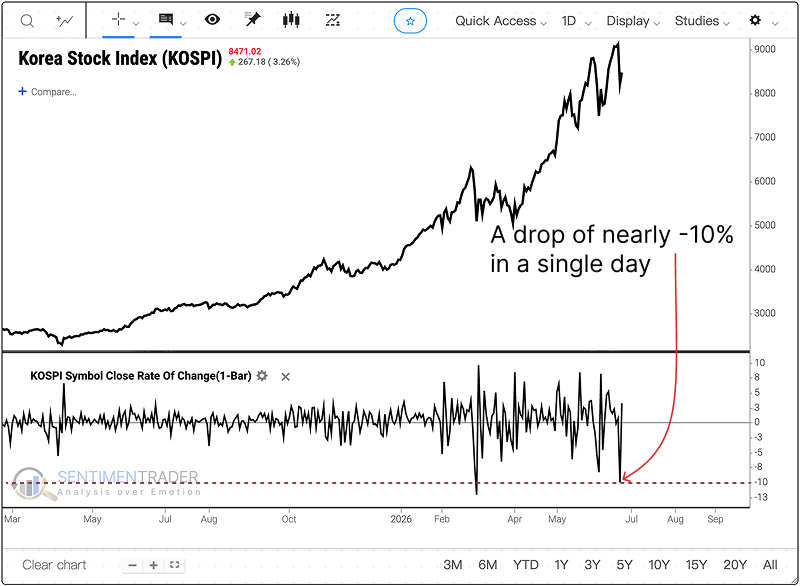
South Korea's KOSPI suffered a rare nearly 10% single-day plunge this week. Historical analysis shows strong-trend selloffs with fast repairs point to a constructive short-term outlook for Korean equities and US tech stocks.
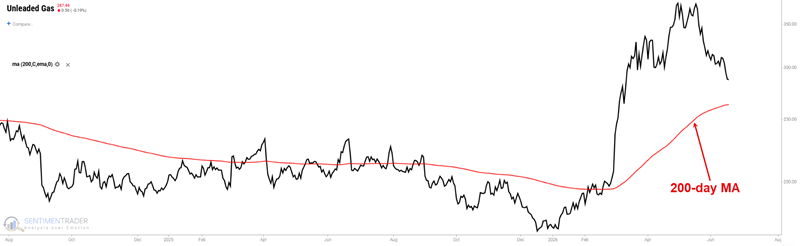
Unleaded gas enjoyed a meteoric rise of almost 125% from December 2025 into March 2026. But now a confluence of seasonality, sentiment, and price action strongly suggests the potential for lower prices in the months ahead. Details herein.
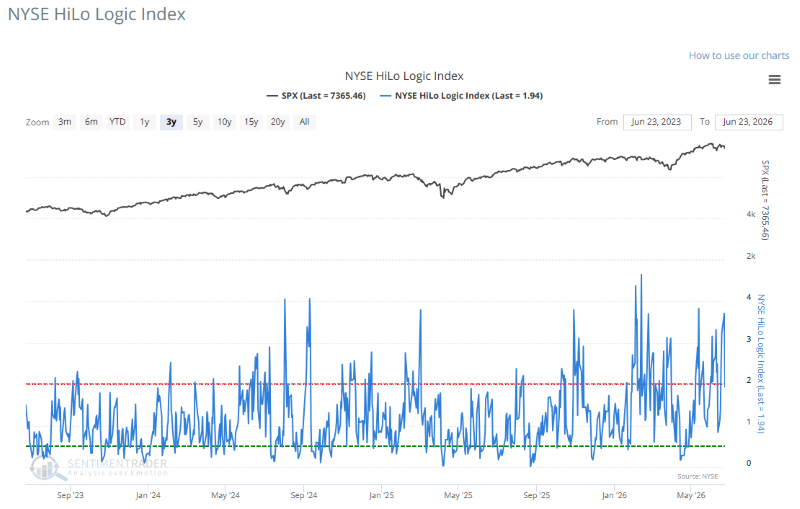
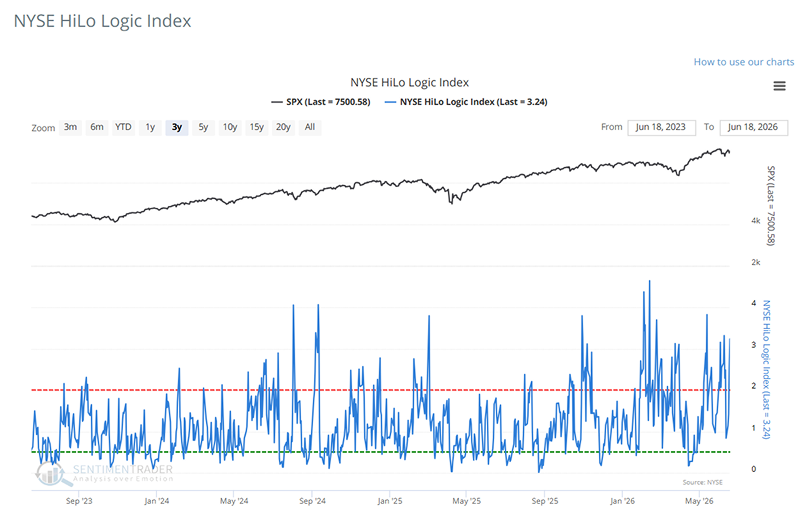
Following the S&P 500 variant, the NYSE High Low Logic Risk-Off Model just triggered, confirming severe breadth divergence. When firing near a 252-day high, the S&P 500 historically faces an abysmal 16% win rate over the next month.
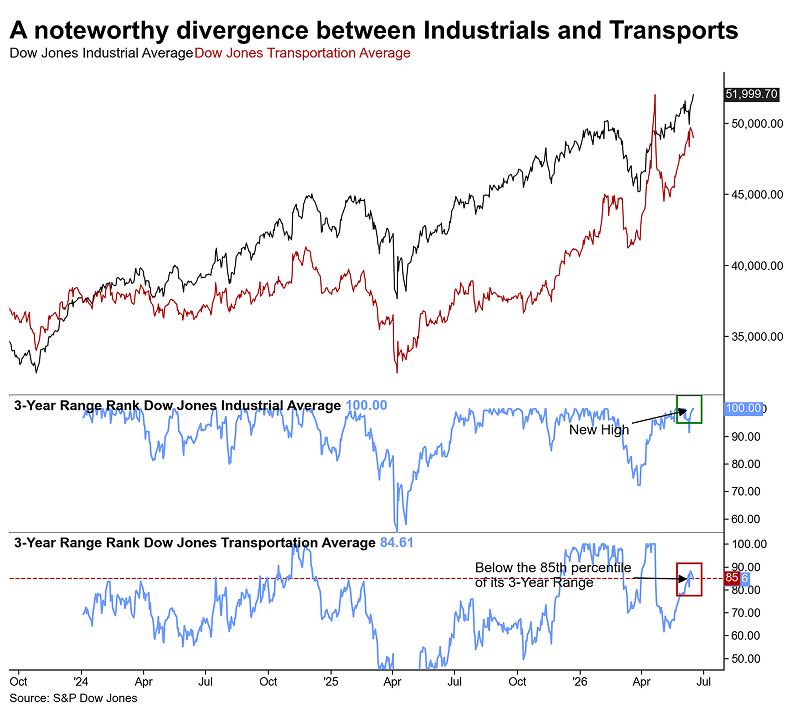
The Dow Jones Industrial Average hit a new 3-year high, but the Transportation Average retreated after recently confirming the advance. This refined divergence signal acts as a participation-quality warning, historically pointing to weaker returns and severe tail risks near major cyclical peaks.
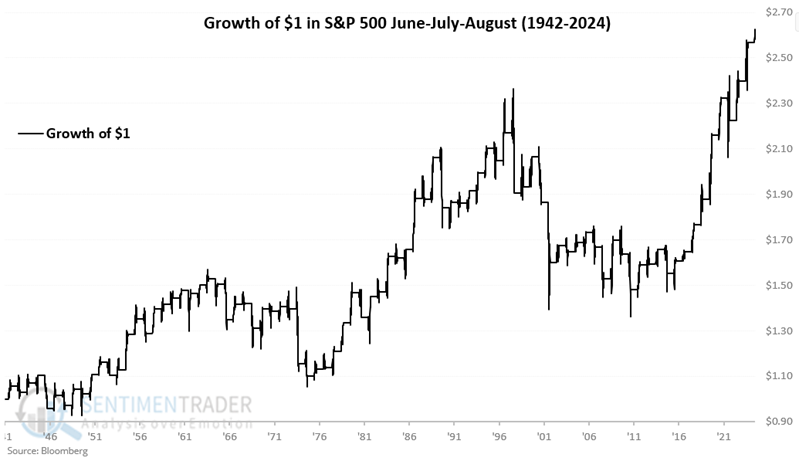
The so-called "Summer Rally" period approaches. Does it really matter? Herein, we examine the history of this period and how it has performed relative to the rest of the summer months. Several long-term tendencies emerge.
The High-Low Logic S&P 500 with Spike model has flashed a tactical risk-off signal amid an elevated 50% composite risk count. History warns of a split market setup prone to near-term corrections.
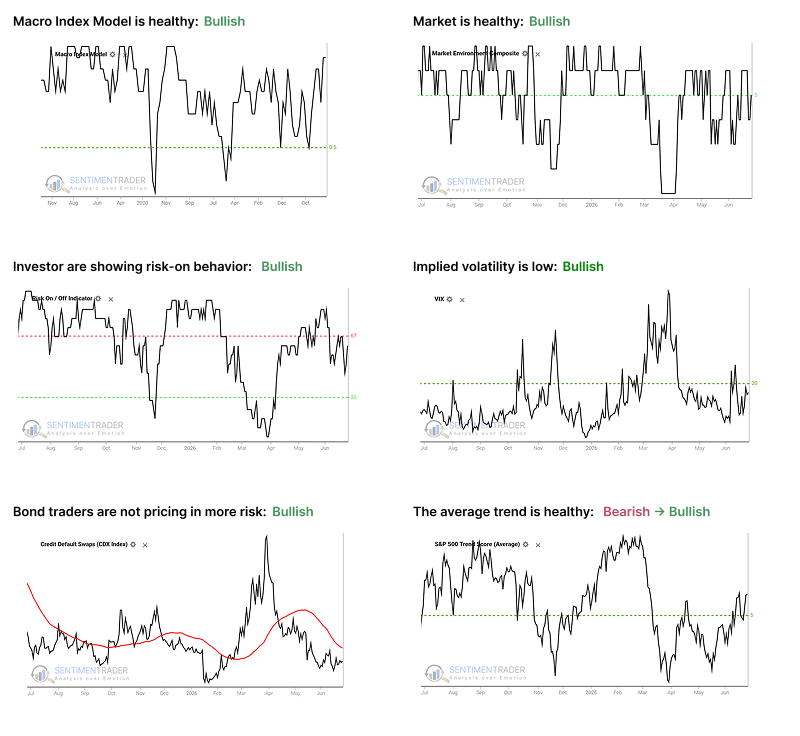
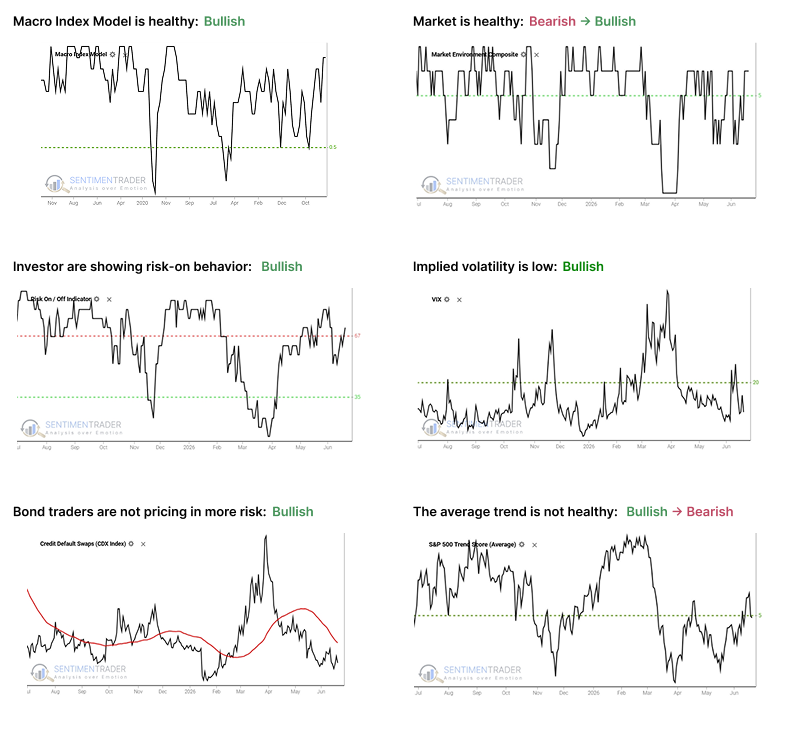
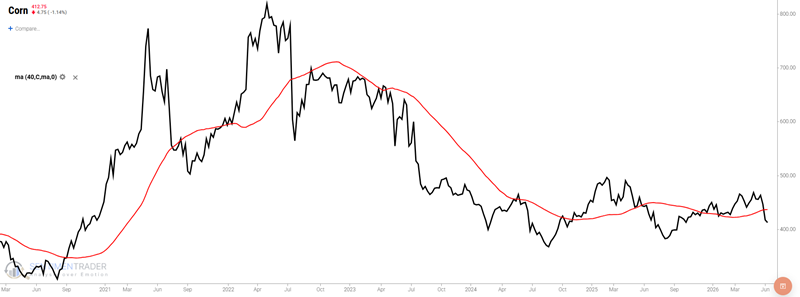
While five independent macro signals and long quant models support the primary S&P 500 uptrend, four key breadth indicators warn of upcoming sideways-to-lower chop. Meanwhile, commodities like Corn and Coffee face severe seasonal downside.
With corn futures entering their most unfavorable seasonal period of the year, already in an established downtrend, traders should look for opportunities to play the short side in the months ahead.