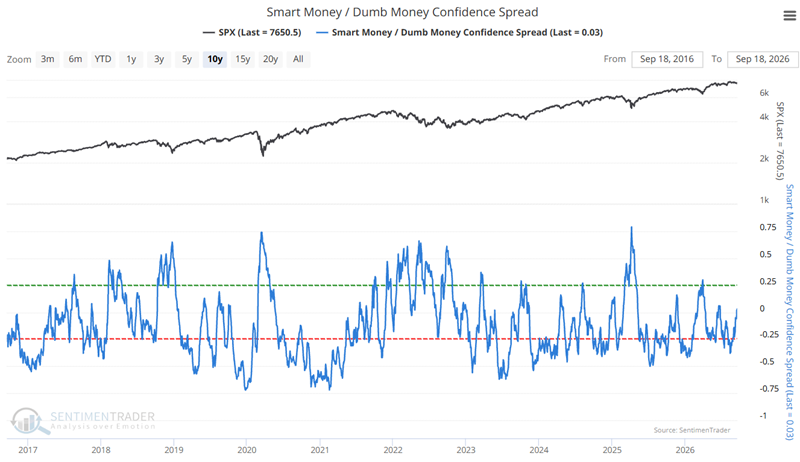
The Smart Money/Dumb Money Confidence Spread is an important sentiment indicator. In this note, we test a systematic approach in Backtest Engine 2.0 using a recently triggered entry signal with exit criteria added.
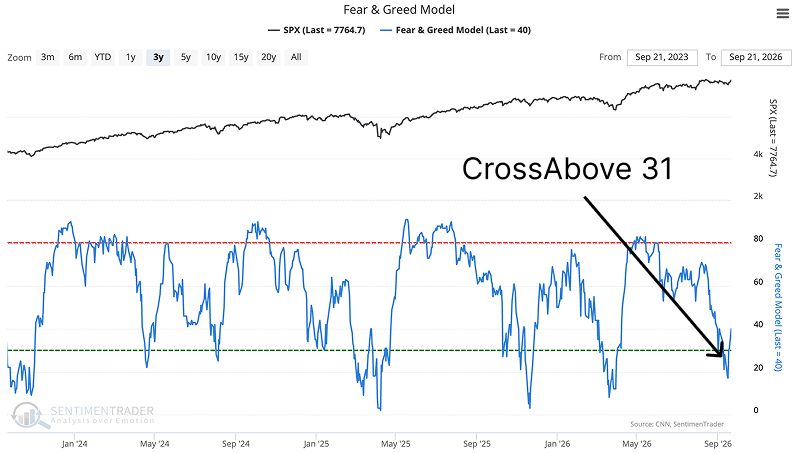
SentimenTrader's Fear & Greed Model recovered above 30 while the S&P 500's long-term trend stayed intact. Similar signals usually preceded gains but did not beat era-matched random dates; within the 20–30 band, direction mattered more than level.
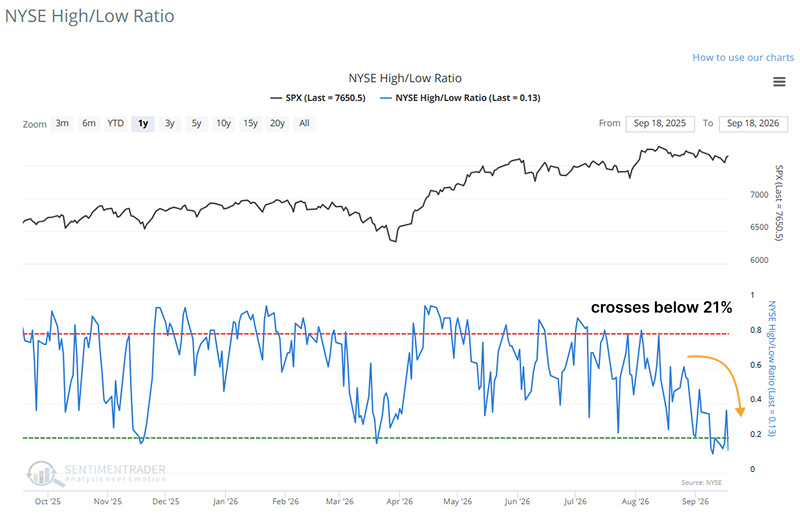
The NYSE Percentage of New Lows and 200-Day Average model has triggered a risk-off signal. With deteriorating internal breadth masked by the S&P 500 hovering near its highs, historical data warns of a high probability of a near-term correction.
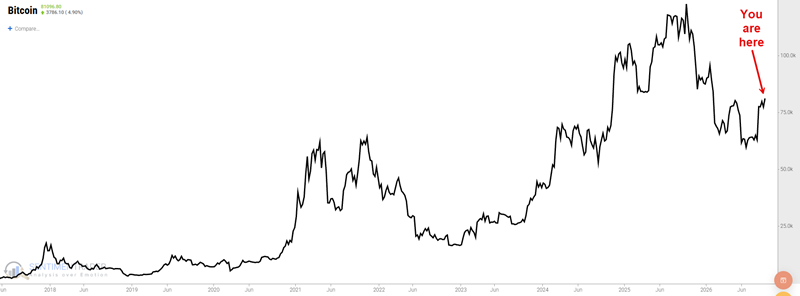
After another major drawdown, Bitcoin has rallied sharply. Does this rally have legs? A variety of indicators suggest a specific answer. Details herein.
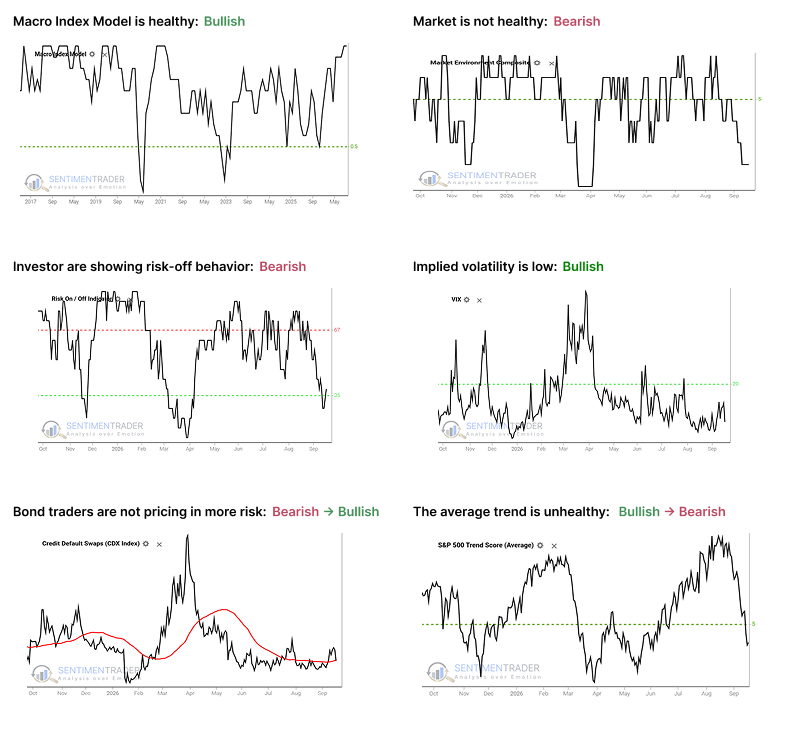
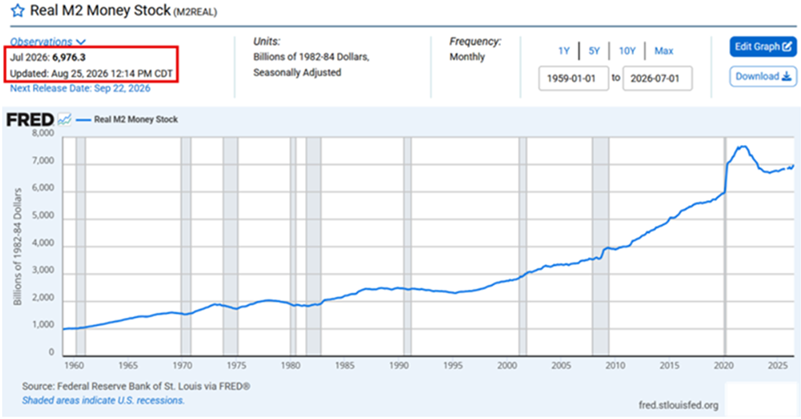
The Fed's first rate hike and an MEC reading in the "Danger Zone" warn of short-term equity drawdowns. Yet, powerful long-term models like the AAII Bull Ratio and Real M2 money supply are flashing historically bullish 12-month signals.
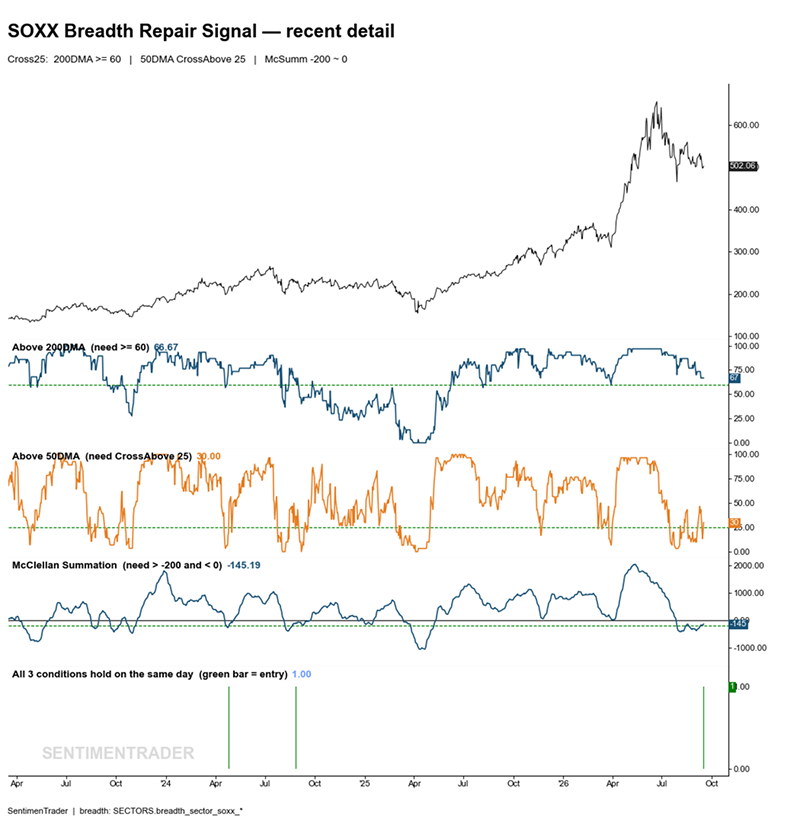
SOXX breadth is attempting to repair while long-term participation remains intact. Historical returns leaned positive but were uneven, as AI leadership stayed dispersed, cyclical chipmakers remained weak, and industry volatility normalized.
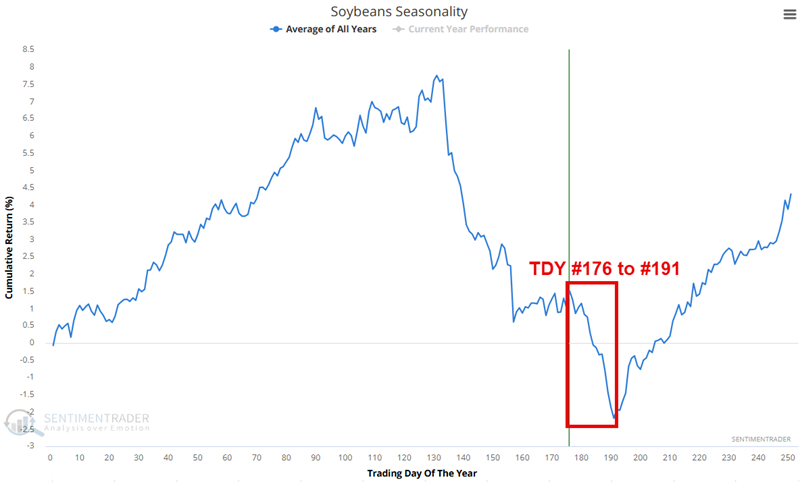
History suggests there may be an opportunity to play the short side of soybeans in the month ahead. However, given that beans have been in a powerful uptrend, aggressive counter-trend traders need only apply. Details herein.
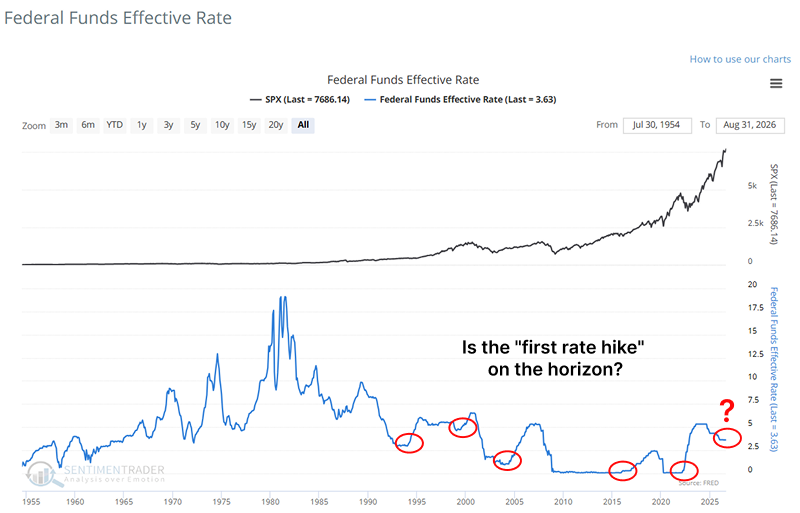
With Fed rate hike probabilities surging past 90%, historical data warns of a 1-to-3-month drawdown for U.S. equities. Conversely, gold and bond yields historically rally in the months following the first hike of a tightening cycle.
We recently examined how money supply trends influence the stock market. Herein, we apply a "similar but different" approach to using money supply trends to generate a favorable or unfavorable outlook for gold bullion.