
The persistent drop in volatility is bullish for stocks

Key points:
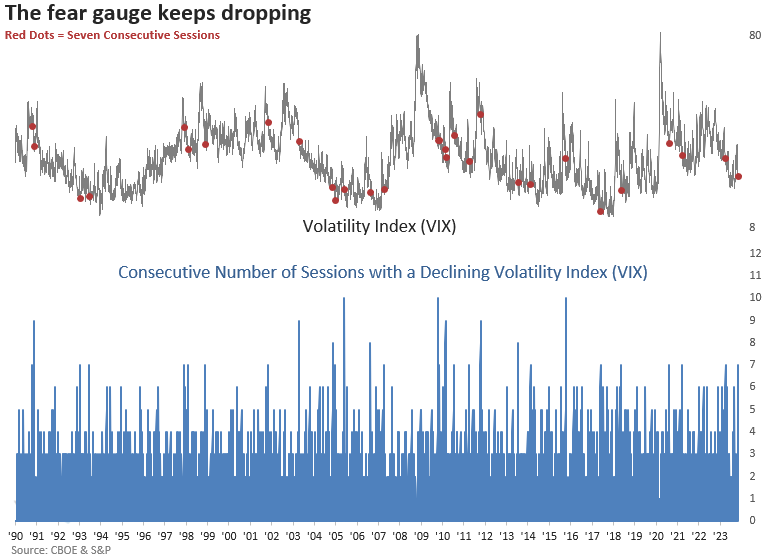
- The Volatility Index (VIX) declined for seven successive sessions
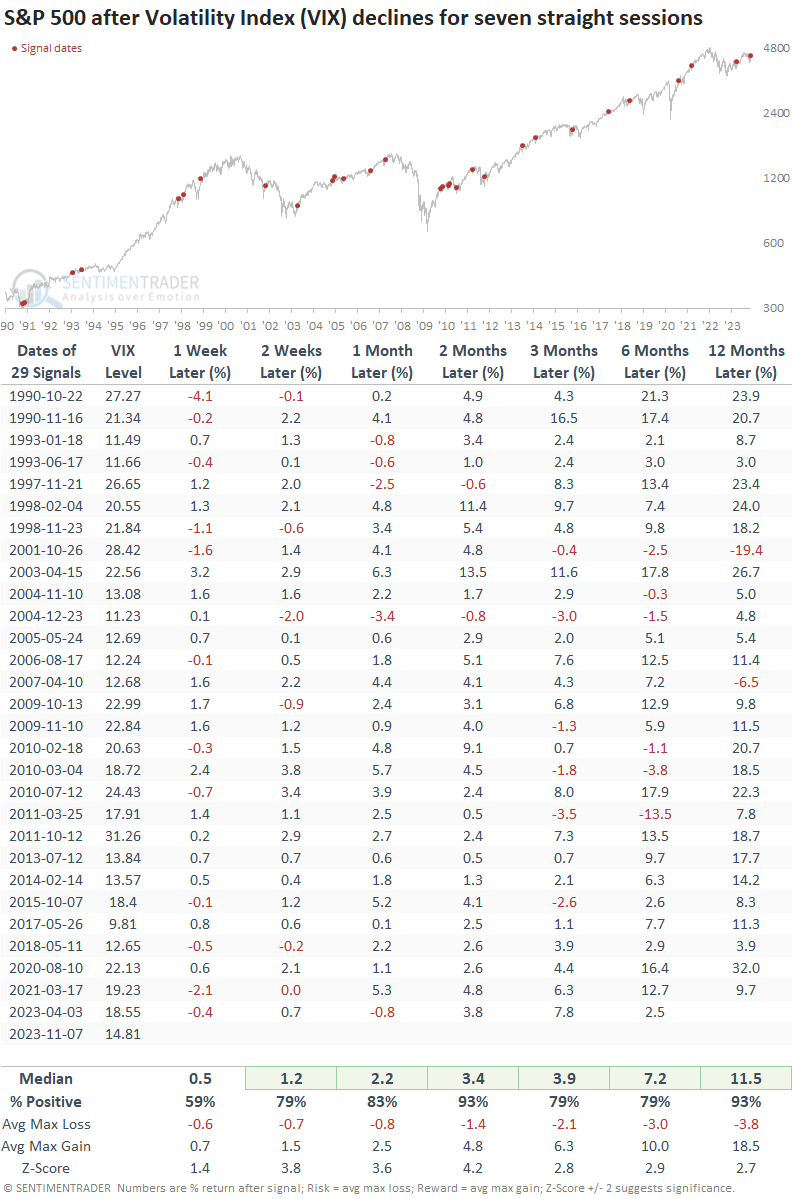
- After similar drops, the S&P 500 was higher 93% of the time over the subsequent two months
- The downtrend in volatility could persist, especially considering seasonality trends
Volatility continues to mean-revert lower, which is typically bullish for stocks
The momentum in stock indexes remains relentless, as the S&P 500 has recorded gains for seven consecutive trading sessions. This consistent upswing in the world's most prominent benchmark index has led to a significant drop in the Volatility Index (VIX).
For only the 30th time since 1990, the Volatility Index (VIX) declined for seven straight sessions. The previous instance occurred in April 2023, leading to an almost 8% gain for the S&P 500 over the subsequent three months.
Lower expected volatility is bullish for stocks
When the Volatility Index (VIX) drops for seven straight sessions, the S&P 500 displays outstanding returns, win rates, and z-scores across all time frames.
Over the following two months, the large-cap index was higher at some point in every case, albeit one precedent was a marginal gain.
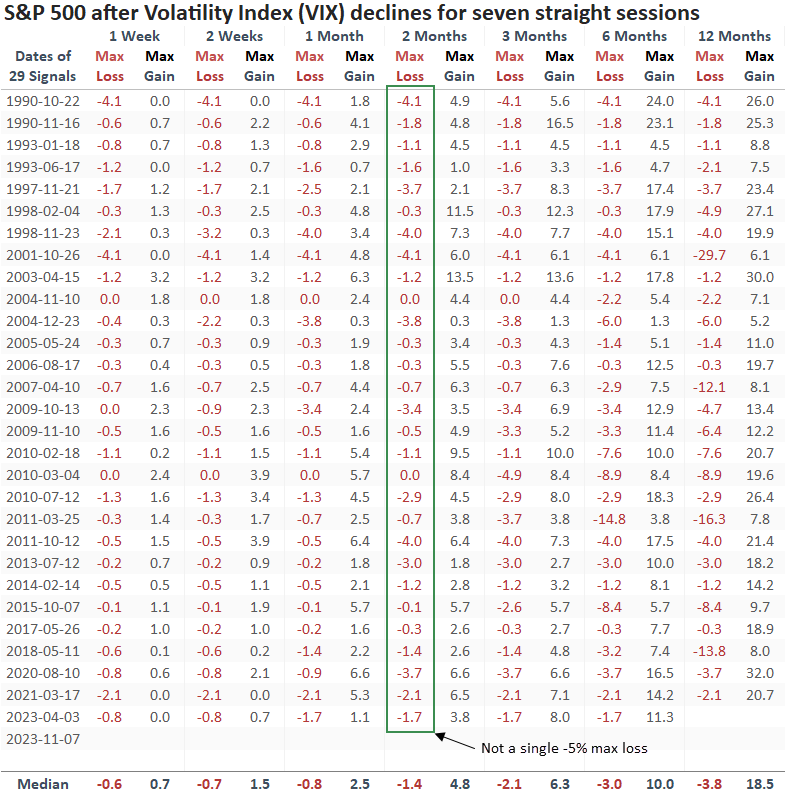
Even more astonishing than the optimistic outlook for the S&P 500 is its track record of consistently steering clear of a maximum loss of more than -5% after experiencing similar drops in expected volatility.
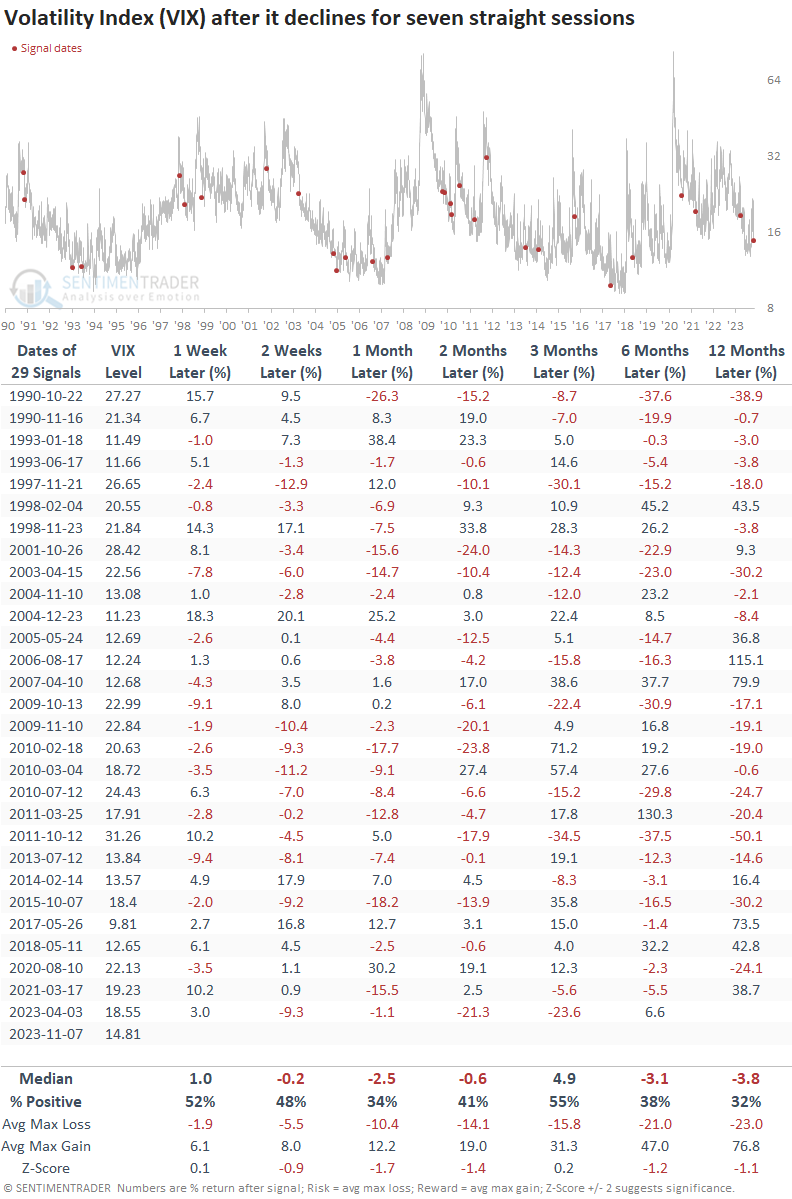
The Volatility Index has the potential to decline even more
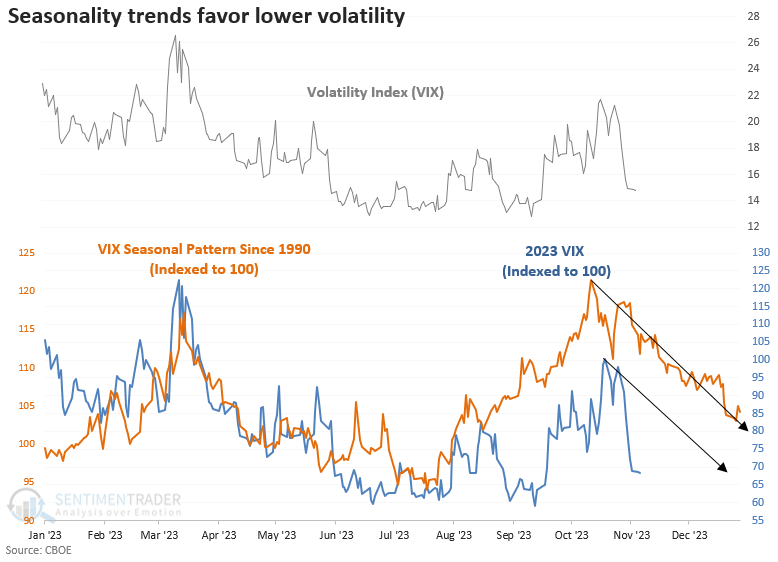
After seven consecutive sessions of the Volatility Index dropping, expected volatility tended to recede, with 5 out of 7 horizons showing losses and unfavorable win rates.
Seasonality
Seasonality for the Volatility Index (VIX) suggests the path of least resistance is lower through year-end if history rhymes.
What the research tells us...
Over the past seven trading sessions, the VIX, a measure of 30-day expected volatility, has witnessed a continuous decline, reflecting a diminished sense of apprehension among investors about the future outlook for stocks. After similar downtrends in volatility, the S&P 500 demonstrated a robust upward bias across all time frames. At the same time, the VIX was likely to continue falling.