
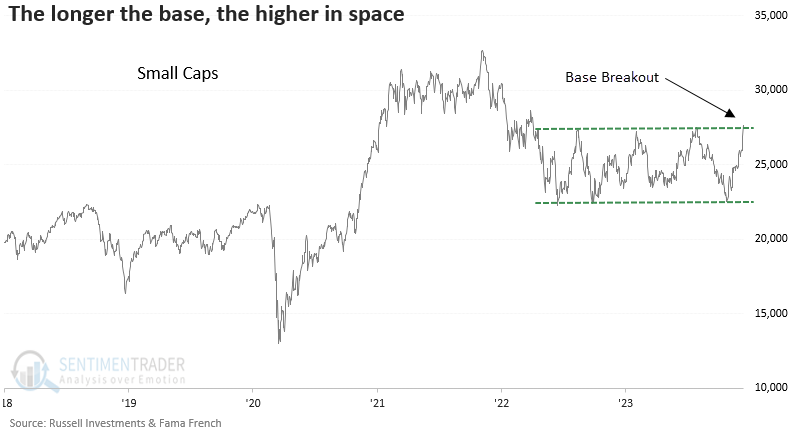
A bullish base breakout for a small-cap index

Key points:
- Small caps closed at a 1-year high but not a 2-year high, completing a base breakout
- Similar patterns led to a consistent upward bias in the small-cap index over the subsequent year
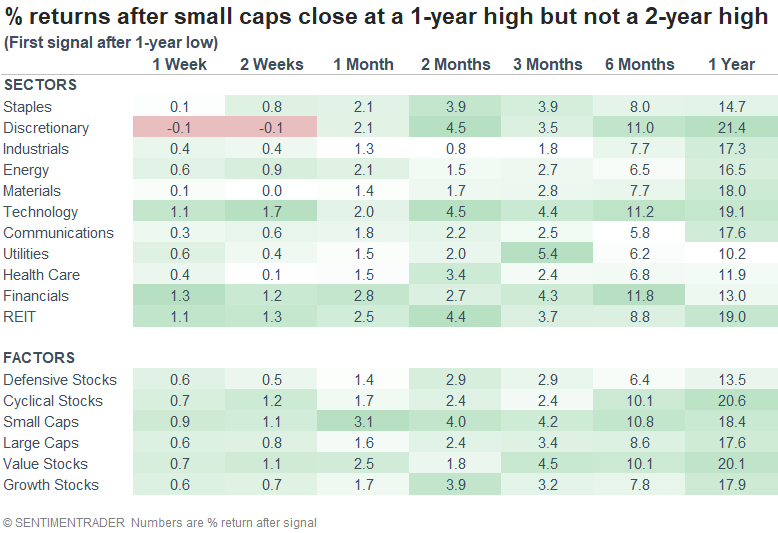
- Outperformance across sectors and factors tilted more toward offensive rather than defensive groups
An index containing economically sensitive small stocks breaks out to a new high
The Federal Open Market Committee (FOMC) opted to maintain the target rate at its current level for the third consecutive meeting last week. It also hinted at the potential for rate cuts in 2024. This decision sent economically sensitive small-cap stocks surging higher, triggering a substantial expansion in new highs amongst index components.
With numerous small-cap stocks registering one-, three-, and twelve-month highs last week, the bullish price action from individual stocks contributed to a new 1-year high in the Russell 2000 Total Return Index.
For only the 26th time since 1932, the small-cap index closed at a 1-year high but not a 2-year high, completing a base breakout pattern after recording a 1-year low as recently as October.
Similar base breakouts preceded further gains
Small caps show a consistent upward bias over all time horizons whenever the index reaches a 1-year high but remains below a 2-year high.
While the previous signal failed miserably, 63-day highs for index components were only 22% compared to the 48% reading from last week. So, significantly more stocks are participating in the upside price action on this breakout.
Since the 1929-49 secular bear market, the small-cap index was higher a year later in 16 out of 18 precedents.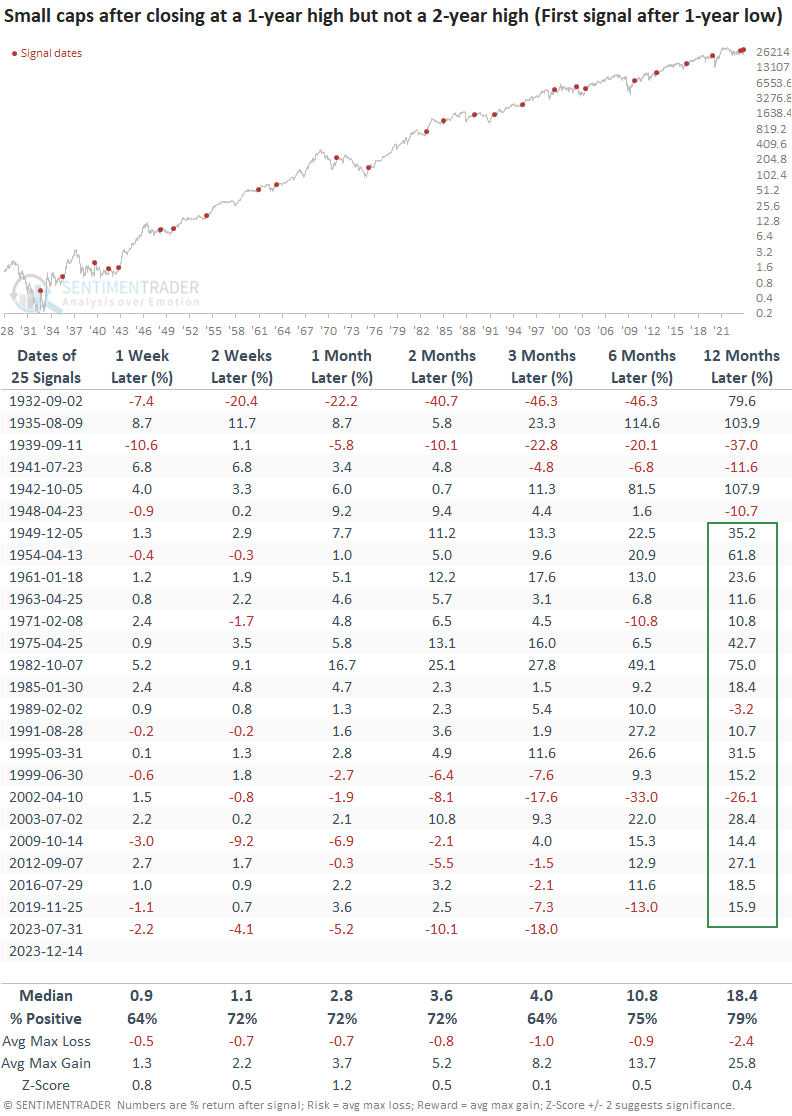
What about large caps?
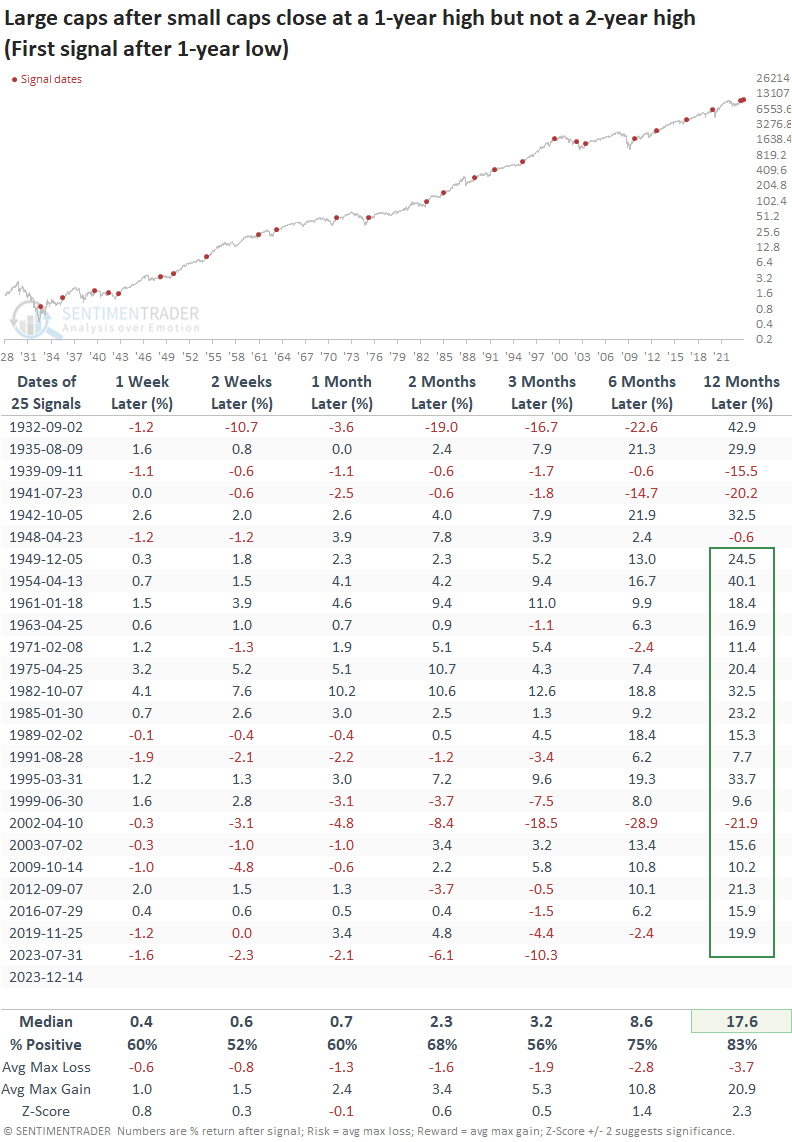
What works well for small-cap stocks tends to be advantageous for large-cap stocks, too. Over the following year, the large-cap index was up 83% of the time, slightly edging out the 79% win rate for small caps.
Small caps outperformed their large-cap counterparts in every time horizon examined. As one might anticipate, the breakout in an economically sensitive small-cap index was accompanied by more robust performance in offensive sectors and factors.
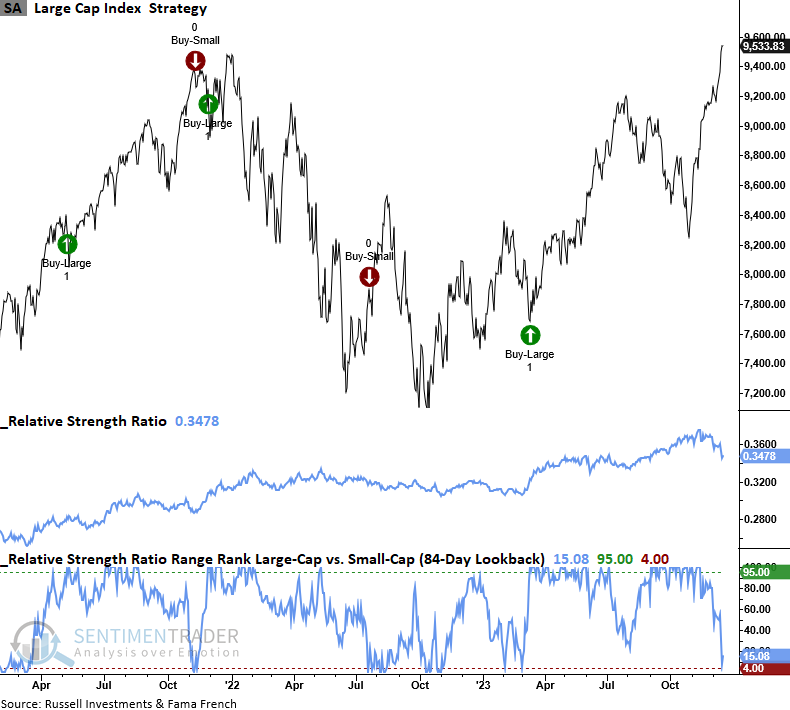
Relative Ratio Range Rank Model
While the small-cap index broke out and has outperformed large-caps since the second week in November, the bullish price action has not been enough to trigger a shift from large to small, according to my relative ratio range rank system. However, it's close.
What the research tells us...
Just about any way you look at the price action, whether from internal or external measures, the price action in small-cap stocks is bullish. The 1-year base breakout in the Russell 2000 Total Return Index has historically led to higher prices over the following year. Perhaps the most prevalent argument against investing in small caps revolves around the general sentiment surrounding this category. Let's face it - when was the last time you went to a party and someone was talking about buying a small-cap bank instead of the latest and greatest Technology stock driving the AI revolution? History suggests we should keep small-cap stocks on our radar screen. Still, it's imperative to use relative strength indicators for timing and risk management.