
Utility stocks are crashing

Key points:
- The S&P 500 utility sector declined 15% over the past 21 sessions
- As a result, 252-day lows spiked to the highest level since the pandemic crash
- After similar conditions, utilities and the S&P 500 struggled over the next few months
The last man standing joins the bear market party
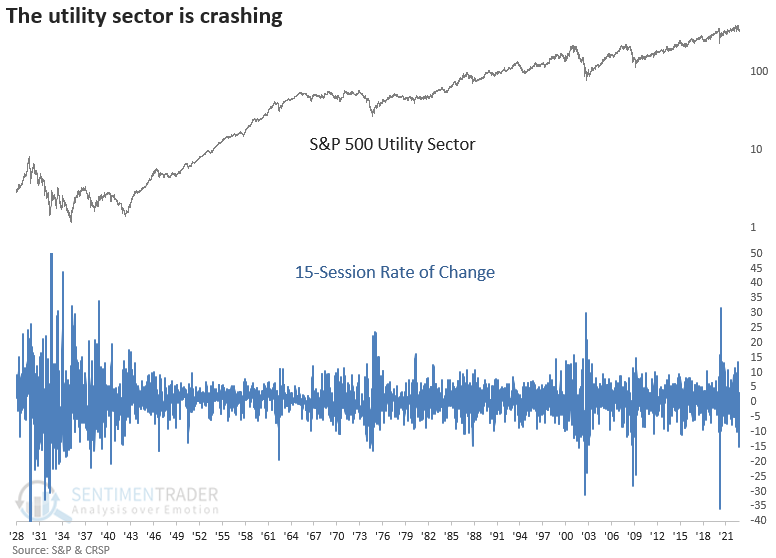
The S&P 500 utility sector decided to join the bear market party, crashing 15% over the past 21 sessions.
Historically, when investors panic and push the sell button on traditionally defensive groups, the broad market is one step closer to a potential bottom. However, the sector is less than 20 sessions from an all-time high. So, it's more likely that the momentum signal could be the start of something rather than the end.
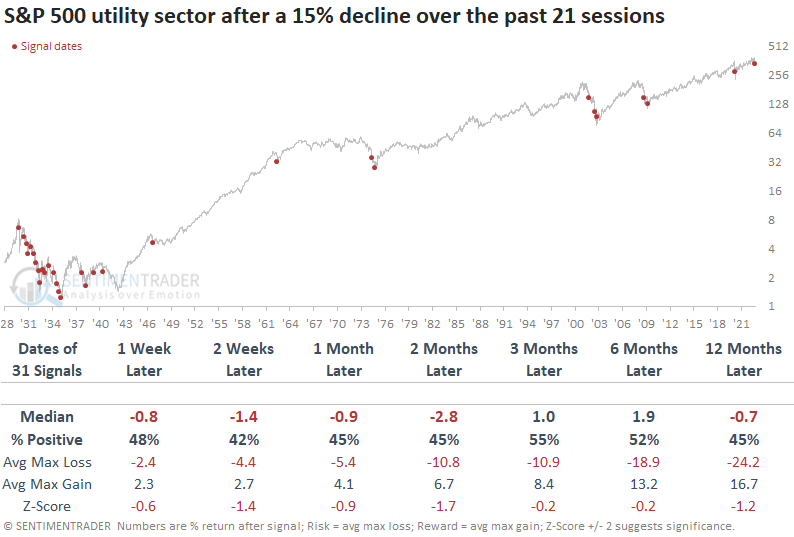
A swift decline in utilities preceded negative returns for the sector
The utility sector tends to decline further over the next few months after rapid contractions over a 21-session period. While the 1929-42 secular bear market dominates the signal count, 7 out of 9 alerts since 1962 were negative at some point in the first two weeks.
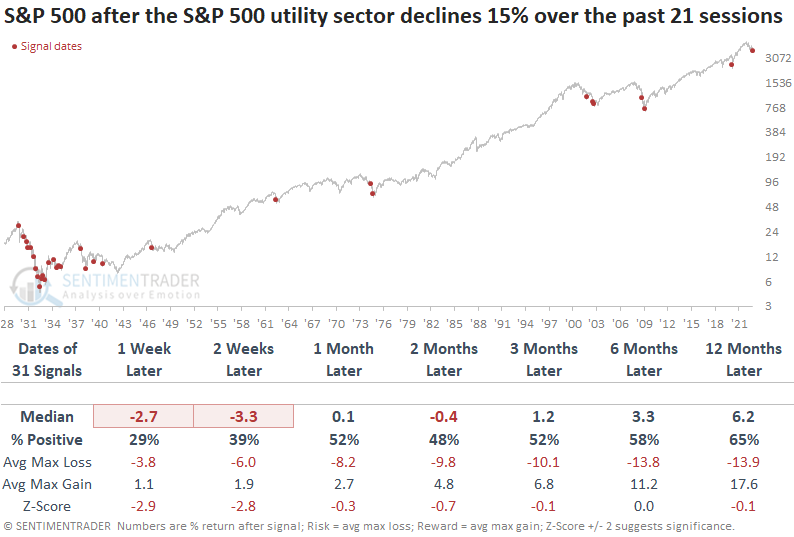
The S&P 500 fared even worse in the first few weeks, with weaker returns and win rates than utilities. Once again, more recent signals were unfavorable in the near term, with 8 out of 9 alerts showing a negative return.
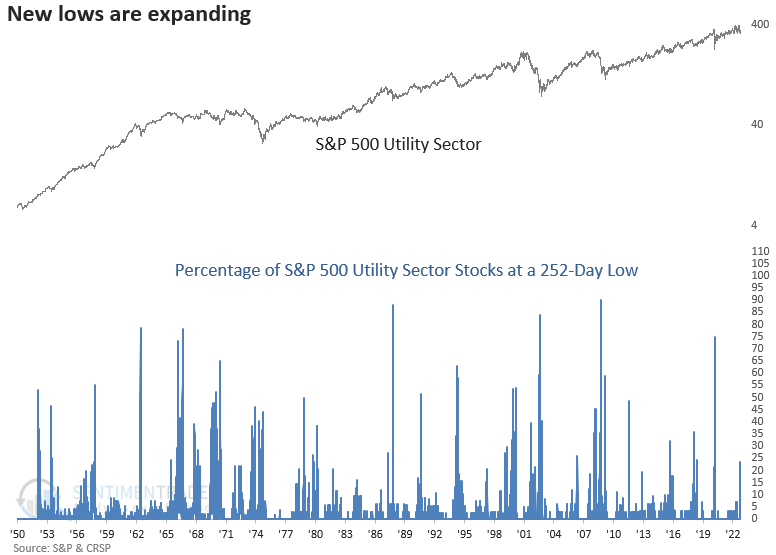
New lows spike as utility stocks crash
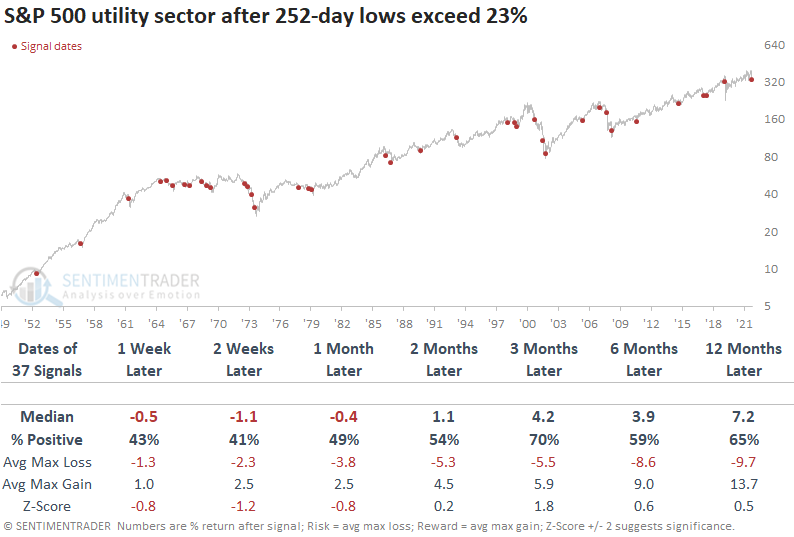
The swift decline in utility stocks resulted in a surge in 252-day lows, which increased to the highest level since the pandemic crash. However, new lows remain well below other bear market levels. For example, they exceeded 80% in July 2002 and October 2008.
A surge in new lows preceded negative returns for the sector
The expansion in new lows for utility stocks does not bode well for the sector over the next month. Returns and win rates were unfavorable, especially during the inflationary 1970s period when bond yields marched higher.
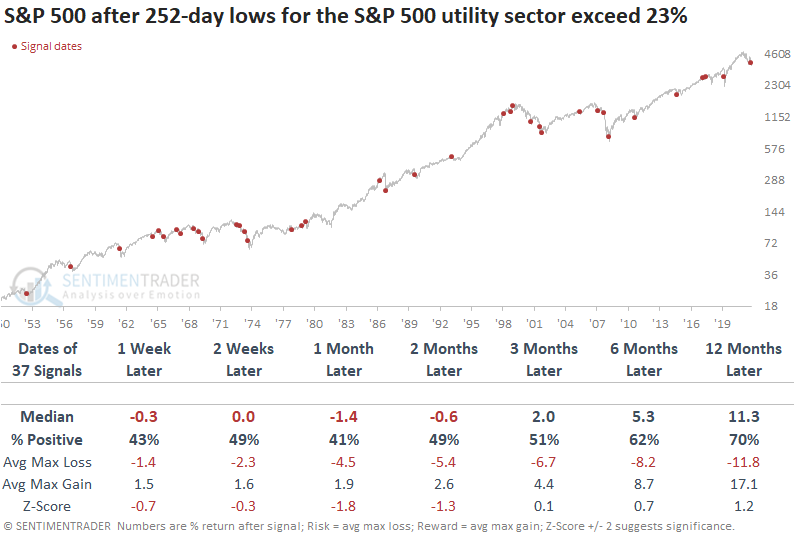
The S&P 500 managed to perform a little worse than utilities after a spike in new lows, with negative returns over the next few months. Once again, alerts that were triggered in the 1970s performed poorly.
What the research tells us...
Defensive sectors are often the last groups to get taken to the woodshed in bear markets. The utility sector finally succumbed to the weight of rising bond yields by crashing over 15% in the last month, which triggered a spike in new lows. After similar conditions, utilities and the S&P 500 struggled over the next few months.