
Two sectors to focus on in the next eight months

Key points:
- The most favorable part of the 3-year election cycle began in October 2022
- Based on historical tendencies, there are two primary sectors or factors that may benefit
- Discretionary and small-cap stocks show returns far above other sectors and factors
A quick review of where we are in the election cycle
In this article, I highlighted that the most favorable portion - by far - of the four-year election cycle starts October 1st of the mid-term year and ends July 31st of the pre-election year. Based on the S&P 500 Index, there has not been a loss during this period since the1930's.
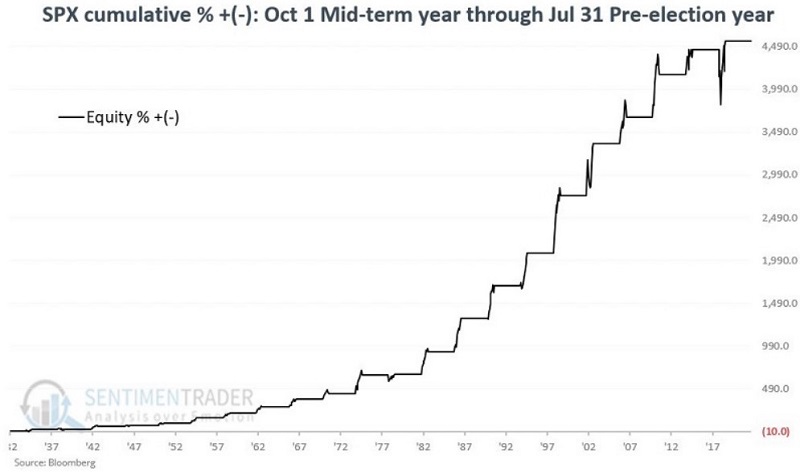
Over the first two months of this 9-month favorable period, the S&P 500 Index has far gained +13.8%. With December beginning, let's take a closer look at the sector and factor performance over the last seven months of this favorable period.
A look back at history
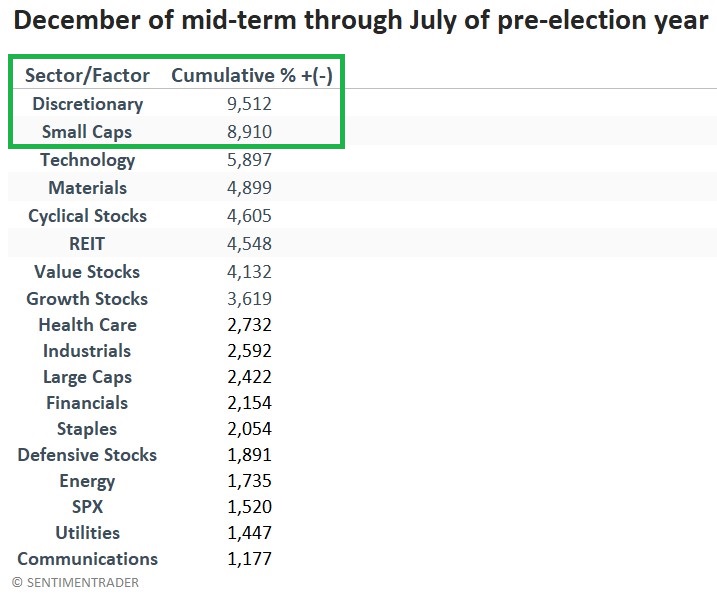
For this test, we use the Fama French data set from 1926 to 1991 and S&P 500 indexes and sector data after that. The table below displays the total return for each sector and factor if held only from December 1st of each mid-term year through the end of July each pre-election year, starting with the 1926-1927 period. By far, the two top long-term performers were Consumer Discretionary and Small caps.
A closer look at Consumer Discretionary and Small caps
Let's take a closer look at their historical performance during December mid-term to July of the pre-election years starting in 1926.
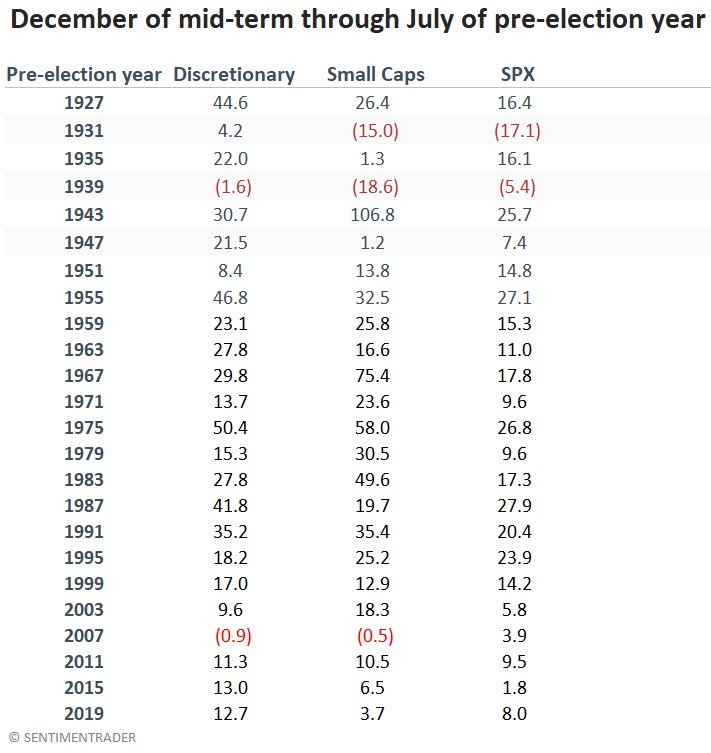
The table below shows the cumulative percentage performance for both sectors during the favorable period. The return for the S&P 500 during the same period is included for comparison.
The chart below displays the growth of $1 invested in the Consumer Discretionary sector only during the favorable period.
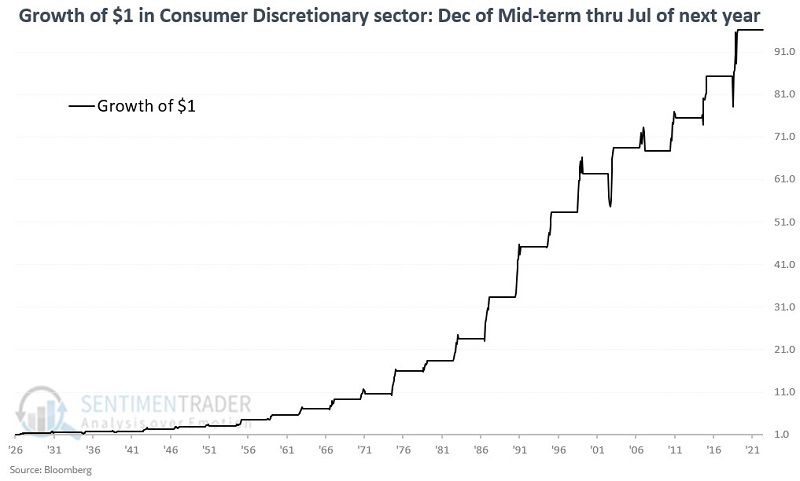
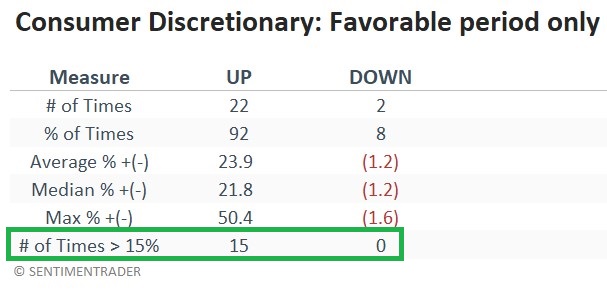
The frustrating thing about seasonal trends is that there is never any guarantee that they will continue to work. That said, the performance for consumer discretionary during this particularly favorable period is hard to quibble with. The largest full-period decline was a loss of -1.6%; on 15 separate occasions, the full-period gain exceeded +15%.
Now let's turn to the small-cap sector (see also here and here). The chart below shows the growth of $1 invested in the Small-cap sector only during the favorable period.
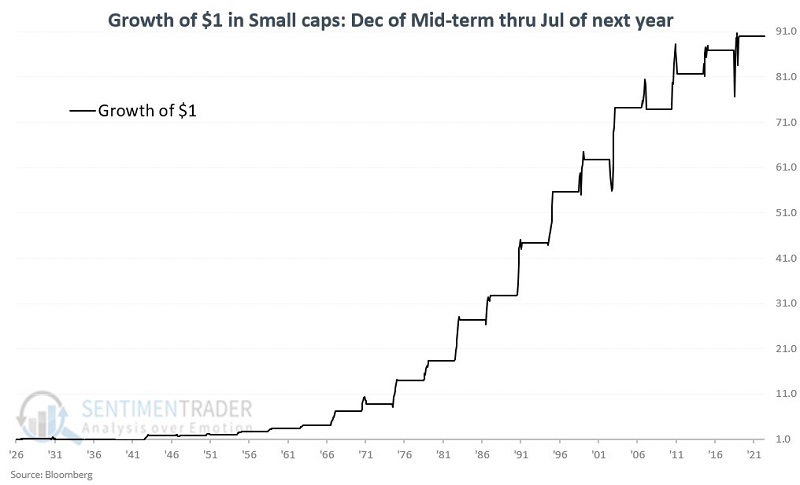
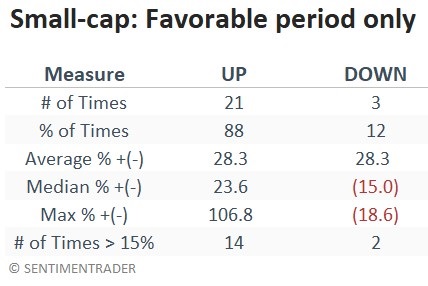
During the favorable period, Small-caps suffered two losses in excess of -15% in the 1930s. Since then, the only down period was a loss of -0.5% in 2006-2007. On 14 separate occasions, Small-caps showed a gain above +15%.
What the research tells us…
This portion of the four-year election cycle has been rock solid in performance for over 90 years. In addition, consumer discretionary and small-caps have been the hands-down top performers during this period. No matter how favorable the historical results for any trend, an investor is not relieved of their responsibility to make the critical decisions regarding a) how much capital to reasonably commit and b) when to cut a loss if things go wrong.