
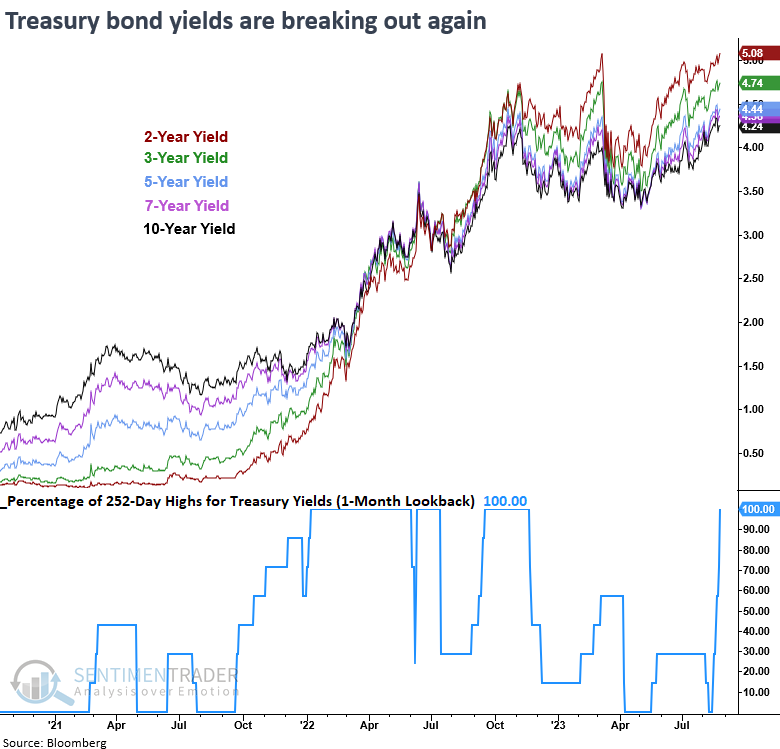
Treasury yields across several time frames closed at new highs

Key points:
- Every single Treasury yield, ranging from two to ten years, closed at an annual high in the last month
- Similar breakouts led to upside follow-through for rates, especially at the short end of the curve
- Stocks tend to struggle when yields across the curve break out to annual highs
What's the market message from Treasury yields?
After consolidating for almost nine months below the previous highs, Treasury yields ranging from two to ten years closed at new annual highs. In 2022, the yield curve breakout signal created a significant headwind for stocks, especially for hyper-growth Technology-oriented ones. Will this time be different?
One difference between now and 2022 is that the FOMC is closer to the end of its tightening cycle rather than the beginning. However, should the Fed stay higher for longer, the economy will eventually slow, which is a concern for stock investors.
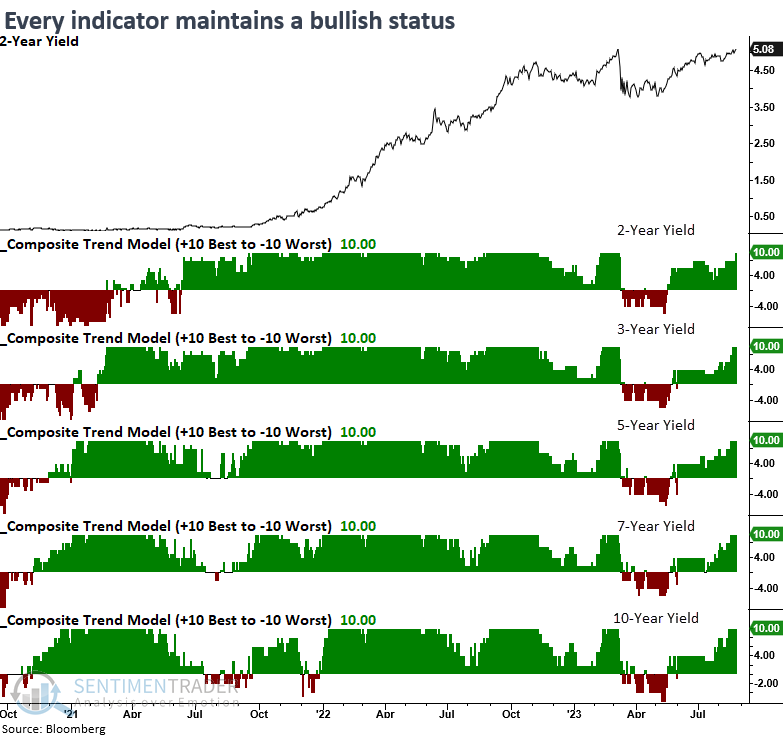
With the two-year yield closing at a new high on Friday, my Composite Trend Model increased to a perfect score of 10, joining the other Treasury yields with every single trend-following indicator in a bullish status.
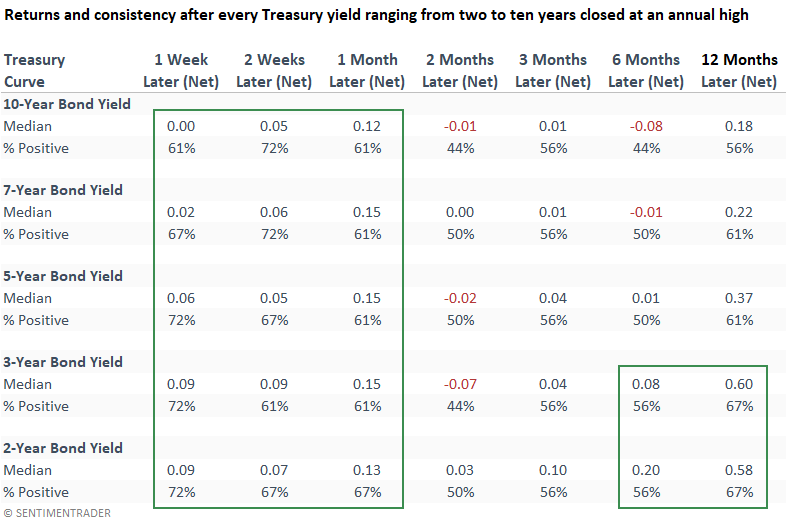
Yield breakouts preceded mostly additional upside follow-through for rates
When every single Treasury yield ranging from two to ten years registers an annual high in the last month, yields across the curve tend to rise further over the next month.
From six to twelve months later, short-duration yields like the two and three-year are more likely to continue to rally.
What about stocks?
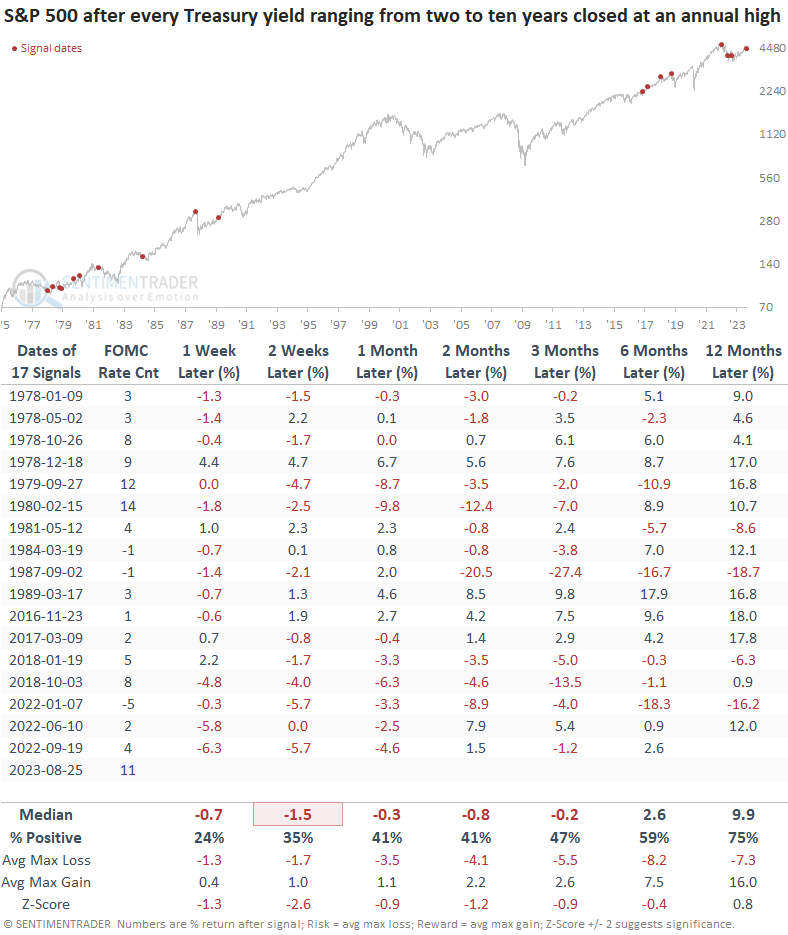
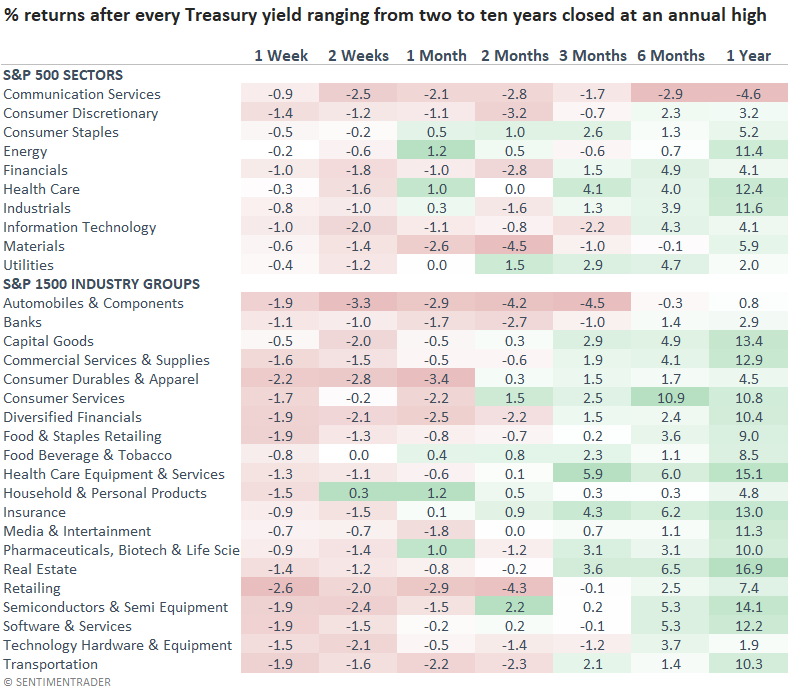
When rates across the curve break out in unison, stocks struggle over short and medium time frames. Over the next three months, the S&P 500 was negative at some point in all but one case.
A significant portion of signals materialized while the FOMC was tightening monetary policy, and these alerts usually occurred in relatively close succession. The late 1970s is a fascinating analog. Despite a bumpy path, the S&P 500 generally rose over the next year before succumbing to the rate pressure in the 1980-82 bear market.
Defensive sectors like Staples, Health Care, and Utilities outperformed in the first three months. As expected, higher rates impacted industries like Autos, Consumer Durables, and Retail.
In a note last week, Jason published a report on the decade-long breakout in the 10-year yield with a slightly different conclusion.
What the research tells us...
Treasury yields ranging from two to ten years closed at new annual highs after consolidating for almost nine months. After similar breakouts, yields across the curve tend to rise in the near term, with the most significant impact occurring in short-duration bonds like the two and three-year. Stocks struggle over the next three months, with defensive sectors outperforming. With seasonality unfavorable, stocks could be stuck in a range for now.