
Tracking bonds with the JK Interest Rate Model

Key points:
- It is a given that the trend in interest rates affects bond prices - lower rates mean higher bond prices, and higher rates mean lower bond prices
- This is especially true for 30-year treasury bonds, as rate changes are the sole determinant of price action, and long-term bonds are much more sensitive to rate changes than short-term bonds
- In this note, we will examine the action of treasury bond futures based on changes in the JK Interest Rate Trend Model
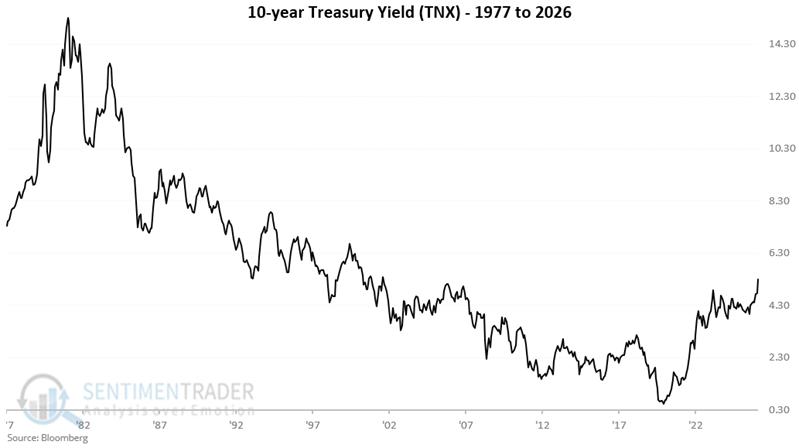
Using 10-year Treasury yield as a proxy for interest rates
For the record, there are lots of "interest rates." There are Treasury bill yields, Treasury Note yields, Long-term Treasury bond yields, various government agency yields, commercial paper yields, corporate bond yields (with various ratings from AAA to junk status), municipal bond yields, and a host of other rates related to various forms of debt.
To make things as straightforward as possible, for this study, we will consider only two measures:
- The month-end yield on a 10-year Treasury note ($TNX)
- The month-end closing price for the 30-year Treasury bond futures
DATA NOTES:
#1. In December 1999, the raw price for the 30-year Treasury bond futures contract was adjusted 20 points lower to reflect a change from an 8% coupon to a 6% coupon. For this test, prices bef