
The S&P 500 completes a base breakdown pattern

Key points:
- The S&P 500 closed at a 3-month low but not a 4-month low, completing a base breakdown
- Similar topping patterns in an uptrend led to bullish results for the S&P 500 over the subsequent month
- Signals that coincided with an oversold condition demonstrated marginally more favorable outcomes
A base breakdown with the S&P 500 in an uptrend
Last week, the S&P 500 undercut support below the August low and registered a new 3-month low but not a 4-month low, completing a topping pattern. Of course, the breakdown elicited the typical negative response from the social media crowd.
Whether the pattern turns out to be something more significant or a garden variety correction in an uptrend remains to be seen. As always, we will use an objective and unbiased approach to analyzing the potential outlook after similar patterns.
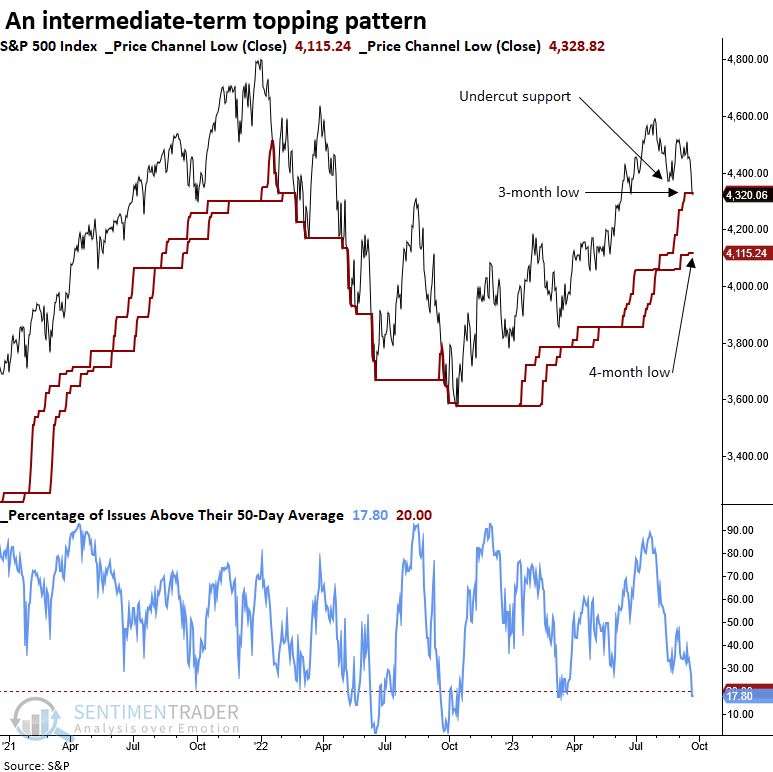
Similar breakdown patterns preceded positive returns for the S&P 500
When the S&P 500 closed at a 3-month low but not a 4-month low, with the index above its 200-day average, the breakdown tends to be closer to the end of a corrective phase rather than the beginning. A month later, the S&P 500 was higher 76% of the time, with a median gain of 2.4%. Additionally, the one and two-month horizons show gains that are significant relative to the median gain over the study period.
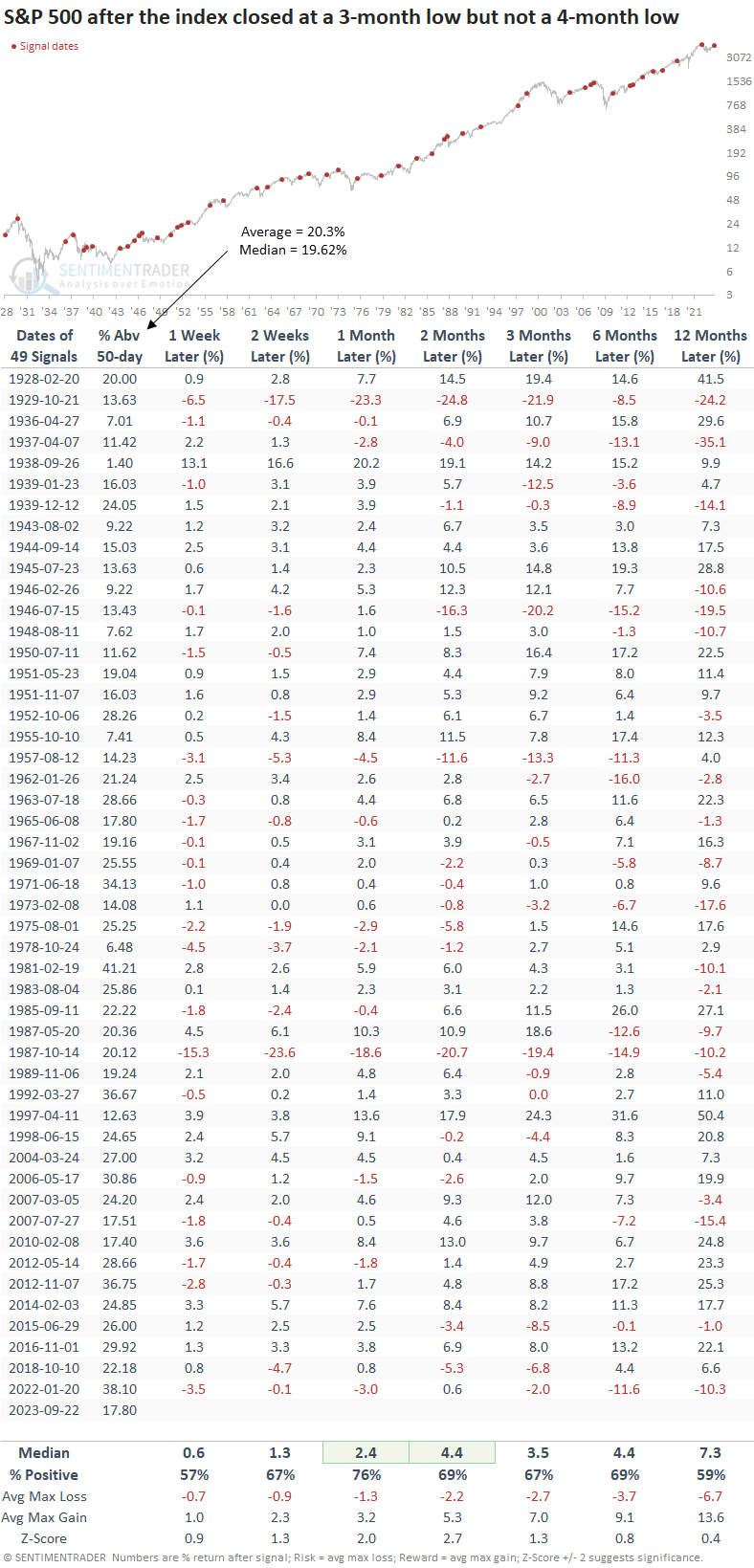
Additional context
On Friday, an intermediate-term breadth indicator, the percentage of S&P 500 issues trading above their respective 50-day average, crossed below 20%, indicating an oversold condition. When the base breakdown pattern occurs, and fewer than 20% of issues close above their 50-day average, the S&P 500 displays slightly more favorable returns and win rates. So, the oversold condition generates some buying interest from traders.
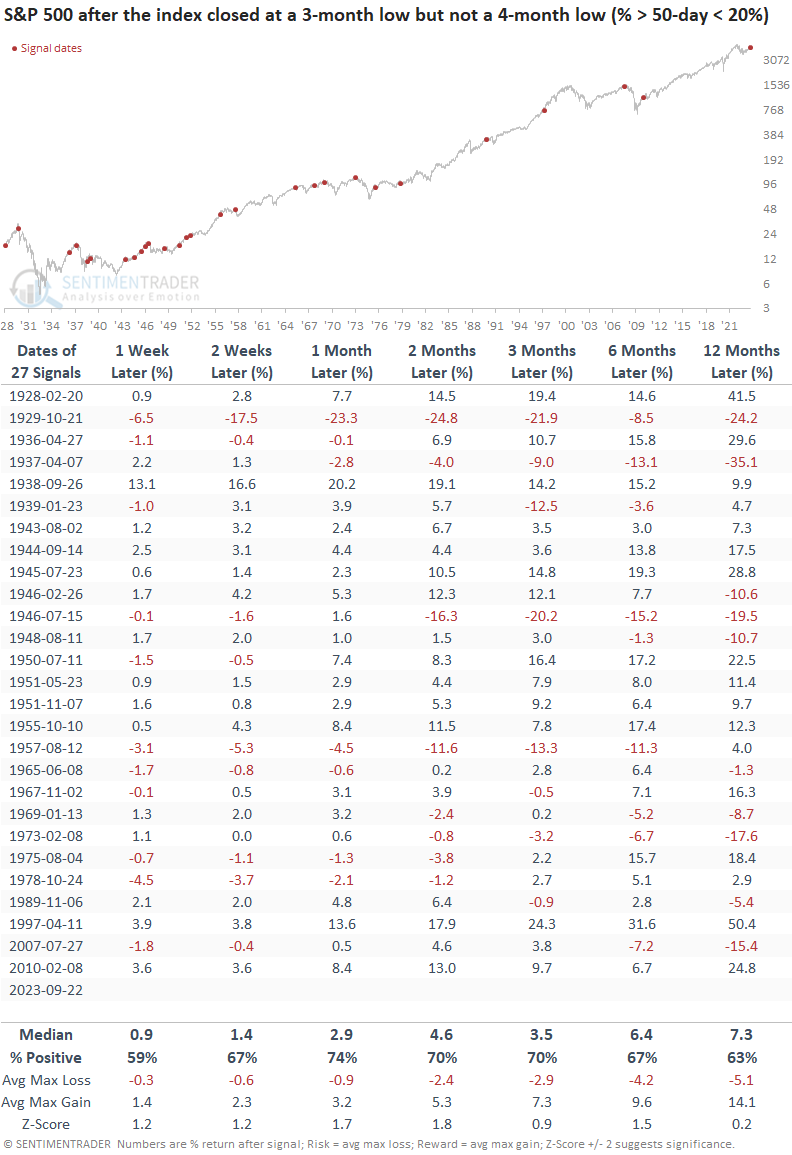
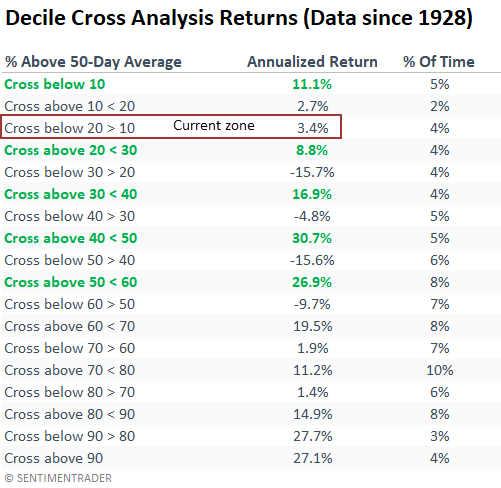
The outlook for the S&P 500 based on an intermediate-term market breadth indicator
When the percentage of S&P 500 issues above their 50-day average crosses below 20% but remains above 10%, the S&P 500 tends to struggle with an annualized gain of 3.4%, significantly underperforming annual returns since 1928.
However, should more and more stocks fall below their medium-term trend, good things tend to happen when the reading dips below 10%. Additionally, returns are outstanding when more stocks recapture their uptrend from an oversold condition.
What the research tells us...
The S&P 500 completed a topping pattern when the index undercut support and closed at a 3-month low but not a 4-month. Similar base breakdowns in an uptrend led to solid returns, win rates, and z-scores over the next few months. When the pattern occurs with fewer than 20% of S&P 500 issues above their 50-day average, the world's most benchmarked index exhibits slightly more favorable returns and win rates. Should medium-term uptrends fall or rise from the current level, annualized returns will improve significantly.