
The S&P 500 and the late summer lull

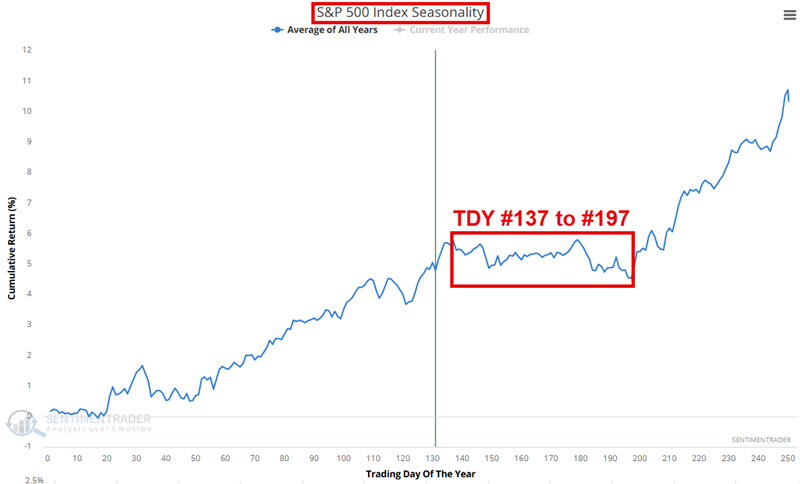
Key points:
- Looking ahead, one piece of potential good news is that October 1st starts one of the most favorable periods for stocks within the four-year election cycle
- The bad news is that a) the Summer Rally period ended at the close on July 14th (the S&P 500 gained 2.5% during the 12-day Summer Rally period), and b) August and September have a greater historical tendency to show weakness than all other months
- No one should act solely based on an unfavorable seasonal tendency; That said, now is an excellent time for investors and traders to consider what action - if any - they would want to take if the market starts to sell off in the months directly ahead
Late July to mid-October can be challenging for stocks
One problem with looking at seasonal trends at all is that there is a mistaken tendency to believe (or to "want to believe") that a given market or security is likely to move in a certain direction based solely on the calendar. It's important to note that seasonality isn't a roadmap. It is merely a measure of movements in the past.
So, just because a given market or security is nearing or entering a supposedly favorable or unfavorable seasonal period does not automatically mean that a trader should expect to make a trade. Ho