
The SentimenTrader risk-on/off indicator shifts to risk-on

Key points:
- The SentimenTrader risk-on/off indicator cycled from risk-off to risk-on
- A trading model that measures the risk on/off range registered a new buy signal
- The S&P 500 has rallied 78% of the time over the next 4 weeks after other signals
Composite models are more reliable than a single indicator
The SentimenTrader risk on/off indicator utilizes a weight-of-the-evidence approach by combining 21 diverse components into a single model to assess the current market environment. A level above 50% is considered risk-on.
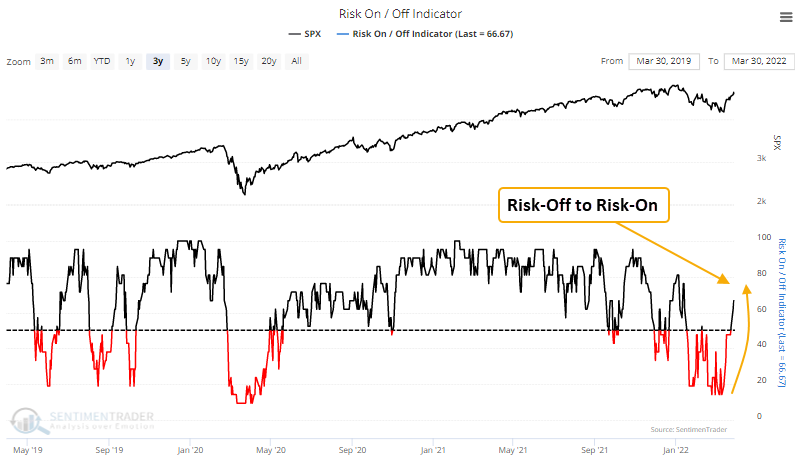
A trading model that identifies a reversal in the SentimenTrader risk-on/off indicator
The trading model applies a range rank to the indicator to identify a bearish to bullish reversal.
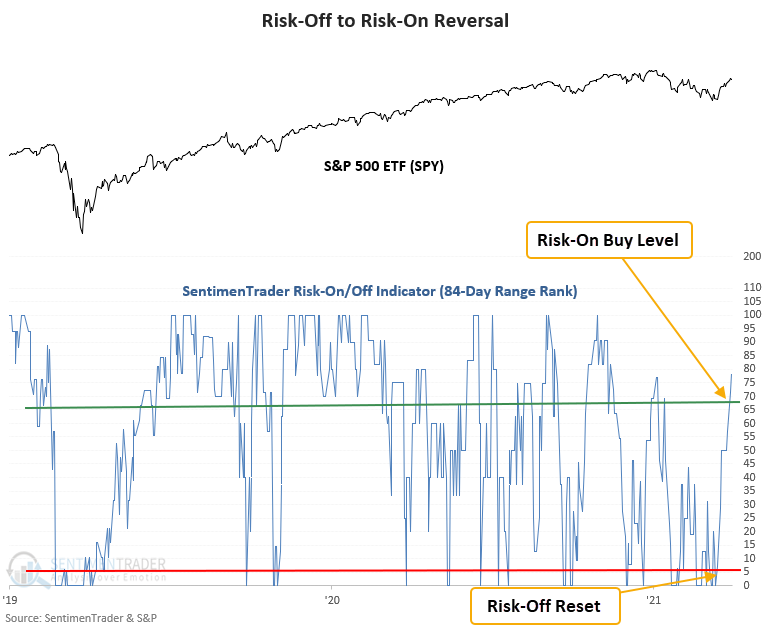
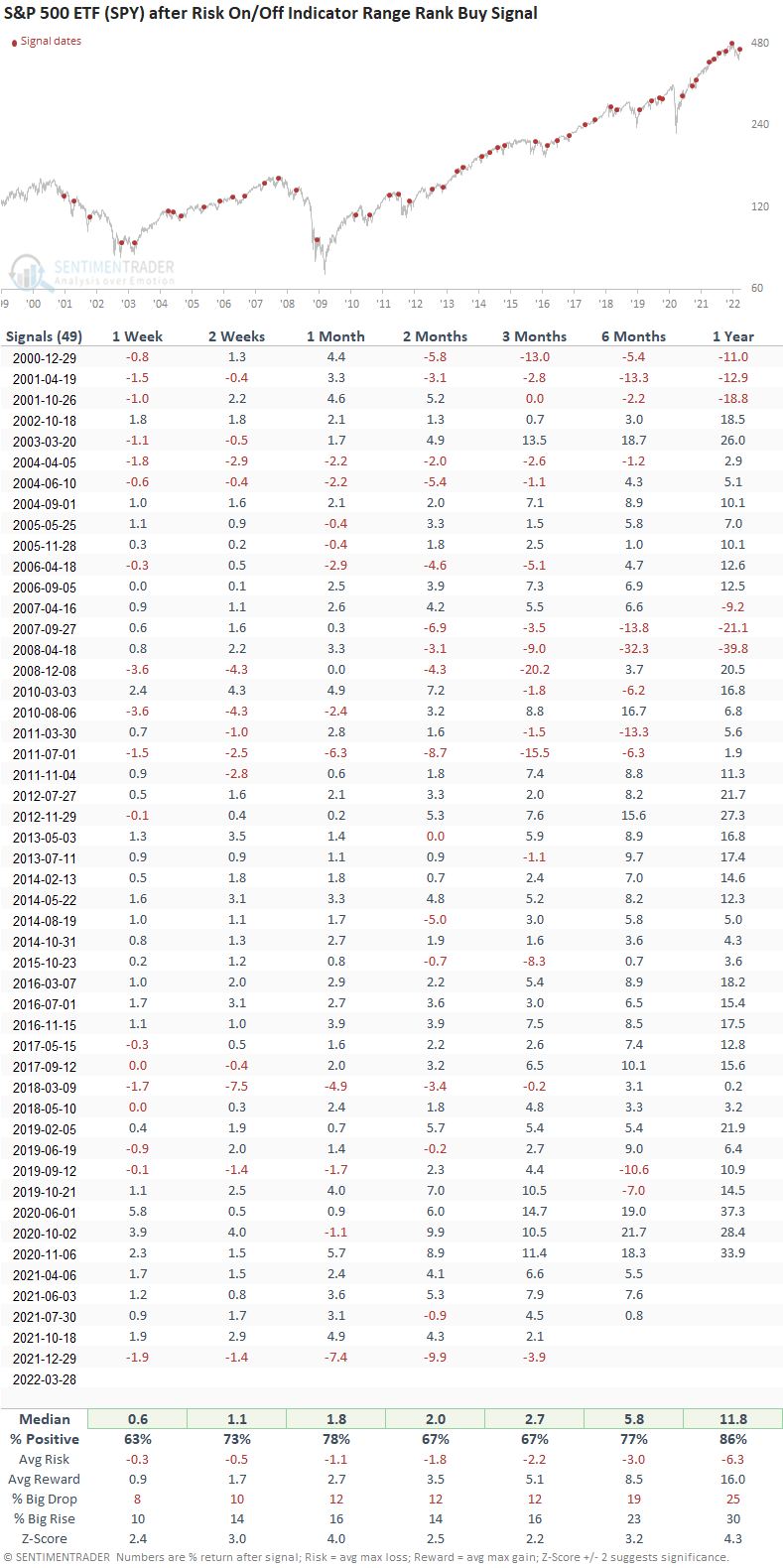
Similar reversals have preceded gains 78% of the time
This signal was triggered 49 other times over the past 22 years. After the others, SPY future returns, win rates, and risk/reward profiles were excellent across all time frames, especially the 4-week window. Since 2006, the 4-week time frame has registered 32 out of 38 winners. However, the previous signal from 12/29/21 recorded the most significant 1-month drawdown in history as Fed policy pivoted to a less friendly stance.
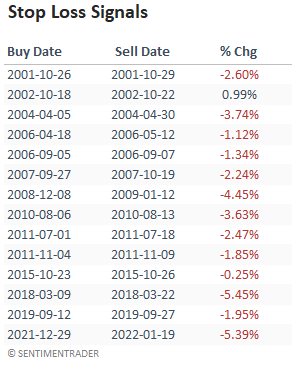
An optimal stop level for the trading signal
Suppose I run an optimization to determine the optimal level to place a stop based on the risk on/off indicator. In that case, the test returns a value of 47%. In instances where the stop loss did not trigger, the signal hit the optimal days-in-trade holding period of 24 sessions. If you were wondering, the model hit the stop loss in 29% of the cases.
What the research tells us...
When the trading model for the risk-on/off indicator reverses from a bearish to bullish condition, stocks are likely to trade higher. Similar setups to what we're seeing now have preceded rising prices for the S&P 500 ETF, with a 4-week win rate of 78%. A testing process showed that one could manage risk by using the risk on/off indicator level of 47% as an ideal stop loss.