
The Russell 2000 is on the cusp of a record drought

Key points:
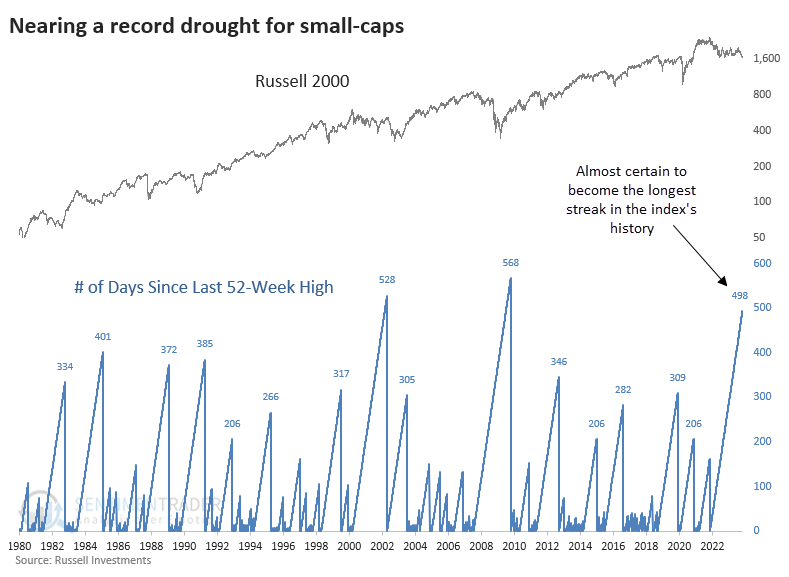
- The Russell 2000 is on the cusp of setting a record number of sessions without a 52-week high
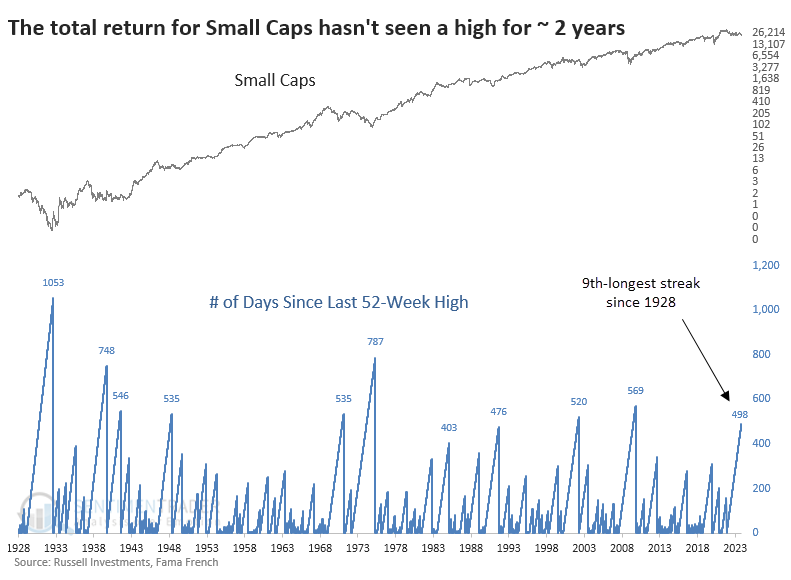
- A longer-term proxy for Small Cap stocks is on its 9th-longest streak without a high since 1928
- Other long stretches without a new high often preceded bounces but not lasting bottoms
Small stocks haven't set a new high for two years
Smaller stocks just can't catch a break. Several times over the summer, we looked at their weak performance relative to larger stocks, and those studies consistently showed that smaller stocks are more likely to continue to underperform. They've been following through on that tendency.
In the coming week, the Russell 2000 will have gone 500 trading days, nearly two full years, since it last closed at a 52-week high. That's the 3rd-longest streak in the index's history, and it's almost sure to set a record - it would have to rally nearly 50% in fewer than 75 days to end the streak.
We use a total return index going back to 1928 for the Small Cap factor, and that one is showing similar behavior. It is now mired in the 9th-longest streak in 95 years, with only three of them going much beyond 500 days.
Two-year streaks without a high often preceded temporary rallies
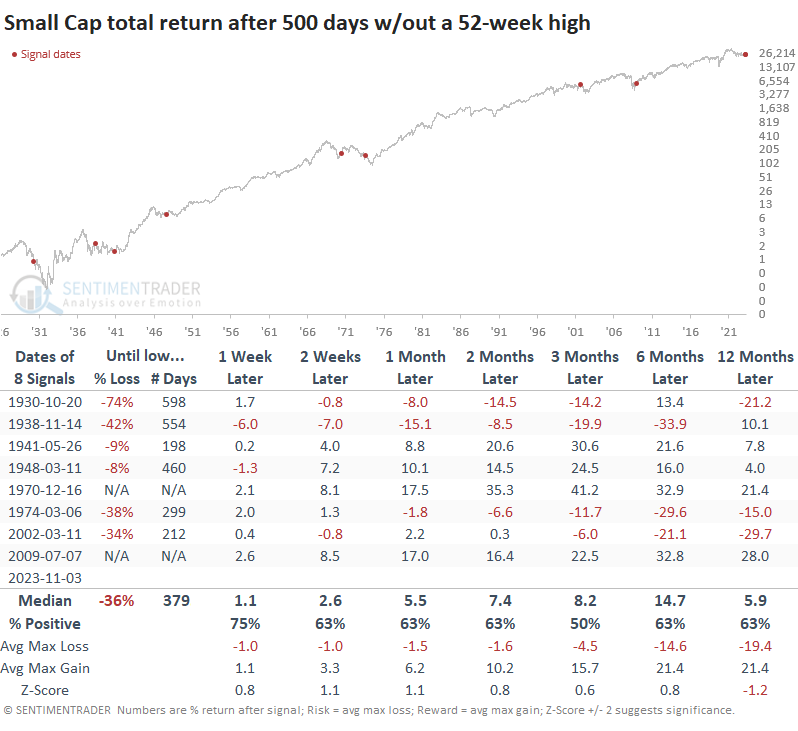
The table below shows the total return in Small Caps after 500 days without setting a 52-week high. The table shows the percentage loss and number of days until the index troughed at its lowest point for at least the next year.
For bulls, this is distressing news. Two times, Small Caps had already bottomed. But on average, the other six signals suffered a further 36% loss, and it took 379 days to reach the bottom - that's a year and a half.
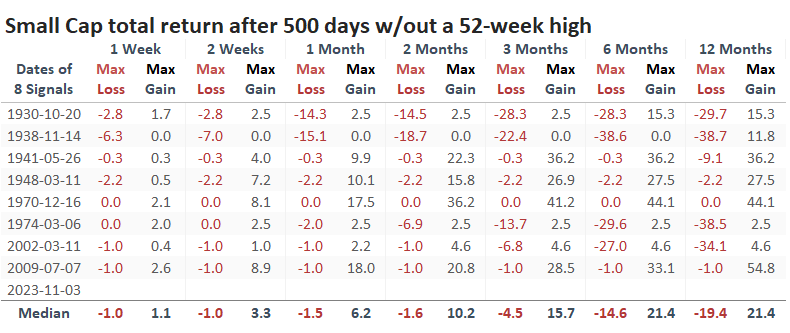
The table of maximum losses and gains across time frames shows that the two signals in the 1930s were brutal, with intense selling in the months ahead. After that, though, none of the signals showed maximum losses of more than -7% up to two months later, and four rallied more than +15% at some point. So, maybe some relief rebound tendencies.
What the research tells us...
This is a tough one. Almost everything we've discussed on the site in recent months has suggested that there wasn't a high likelihood of mean-reversion for beaten-down Small Cap stocks. And the time-to-trough table above suggests that significantly more pain could be in store before a lasting bottom. On a shorter time frame, however, most of those precedents, especially since 1940, have preceded multi-month relief rebounds. That would fit nicely with seasonality, which is strongly positive from now through January.