
The fear gauge triggered a buy signal for stocks

Key points:
- A swing trading system based on the CBOE Volatility Index (VIX) triggered a new buy signal
- Comparable reversals in volatility produced excellent returns and consistency for the S&P 500
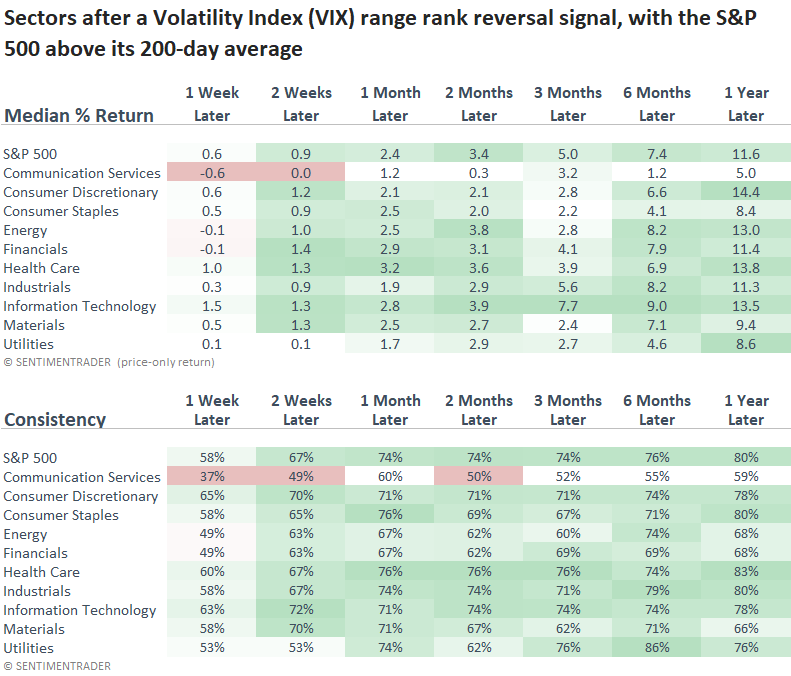
- Cyclical-oriented sectors tended to outperform the world's most benchmarked index
Expected volatility reversed to the downside, suggesting fear is subsiding
The CBOE calculates a volatility index for the S&P 500, commonly known as the VIX or fear gauge. It measures market expectations of near-term volatility (1 month) conveyed by index option prices. The VIX rises when investors are uncertain or fearful about a market's direction. Conversely, when apprehension subsides, volatility reverts lower.
Following a significant surge in the VIX, a swing trading system triggered a new alert when the volatility index's 84-day range rank reversed lower after rising to the top end of its range.
The previous alert occurred following the correction in April, leading to a 7.5% gain in the S&P 500 over the subsequent two months.
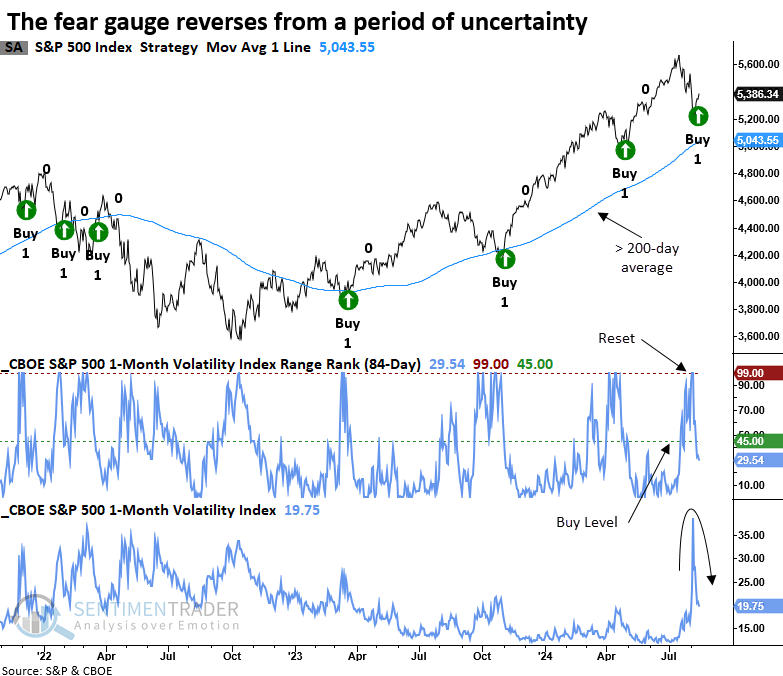
Similar reversals in expected volatility preceded a bullish outlook for stocks
Whenever the S&P 500 Volatility Index's 84-day range rank cycled from above 99% to less than 45%, with the S&P 500 above its 200-day average and exhibiting positive price momentum, the world's most benchmarked index displayed excellent returns and consistency over medium and long-term horizons.
Additionally, the signals showed significance relative to random returns from one to twelve months later.
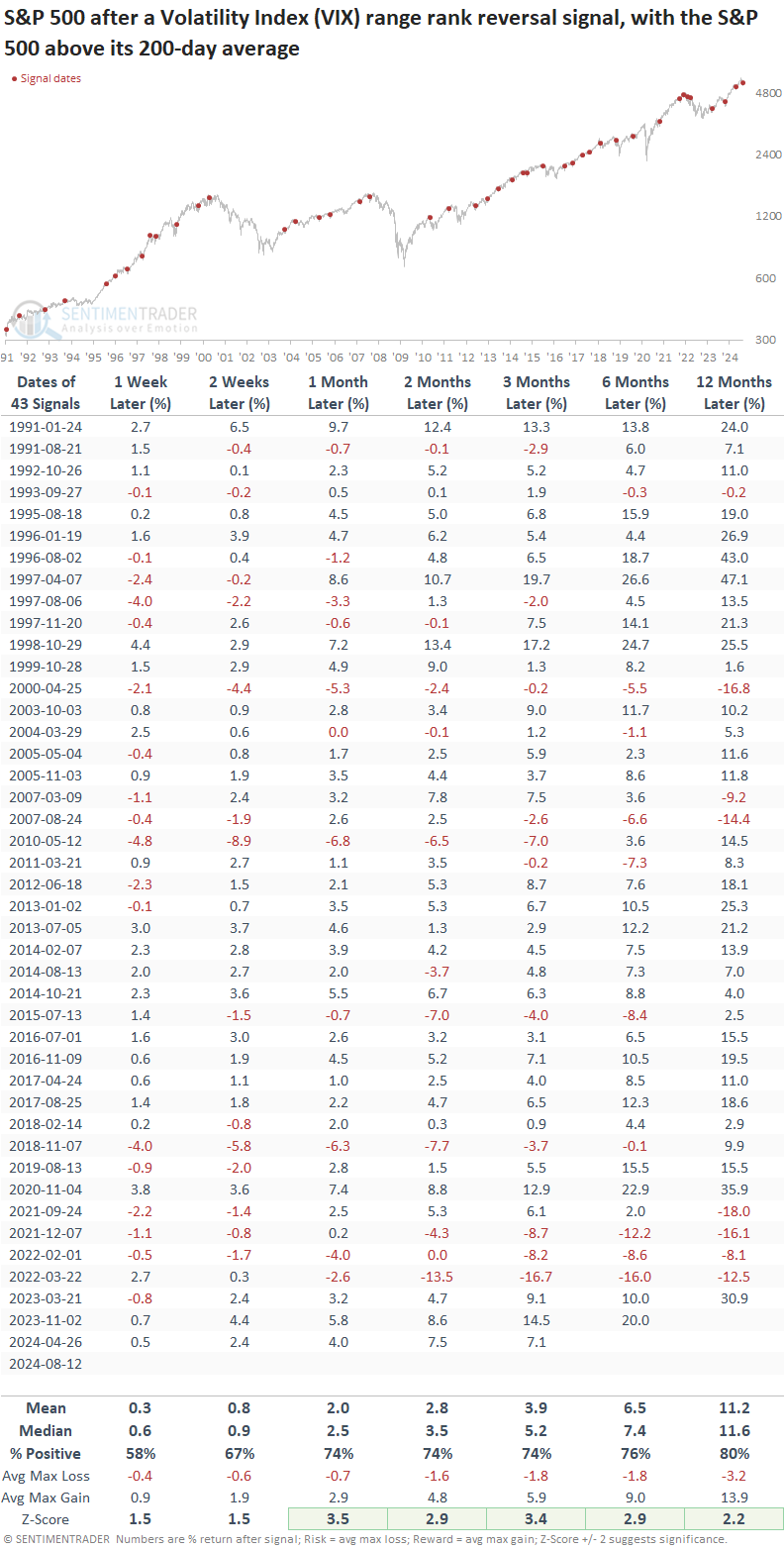
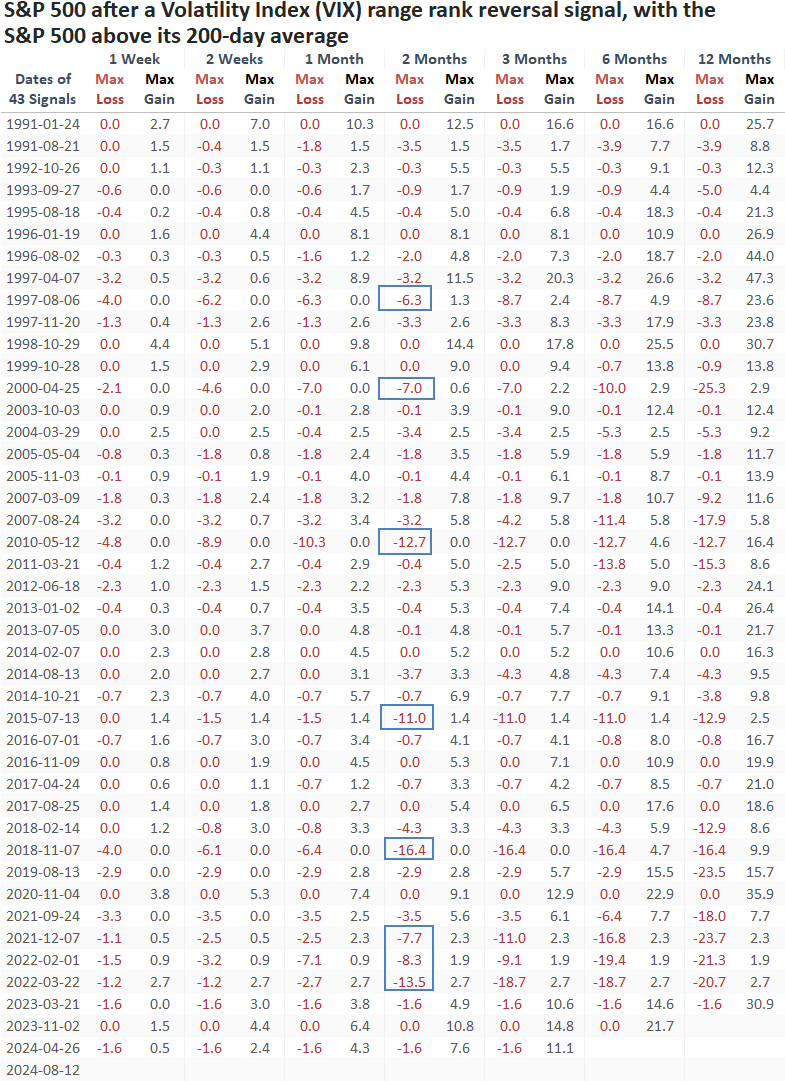
Over the next two months, only eight precedents saw a maximum loss exceeding -5%. In many cases, these signals coincided with the onset of bear markets, which are notoriously tricky for swing trading systems, underscoring the need for proper risk management.
Most cyclical-oriented sectors outperformed the S&P 500 and defensive groups over the subsequent year.
Update to a previous signal
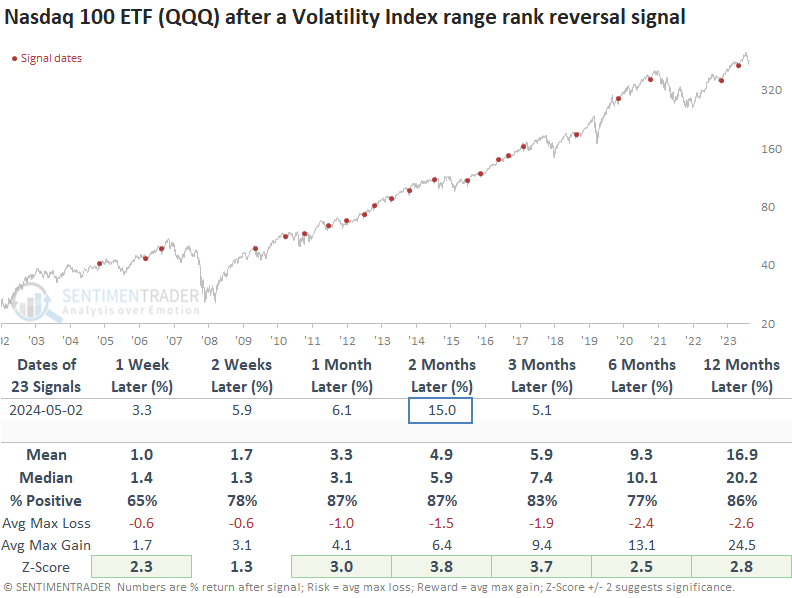
In May, I highlighted a Volatility Index range rank reversal signal for the Nasdaq 100, which delivered a 15% gain over two months. Although a new signal has failed to trigger following the recent surge in volatility, the pre-conditions for an alert are active and could fire any day.
What the research tells us...
The fear gauge exploded higher as traders hit the panic button following some soft economic data and the unwind of the yen carry trade. As is generally the case, once cooler heads prevail, expected volatility reverses to the downside as the need to hedge via options diminishes. A swing trading system that captures these sentiment shifts triggered a new buy signal. Comparable reversals in volatility, with the S&P 500 in a long-term uptrend, produced outstanding returns and consistency for the world's most benchmarked index over medium and long-term horizons.