
The divergence between energy stocks and crude oil suggests near-term caution

Key points:
- The energy sector is near the upper end of its recent range, with crude oil at the bottom of its range
- After similar divergences, energy stocks weakened in the near term
- Crude oil could see further downside over the next few weeks
Energy stocks are ignoring the significant deterioration in the price of crude oil
Crude oil closed at a new 63-day low on Friday and is now over 38% below its 252-day high. At the same time, the S&P 500 energy sector closed less than 3% below its respective 252-day high.
With limited historical cases of the energy sector being down less than 3%, as crude oil is down more than 38% from a high, I'm going to use a range rank methodology to identify divergences.
I will rank the current close relative to all other closing prices over the last 63 days for the S&P 500 energy sector and crude oil. On Friday, the energy sector closed in the 90th percentile, whereas crude oil fell to the lowest possible level, 0%.
A divergence between the energy sector and crude oil of this magnitude is rare, with the last instance occurring over a decade ago.

I screened out repeats by requiring the energy sector rank to fall below 45% before a new signal could occur again.
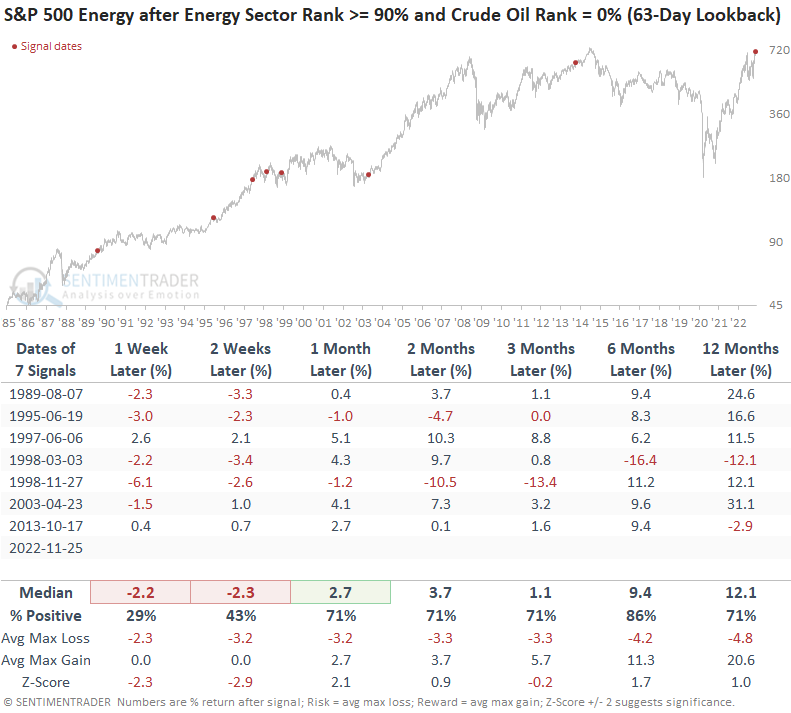
Similar divergences preceded negative returns for energy stocks
When the energy sector ignores the deterioration in crude oil prices, energy stocks tend to weaken in the near term. The catch-down in the energy sector appears to be nothing more than a consolidation within an uptrend, with one notable exception. The 1997-98 Asian contagion period led to a broad trading range. Could the Chinese government's Covid lockdown policy create a similar scenario?
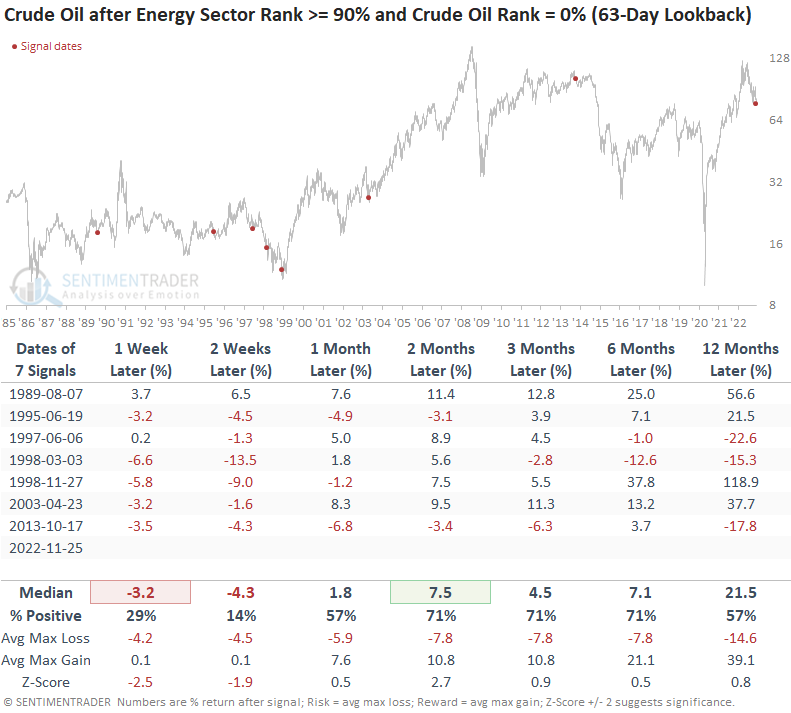
Similar divergences preceded negative returns for crude oil
The weak price trend backdrop for crude oil tends to accelerate further to the downside in the near term, especially two weeks later. As with the energy sector, oil tends to rebound with solid results two months later. Interestingly, the commodity was positive at the two-month mark in all three cases during the Asian contagion.
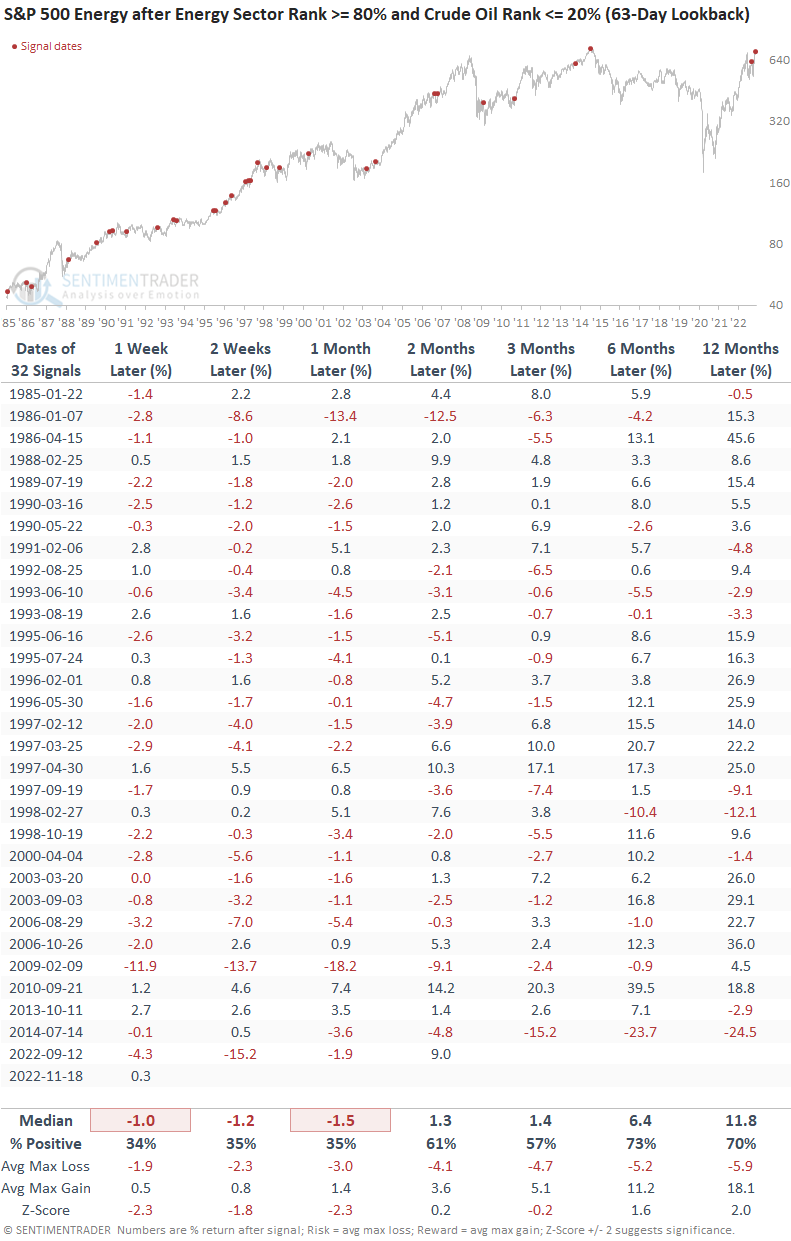
A larger sample size provides a similar message for energy stocks
Let's expand the sample size by adjusting the parameters to capture signals with a range rank of >= 80% and <= 20% over the last 63 days. The relaxed parameters provide a similar message; energy stocks could weaken over the next month.
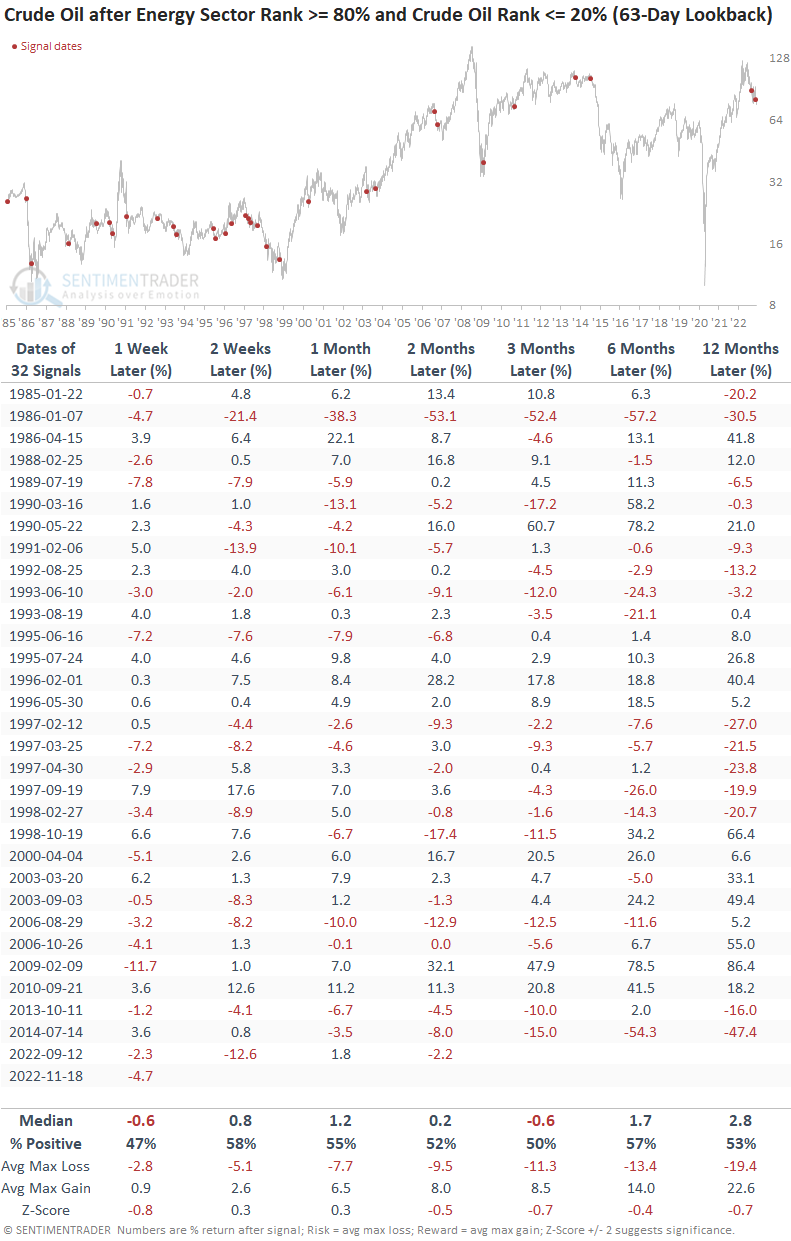
A larger sample size provides a somewhat different outlook for crude oil
When I apply the expanded sample size signal dates to crude oil, the near-term outlook for the commodity is stronger than the original study. However, the medium to long-term picture appears less favorable, with somewhat muted returns.
What the research tells us...
Energy stocks, which tend to outperform in the later stages of an economic expansion and during the initial stages of a contraction, have diverged from crude oil. The disconnect between the energy sector and oil is one of the most significant in over a decade. After similar signals, energy stocks and crude oil prices tend to weaken over the next few weeks. A larger sample size provides a similar negative outlook for the energy sector, with a slightly less pessimistic message for crude oil in the near term.