
The Combined Credit Spread Model Falls to Unfavorable - Part II

Key points:
- Credit spreads measure the difference in yield between a higher quality issue and a lower quality issue
- Rising credit spreads signify risk-off behavior among very large and sophisticated investors
- The Combined Credit Spreads Model recently fell into unfavorable status - suggesting limited upside for stocks while this status remains
The Combined Credit Spread Model
In Part I, we detailed the components that comprise our Combined Credit Spreads Model and why they matter. The model recently fell into unfavorable territory. In Part II, we will take a closer look at S&P 500 performance during previous instances.
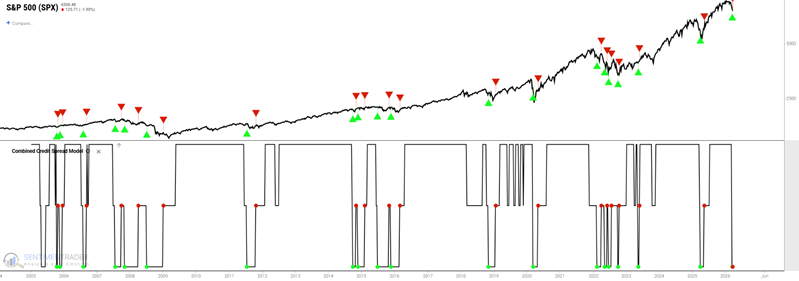
In the chart below, a green arrow marks the beginning of an unfavorable period. This happens when the Model drops to 0. The subsequent red arrow indicates the end of a given unfavorable period. The most recent signal occurred the week ending March 13th.
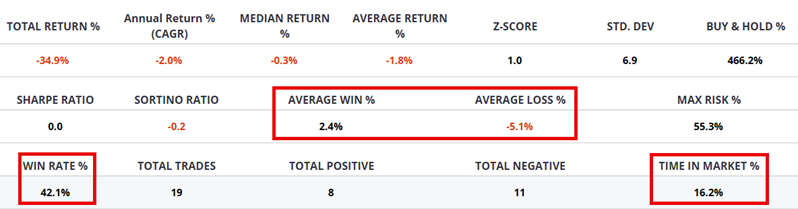
The table below summarizes the S&P 500's performance during unfavorable periods. Key things to note:
- The model has been unfavorable 16.2% of the time (the rest of the time it is favorable for stocks)
- The Win Rate in 42% (this alerts us to the fact that roughly 2 out of 5 unfavorable periods will ultimately end with a net gain for the S&P 500)
- Average Win is 2.4%, and Average Loss is -5.1% (this tells us that even though the S&P may ultimately show a gain for a given unfavorable period, upside potential is typically very limited during these periods)
This lack of upside potential is confirmed in the table below. The green box highlights the maximum open profit experienced during each unfavorable period. Note that the largest open gain during any unfavorable period was +9.2%, and only three periods showed an open gain of +5.0% or more. This suggests seriously adjusting one's expectation for gains while the model is unfavorable.
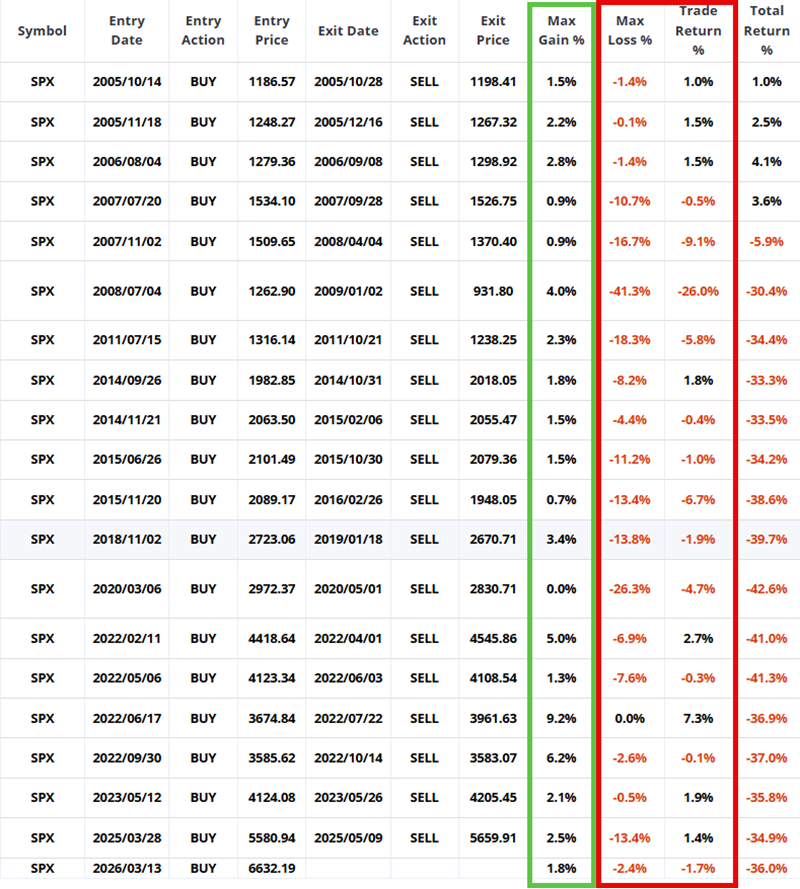
The values in the tables above suggest an unfavorable environment for the S&P 500. This historical tendency is confirmed in the chart below, which displays the cumulative percentage performance for the S&P 500 during unfavorable periods.
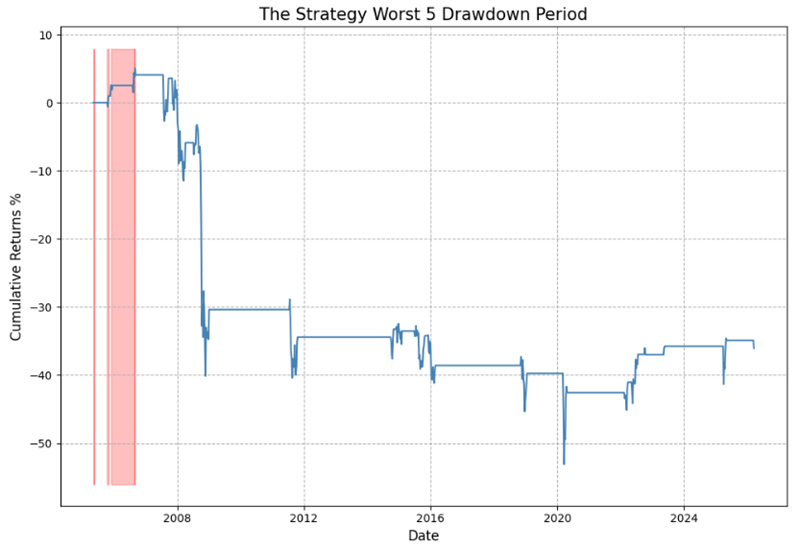
The downside bias is obvious, though it is fair to point out that the bulk of the net loss occurred during the 2008 bear market. Nevertheless, it is also useful to examine the equity curve's behavior during each unfavorable period. The bulk of all unfavorable periods experienced at least some significant downside volatility, even those that ultimately ended in a net gain. The bottom line: Investors typically experience some degree of angst and volatility when the model is unfavorable.
The table below summarizes S&P performance over various timeframes. Once again, while results are by no means disastrous, they do highlight the general lack of upside potential that has accompanied previous unfavorable model periods.
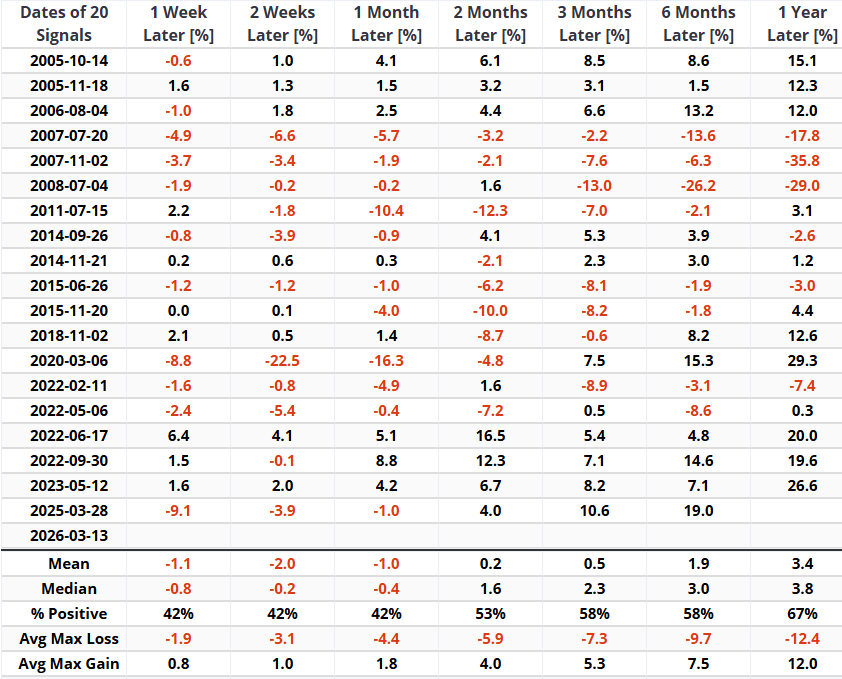
The last table summarizes sector performance during unfavorable periods. Interestingly, the historically worst-performing - Energy - is the hottest sector at the moment.
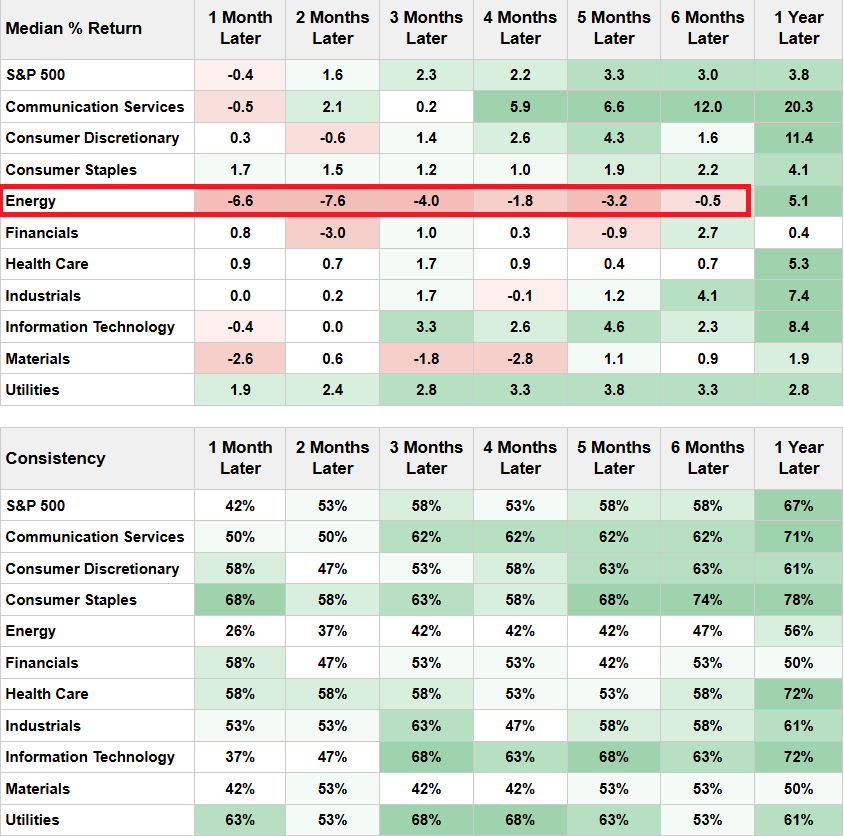
Does this mean that the current rally in Energy is doomed to reverse? Not necessarily. It may suggest that now is not the time to make a meaningful commitment to the energy sector.
What the research tells us…
The results above show that stocks tend to underperform during periods when the Combined Credit Spreads Model is unfavorable. This does not mean that the market is doomed to decline between now and the next favorable model period, nor that an advance is not possible. But investing is a game of probabilities. While we would not rely solely on this model to fully guide any investment strategy, investors may want to adjust their expectations for meaningful upside until the model reverses course.