
The Breakout of VIX

Key points:
- The VIX crossed 30.
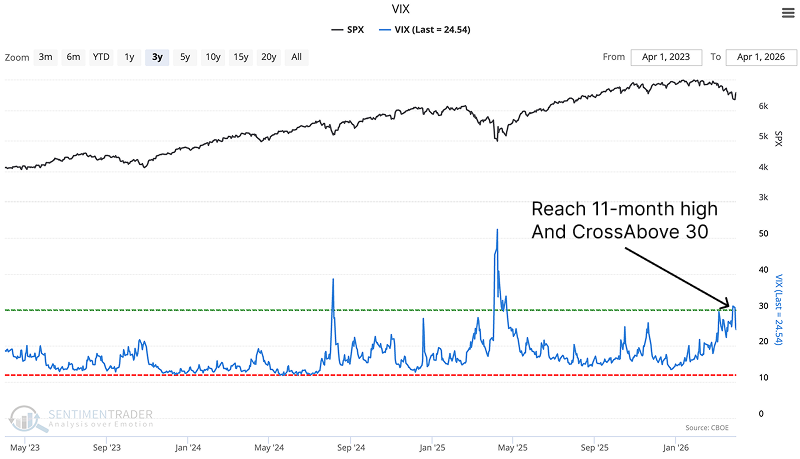
- Increased to the highest level in the previous 11 months
- The VIX had not exceeded 30 for 232 consecutive trading days
The baseline of panic
Over the course of a typical stock market correction, volatility, sentiment, and price-based indicators generally follow a repeatable pattern. Volatility surges, sentiment indicators reflect pessimism and price-based measures become oversold.
One measure of expected volatility, the CBOE Volatility Index (VIX), increased to the highest level in the previous 11 months.
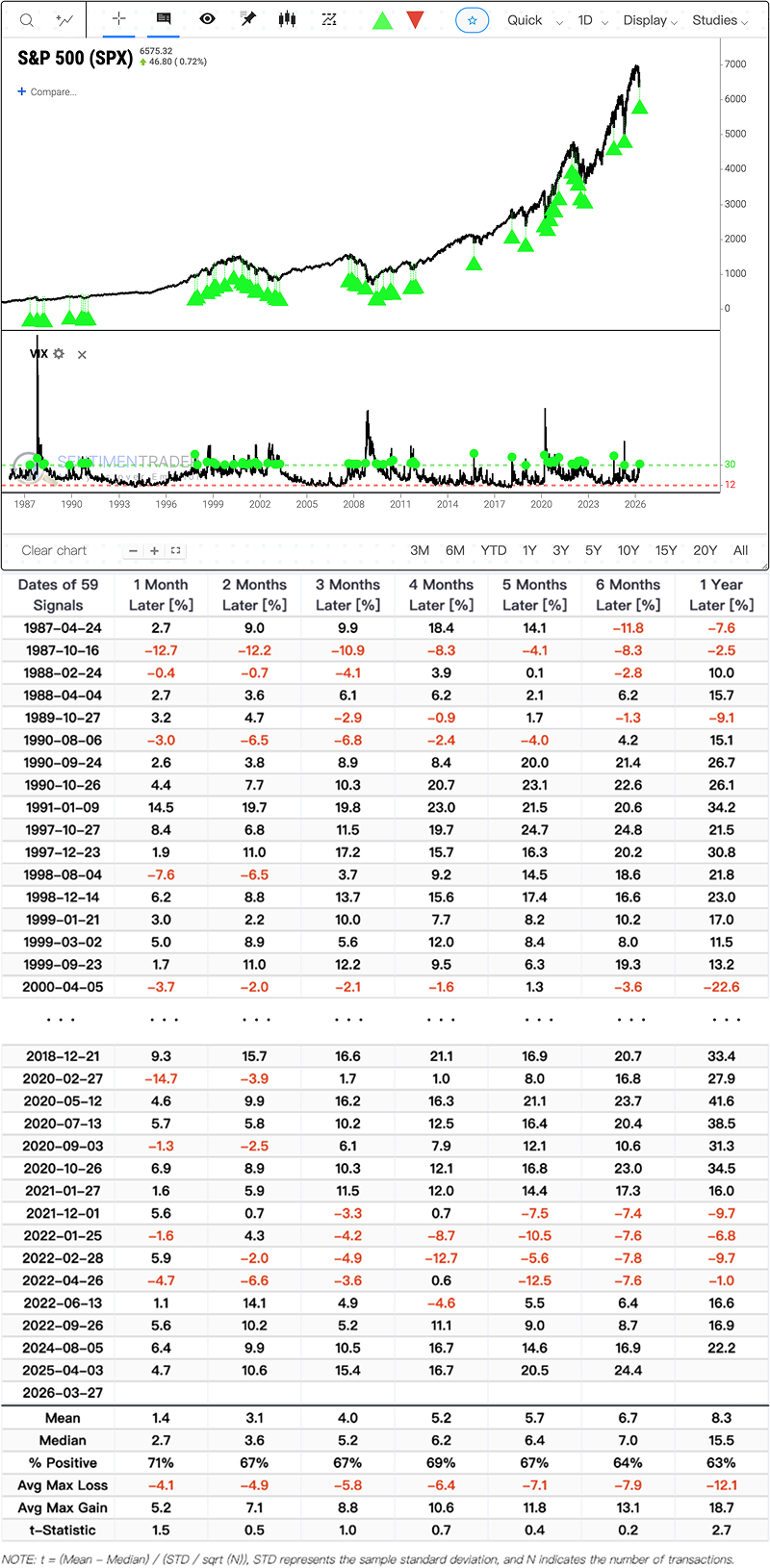
A VIX move above 30 forces systematic hedging programs and dealer gamma desks to react. Historically, such absolute panic, if taken in isolation, has favored buyers.
Looking out 1 month, the S&P 500 was higher 71% of the time.Click here.
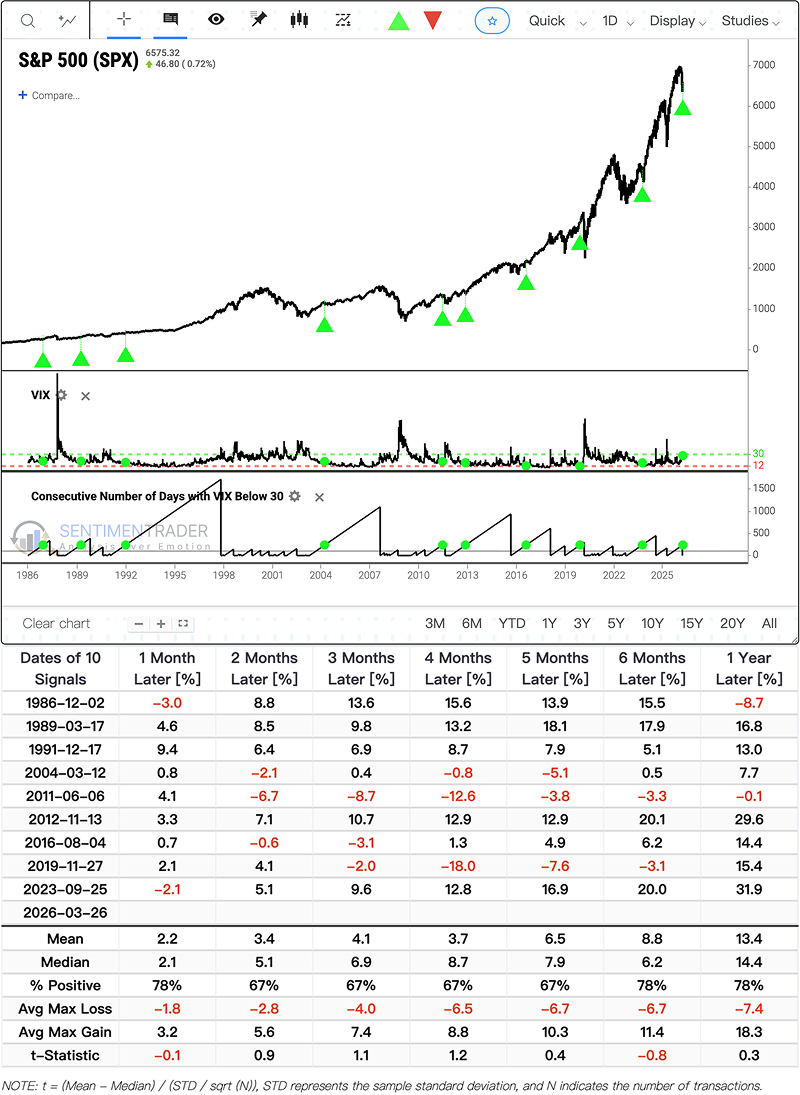
Consistently below 30
At the same time, the index just ended a 232-day streak below the 30 level. Data shows that the one-month win rate actually is 78%.Click here.
Cycle of fear
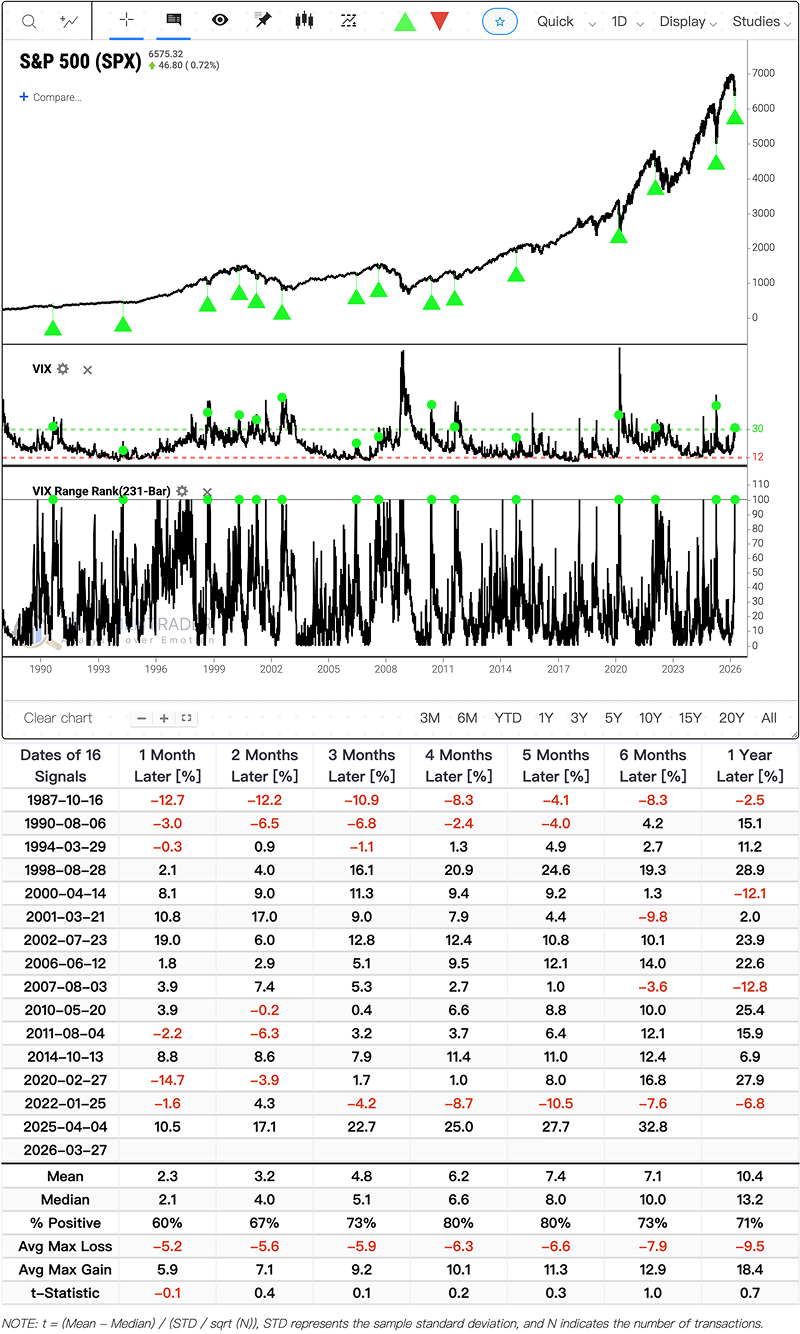
However, these headline figures obscure a more nuanced structural risk. Filtering for a VIX that cycles from an 11-month low to an 11-month high while the S&P 500 trades below its 200-day moving average, this setup doesn't measure the speed of the breakdown. It tracks the transition from near-complacency to outright panic under a long-term downtrend.
In 16 similar historical instances, while the win rate declined in the short term, the risk-reward profile was roughly even. However, the following 4-5 months showed a higher win rate.Click here.
What the research tells us...
Standard VIX spikes above 30 historically establish a solid baseline for long-term equity buyers, but the structure here introduces a structural caveat. Ending an extended complacency streak, completing a full cycle from an 11-month low to an 11-month high, and doing so while the broader market is below its 200-day moving average worsens the immediate risk-reward ratio as short-volatility positioning unwinds. The evidence suggests waiting for the initial aftershocks to settle, rather than chasing the first bounce, especially provided the volatility term structure has yet to normalize.