
The Big Money is getting more bullish

Key points:
- Large money managers in the latest Barron's survey showed an increase in optimism from the spring
- This uptick in optimism comes from a very low base
- Similar behavior showed gains in the S&P 500 going forward in every case
Big money managers are becoming more optimistic
We like to update the semi-annual poll of large money managers conducted by Barron's. It gives an interesting glimpse into the thought processes of some of the largest wealth managers in the country.
The publication notes that:
This fall, there is no predominant mood among the professional money managers surveyed by Barron's. Some 38% of Big Money respondents say they are bullish about the prospects for equities in the next 12 months. That compares with 38% in the neutral camp, and 24% who call themselves bears.
We have historically used a bullish percentage for this survey, which adds the sentiment among those who are bullish or very bullish and subtracts those who are bearish or very bearish. This figure has ticked up to 14% from only 8% during the last survey in April, which was the 2nd-lowest optimism in 24 years.
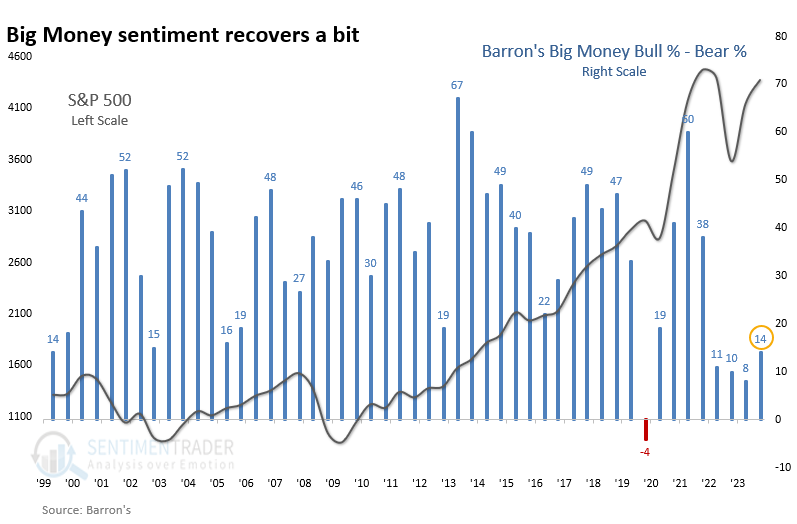
When sentiment among these large money managers recovers from a very low level, it has been a good sign for stocks. The theory is that since these managers control such massive amounts of money and since they presumably have some dry powder after a period of extreme pessimism, a recovery means they're more willing to submit buy orders going forward.
Recovering sentiment among money managers has preceded gains
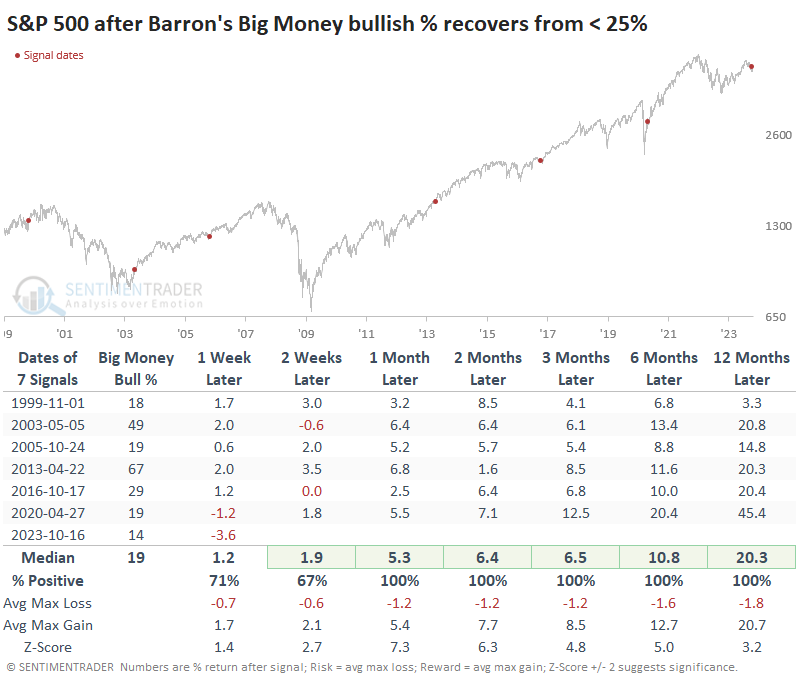
Whatever the theory, it has been a good sign in practice. Whenever their bullish percentage increases from the prior survey, and that prior survey was below 25%, the S&P 500 never showed a negative return up to a year later.
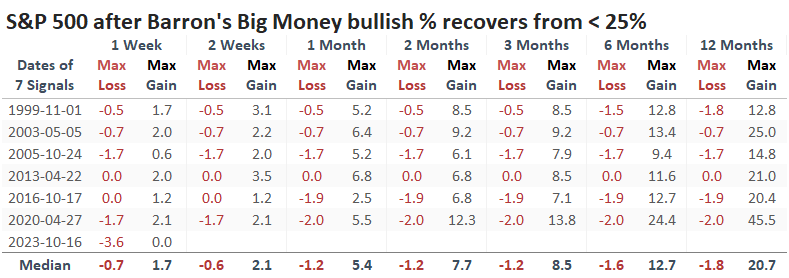
The table of maximum gains and losses across time frames shows just how limited the risk tended to be. This is kind of crazy, but not a single signal saw the S&P decline more than -2% at any point within the next year (from the survey date). The current one has already exceeded that, which is a bit of a concern.
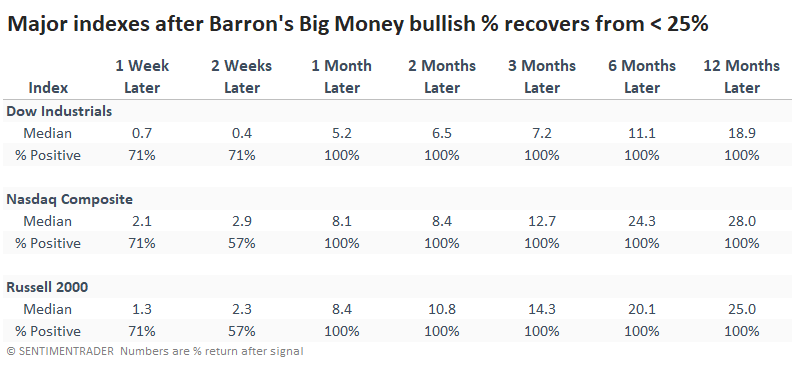
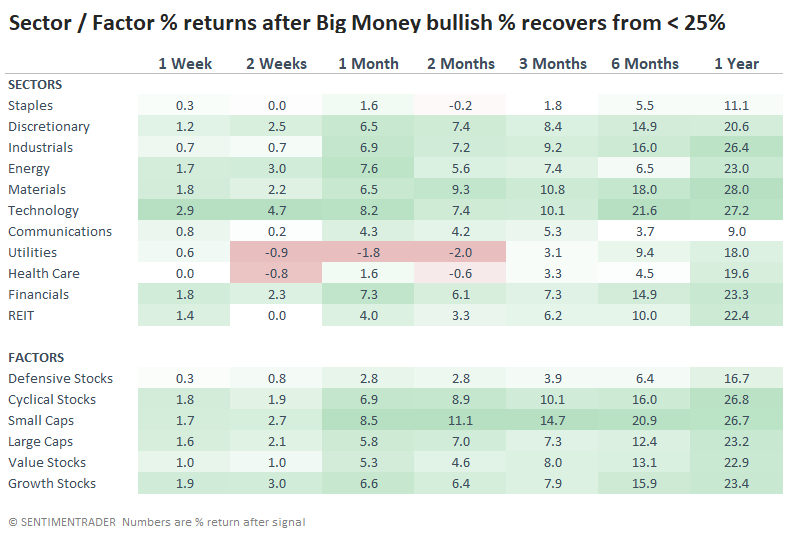
Because of the consistent tendency to rise, it's not a shocker that the higher-beta indexes tended to show higher returns.
Less defensive sectors and factors also showed higher returns, in general.
What the research tells us...
We've had a lukewarm relationship with the Barron's survey over the decades. It's an interesting read, and certainly, many of the managers are among the most astute fiduciaries in the market. Like all populations, however, they tend to gravitate toward group-think in aggregate. While it hasn't been as consistent a contrary indicator as many surveys, it does tend to tilt that way at extremes.
It's rare for large money managers to be net negative, as most of them are long-only, and it goes against their best interests (and historical probabilities). Recent years have seen very subdued optimism, unlike anything else in the survey's history. The current uptick in optimism isn't that substantial, but it's something, and it's coming off a very low base. History suggests that's a good sign for bulls.