
S&P 500 winning streak is another bear killer

Key points:
- The S&P 500's winning streak above its 10-day average triggered a buy signal
- After similar streaks, the S&P rallied 78% of the time over the next 12 months
- After a 20% decline, the S&P 500 rallied 94% of the time over the next 12 months
Persistent win streaks above a moving average are indicative of uptrends, not downtrends
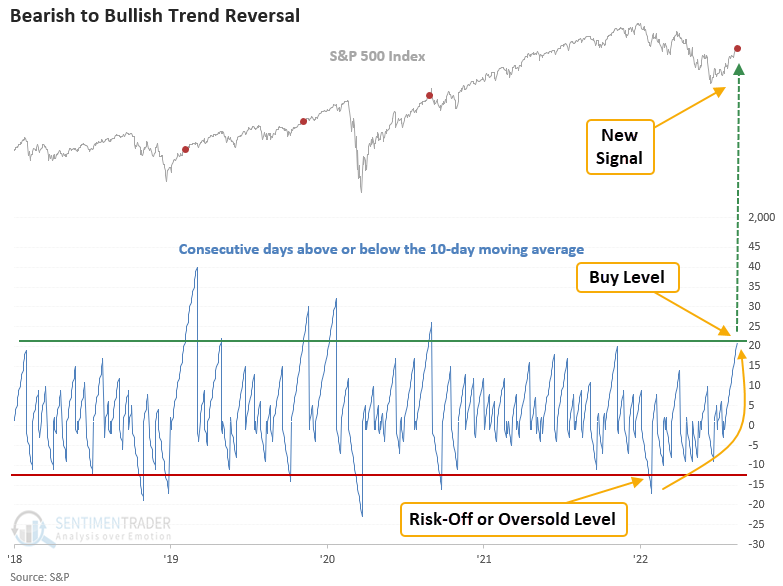
A new signal from a voting member in the TCTM Composite Confirmation Model issued an alert at the close of trading on Tuesday. The component is called the moving average bearish to bullish reversal streak.
The win streak model is simple. It first identifies a period whereby the S&P 500 closes below its 10-day average for a minimum of 12 consecutive sessions. i.e., an oversold condition. Once that condition is achieved, the model will trigger a buy signal when the index sustains itself above the 10-day average for 21 successive sessions.
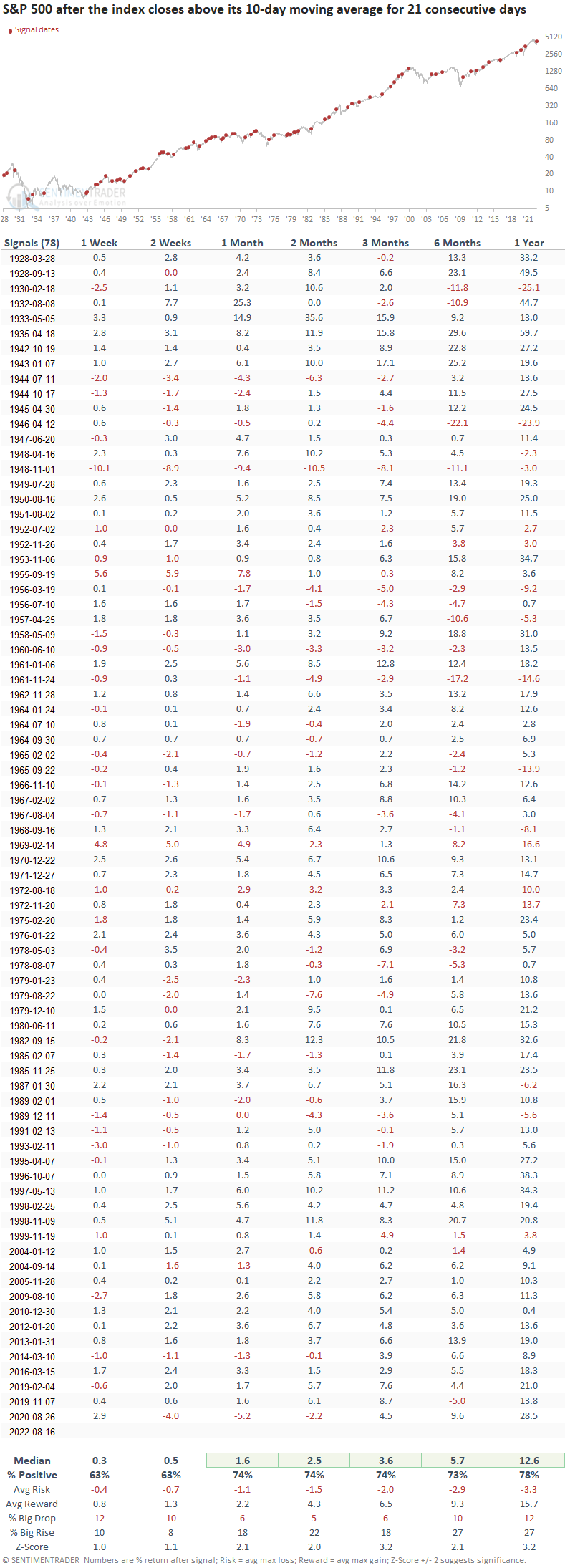
Similar signals preceded gains 78% of the time a year later
The win streak model generated a signal 78 other times over the past 95 years. After the others, S&P 500 future returns, win rates, and z-scores were excellent across medium and long-term time frames. Consistency looks impressive, with only one signal showing a negative return across all time frames, which occurred in 1948.
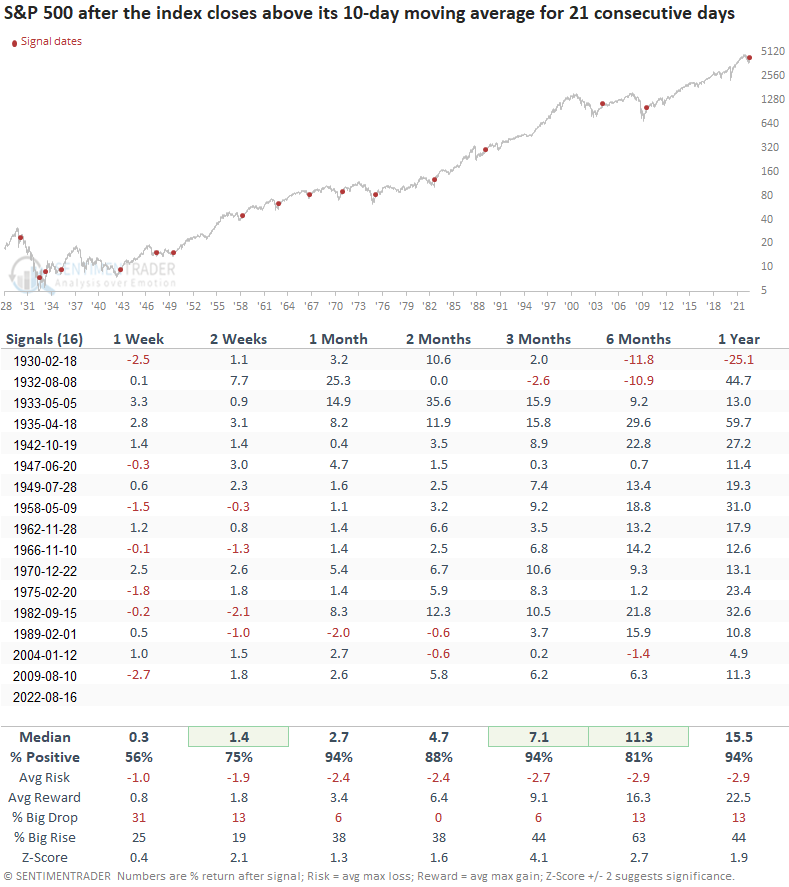
First signal after a 20% decline from a high
If I isolate instances after the S&P 500 closed down 20% or more, the model identified 16 other signals in the last 93 years. Once again, consistency looks excellent, with several windows showing a win rate of 94%. Besides the 1930 signal, drawdowns were minimal across all time frames.
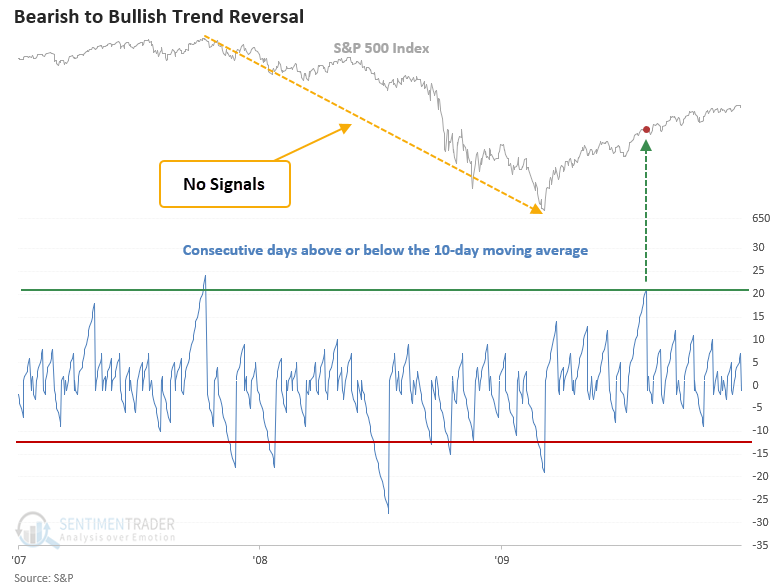
Win streaks rarely occur in bear markets
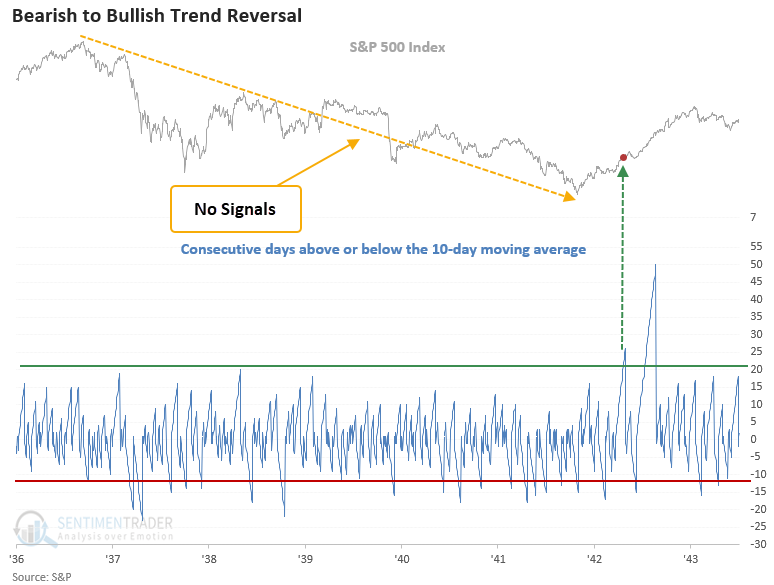
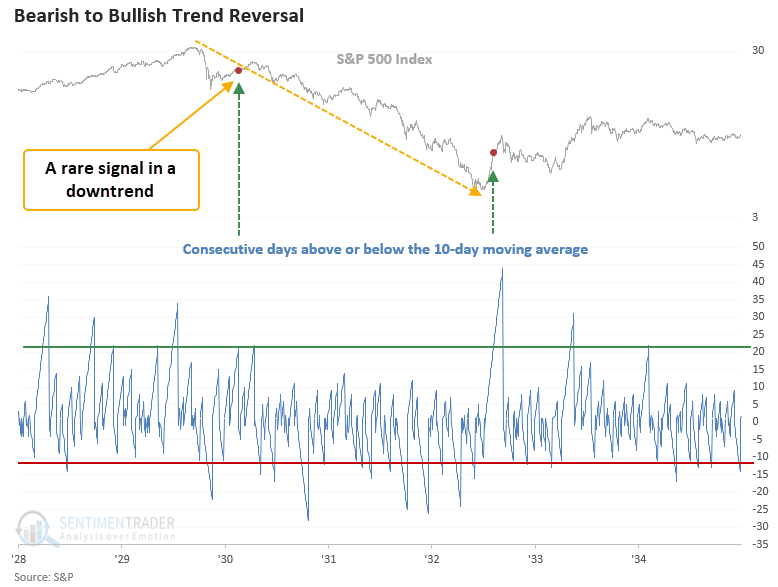
Suppose we review some historical bear market charts. In that case, we see that signals rarely occur in downtrends. The win streak model is a component in the composite confirmation model because it's less likely to identify a trend reversal before other more timely indicators like breadth thrusts.
2007-08 chart example
2000-02 chart example
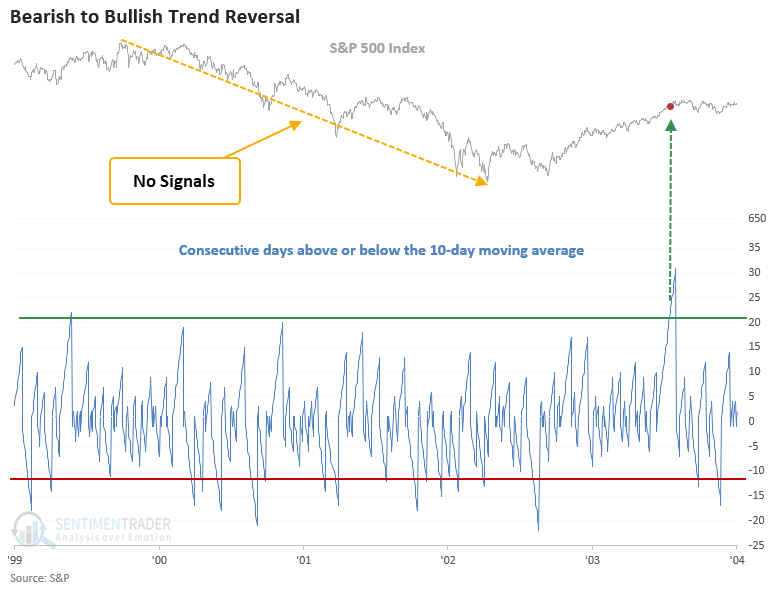
1980-82 chart example
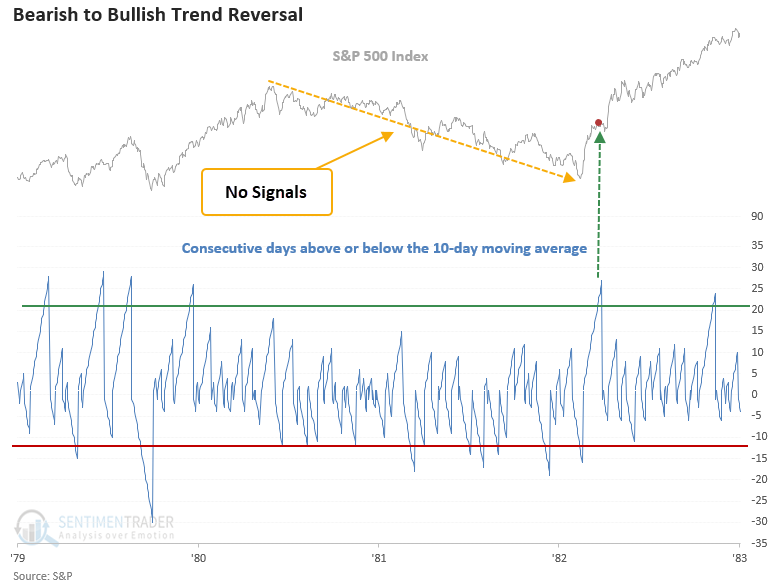
1973-74 chart example
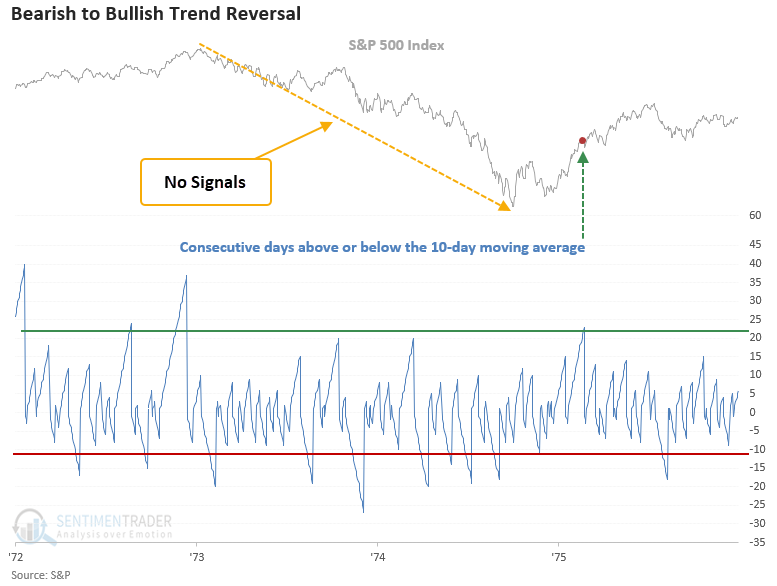
1946-49 chart example
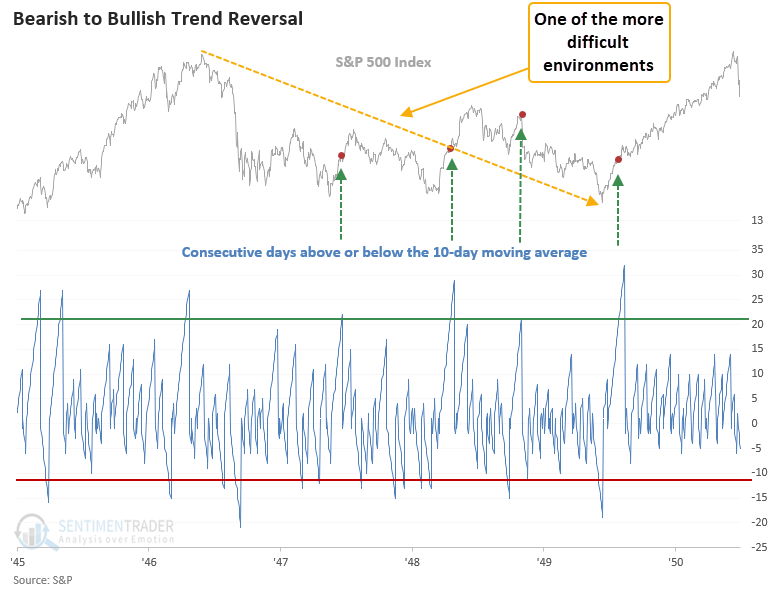
1938-42 chart example
1929-32 chart example
What the research tells us...
When the stock market is in a downtrend or in the early stages of forming a bottom, price action is volatile, and indices rarely sustain themselves above a short-term moving average for an extended period. The win streak model seeks to identify a transition from a bearish risk-off period to a bullish risk-on uptrend. Since the June low, bullish market signals have predominantly come from breadth-based indicators. With the new win streak signal, we now have confirmation at the index level from a price-based measure, which is a good thing.