
Some interesting reversals with bullish implications for stocks

Key points:
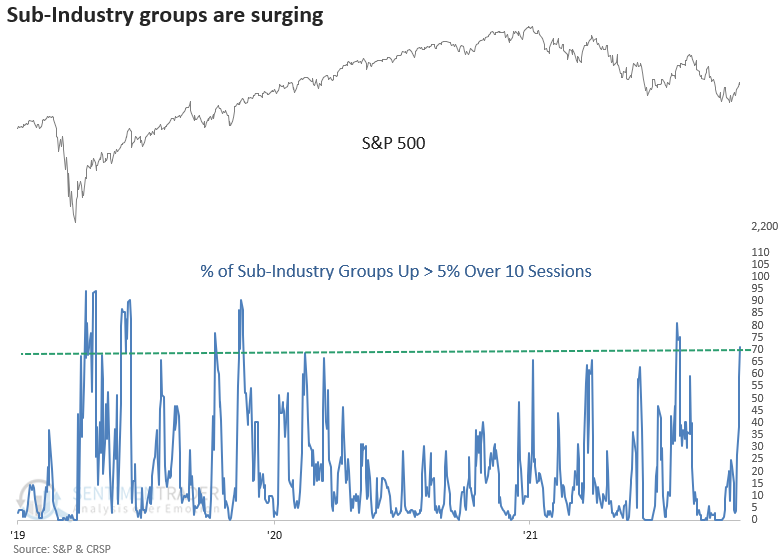
- The % of Sub-Industry groups up > 5% over 10 sessions cycled from < 3% to > 70%
- The surge in participation occurred in only five sessions
- After similar reversals, the S&P 500 showed excellent results 6 to 12 months later
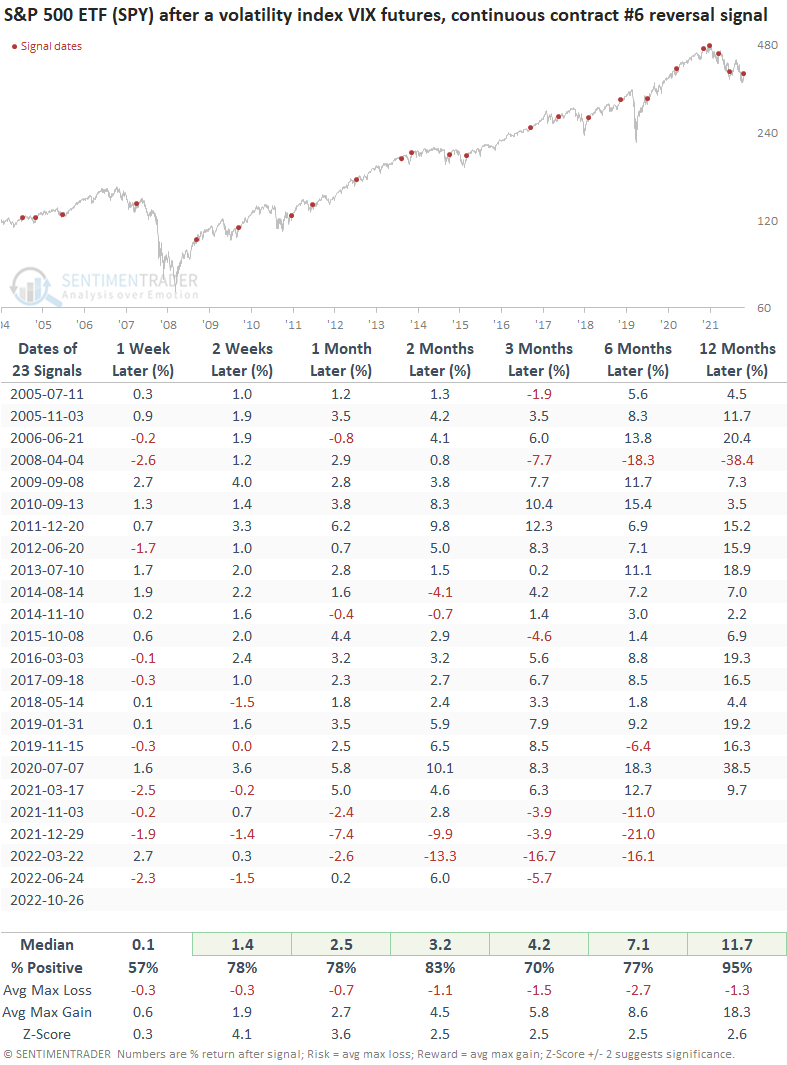
- Volatility has eased relative to its recent range, triggering a buy signal for stocks
A reversal that suggests the counter-trend rally can continue
In a recent note, I shared a study that showed the market had become oversold again.
Stocks, excluding some mega-cap technology/communication sector members, have responded to the oversold condition by swiftly reversing higher.
On Wednesday, the percentage of Sub-Industry groups up > 5% over 10 sessions cycled from < 3% to > 70%. The reversal occurred in only five sessions.
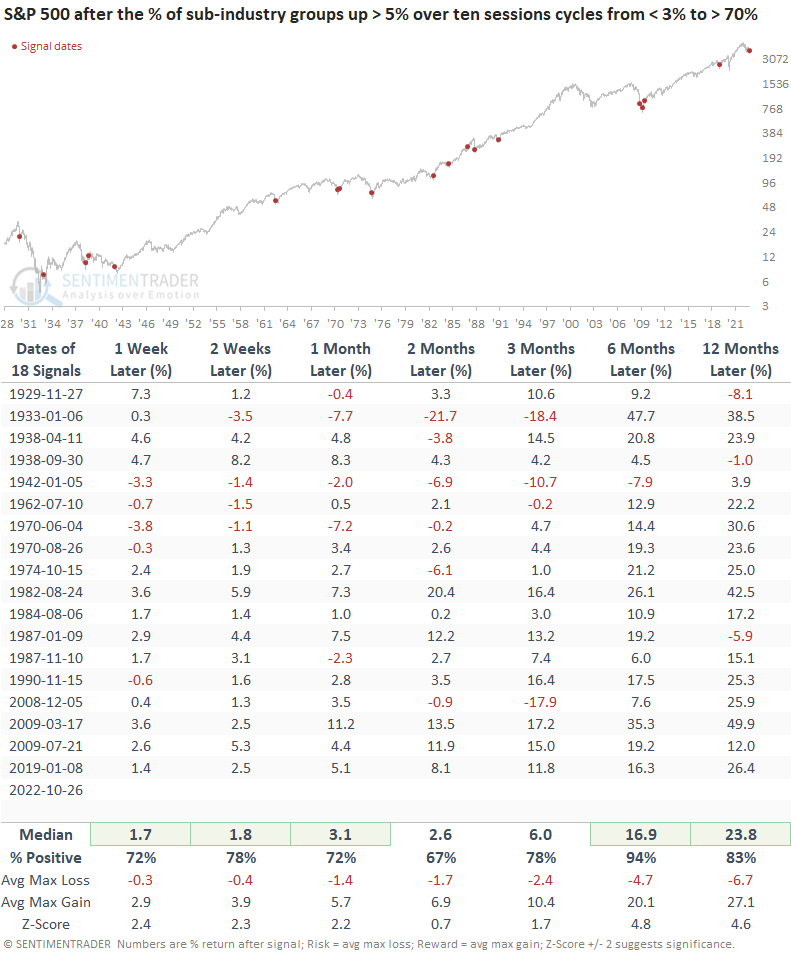
Similar Sub-Industry group reversals preceded positive returns
When Sub-Industry groups thrust higher in a brief period, the momentum typically leads to more upside momentum. Returns, win rates and z-scores are excellent across all time frames, especially the 6 to 12-month windows. The signal marked several significant bottoms since 1962, with 2008 being an exception.
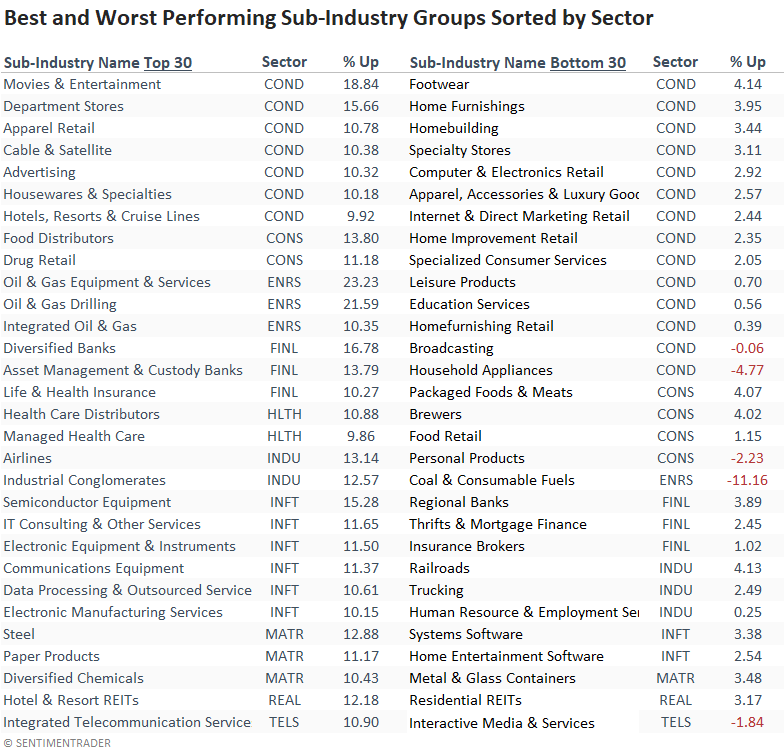
Relative winners and losers over the signal period
Suppose I sort the sub-industries by the top and bottom 30 performing groups over the last ten sessions. In that case, the energy sector has the two best-performing sub-industries. Not surprisingly, several consumer discretionary groups are lagging, especially ones in the housing ecosystem.
Volatility is easing, which is typically a bullish development
The reversal in stocks from the October low has driven volatility lower, which is typically the case after a drawdown phase. However, the easing in volatility is somewhat interesting, given that two significant events are just around the corner in early November; The Fed meeting and the election.
Volatility could ease further once those events are out of the way.
A trading model that uses VIX futures to identify when volatility cycles from high to low relative to its recent range issued a buy signal at the close of trading on Wednesday.
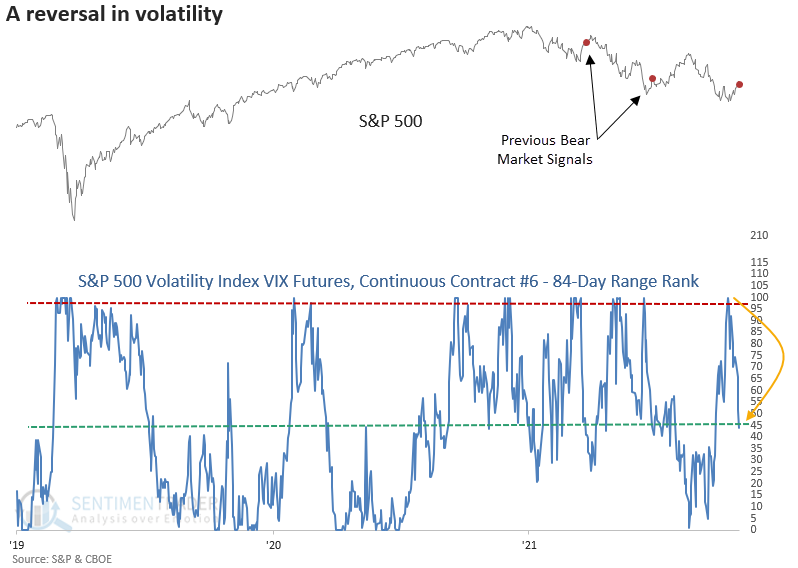
With the VIX futures index data starting in 2005, the range rank signal has benefited chiefly from bull markets. While the sample size is small, the bear market alerts all show a gain at some point in the first two months. In the case of the March 2022 instance, the profit lasted only a short time.
What the research tells us...
In the last few days, a handful of mega-cap growth stocks have imploded, which has pressured the cap-weighted S&P 500. However, performance from a broader basket of stocks, which one can measure with the all-capitalization sub-industry group data, has exploded higher.
The surge in participation from sub-industry groups is a welcome development as it bodes well for a continuation of the counter-trend rally.
With most stocks moving higher, volatility has eased, triggering a bullish buy signal for the market.