
Small-Cap vs Large-Cap Performance

Key points:
- The ratio of small-cap stocks to large-cap stocks has surged to the highest level within its recent range
- After the signal triggers, large-cap stocks have a 81% probability of rising over the subsequent 12 months
- After the signal triggers, small-cap stocks have posted gains over the subsequent 3 months 75% of the time
Economically-sensitive small-cap stocks as a broad market risk appetite barometer
From November 20, 2025, to January 14, 2026, the Russell 2000 Index has rallied sharply by 15.0%, while the S&P 500 Index gained 5.9% over the same period. This standout performance from small-cap stocks is encouraging. Nevertheless, historical data serves as a caution: small-caps typically underperform large-caps in the aftermath of such sharp short-term price surges.
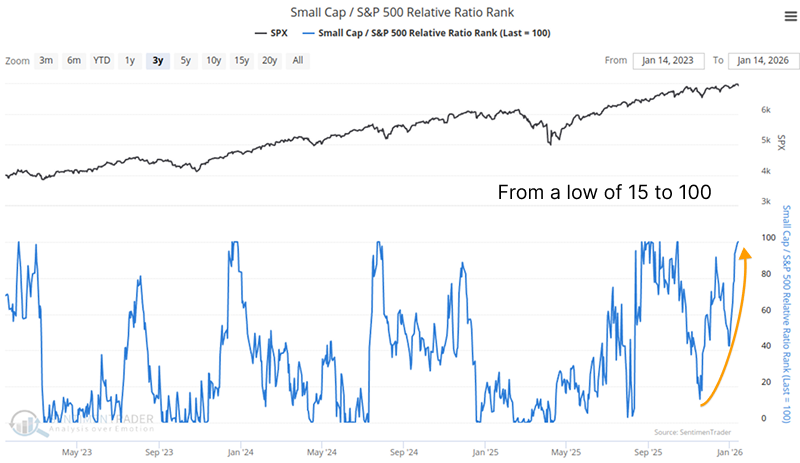
We track the relative performance ranking of small-cap and large-cap stocks through a dedicated metric - the Small Cap/S&P 500 Relative Ratio Rank. Recently, the 4-month range rank of the small-cap vs large-cap ratio has reversed sharply, moving from below 15% to 100%.
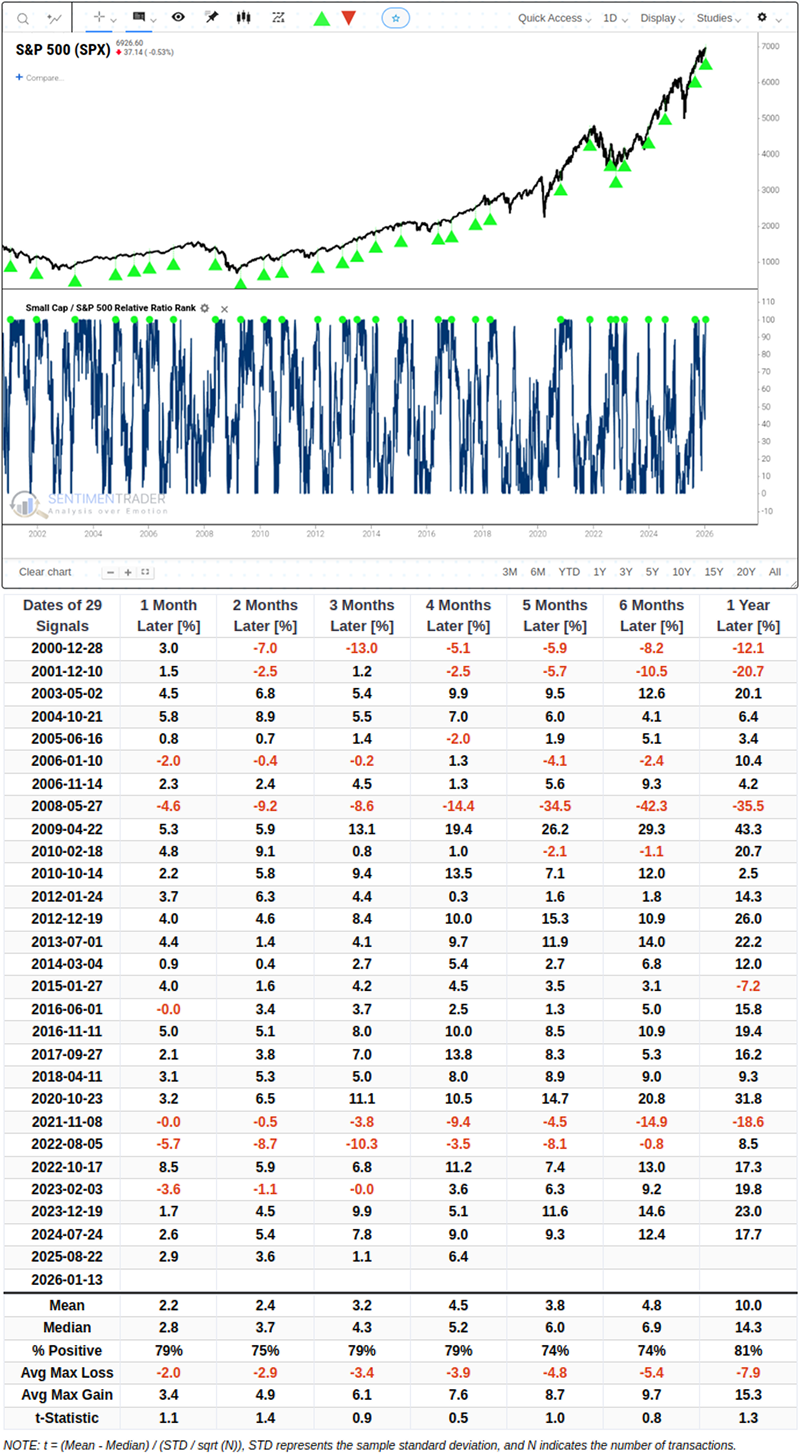
The S&P 500 Index has risen over the next 12 months 81% of the time
This signal has been triggered a total of 29 times over the past 25 years. Historically of the signal activation, large-cap stocks delivered strong performance across all time horizons, with multiple meaningful risk/reward characteristics. While the overall track record is solid, investors should note that during major systemic downtrends, the signal did not prevent absolute losses for either index. This suggests the signal requires a supportive macro environment to be effective.
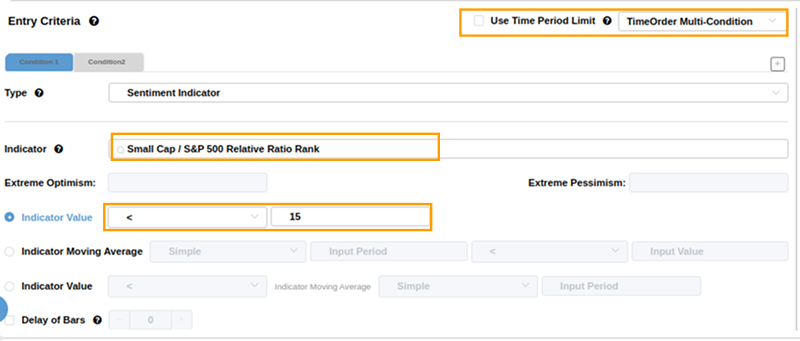
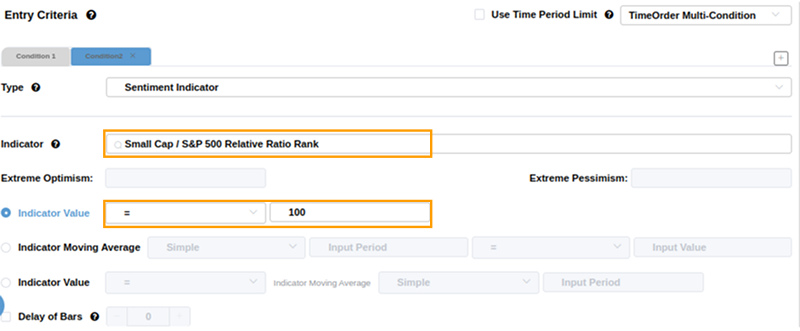
You can create a backtest with identical conditions in our BacktestEdge by following these steps:
The Russell 2000 Index has risen over the next 3 months 75% of the time
Small-cap stocks have also demonstrated strong performance, with sound risk/reward ratios across all time frames. However, considering the Historical Win Rates after 1 year (81% vs 67%), Large-cap stocks appear to maintain a consistency advantage over the medium to long term. Investors should favor Large-caps (S&P 500) for higher probability of positive returns.Related Backtest Click Here.
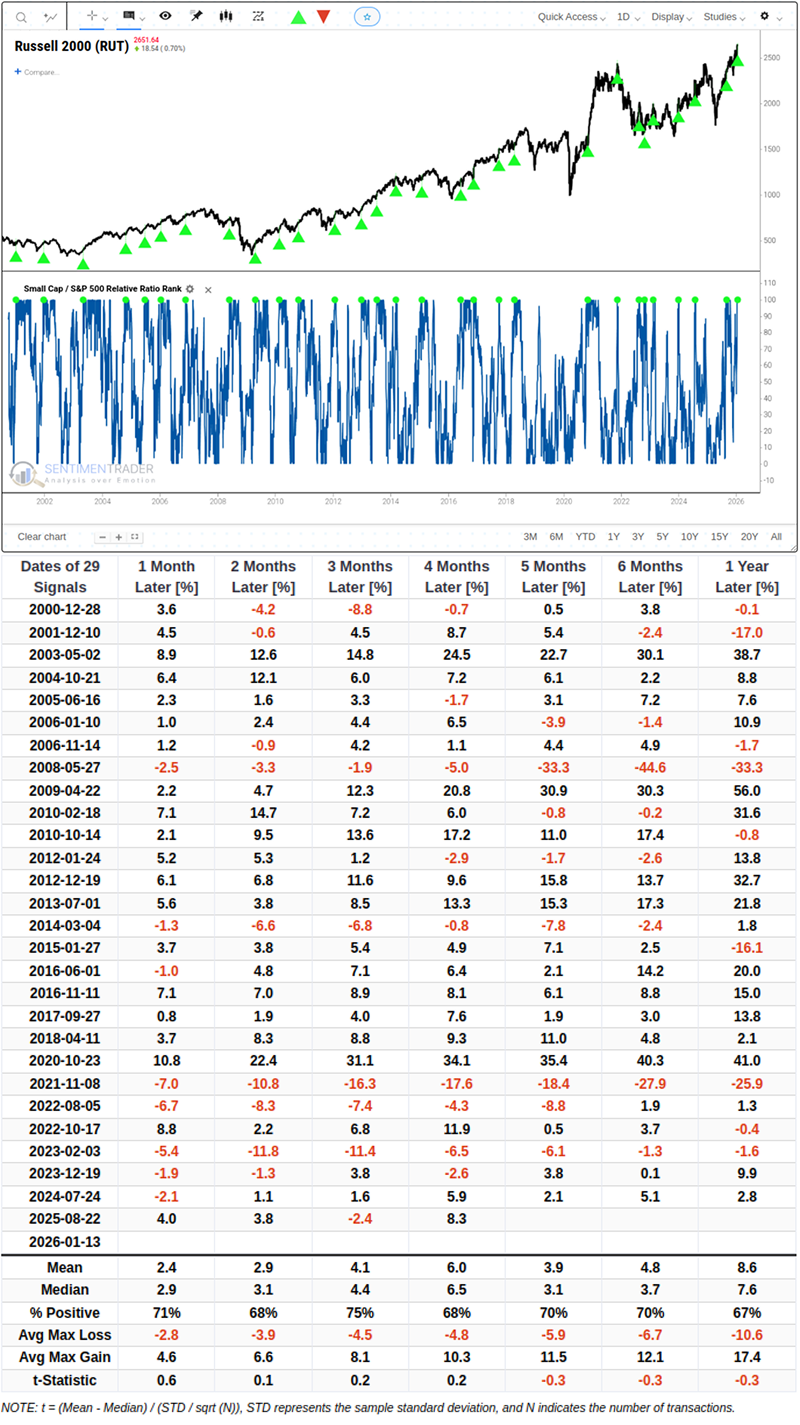
Small-Cap Performance Tends to Lag Behind Large-Caps
Based on the net return spread between the S&P 500 Index and the Russell 2000 Index, forward-looking tables indicate a more favorable market landscape for large-cap stocks over the medium to long term.
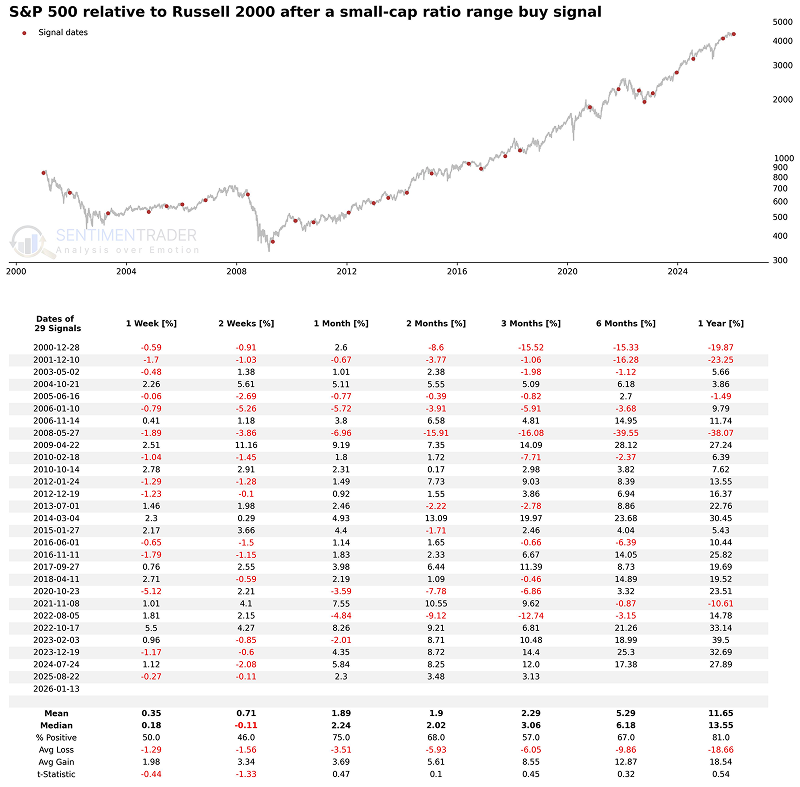
What the research tells us...
When small-cap relative performance reverses from underperformance to outperformance and triggers this reversal signal, historical data offers us a unique perspective. Similar market conditions observed today have historically driven upside momentum in both the S&P 500 and Russell 2000 Indices, with robust risk/reward profiles across medium and long-term timeframes. Large-cap stocks appear to maintain a consistent advantage when this signal is triggered - offering superior risk-adjusted returns over the full cycle.