
Small business optimism is rebounding

Key points:
- Small business optimism has jumped above average for the first time in months
- After other increases in optimism, the small-cap Russell 2000 performed just okay
- The large-cap S&P 500 was the best beneficiary of improved sentiment, especially over the following 3 months
Business is back
Small business owners are feeling better. After a rough start to the year with economic and geopolitical uncertainty, they're starting to feel like they have their feet underneath them.
The latest survey by the National Federation of Independent Business (NFIB) shows that business owners are more optimistic than they usually are about future conditions.
For the first time in several months, the survey popped above 100. For the small-cap Russell 2000 index, a reading above 100 is not necessarily a great sign. The annualized returns in that index were below random, partly because it has been more difficult for that index, which is stuffed with money-losing companies, to sustain upward momentum, even when their owners are feeling good.
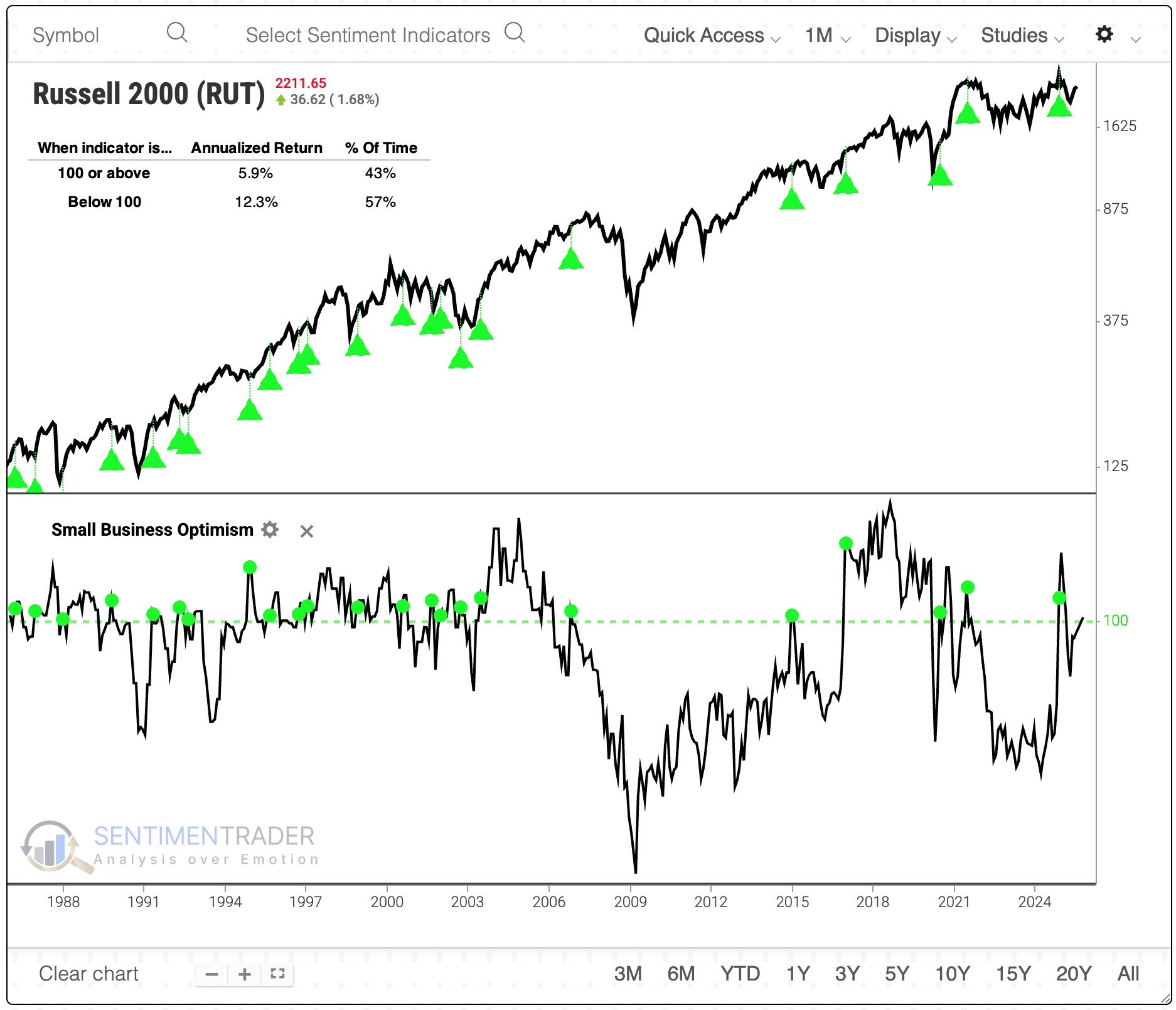
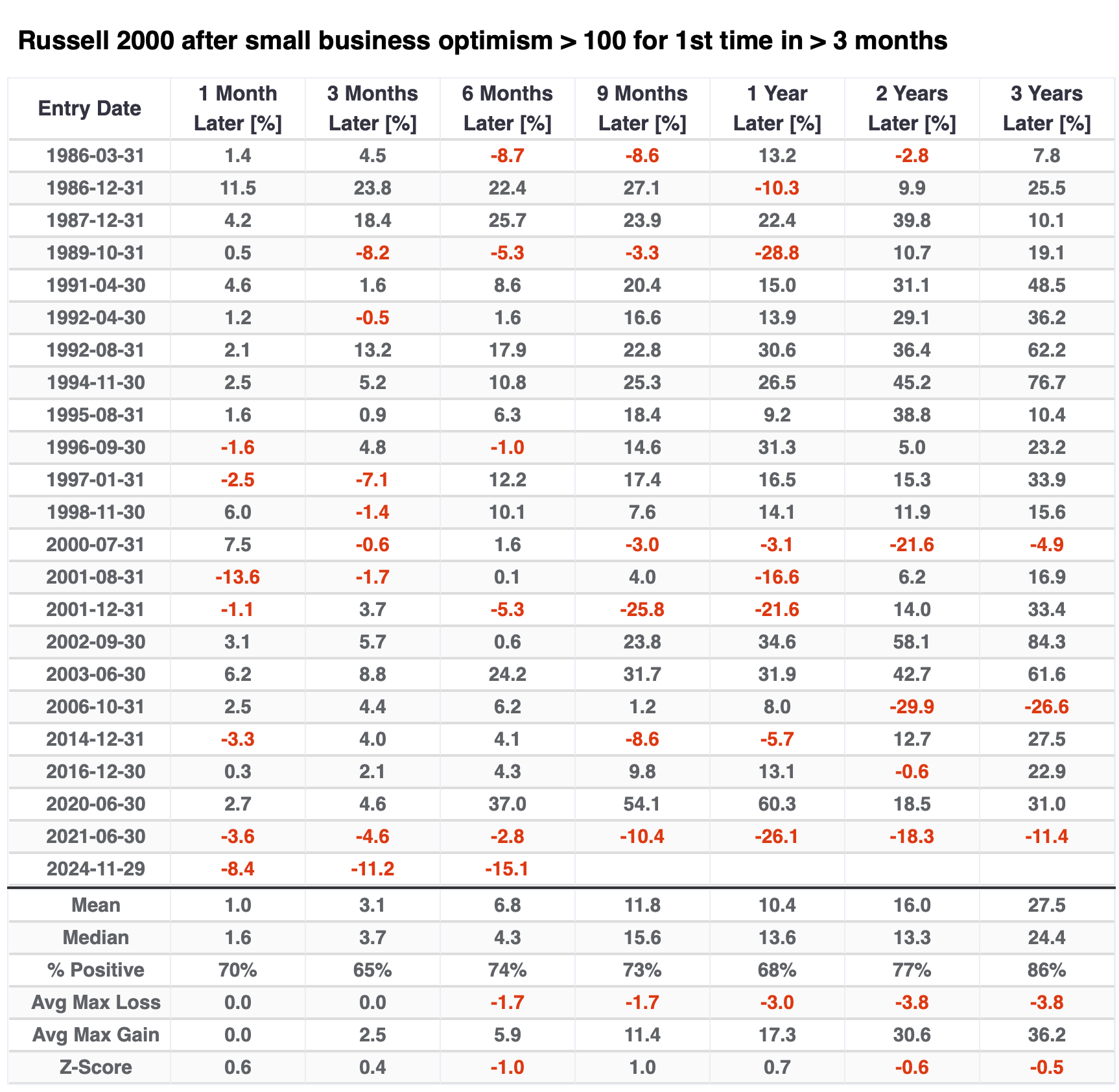
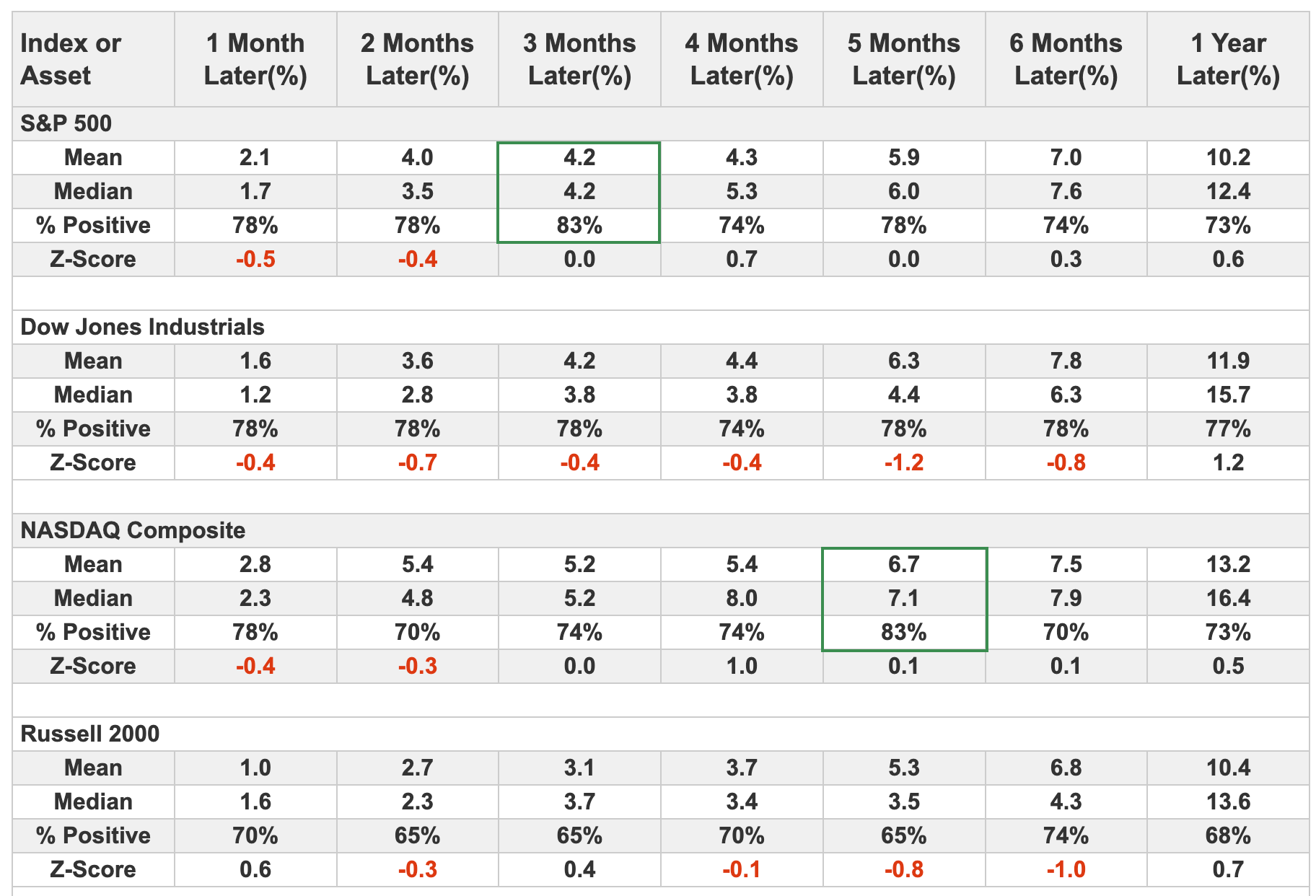
The Russell 2000 fared okay after these rebounds in optimism; it just didn't do great. Several of these rebounds preceded nearly immediate and meaningful declines, and a year later, the index was higher only 68% of the time.
Bigger was better
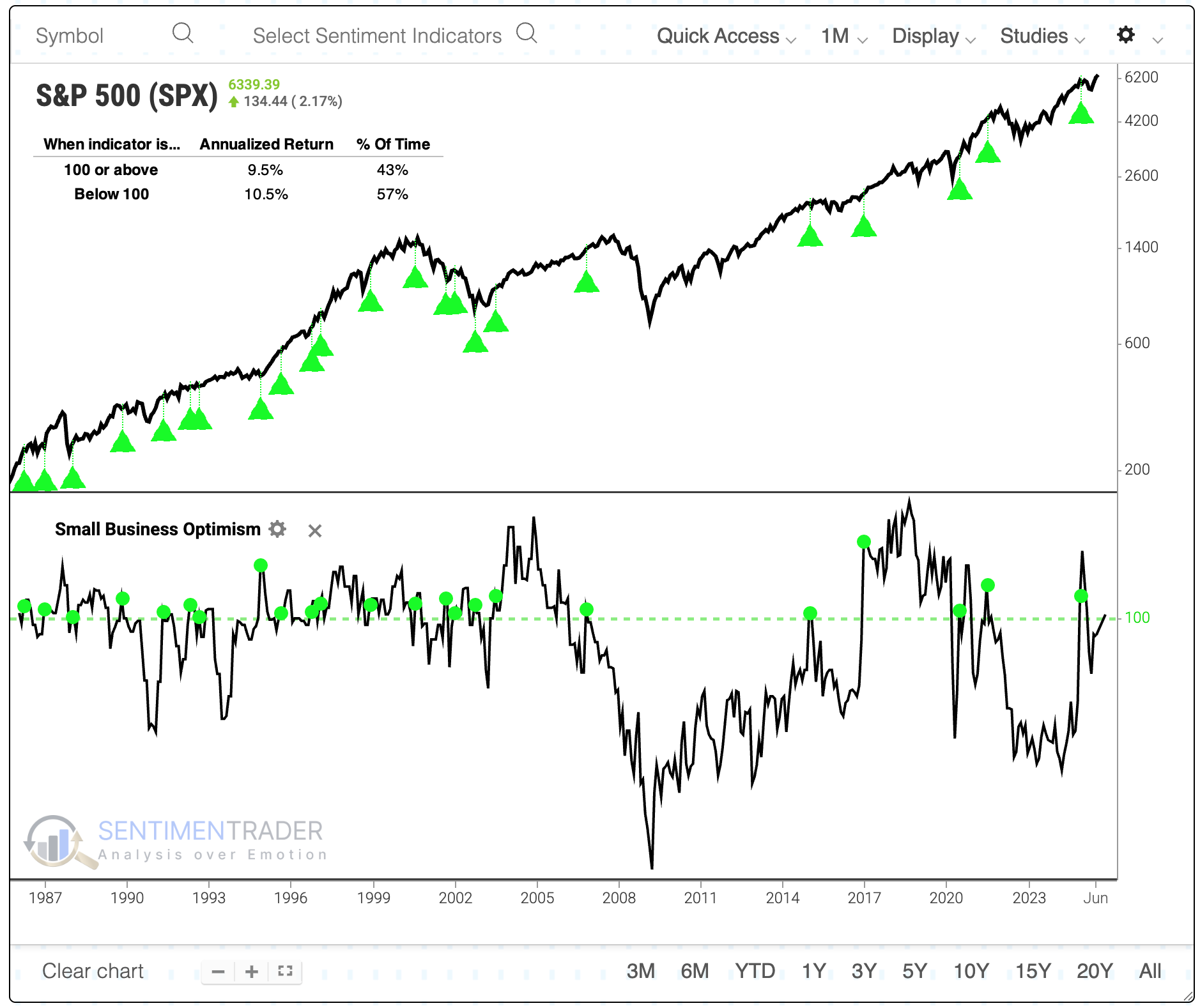
The improved sentiment among small business owners is paradoxically a better sign for the best large-cap stocks. When the survey was above 100, the S&P 500 fared much better than the Russell 2000, with about twice as large an annualized return.
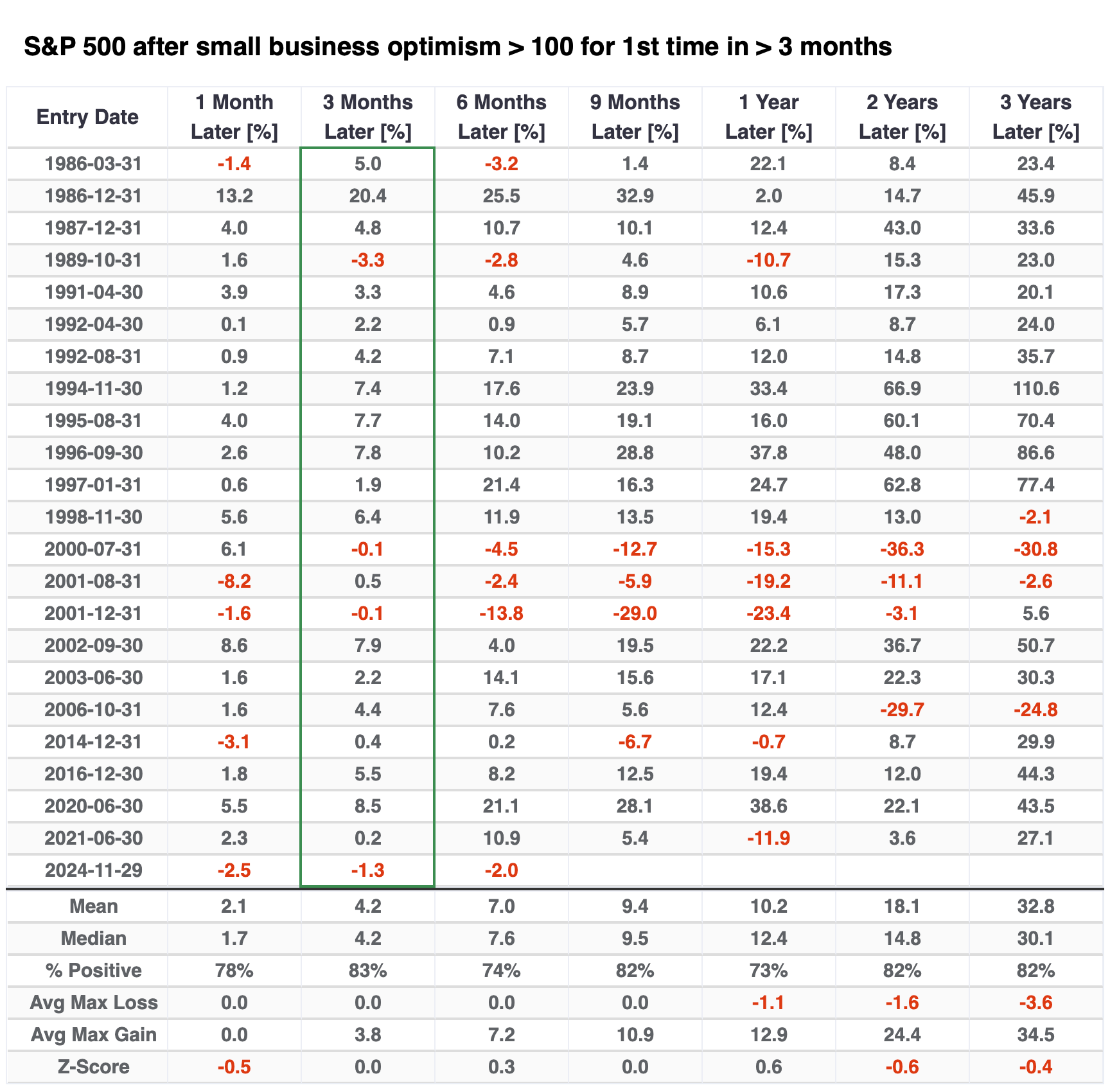
Over the next three months, the S&P rarely suffered a loss. The four times it did decline, the losses were small. Those losses were somewhat effective warning signs, however. Each time the three-month return was negative, so was the one-year return (the 2024 signal is TBD).
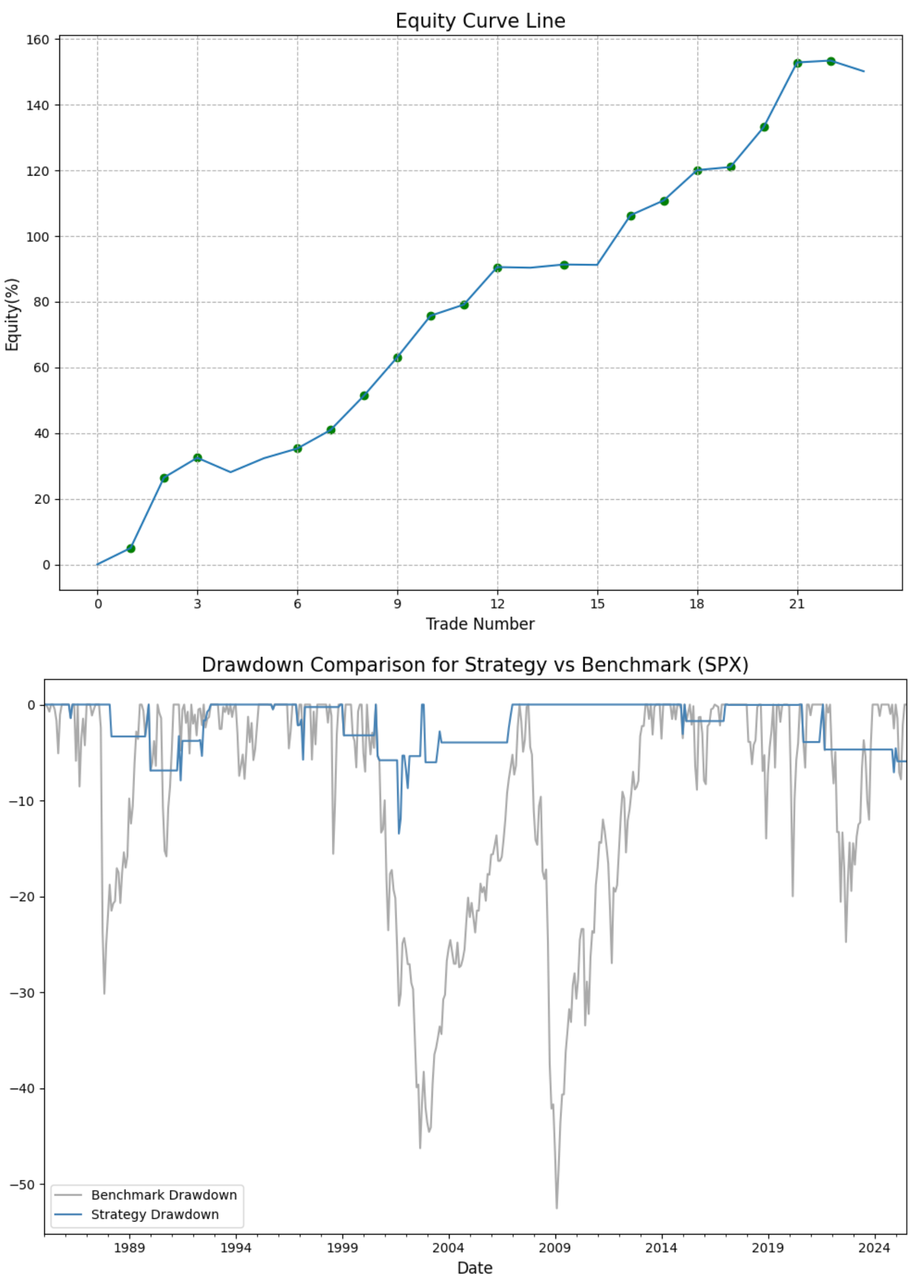
If we ask the Backtest Engine to buy the S&P 500 when optimism crosses 100 and hold for three months, the equity curve shows a distinct up-and-to-the-right pattern, with very low drawdowns. Click here to load the test the study.
The S&P 500 fared the best out of the major U.S. equity indices over the next few months, but the Nasdaq Composite showed the best consistency and median return five months later. The Russell 2000 is sort of a perennial loser among the Big Four indices, and it was no different even after small business owners started feeling more optimistic.
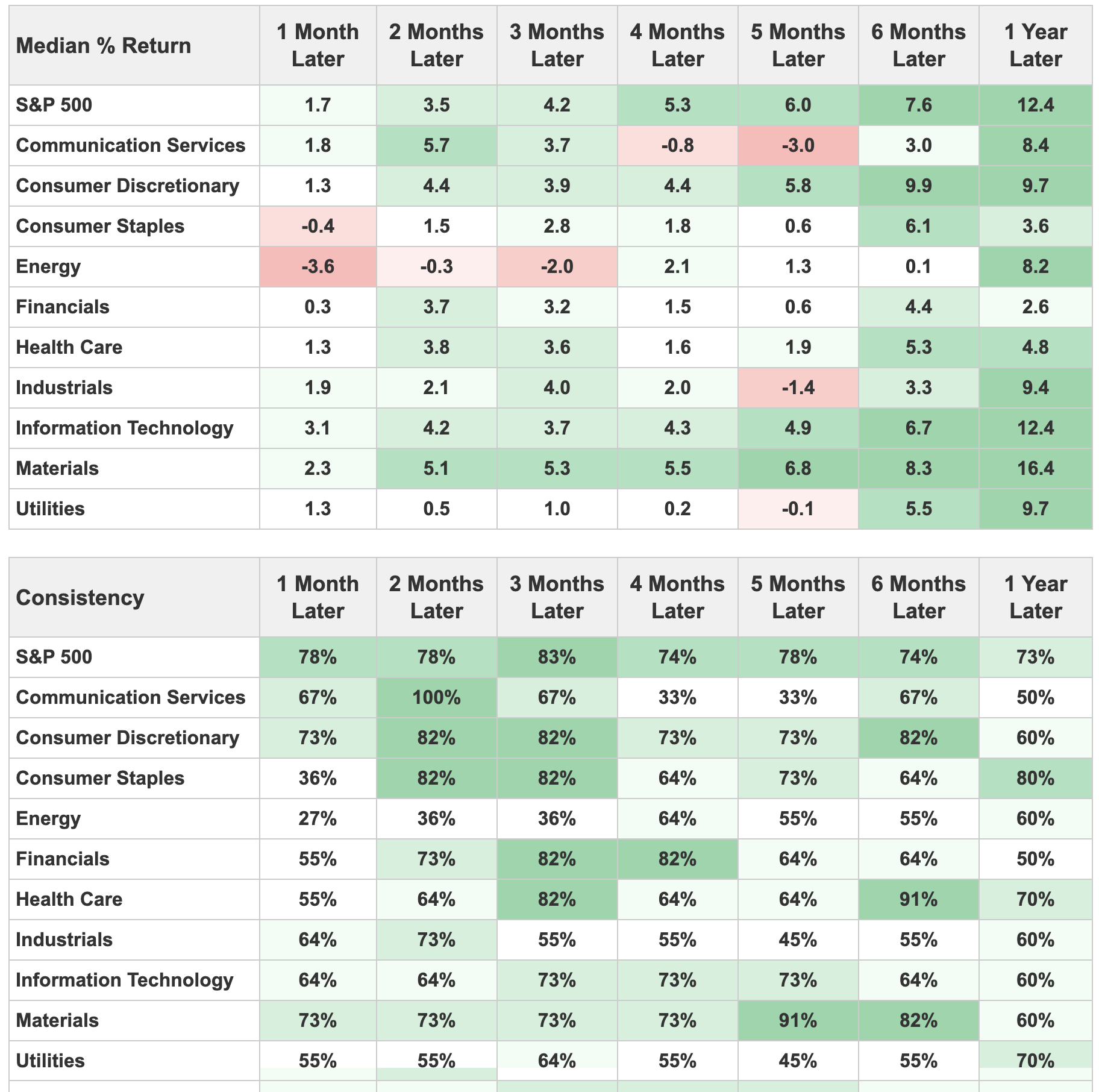
After these signals, there was no clear pattern among sector returns. The following two to three months saw both consumer staples and discretionary stocks do well, so perhaps the key word is "consumer."
What the research tells us...
There have been some mild short-term concerns with market breadth among big tech stocks on the latest push to new highs. That has been a consistent short-term worry, but buyers shrugged it off with prejudice on Tuesday. Broader breadth has been holding well, and momentum is clearly still a driving force.
Now that we have signs of improved confidence among small businesses, it should prove to be yet another tailwind for U.S. stocks. While a logical assumption would be that small-cap indices like the Russell 2000 would be the biggest beneficiaries, that has not been supported empirically. The S&P 500 is a very difficult bogey to overtake, and that was the case after rebounds in small business sentiment. That was the best index out of the major ones, and looks to be among the best bets for the next few months.