
SLV via contrarian copper

Key Points
- Copper has plummeted over -35% in just four months
- Conventional wisdom argues that a) this is a sign that the economy is going to weaken seriously, and b) there is more downside to come for copper
- Both assertions above may prove to be correct
- Nevertheless, a short-term contrarian opportunity may be at hand for aggressive traders willing to a) speculate on a contrarian basis and b) limit risk ruthlessly
The Bad News
First, price is plummeting - presumably for a reason (i.e., an impending weakening of the economy) - and it could get much worse. The chart below (courtesy of Profitsource) clearly shows the nature of copper's recent failure after breaking out to new all-time highs. History suggests that it will take some time before copper approaches its recent highs.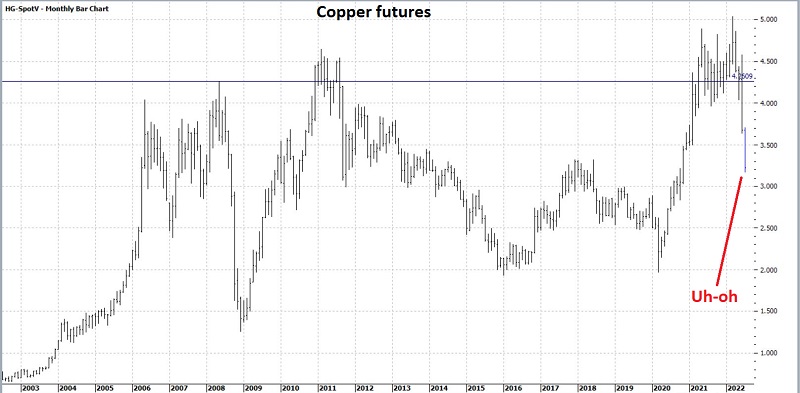
Likewise, the chart below displays the annual seasonal trend for copper futures. Seasonality suggests that copper will not get much better anytime soon, as the second half of the calendar year tends to show weakness.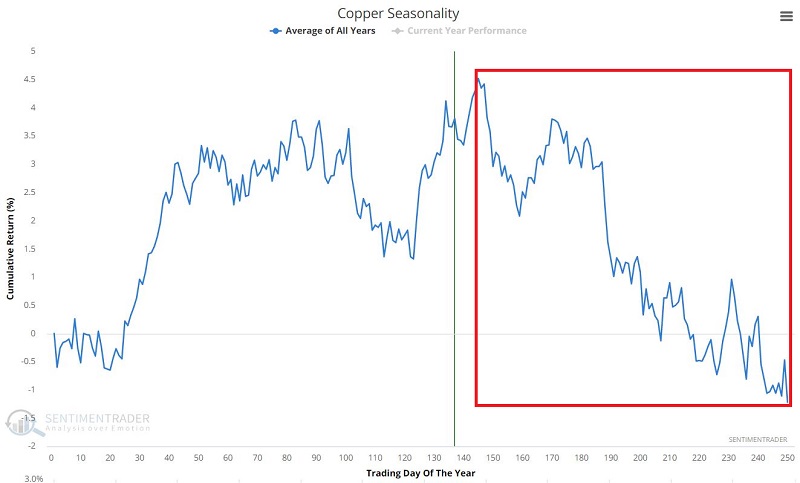
All in all, there is good reason to stand with the bearish crowd on copper.
The contrarian indicator
Now - for just a moment - let's stand firmly athwart the mob clamoring about "bearish copper." The chart and table below display the action of copper following those occasions when the Copper/Gold Ratio was below 0.19 for the first time in 252 trading days.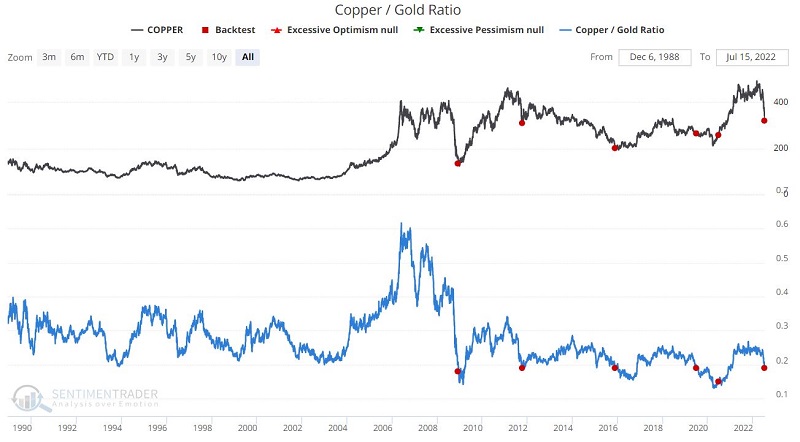
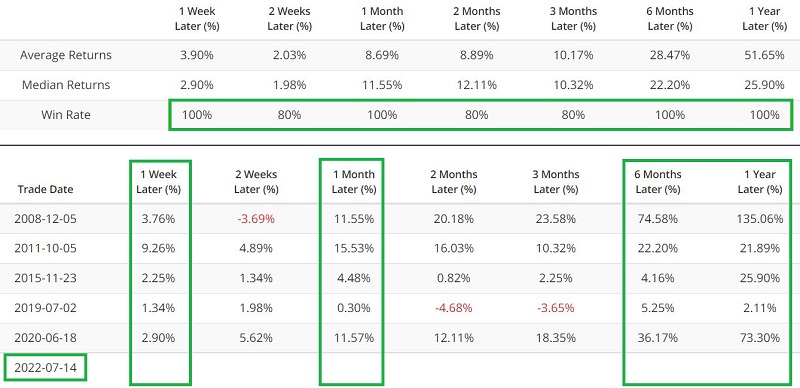
Two things to note:
- This doesn't happen often, so there is a legitimate question about the sample size
- Historically the results have been almost universally "bullish" for copper
The small sample size should stand as a firm reminder not to get too carried away by performance results. Still, the results "are what they are."
So now comes the real question: Does it make any sense to pile into the long side of copper at this exact moment based solely on the action of this one indicator? I can't answer that question for anyone else. I am not inclined to buy copper futures at the moment as I have been cautioned - and have warned others - many times about the dangers of trying to "catch a falling safe." Still, I find this signal very compelling.
Managing risk (in this case, roughly defined as "Not losing all of your investment capital in one foolhardy attempt to pick the exact bottom in a market that is potentially falling to earth like a flaming comet") is Job #1. So, this seems like a good time to invoke:
Jay's Trading Maxim #19: When human nature leads you to bet against the prevailing trend, consider a limited dollar risk trade using options.
SLV and GDX
The chart and table below display the action of ticker SLV (iShares Silver Trust ETF) Copper/Gold Ratio was below 0.19 for the first time in 252 trading days.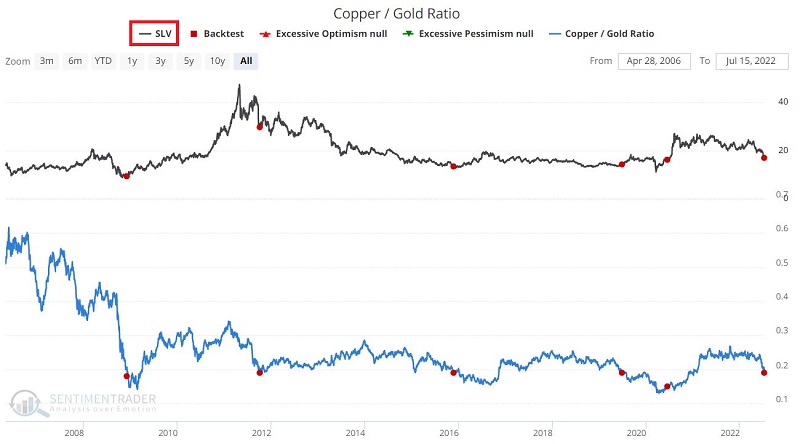
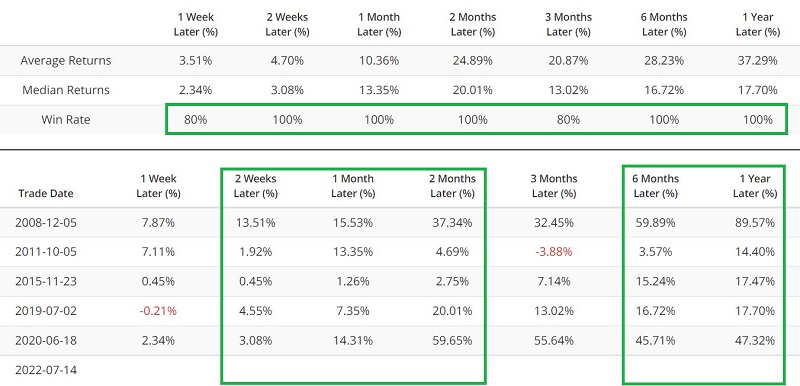
The 2-month period has shown highly favorable results in this limited sample size.
The chart and table below display the action of ticker GDX (VanEck Vectors Gold Miners ETF) Copper/Gold Ratio was below 0.19 for the first time in 252 trading days.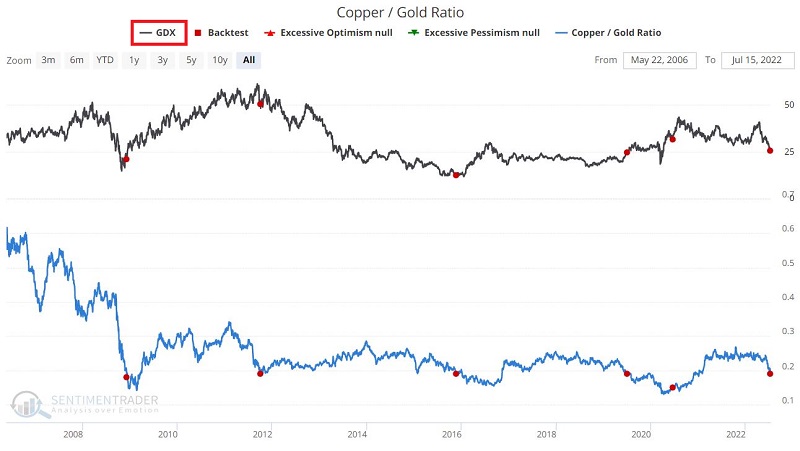
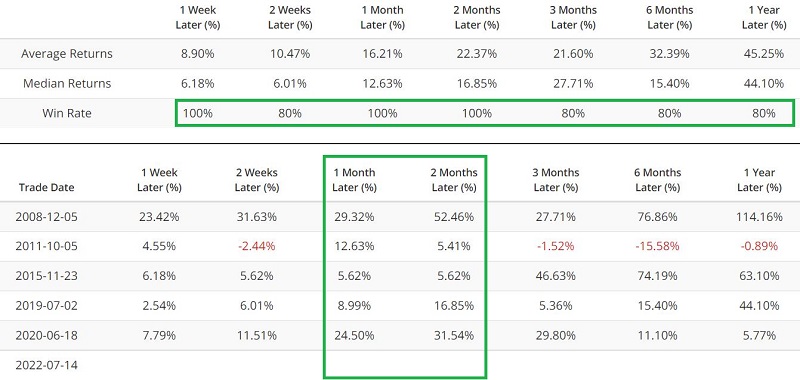
Using options on SLV
One hundred shares of SLV and GDX can be bought for roughly $1,700 to $2,500, respectively. But remember the maxim above: This is NOT an "investment" situation. This is blatant, rampant, unbridled speculation in the face of all logic. Sounds like a job for options.
The trade that appears below should not be considered a "recommendation." It is merely an example of a way to allow yourself to indulge the speculative juices (whether in this particular situation or at some other point in the future) while managing risk intelligently.
The example trade for SLV involves:
- Buying the Sep2022 SLV 15 call @ $2.26
The particulars and risk curves for this trade appear in the figures below (courtesy of Optionsanalysis).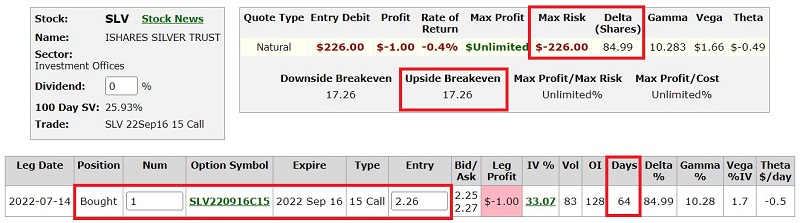
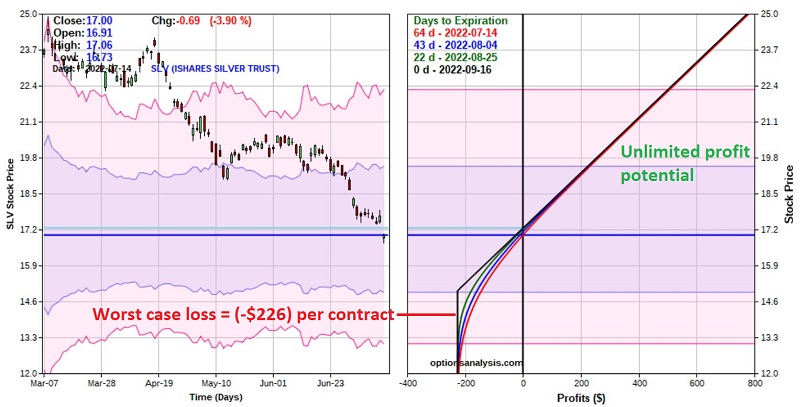 Things to note:
- The cost to enter the trade is $226 per 1-lot, and this also represents the maximum risk
- The breakeven price is $17.26 (i.e., SLV must get above this price for the option trade to generate a profit)
- The option has a "delta" of 85, which means it will act similarly to a position of holding 85 shares of SLV
A trader can size this trade according to their own willingness to accept risk. For example, a trader with a $50K trading account can buy two calls for $452 and risk less than 1% of their trading capital (or they can buy more and risk more, but the point is the trader can actively limit their risk to a specific dollar amount or percentage of trading capital).
On another note, a trader could buy an at-the-money or out-of-the-money call at a lower price. This allows the potential for more significant profit due to leverage - but also increases the probability that the option will expire worthless. The well-in-the-money 15-strike price was chosen because it gets point-for-point movement with the shares when SLV moves above the breakeven price of $17.26 (SLV is trading at $17.00 as this is written).
What the research tells us…
We have all been cautioned not to try to "catch the falling safe" in the financial markets. And on the whole, this is excellent advice. But human nature is a pesky thing. And at times, even the most disciplined, unemotional trader feels the urge to speculate on a situation that appears to offer a low probability of success.
The key when engaging in speculation is to "manage risk first." A manageable loss is simply a part of trading, even if it results from what was a foolhardy venture in hindsight (possibly even in foresight). The proper approach to the SLV example above can be summed up as follows:
Question #1: Do you think there is a remote chance that SLV will bounce in the next two months?
Question #2: Do you have $226 bucks?
Question #3: Are you willing to risk that $226?
Question #4: Can your ego handle it if you lose the $226?