
Silver is shining

Key points:
- Silver became stretched moving its moving averages just as it reached new highs
- Traders are anticipating a generational run, with optimism among the highest in decades
- The metal has had a strong tendency to decline after similar moves, with the rare exceptions that earn its reputation as a widowmaker
Stretched at new highs
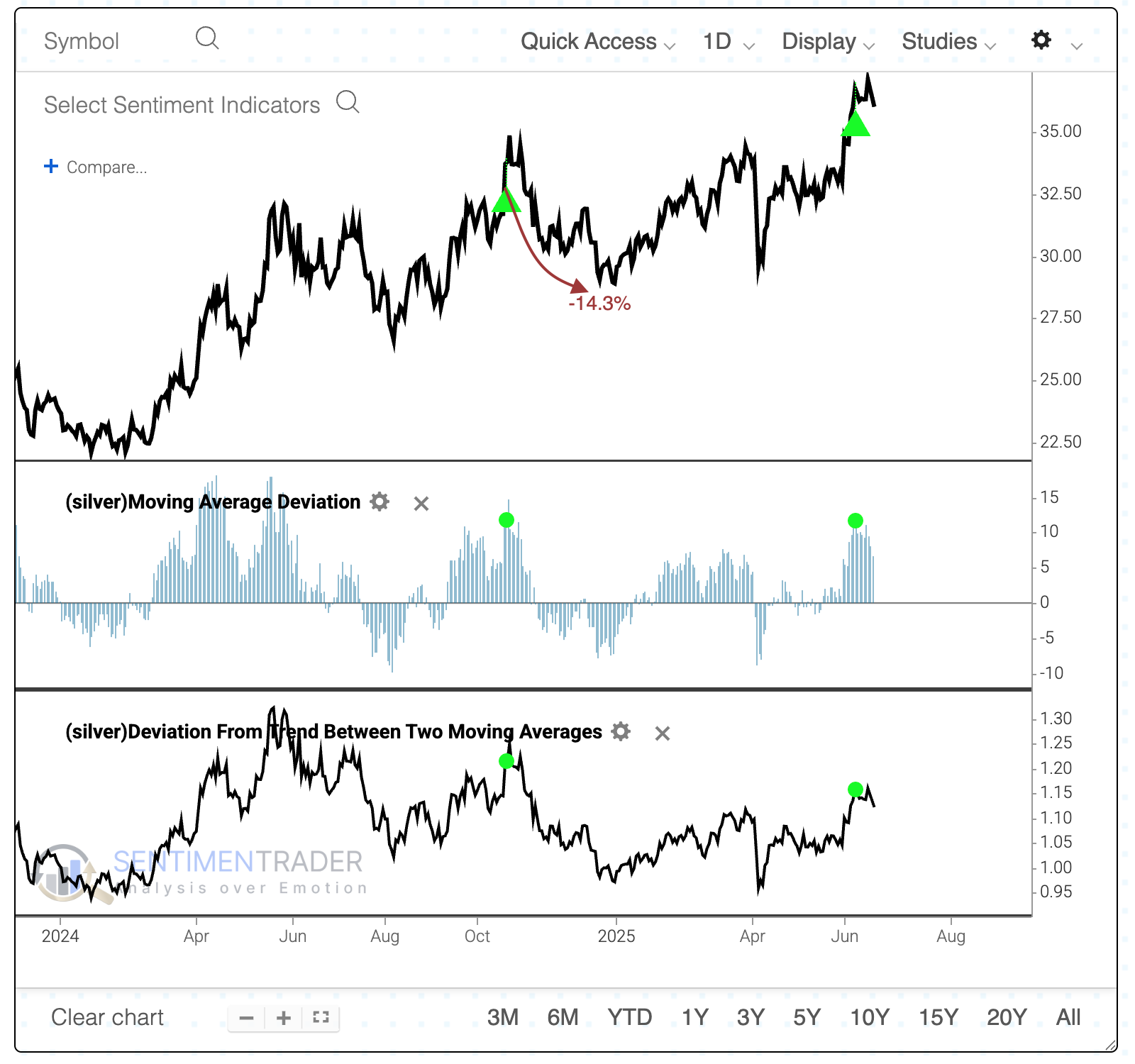
Silver is back on traders' radars after being mostly an afterthought thanks to gold's impressive run. As a result, the metal became stretched above its moving averages just as it reached a multi-year high.
For one of the few times in decades, silver hit a new high just as it pushed more than 10% above its 50-day moving average and 15% above its 200-day average, before pulling back a bit in recent sessions. The last time it accomplished such a feat was last October, right before a -14% pullback over the next few months.
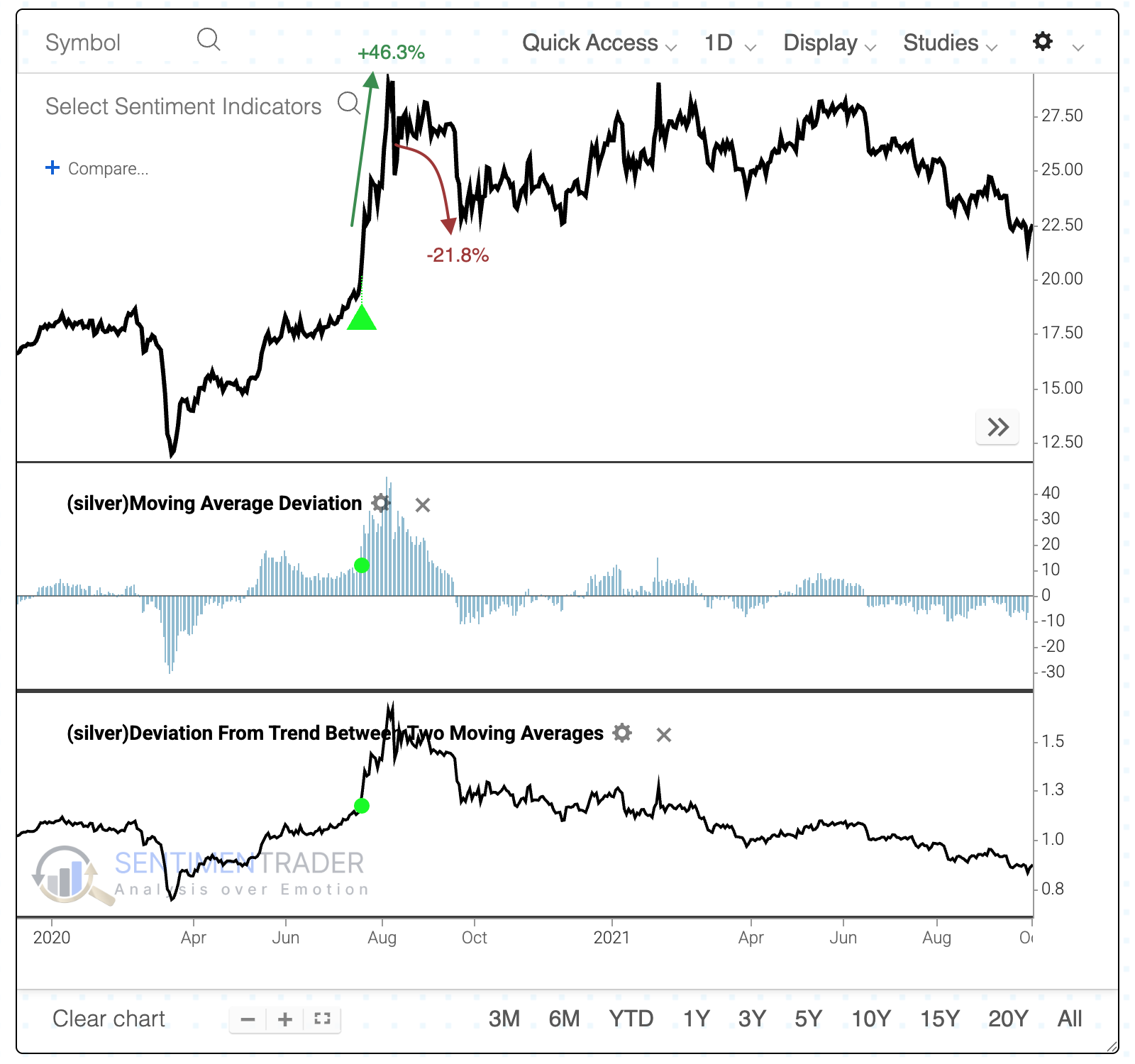
The time before that was a post-COVID money-printing spike in 2020 that saw silver rise exponentially over the next few weeks. After that euphoric spike, it gave back half its gains and then stagnated for years.
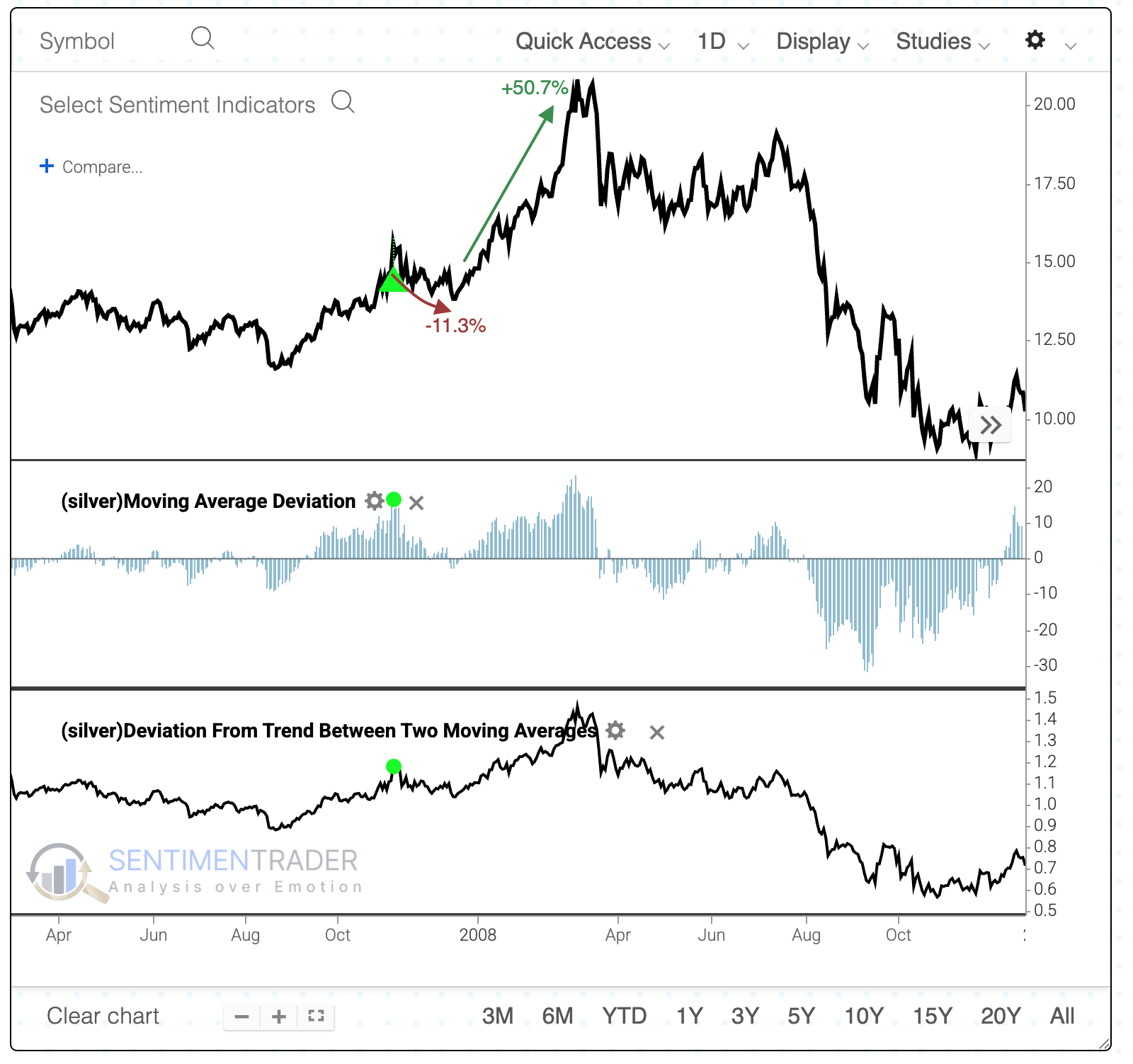
Another global conflagration in 2007-08 saw silver pull back more than -11% during the next couple of months. As the global financial crisis unfolded, the metal jumped more than +50% before crashing along with financial assets.
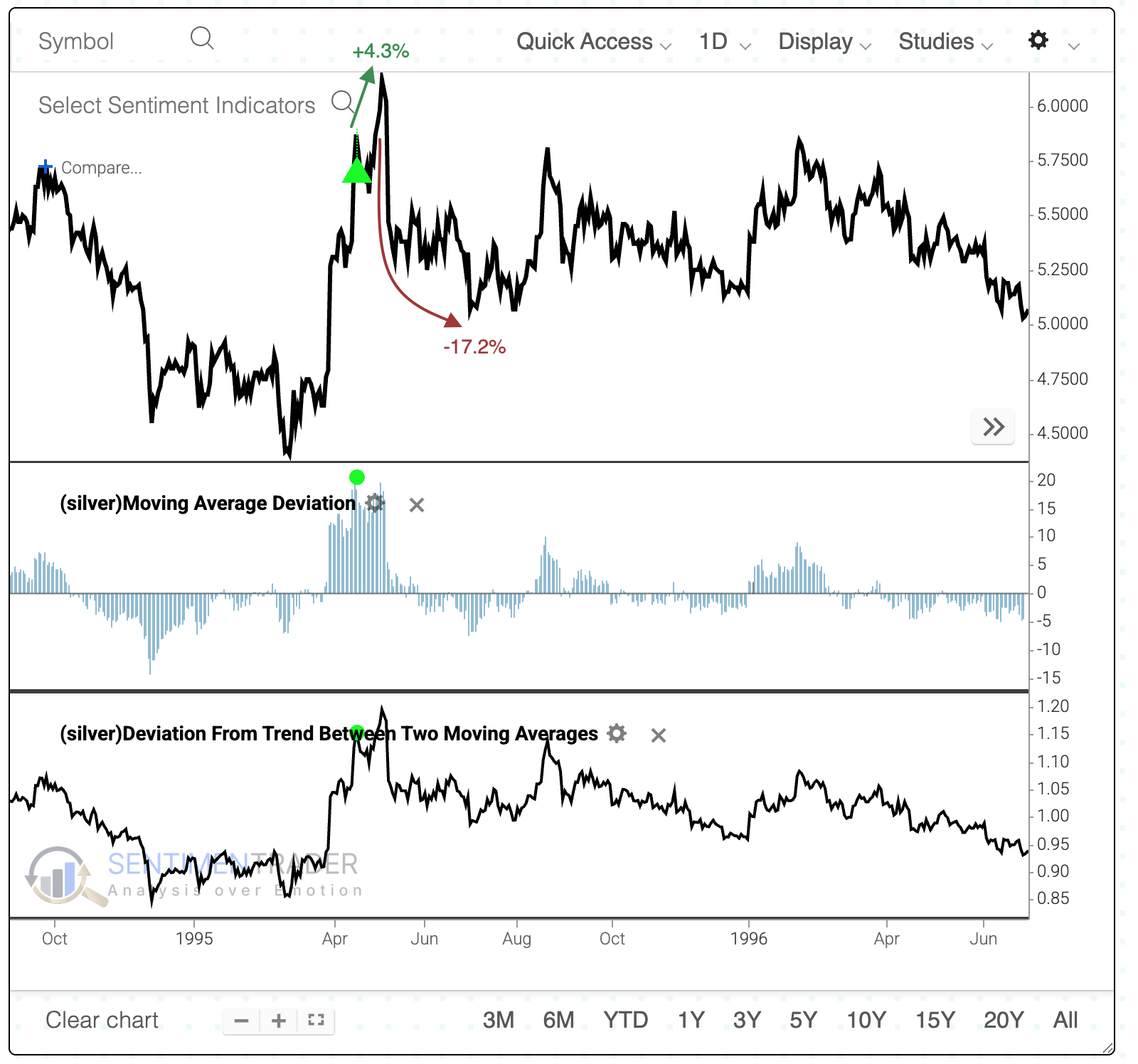
The only other precedent for this run in silver occurred in 1995. By the time silver's trends reached its current thresholds, it formed a volatile peak after pulling back for a few sessions, like it did late last week, then spiking again before ultimately crashing more than -17% in a short period, and then went nowhere for years. If you'd like to run this backtest and fiddle with the parameters to find other precedents, click here, then the Run Backtest button.
Traders are anticipating a once-in-a-generation move
The run in silver has excited some newfound bulls.
The Optimism Index (Optix) for silver just exceeded 83, which is the highest level in nearly 15 years. The Optix is based on established surveys, along with other measures of sentiment from the options and futures markets.
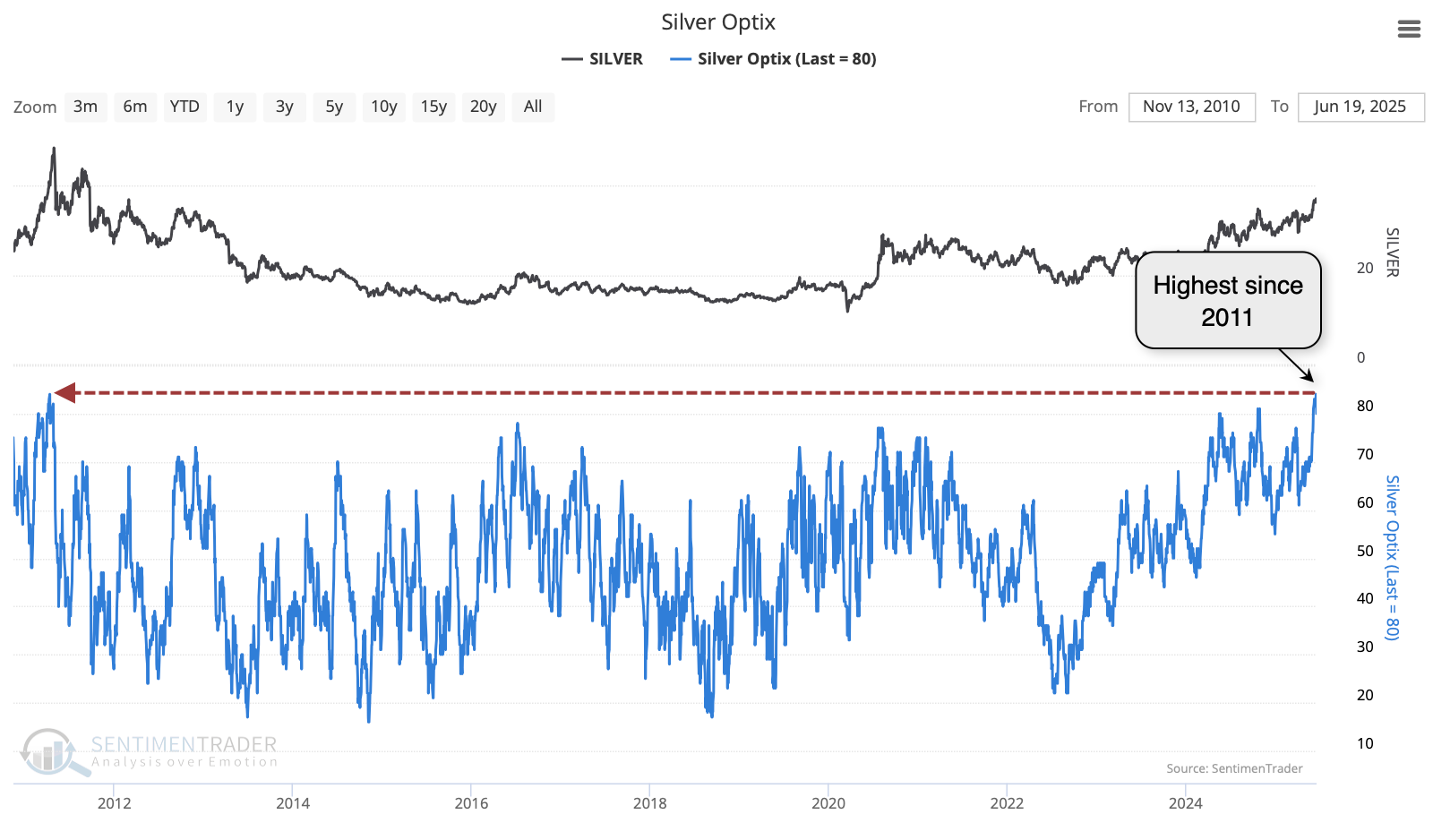
Every once in a great while in commodities, we'll see sentiment at such an extreme, and it will have no impact on future returns. Some structural anomaly hit the market, and traders completely gave up on traditional forms of analysis or valuation. That was rarely the case in silver by the time sentiment reached its current level. Out of 72 days with sentiment at the current extreme, silver showed a negative return 69 times at some point within the next three months.
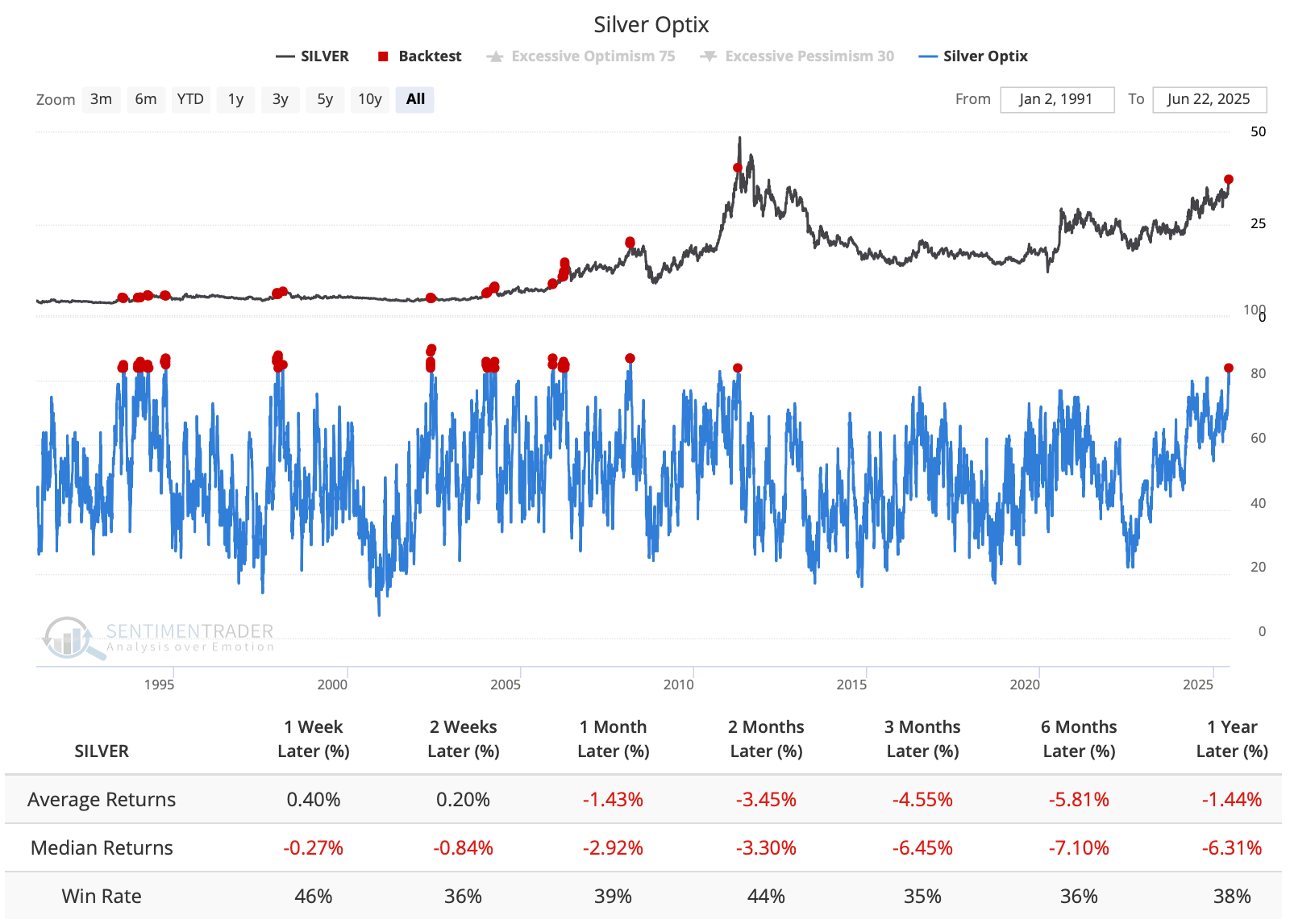
Taking a more systematized view, the chart and table below show how a trader would have fared by shorting silver when its Optimism Index crossed below 83. Because the test is shorting the metal, a positive return means silver declined. And it typically did so, with a profitable short position 8 times and a losing position 3 times if holding for four months. But note that gigantic loss on the short in 2005 as silver went parabolic.
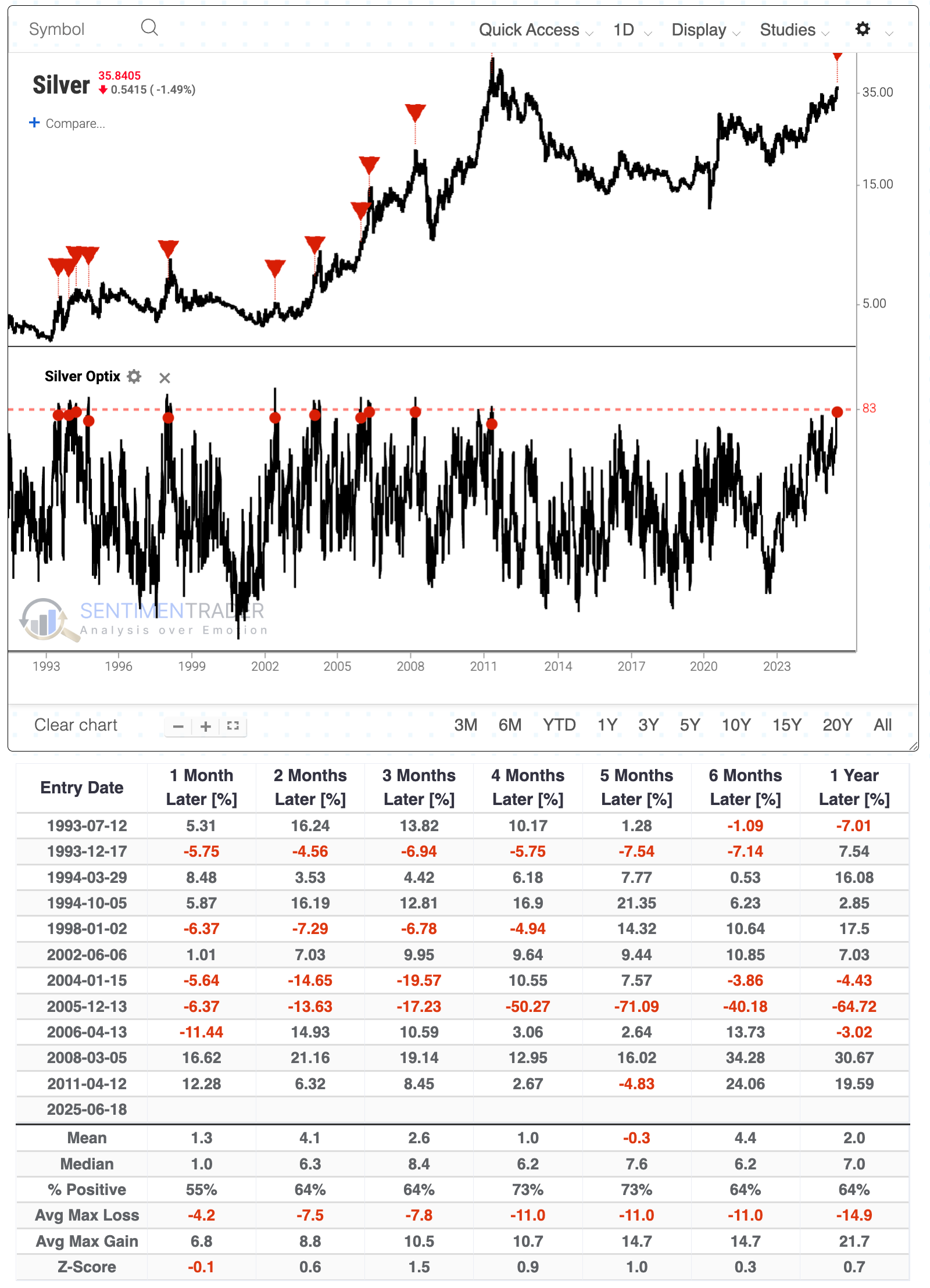
A major component of the Optimism Index is the behavior of speculators in silver futures. According to the latest Commitments of Traders report, large speculators hold over 38% of open interest net long. Again in 2005, this had no ill effects on silver's prospects, but even including that time frame, its average returns were poor across all time frames.
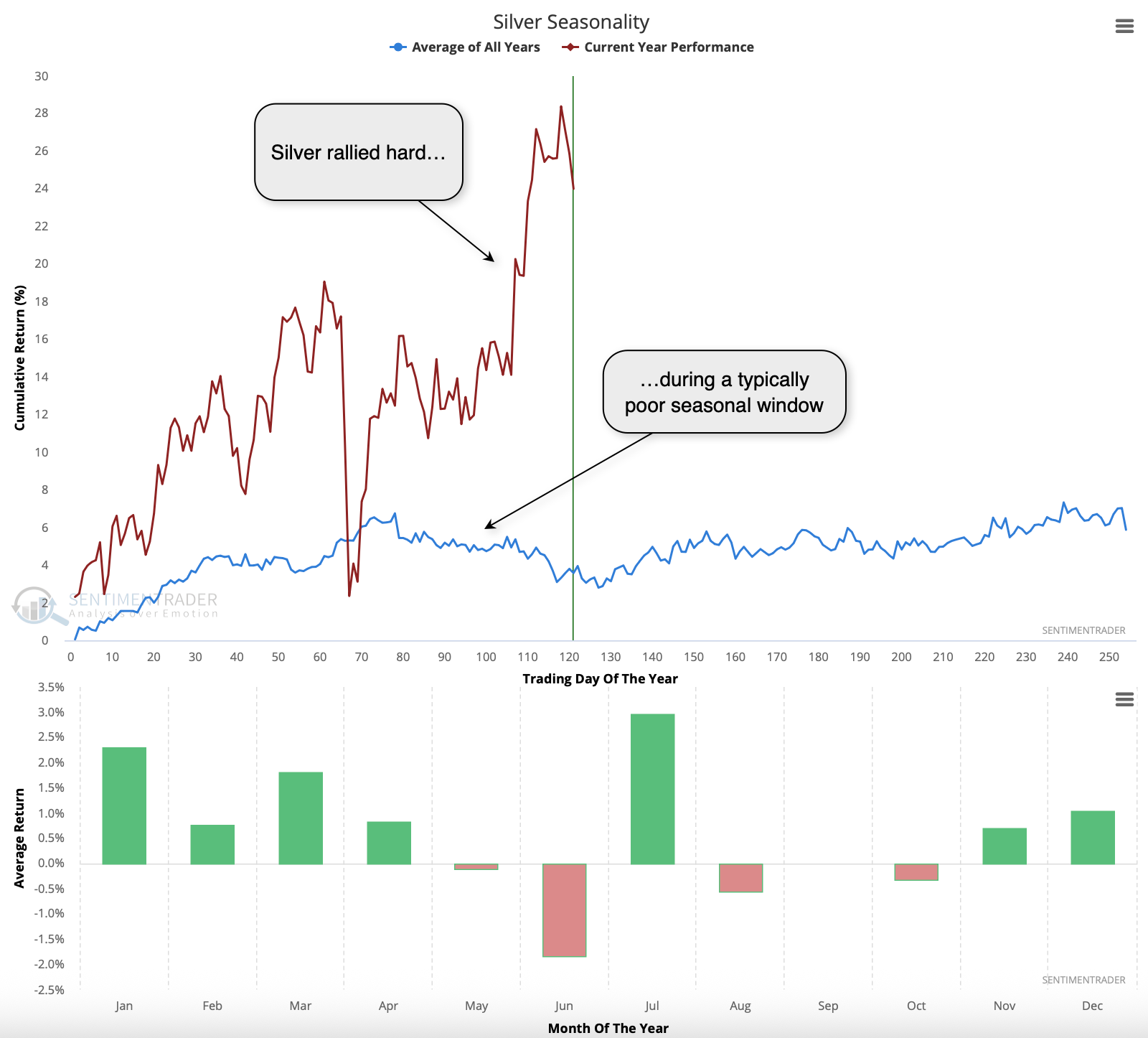
Seasonally, silver often bottoms around late June and rallies into the early fall. It mostly held to its seasonal pattern to start the year, but has bucked it since then, rallying strongly during a typically soft part of the calendar. History is mixed, whether this is a good sign, with some years showing that a structural imbalance was taking over, while others showing that gains were front-run.
What the research tells us...
Silver deservedly has a reputation as a widowmaker, similar to natural gas. It is a notoriously difficult, volatile, and surprising market that is relatively small and prone to breathtaking moves that can wipe out leveraged players. Fading extreme moves in either direction pay out about three times in four, but that "once" is a killer because the market rolls over everything in its path.
That's why anyone attempting to take a position in the silver market should have a risk-controlled way of doing so. For example, implied volatility on SLV options is on the lower end of its yearly range, so buying put options would be a reasonable way to express an outlook without subjecting an account to undue risk in the event of a once-in-a-generation exception to silver's typical reaction to conditions similar to those we see today.