
Sentiment surveys show a significant surge in optimism

Key points:
- The retail investor sentiment survey from AAII increased by over 15% week-over-week
- An equity market exposure index that measures active investment managers increased by over 36%
- Similar week-over-week surges in optimism from these two groups preceded an upward bias in the S&P 500
Optimism among retail and active investment managers is soaring higher
Several sentiment surveys, like the American Association of Individual Investors (AAII) and the National Association of Active Investment Managers (NAAIM), showed significant week-over-week increases in optimism, with new data reported on Thursday.
The easy conclusion would be to assume that when optimism surges, like now, it's bearish for equity markets. However, as I showed in my note on Tuesday, that's only sometimes the case. More often than not, the initial push higher in optimism after an extended period of pessimism is bullish, not bearish.
The AAII % bulls survey increased by 15% week-over-week to the highest level since November 2020. Let's assess the outlook for the S&P 500 after similar surges.
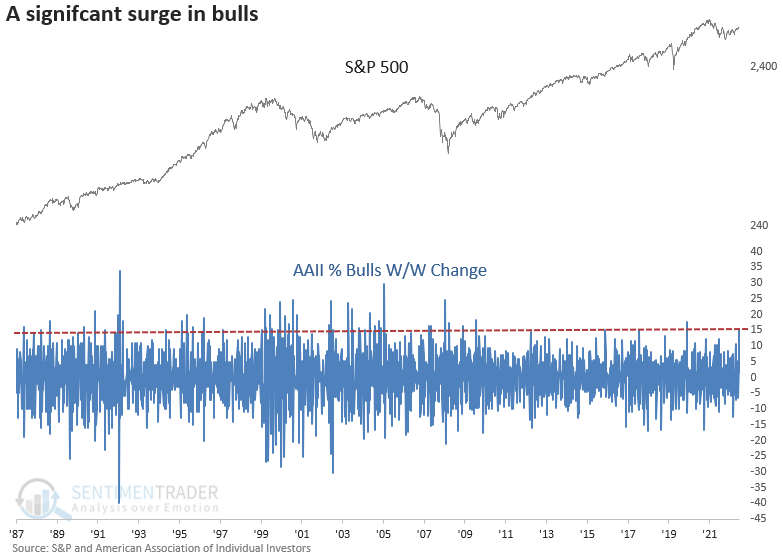
Similar week-over-week increases in the percentage of bulls preceded positive returns
When the AAII % bulls survey increases by 15% or more, the S&P 500 showed a consistent upward bias across all time frames. Significant surges like now have become less frequent since 2006. And the signal struggled in the early stages of the Dotcom bust as retail investors most likely clung to a bullish bias after a decade of stellar returns.
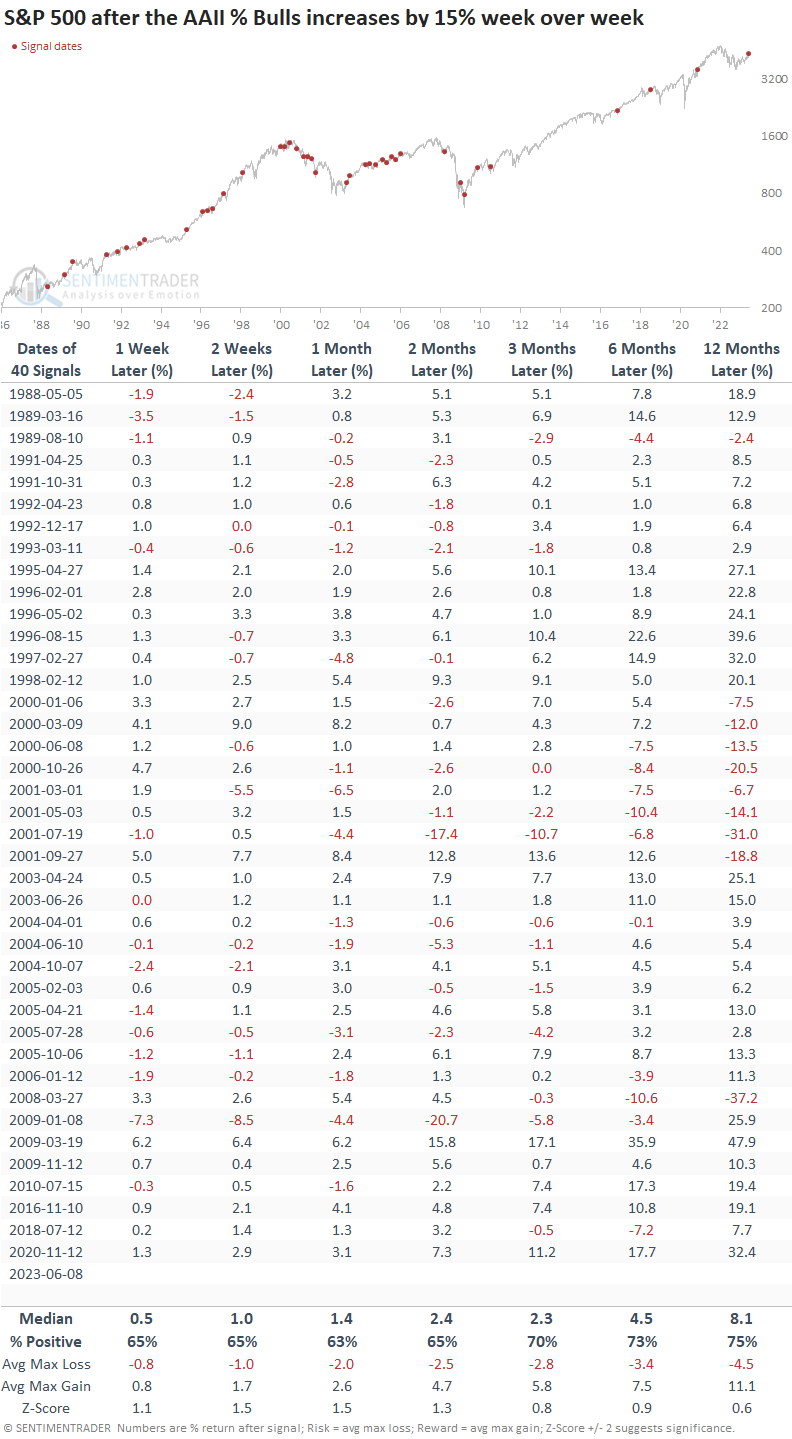
Signal dates reflect the as-of-report date, and I used the first alert in eight weeks to screen out repeats.
Signals in an uptrend
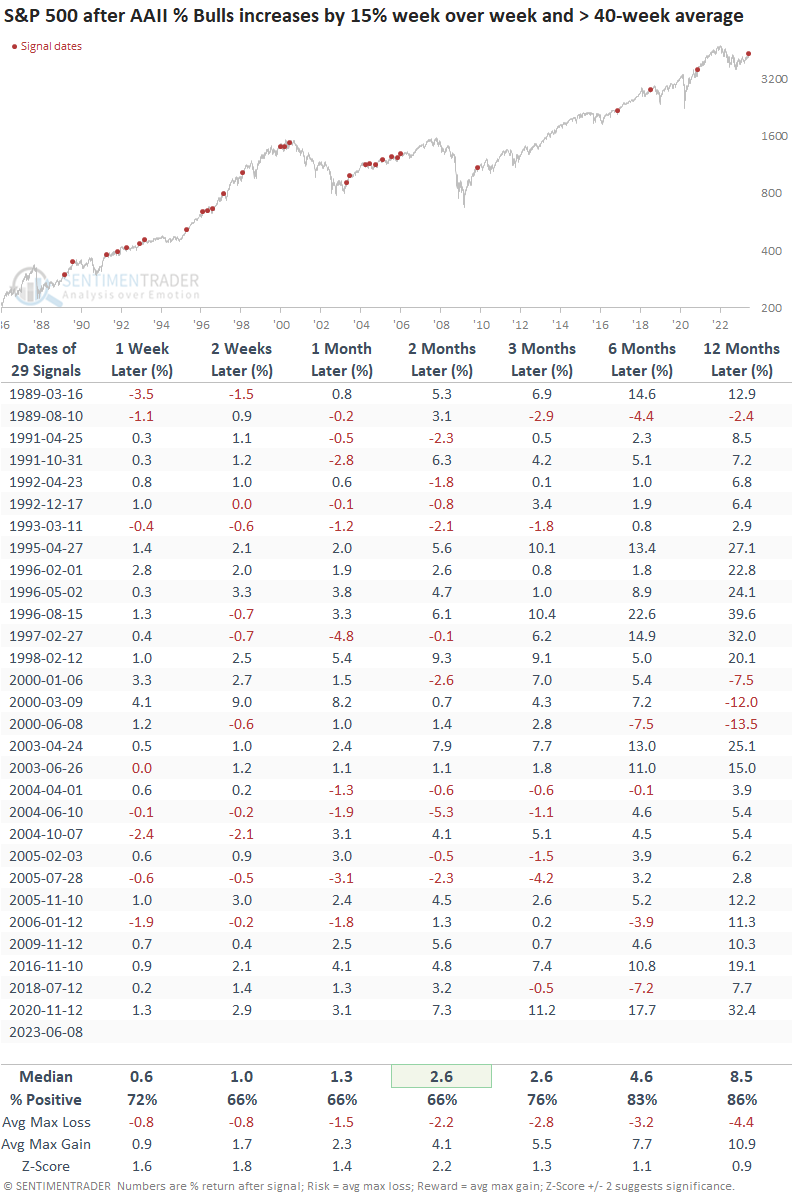
Suppose I add a trend filter to isolate signals when the S&P 500 trades above its 40-week moving average, like now. In that case, returns and win rates were slightly better. More importantly, significant drawdowns were less likely.
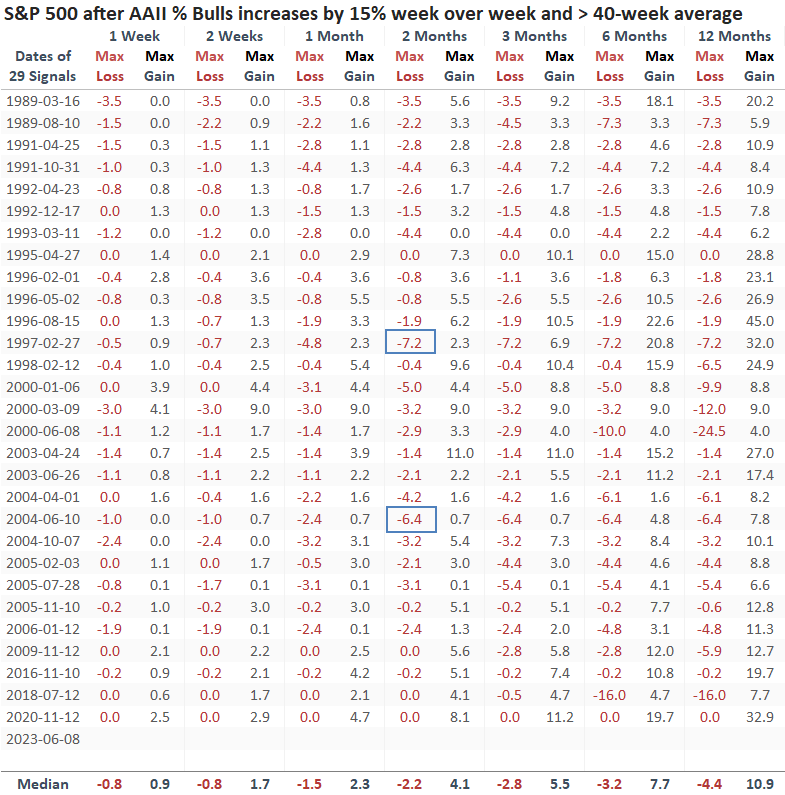
Only two precedents showed a max loss of more than -5% over the next two months when the S&P 500 traded above its 40-week average.
A survey that measures exposure for active investment managers surged
The NAAIM exposure index surged by over 36%, the largest week-over-week gain since April 2021 and the 5th most significant in history. Let's assess the outlook for the S&P 500 when the index increases by 30%.
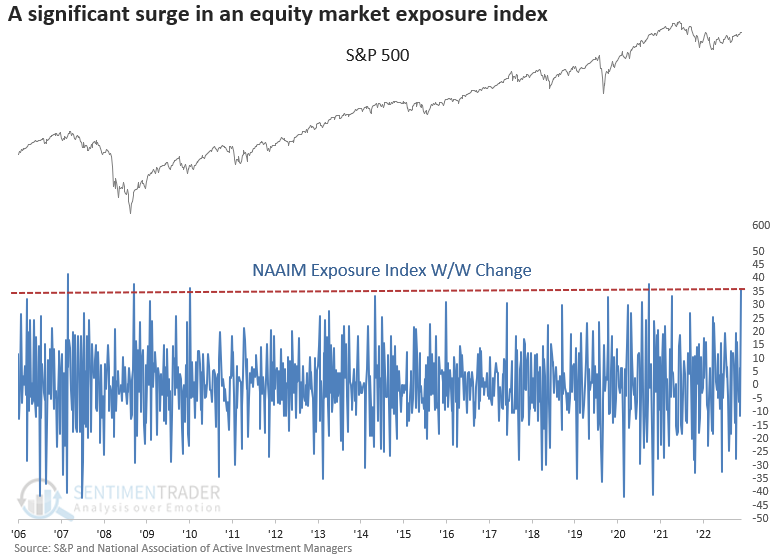
When the NAAIM Exposure Index surges like now, the S&P 500 tends to rally, with excellent results across all horizons. The survey started in 2006, so it's less battle-tested in bear markets.
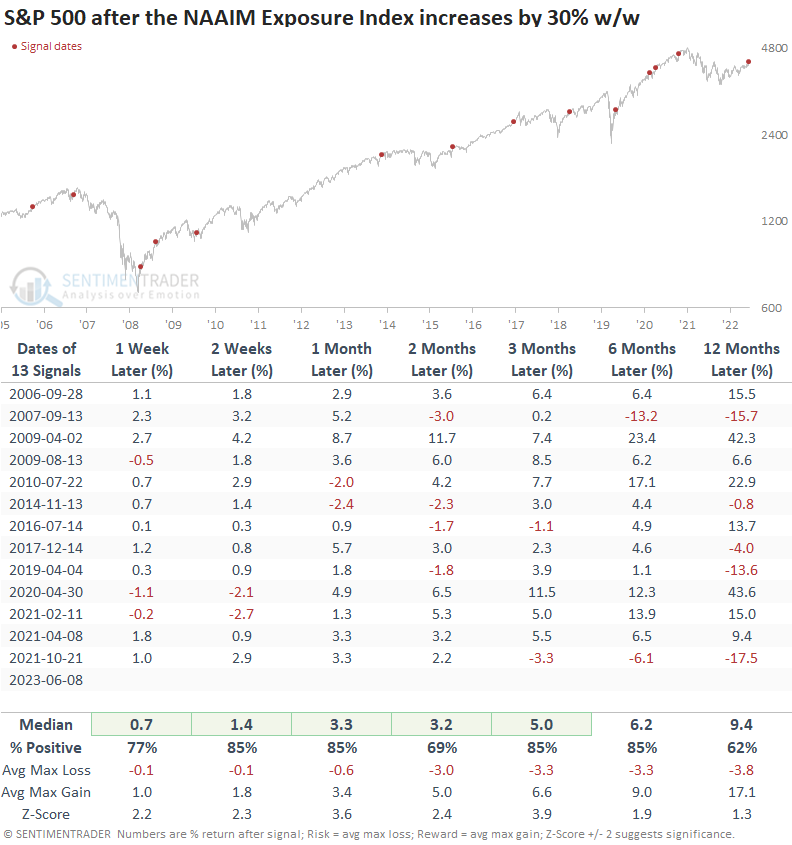
Signal dates reflect the as-of-report date, and I used the first alert in eight weeks to screen out repeats.
Signals in an uptrend
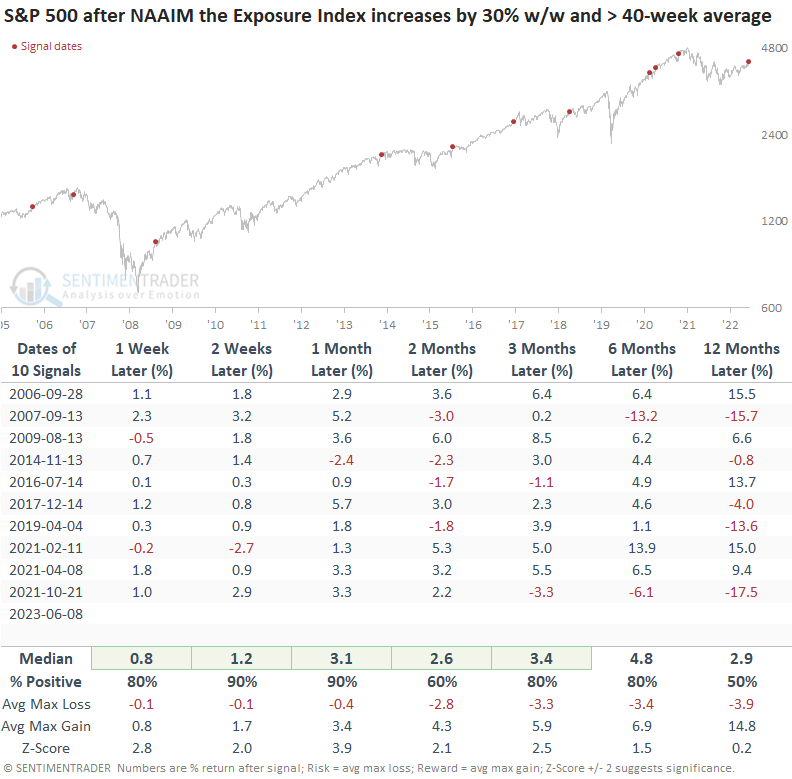
The results look excellent over the next six months when I add the trend filter condition to the NAAIM signals. Eventually, bullish sentiment in an uptrend impacts the S&P 500, with an uninspiring outlook a year later.
What the research tells us...
Sentiment surveys are becoming more optimistic, especially over the last week, with new data from AAII and NAAIM showing significant increases. Historically, a surge in optimism like now tends to be more bullish than bearish for the S&P 500. Remember, sentiment signals work best when they reach an extreme condition and reverse the other way. So far, most sentiment-based indicators have yet to arrive at an overly optimistic extreme, much less hook down.