
Seasonal Opportunities in Commodity Futures and ETFs

Key points:
- Seasonality is not to be confused with "precision market timing"
- Seasonality is not a roadmap of the future, but merely an average of the past; for this reason, seasonality is best used when price action and the expected seasonal trend are in alignment
- Short-term seasonal periods are absolutely "hit or miss" affairs, so the opportunities detailed below in Platinum, Corn, Soybeans, Palladium, US Dollar, Natural Gas, and the Euro are only for those traders who understand the risks involved and who are willing to take action to minimize their risk
Commodities rose in 2025; further gains appear possible
The Bloomberg Commodity Spot Price Index (BCOMSP) gained more than 15% in 2025. Precious metals led the way, with the Invesco DB Precious Metals Fund (DBP) leading the way with a 70% gain. Historically, rallies in precious metals have tended to precede rallies in broader commodity indexes. Will the same thing unfold now? We cannot predict. However, the performance of commodities relative to stocks has been beaten down in recent years, as shown below.
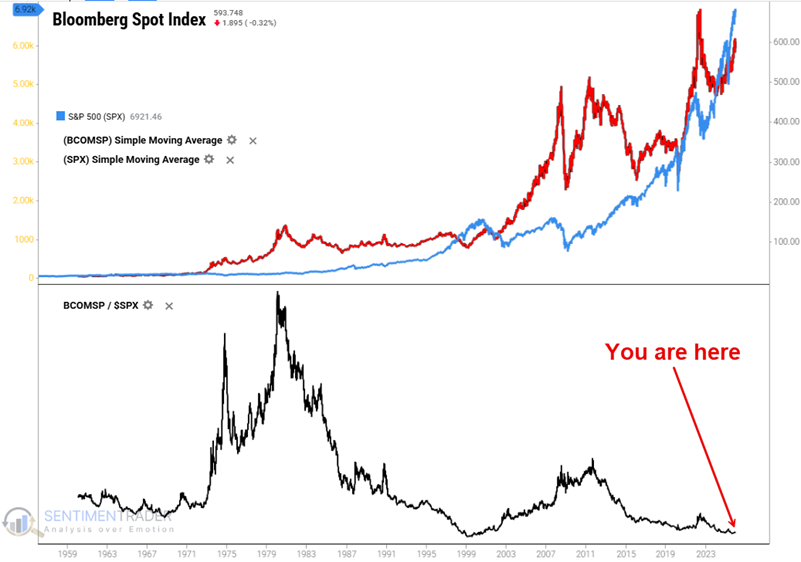
It is tempting to look at the lower clip in the charts above and assume that commodities are "due" to outperform stocks. The reality is that one could have made that argument for most of the last decade. "When" the tide will turn remains an open question. Our best suggestion is to keep a close eye on this relationship and be prepared to jump on board the commodities train (consider index ETFs such as GCC, DBMF, and PDBC) when an actual uptrend begins to unfold.
In the meantime, trading opportunities (in futures contracts and/or related ETFs, as detailed) may soon emerge in the markets listed below.
Platinum
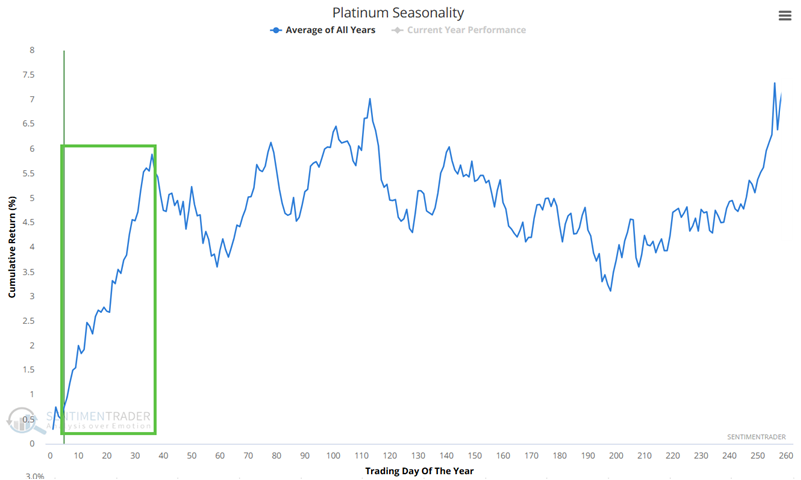
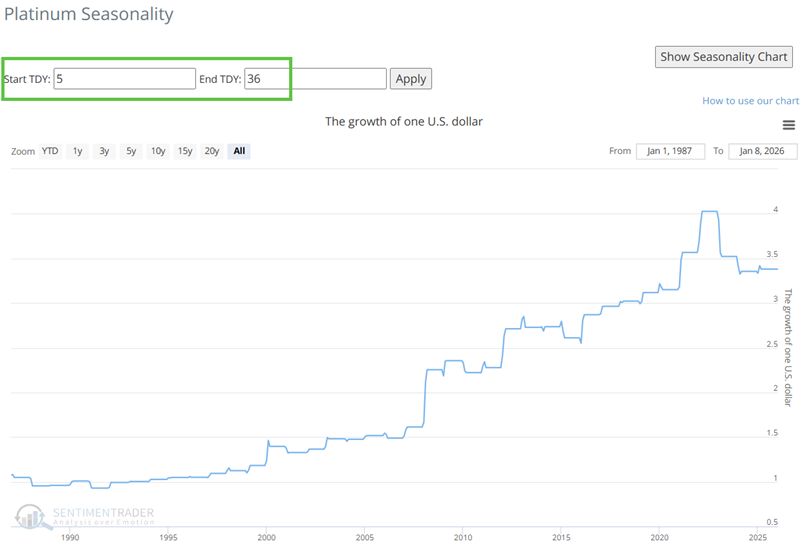
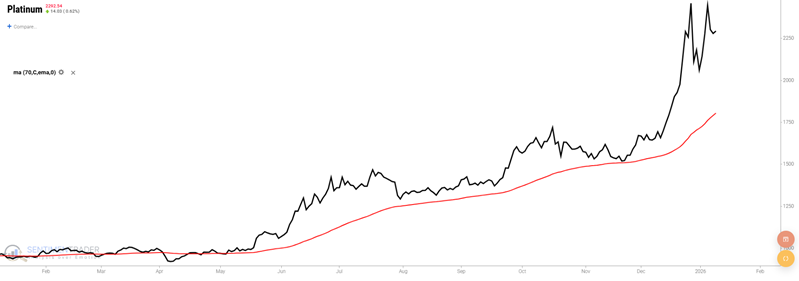
Platinum enjoyed a near-vertical ascent from late November to late December. Since then, it has been whipsawing in a very wide range. The Annual Seasonal Trend chart for Platinum still suggests a bullish bias for the next month or so. The highlighted period extends from Trading Day of the Year (TDY) #4 through TDY #36. For 2026, this period extends from January 8th through February 24th.
The chart below displays the hypothetical growth of $1 achieved by holding a long position in Platinum only during this period every year since 1987.
Platinum remains in a price uptrend, although it has experienced an extremely overbought reading, so there is significant downside risk if the price action fails to follow through to the upside.
Non-futures traders can consider the abrdn Physical Platinum Shares ETF (PPLT).
Corn
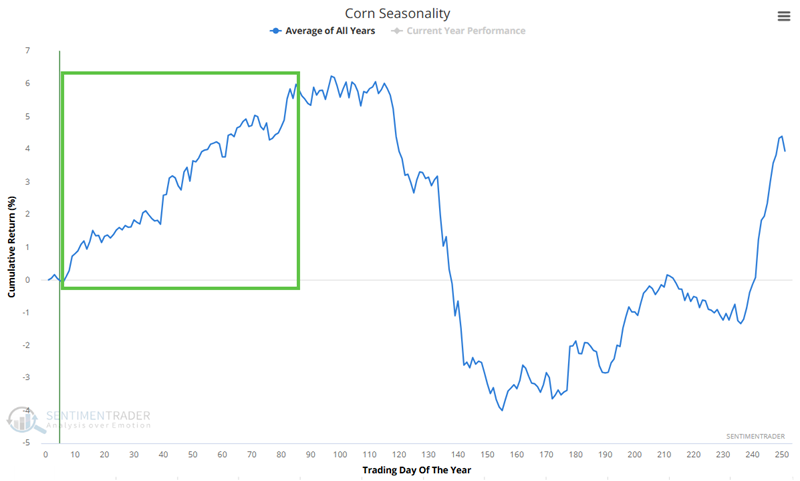
The chart below displays the Annual Seasonal Trend chart for Corn and highlights a favorable period that extends from Trading Day of the Year (TDY) #5 through TDY #85. For 2026, this period extends from January 8th through May 5th.
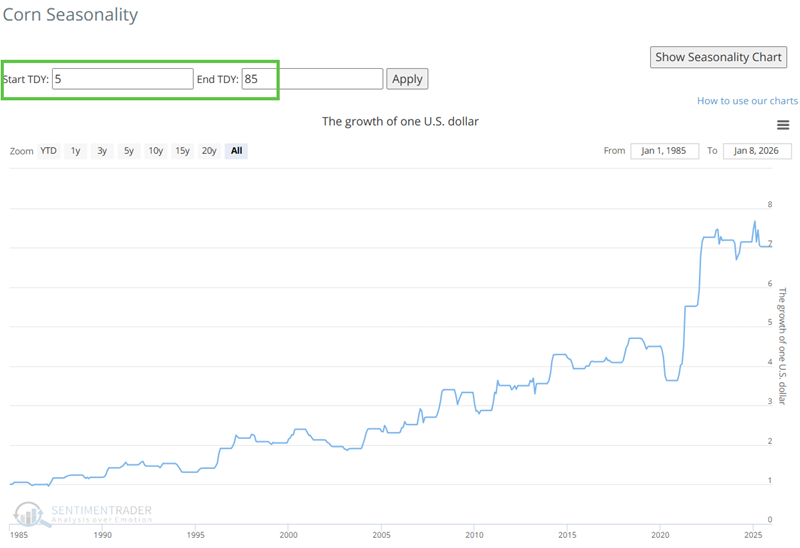
The chart below displays the hypothetical growth of $1 achieved by holding a long position in Corn only during this period every year since 1987.
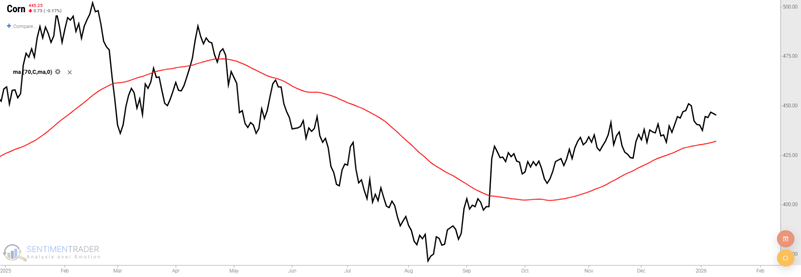
Seasonality and price action presently align for corn.
Non-futures traders can consider the Teucrium Corn Fund ETF (CORN).
Soybeans
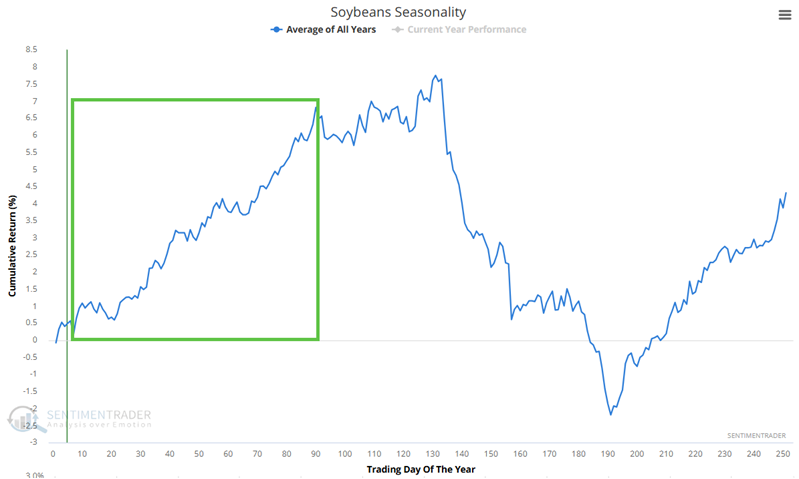
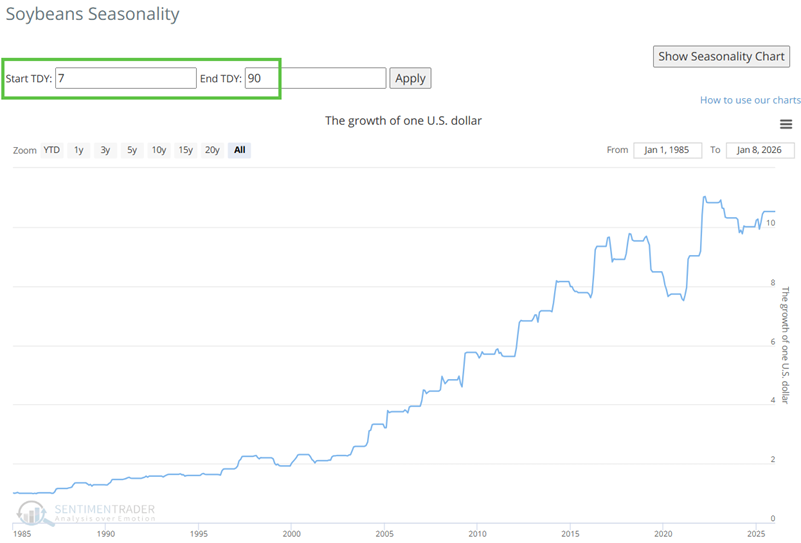
The chart below displays the Annual Seasonal Trend chart for Soybeans and highlights a favorable period that extends from Trading Day of the Year (TDY) #7 through TDY #90. For 2026, this period extends from January 12th through May 12th.
The chart below displays the hypothetical growth of $1 achieved by holding a long position in Soybeans only during this period every year.
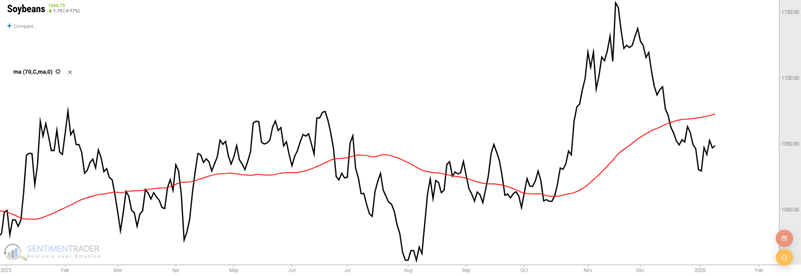
Price action is not yet in alignment with seasonality, so traders must decide whether to commit in anticipation of an up move or wait for price action to confirm an uptrend before entering.
Non-futures traders can consider the Teucrium Soybean Fund ETF (SOYB).
Palladium
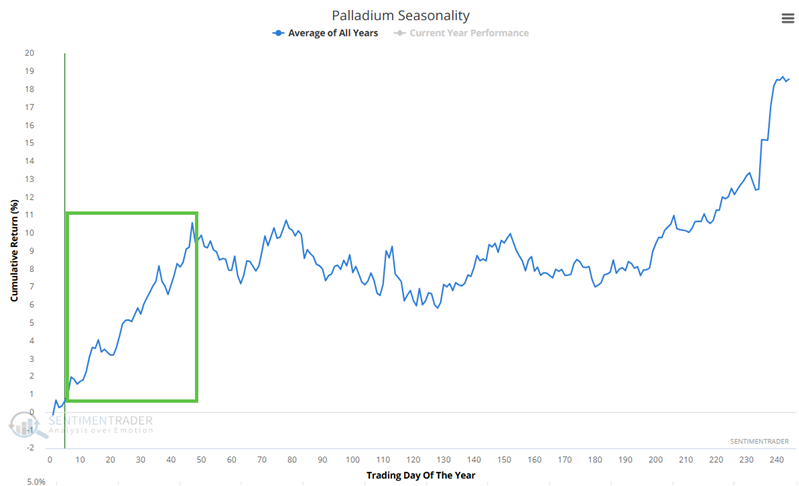
The chart below displays the Annual Seasonal Trend chart for Palladium and highlights an unfavorable period that extends from Trading Day of the Year (TDY) #9 through TDY #47. For 2026, this period extends from January 14th through March 11th.
The chart below displays the hypothetical growth of $1 achieved by holding a long position in Palladium only during this period every year.
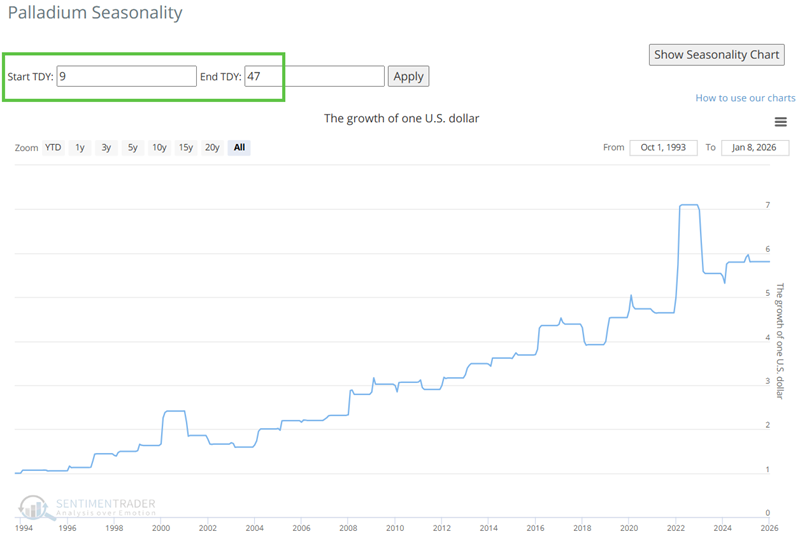
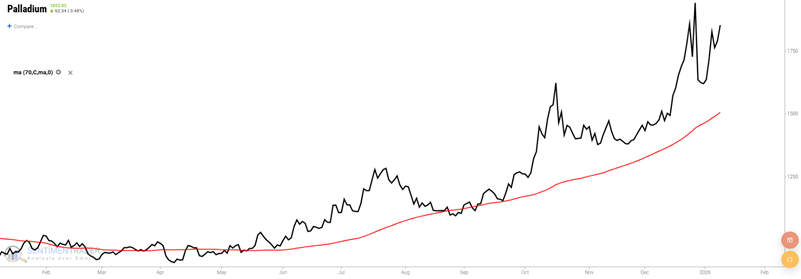
Like platinum, palladium has already enjoyed a monster rally in recent months. So, while price is clearly in agreement with a favorable seasonal outlook, there is significant downside risk to consider.
Non-futures traders can consider the abrdn Physical Palladium Shares ETF (PALL).
US Dollar
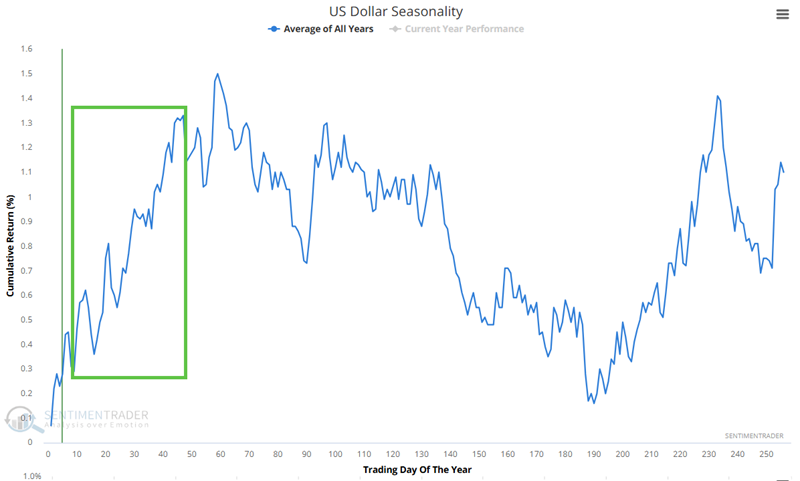
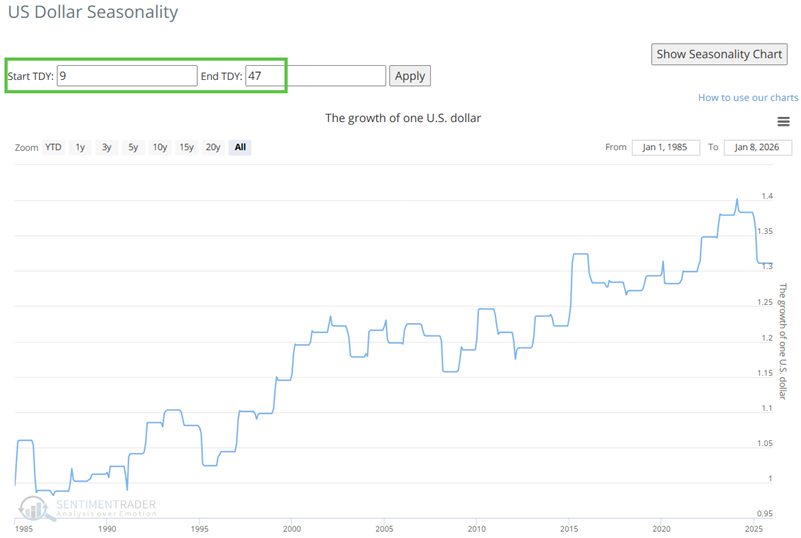
The chart below displays the Annual Seasonal Trend chart for the US Dollar and highlights an unfavorable period that extends from Trading Day of the Year (TDY) #9 through TDY #47. For 2026, this period extends from January 14th through March 11th.
The chart below displays the hypothetical growth of $1 achieved by holding a long position in the US Dollar only during this period every year.
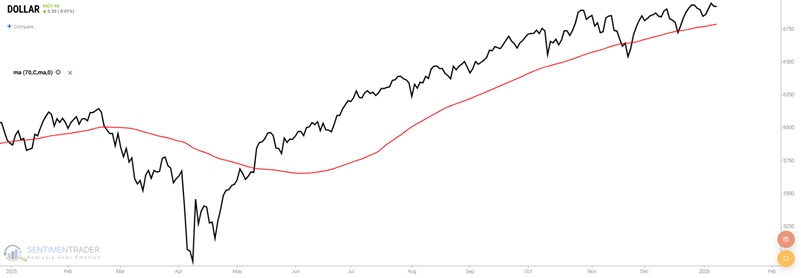
The Dollar has quietly established a price uptrend recently and is presently in alignment with the impending favorable seasonal trend.
Non-futures traders can consider the Invesco DB US Dollar Index Bullish Fund ETF (UUP).
Natural Gas
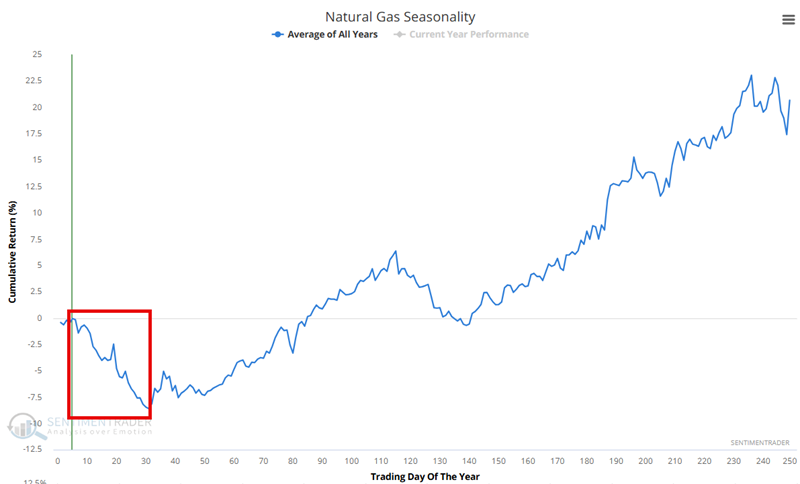
The chart below displays the Annual Seasonal Trend chart for Natural Gas and highlights an unfavorable period that extends from Trading Day of the Year (TDY) #6 through TDY #31. For 2026, this period extends from January 9th through February 17th.
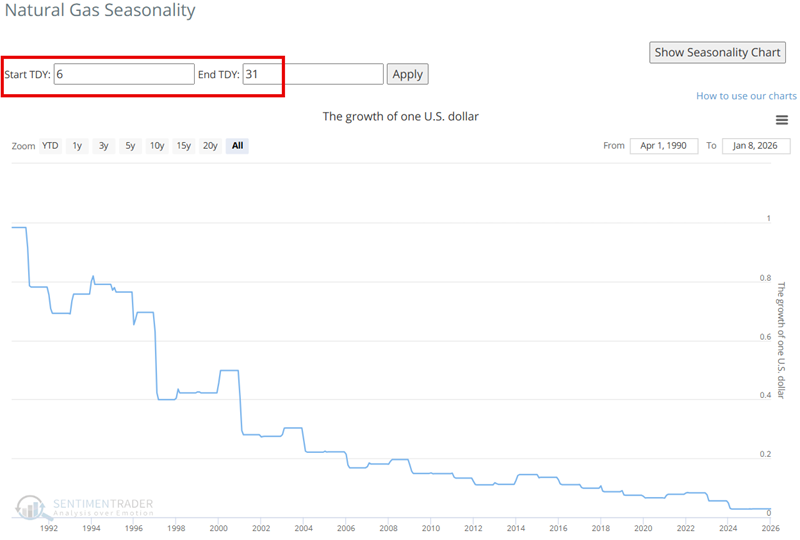
The chart below displays the hypothetical growth of $1 achieved by holding a long position in Natural Gas only during this period every year.
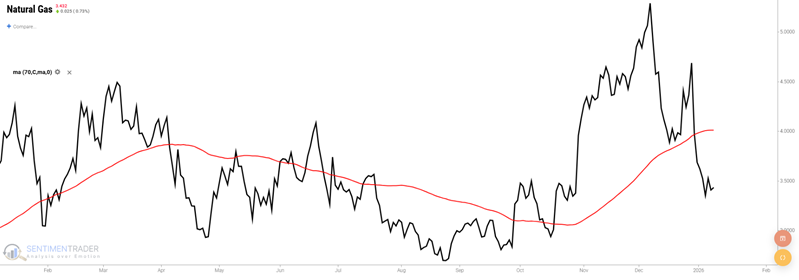
Seasonality and price action presently align for Natural Gas. That said, Natural Gas is sort of the inverse of platinum and Palladium in that it has already experienced a sharp decline. NG is one of the most volatile markets, and sharp countertrend moves are common.
Non-futures traders can consider a short position in the United States Natural Gas Fund LP (UNG), or a long position in the leveraged inverse ProShares UltraShort Bloomberg Natural Gas (KOLD).
Euro
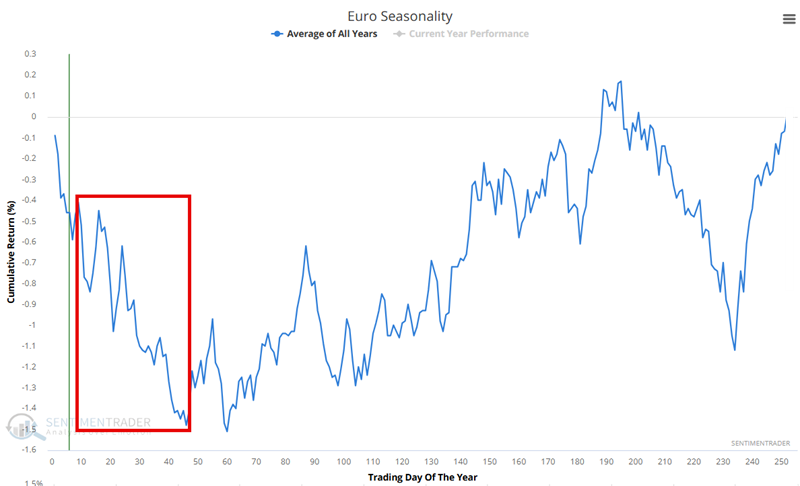
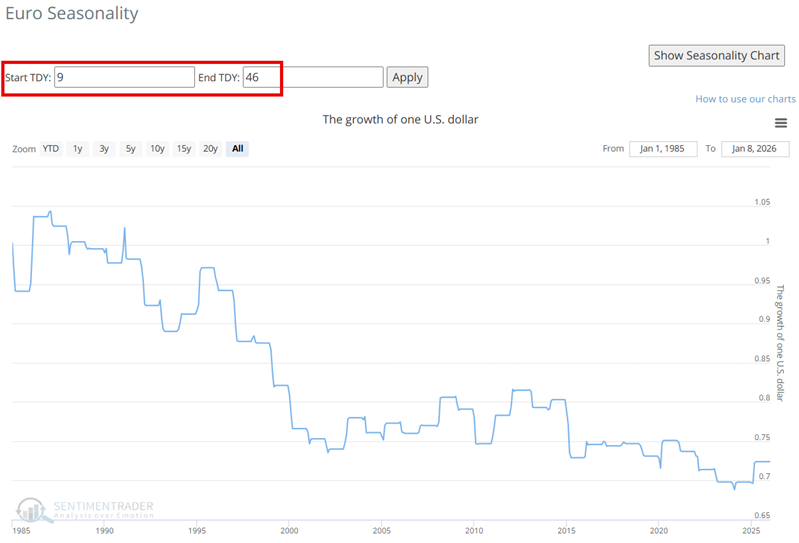
The chart below displays the Annual Seasonal Trend chart for Euro and highlights an unfavorable period that extends from Trading Day of the Year (TDY) #9 through TDY #46. For 2026, this period extends from January 14th through March 10th.
The chart below displays the hypothetical cumulative $ (+/-) achieved by holding a long position in Euros only during this period every year.
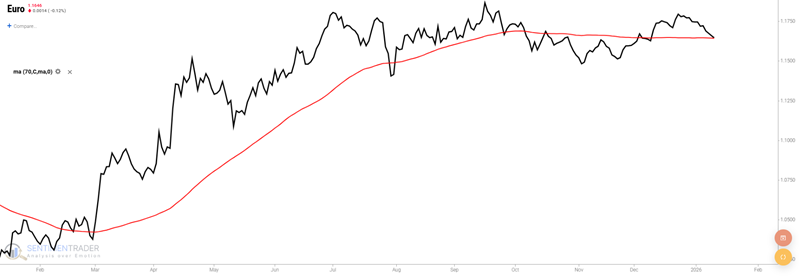
Price action is neutral for the Euro, neither confirming nor denying the seasonal expectation for lower prices.
Non-futures traders can consider a short position in the Invesco CurrencyShares Euro Trust ETF (FXE) or a long position in the leveraged inverse ProShares UltraShort Euro ETF (EUO). Note that EUO is very thinly traded.
Summary of potential opportunities
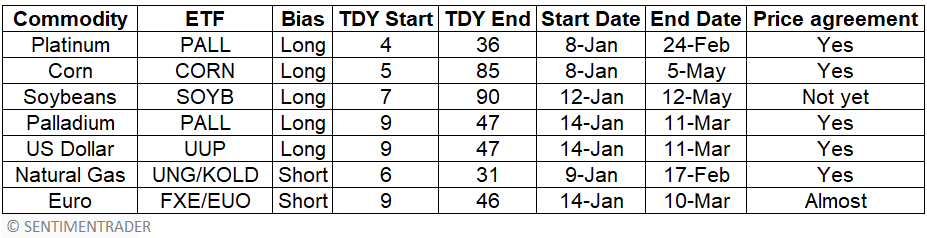
The table below summarizes the potential opportunities detailed above.
What the research tells us…
The onset of a particular historically favorable or unfavorable period for a given market does not, in this analyst's opinion, automatically equate to a trading signal. Seasonal tendencies merely suggest "When to look where," i.e., they offer an alert to a possible trend. As confirmation, it is generally helpful to enter trades where both the seasonal trend and actual price action are favorable or unfavorable. This can significantly increase the likelihood of success for a given trade. That said, price action can always reverse unexpectedly. As a result, it remains each trader's responsibility to select an actual entry point, to allocate capital responsibly, and to manage risk ruthlessly.
Each commodity market ultimately fluctuates based on its own supply and demand factors. Very often, these factors are influenced by seasonal fluctuations, and as a result, specific and unique opportunities can arise. Aggressive traders who understand how to manage risk in the futures market (or via an ETF) may consider pressing their advantage in these markets in the near term.