
Seasonal Clues for Biotech, Natural Gas, MLPs, and Regional Banks

Key points:
- Seasonal trends should not be thought of as "buy" or "sell" signals
- Seasonal trends should be thought of as "clues" that tell us "When to where for a potential opportunity"
- With that understanding in mind, traders might consider looking more closely at biotech, natural gas, master limited partnerships, and regional banks for potential trading opportunities
Biotech (IBB) faces a short-term headwind
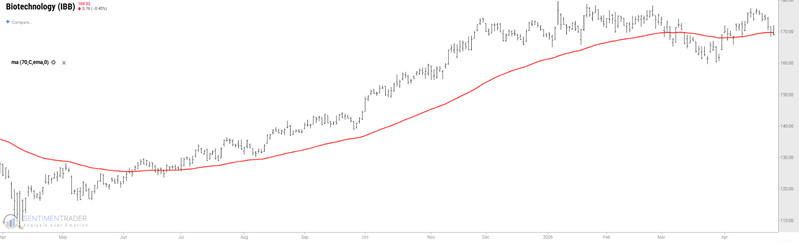
After a strong rally from April to November 2025, the iShares Nasdaq Biotechnology ETF has traded sideways for 5 months.
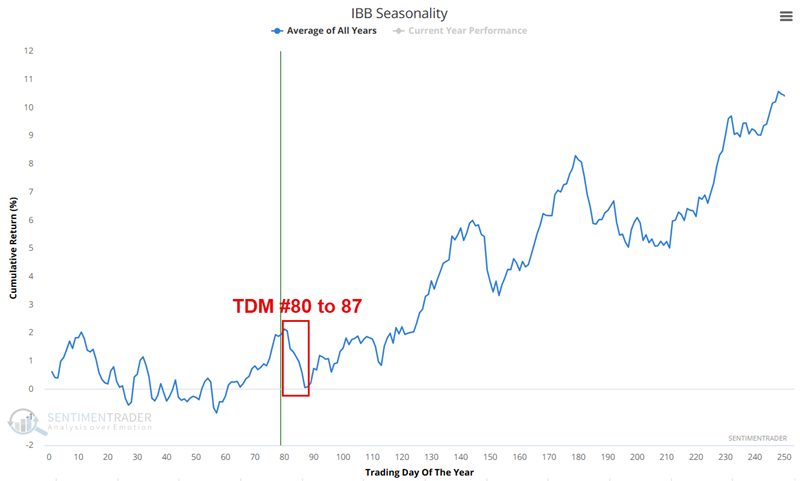
The Annual Seasonal Trend chart for IBB still suggests a bullish bias for most of the rest of the year. However, the short-term period from Trading Day of the Year (TDY) #80 through TDY #87 tends to be very challenging for this sector. For 2026, this period extends from April 28th through May 7th.
The chart below displays the hypothetical growth of $1 achieved by holding a long position in IBB only during this period every year since 2002.
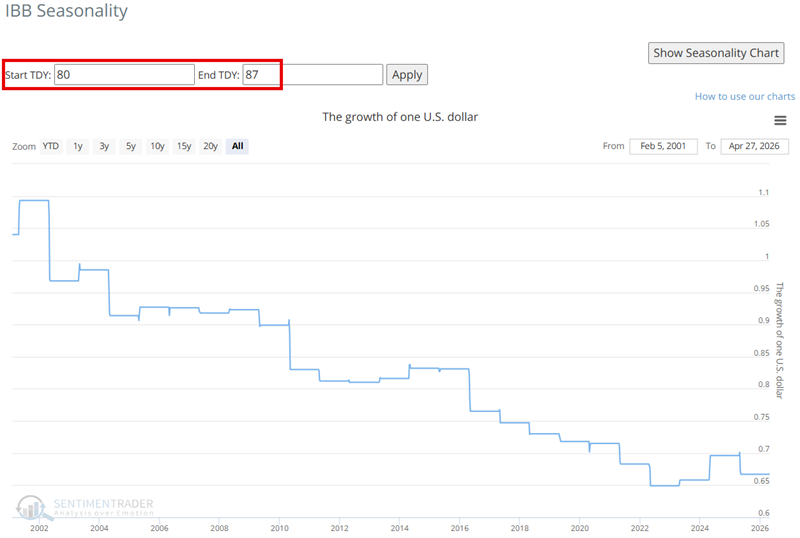
Aggressive short-term traders might consider trading the short side of IBB (with a stop-loss to limit risk) or an options trade on IBB. Those considering jumping into IBB on the long side should wait until this unfavorable seasonal period has passed.
It may be soon or next year for the Natural Gas (UNG) winter-to-spring tendency
The United States Natural Gas Fund LP (UNG) has trended relentlessly lower.
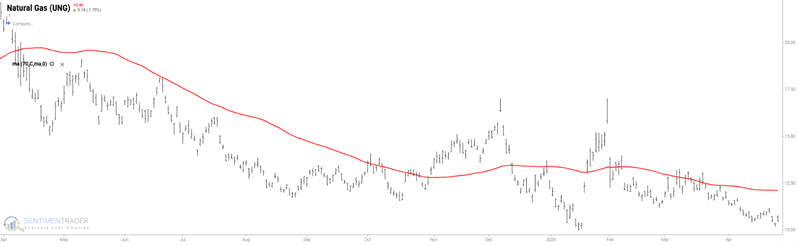
This has continued even though UNG seasonality has been favorable in mid-February.
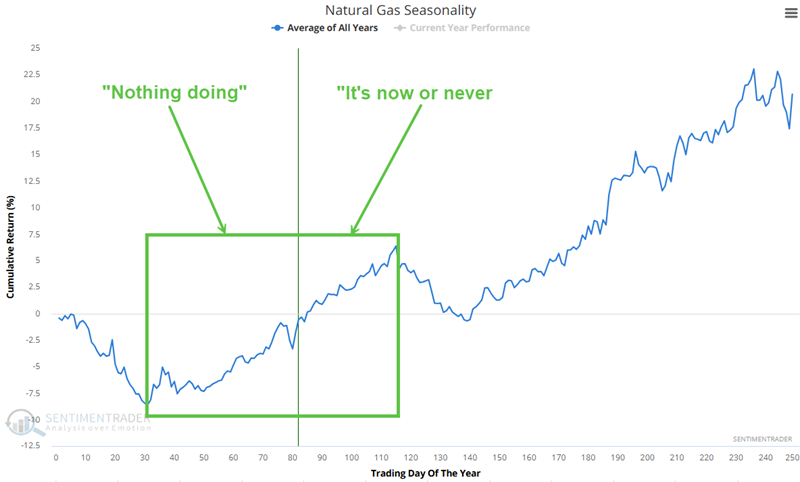
Natural gas is now entering the "It's now or never" phase of this year's "typical seasonal strength in late winter into Spring" period. One more favorable period will run from TDY #84 through TDY #115 (April 30 through June 15). The chart below shows the hypothetical cumulative return since 1990.
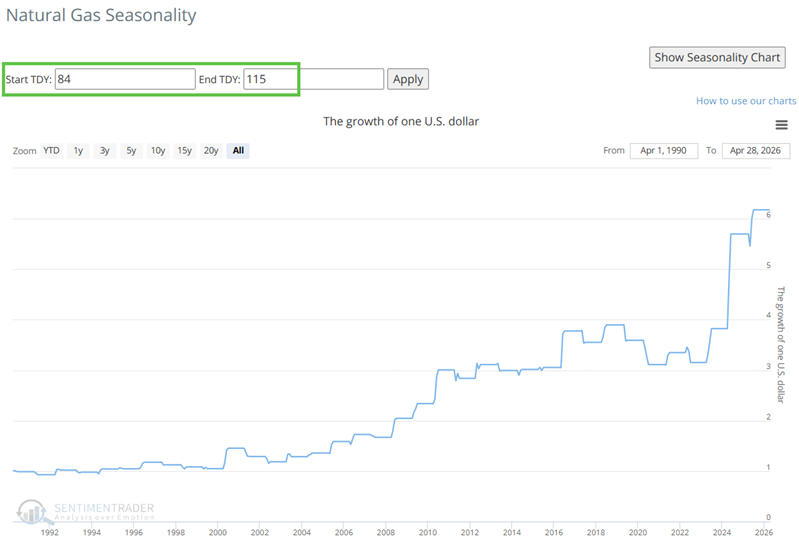
Aggressive short-term traders might consider watching UNG closely for signs of a reversal as long as the January low of $9.94 a share holds. A drop below that support level would suggest it's time to "throw in the towel."
Holding off on buying AMLP might be wise
The Alerian MLP ETF (AMLP) is entering a short-term, unfavorable seasonal period. The play here is less about shorting AMLP (shorting AMLP shares or trading put options on AMLP) and more about simply delaying any purchases of AMLP shares until the upcoming seasonal period passes. For 2026, this near-term period extends from the close on TDY #81 through TDY #91 (April 29th through May 13th).
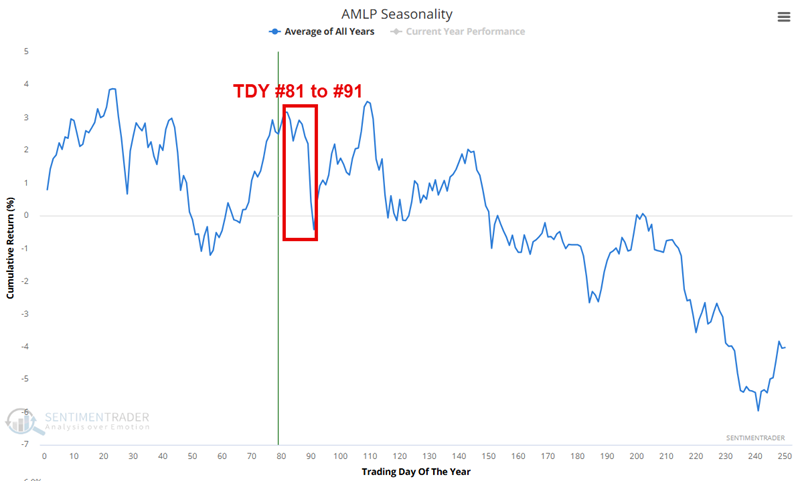 The chart below shows the hypothetical cumulative return for AMLP during this period since 2010.
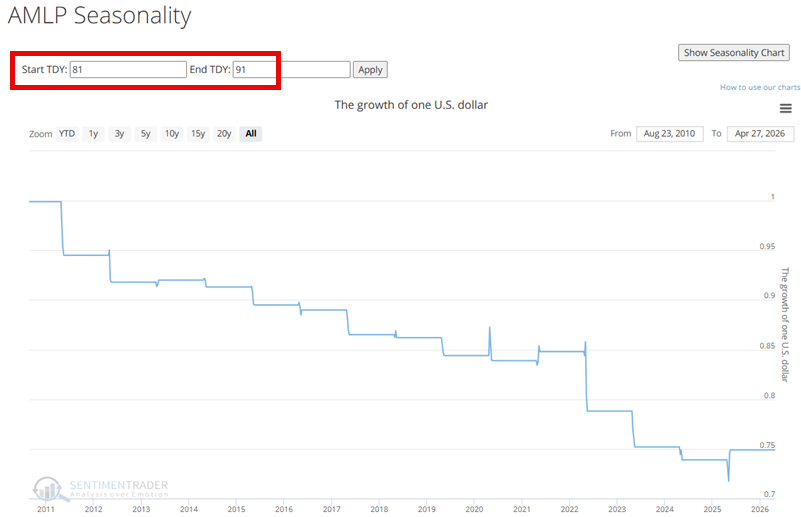
While there is no guarantee that AMLP will trend lower in the short term, history suggests the long side is not the place to be for now.
Regional Banks (KRE) - acting well, but facing a serious seasonal headwind
The State Street SPDR S&P Regional Banking ETF (KRE) stands 43% above its April 2025 low and is acting well.
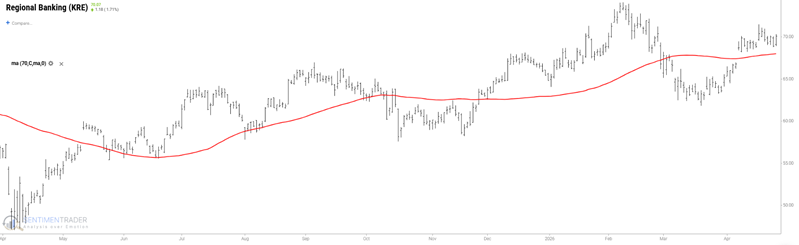
Despite the recent strength, investors and traders should note that KRE is entering a very unfavorable seasonal period. This period extends from TDY #81 through TDY #122 (for 2026, this is the close of April 29th through June 29th).
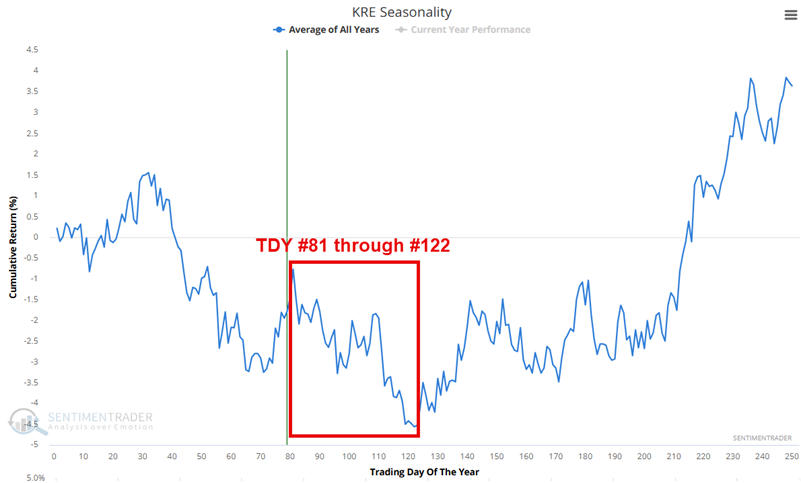
The chart below displays the hypothetical growth of $1 achieved by holding a long position in KRE only during this period every year since 2006.
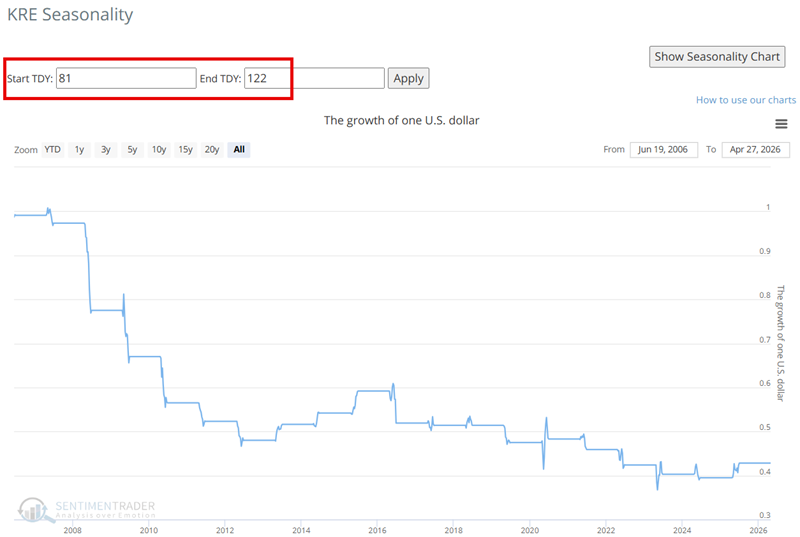
So, is KRE "doomed" to fall between late April and late June? That is not exactly what is being implied. The real message is that there has rarely been big money to be made in regional banks during this period. So, the real question for investors is, "Is this where I want to allocate capital?" As long as price action holds up, there is no reason for panic. But the warning sign is flashing if the price starts to break down.
What the research tells us…
The onset of a historically favorable or unfavorable period for a given sector or ETF does not automatically constitute a "trading signal." Seasonal tendencies merely suggest "When to look where," i.e., they offer an alert to a possible trend. As confirmation, it is generally helpful to enter trades where both the seasonal trend and actual price action are favorable or unfavorable. This can significantly increase the likelihood of success for a given trade. That said, price action can always reverse unexpectedly. As a result, it remains each trader's responsibility to select an actual entry point, to allocate capital responsibly, and to manage risk ruthlessly.