
Risk Appetite Index signal still on track

As the name implies, our Risk Appetite Index measures the degree to which investors are willing to accept risk at a given time. Like many sentiment indicators, it tends to be right in the middle but wrong at the extremes. When the index gets too low, it typically implies a favorable contrarian environment. When it gets too high, it usually means that investors have become too bullish. However, acting on these extreme readings often entails buying into the teeth of a sharp decline or selling into a rally.
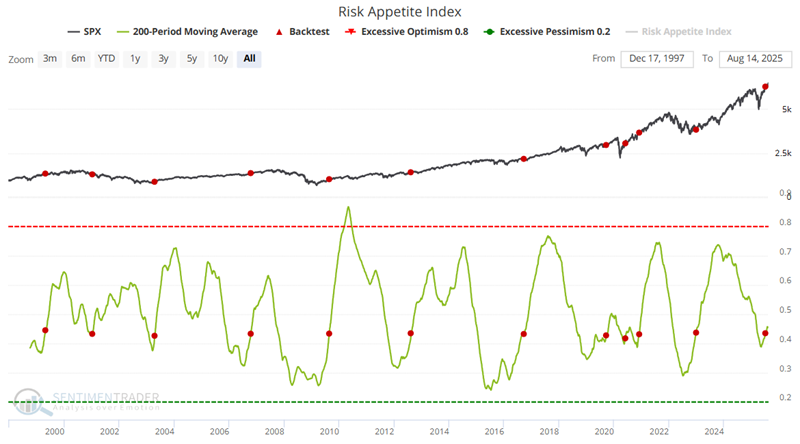
One helpful alternative usage is to wait for a moving average to reach a low extreme and then start trending in the opposite direction. In other words, instead of trying to pick a bottom, our objective is to jump in at the earliest sign of a new established uptrend. One example involves buying when the 200-day moving average for the Risk Appetite Index crosses above 0.43.
The chart and tables below summarize S&P 500 performance following this signal since 1998.
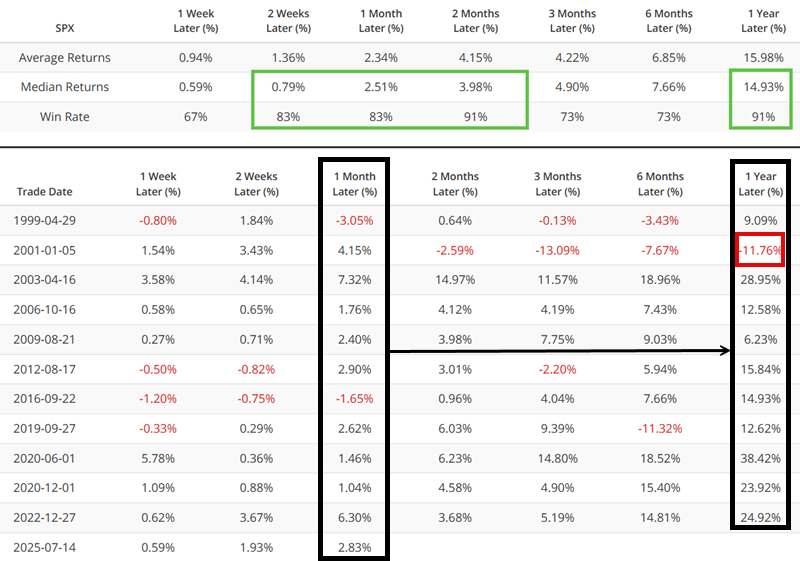
The most recent signal occurred on July 14th. Only once previously did the S&P 500 not rise between one month and one year after a signal. No signal is ever guaranteed to work, but this is a useful continuation signal, suggesting still higher prices in the months ahead.