
Rising economic and consumer optimism supports a positive stock market outlook

Key points:
- An economic and consumer sentiment composite surged over the last three months
- Similar upticks in survey-based optimism suggest the uptrend in the S&P 500 will persist
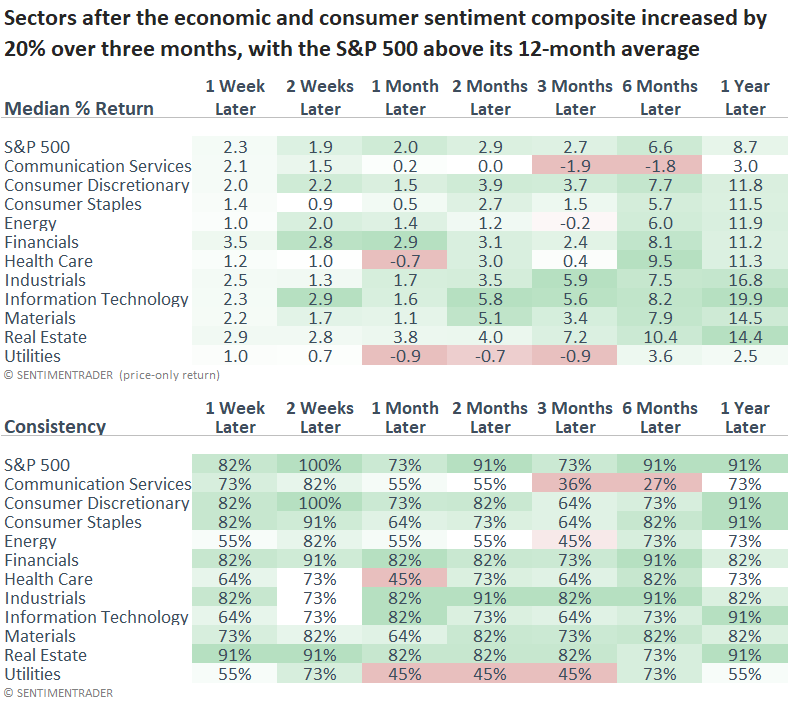
- Cyclical-oriented sectors tended to outperform the broad market and defensive groups
Surveys reveal more optimism, particularly among small businesses
The National Federation of Independent Business (NFIB) released its small business sentiment survey on Tuesday. This is the final November data point for my economic and consumer sentiment composite, which reflects a broad range of surveys across the economy, including small business owners, housing, manufacturing, services, and consumers.
As the chart below depicts, the economic and consumer sentiment composite shifted upward after languishing in pessimistic territory frequently associated with recessions amidst challenges like inflation and Fed policy that soured sentiment.
Boosted by a surge in NFIB components, the economic and consumer sentiment composite climbed 22% over three months to reach its highest level since April 2022-an encouraging sign for stocks, as improved confidence often spurs increased consumer spending and business investment, driving economic growth and supporting equity markets.
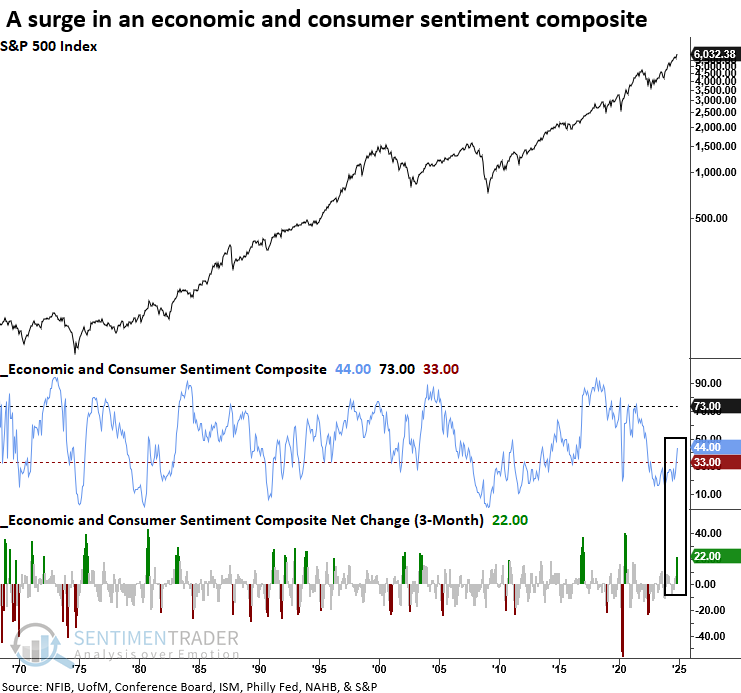
Source/Components:
1.) NFIB Small Business Optimism
2.) NFIB Small Business Economy to Improve
3.) University of Michigan Consumer Sentiment
4.) Conference Board Consumer Confidence
5.) ISM Manufacturing PMI
6.) National Association of Homebuilders
7.) Philadelphia Fed Business Outlook
8.) ISM Non-Manufacturing NMI
Comparable surges in survey-based optimism preceded positive returns for stocks
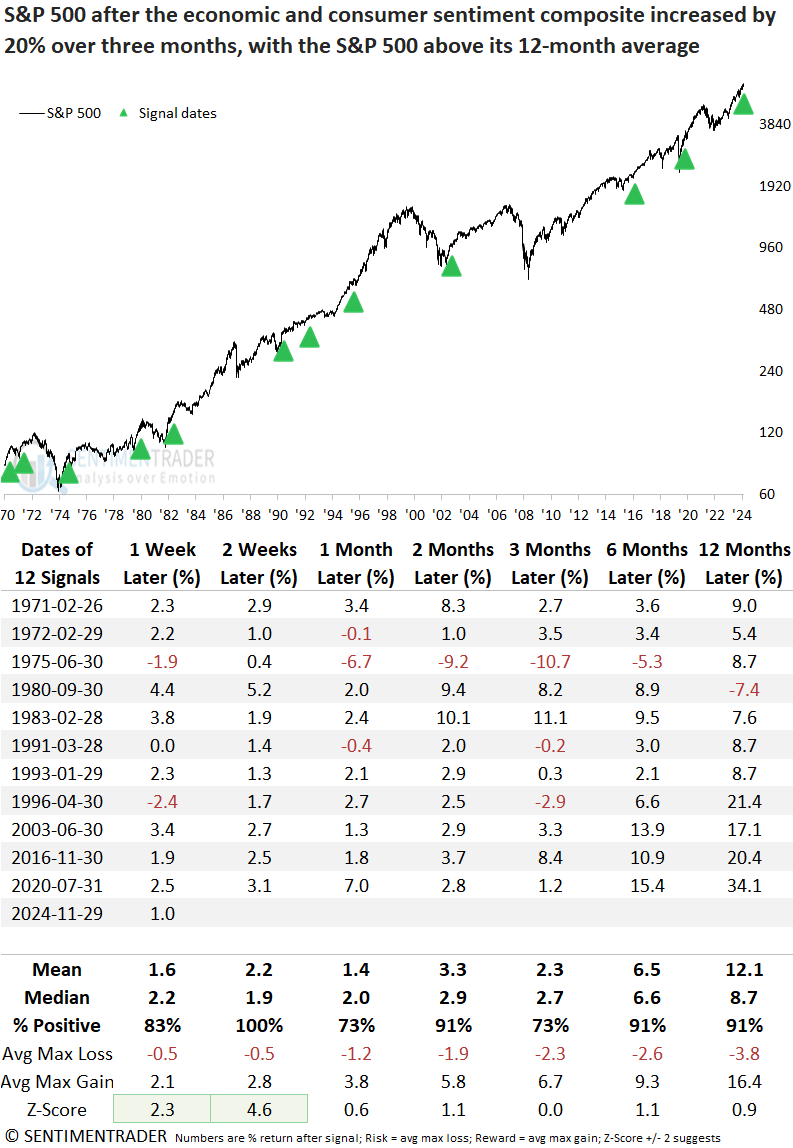
Whenever the economic and consumer sentiment composite increased by over 20% in three months, and the S&P 500 exceeded its 12-month average, the surge in optimism from surveys across a broad range of the economy provided a favorable tailwind for stocks.
Over the subsequent six and twelve months, the S&P 500 rallied in all but one case.
Although most signals occurred as stocks emerged from a bear market linked to an economic contraction, 1996 and 2016 offer compelling comparisons. Like today, these periods featured scenarios such as a soft landing, a technology-driven innovation cycle, and a favorable election outcome for Trump. Will history rhyme?
Unsurprisingly, an uptick in sentiment regarding the economy and consumers provided a more compelling case for owning cyclical sectors over defensive groups.
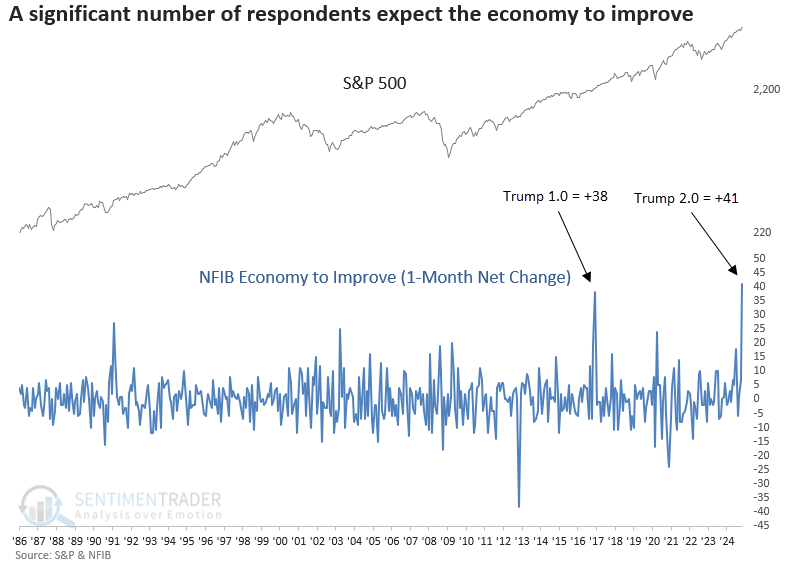
The economic outlook appears brighter to small business owners
Following the election, respondents' expectations of an improving economy, one of ten components in the NFIB survey and a part of my economic and consumer sentiment composite, experienced the most significant monthly increase in its history. Interestingly, a friend of mine, who imports tile from overseas and distributes it across the Southeast, recently shared that his business experienced a significant boost after the election.
"Bull markets are born on pessimism, grow on skepticism, mature on optimism, and die on euphoria." - John Templeton
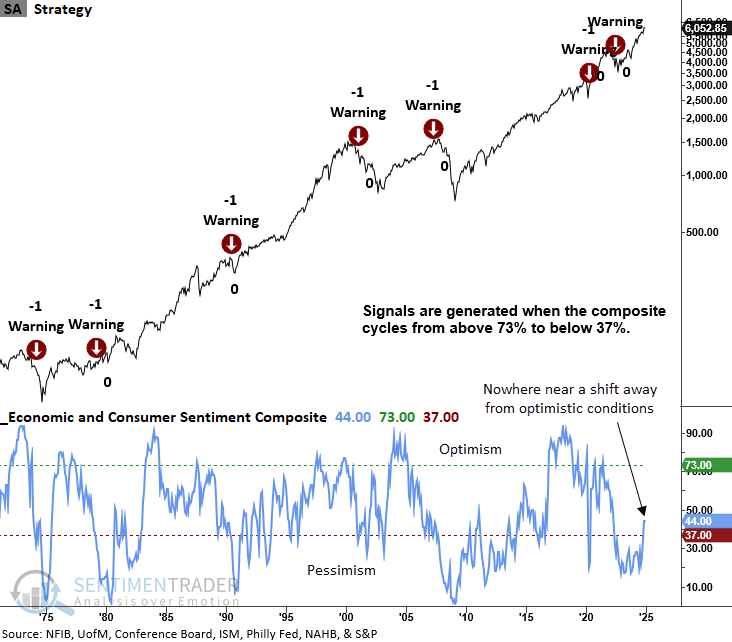
Although the quote from Templeton was intended for the stock market, it could just as easily apply to economic and consumer sentiment surveys, which suggest we're situated somewhere between pessimism and skepticism- far from optimism or euphoria.
Like the stock market, sentiment surrounding the business cycle needs to reach a state of euphoria and reverse lower, as depicted by the model in the following chart, a component of the TCTM Recession Composite.
Transitioning into a bear market accompanied by a recession typically requires widespread optimism from investors and business cycle surveys. At present, only investor sentiment reflects such optimism.
What the research tells us...
Economic and consumer sentiment surveys saw a notable boost of optimism following the election, particularly from small business owners, reflecting increased confidence in the economic outlook. While I don't consider sentiment surveys of this nature to act as a primary market signal, they can provide valuable confirmation of existing market trends. Historically, rising sentiment aligns with positive stock market performance, as improved confidence can spur consumer spending and business investment, fueling economic growth. The current uptick in sentiment underscores the market's bullish message, reinforcing the perception of a favorable economic environment and lending credibility to the ongoing uptrend in equities.