
Relative trends around the globe look bullish

Key points:
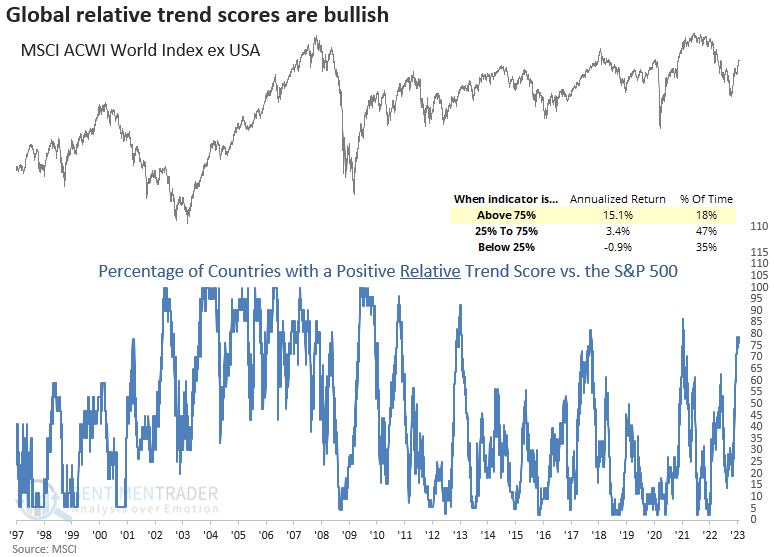
- Over 78% of USD-based country ETFs maintain a positive relative trend score vs. the S&P 500
- When the indicator exceeds 75%, a global index shows an annual return of 15.1%
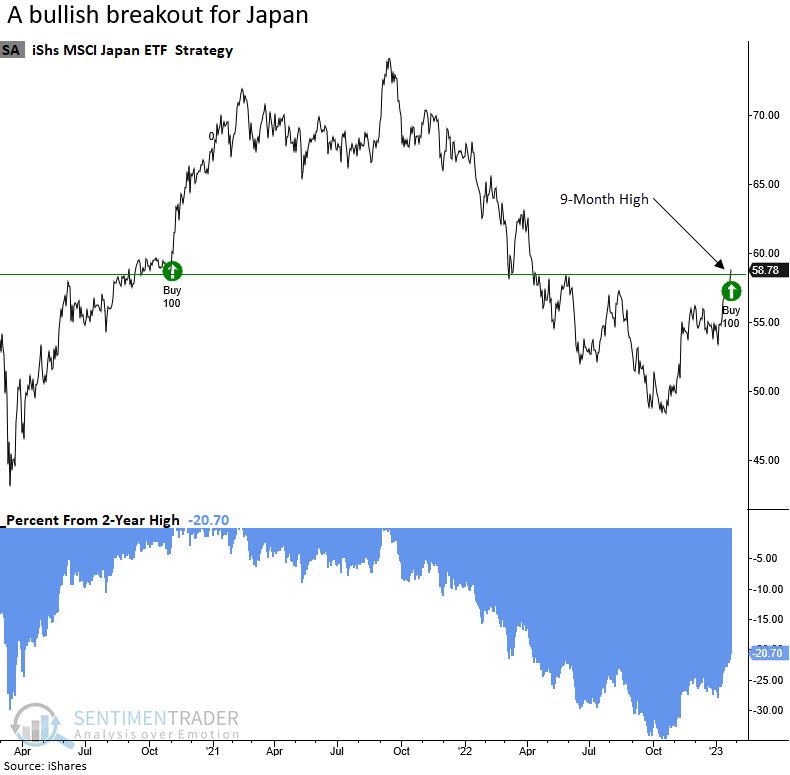
- Japan closed at a 9-month high but not a 12-month high
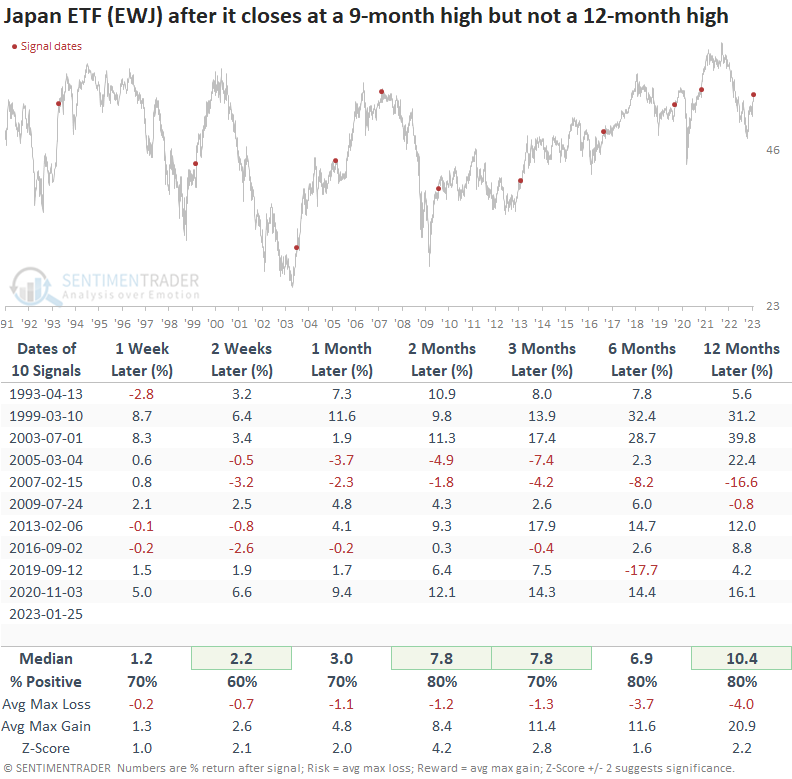
- After similar breakouts, the ETF was higher 80% of the time over the next two months
Global trends transition from a headwind to a tailwind
Now that global equity indexes have recovered from bear markets and surged above long-term trend indicators, the current environment should yield more opportunities for investors and traders.
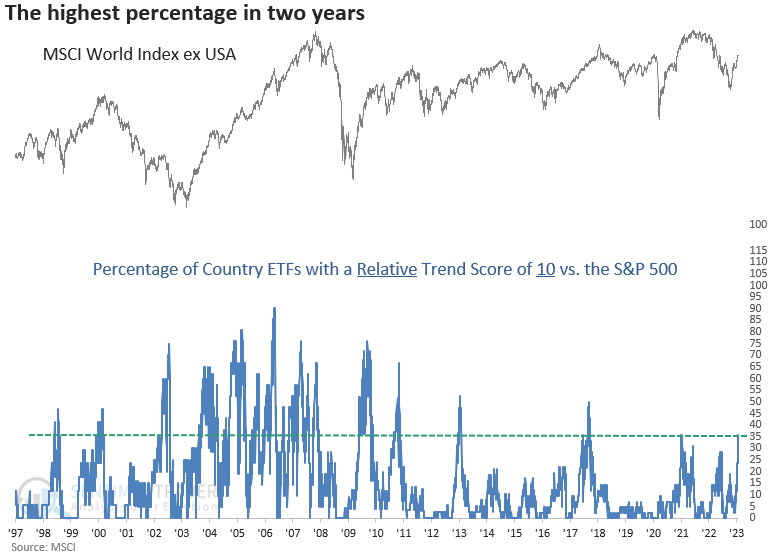
The percentage of country ETFs with a positive relative trend score versus the S&P 500 recently exceeded 78%, representing the highest level in two years. When the indicator increases above 75%, annual returns for the MSCI World Index ex USA surpass 15%.
So, the global relative trend backdrop looks significantly better than the past couple of years.
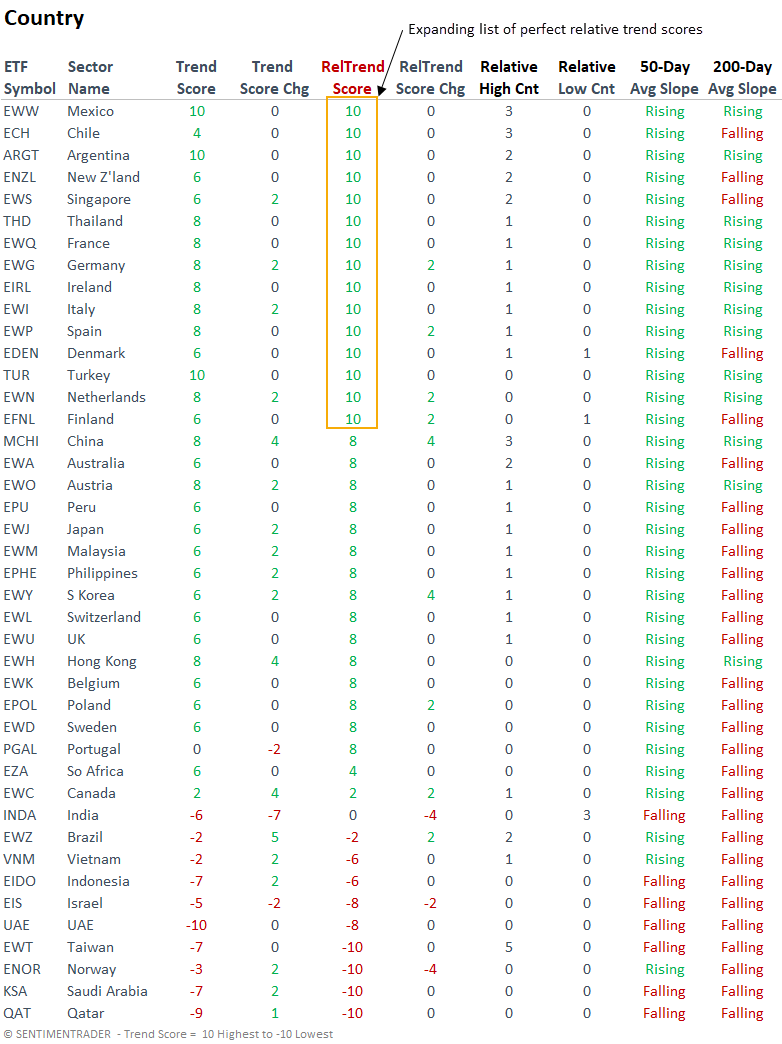
Not only is the list of country ETFs with a positive relative trend score versus the S&P 500 increasing, but the number of ETFs with a perfect score of +10 continues to expand.
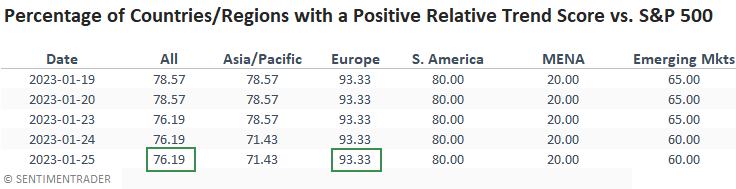
From a regional perspective, the Eurozone looks the best, with over 93% of the countries showing a positive score.
Country ETFs look bullish on an absolute and relative basis
The number of country ETFs with positive absolute and relative trend scores continues to expand.
China and South Korea, two manufacturing-driven economies, had notable w/w relative trend score changes and registered several new relative highs versus the S&P 500.
A manufacturing/export-driven country closed at a new high
In recent notes, I highlighted breakouts in crude oil and semiconductors. We now have a similar breakout in a manufacturing/export-driven economy. On Wednesday, Japan closed at a new 9-month high but not a 12-month high. From a subjective perspective, the chart looks like an inverse head and shoulders pattern.
When the Japan ETF (EWJ) closes at a 9-month high but not a 12-month high, the ETF shows consistently bullish returns and z-scores across most time frames. One notable exception was a signal at the tail end of the 2003-07 bull market.
What the research tells us...
Whether investing or trading, our chances of success are greatly improved if we have a tailwind at our back. With a broad global recovery in absolute and relative trends, we should have ample opportunities to exploit, despite a challenging macro environment. When the percentage of country ETFs with a positive relative trend score versus the S&P 500 exceeds 75%, annual returns for a global index improve dramatically. Japan is taking note of the bullish backdrop by breaking out to a new 9-month high. After similar breakouts, the Japanese ETF (EWJ) was higher 80% of the time over the next two months.