
Quick Hits: Analyst Price Changes and Major Index Combo

Key Points
- Analysts spent most of the early part of 2022 revising their stock price estimates lower; that process has now reversed
- Upside reversals from a low level are typically a favorable contrarian sign
- Professional hedgers and small speculators have very different views of where the major stock market indexes are headed - hedgers are bullish, and speculators are bearish
- This configuration is typically a bullish sign for stocks
Analyst Price Changes
This data series tracks the net number of S&P 500 stocks for which Wall Street analysts have upgraded their price target. It is calculated by taking the total number of stocks with a price upgrade minus the total number with a price downgrade. It tends to act as a contrary indicator when it reaches an extreme reading.
The chart below displays those times when Analyst Price Changes crossed above -130. In other words, the series first must fall to a very negative number - indicating rampant bearishness as analysts downgrade their expectations for a large number of stocks. Then a reversal back above -130 must occur.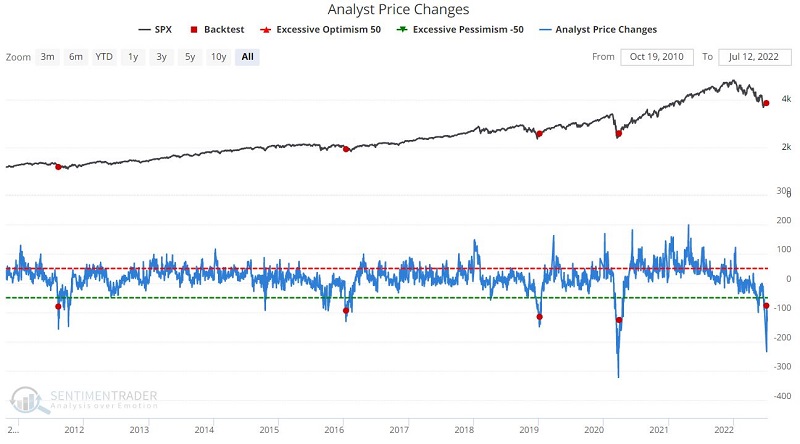
The most recent signal occurred on 7/6/2022. The table below displays performance for the S&P 500 Index following previous signals.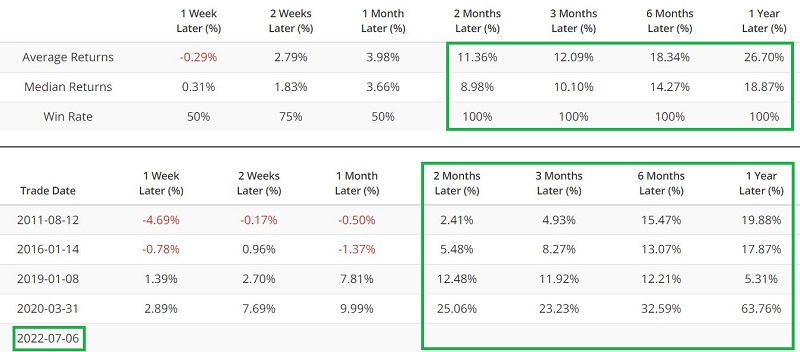
Major Index Combo
This data series reflects the positions of hedgers and small speculators in the S&P 500, Nasdaq 100, and DJIA futures. It combines the full-size contract and e-mini, adjusting for contract size, and calculates the dollar value. The chart is a one-year stochastic of hedger positions minus speculator positions, so if it reads 100, then hedgers are the most exposed to stocks in at least a year, and speculators are the least exposed. This is computed as a non-contrary indicator, which can be a good sign for stocks when the Combo is exceptionally high (an indicator reading above 80). Conversely, readings below 20 are usually a negative sign for stocks.
The chart below displays those times when the 10-week average of the Major Index Combo indicator rose above 66.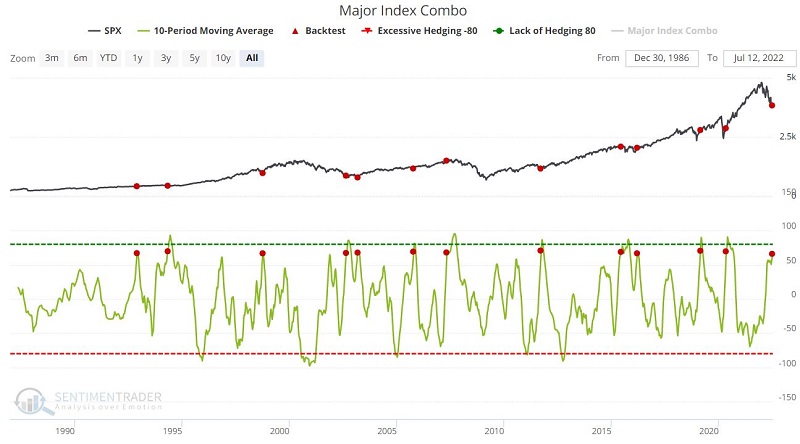
The most recent signal occurred on 7/5/2022. The table below displays performance for the S&P 500 Index following previous signals.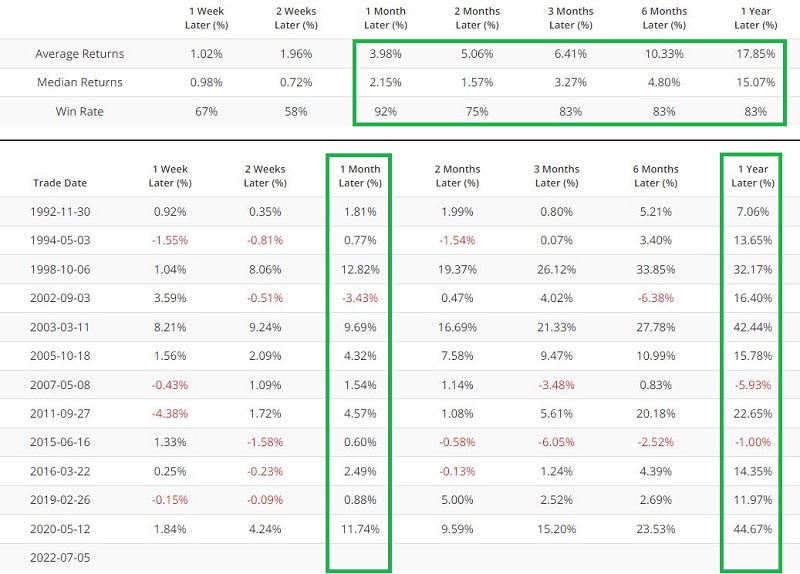
What the research tells us…
The indicators above are not intended to be used as standalone trading models. They offer a powerful - albeit only occasional - additional "weight of the evidence" to the bullish side of the ledger.
When professional market analysts significantly lower their future price estimates and reverse course en masse, it typically provides a powerful clue that sentiment is getting overdone to the bearish side. Likewise, when the "smart money" (professional hedgers) is bullish, and the "dumb money" (small speculators) is bearish, that tends to mark periods when a bullish reversal may be imminent.
As always, there is no guarantee that that will be the case this time. Still, the signals detailed above suggest at the very least that investors and traders ought to keep their minds open to the possibility of a buying opportunity.