
Price trend conditions for the S&P 500 show further deterioration

Key points:
- A composite trend model for the S&P 500 fell to the lowest level since the pandemic crash
- The recent change in the composite score comes after 10 out of 10 components showed a positive trend
- Similar trend score changes show modest returns for the S&P 500 on a short to medium-term basis
A bullish to a bearish reversal in trend indicators for the S&P 500
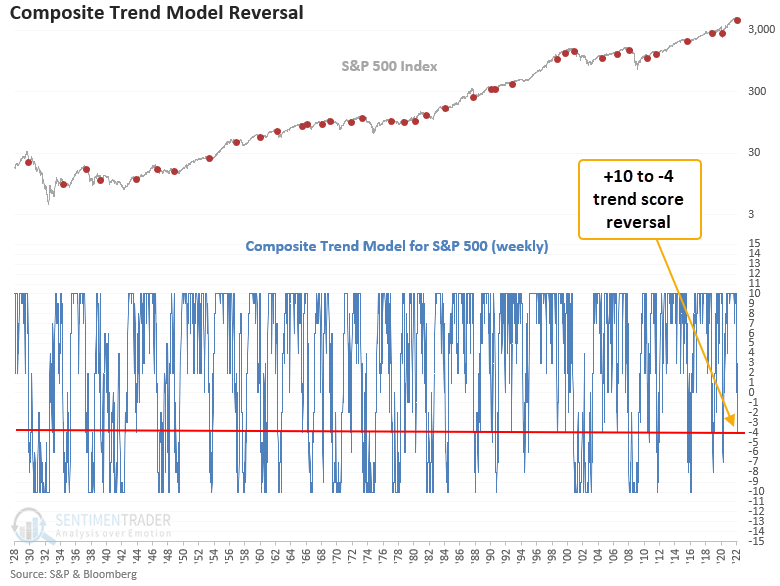
A composite trend model that uses weekly data for the S&P 500 recently showed 10 out of 10 components with a positive trend. At the close of trading on Friday, the trend score fell to -4. Let's conduct a study to assess the outlook for S&P 500 after similar trend score reversals.
Please click here to see a note on how I construct the composite trend model. Duration lengths will vary depending on whether it's applied to daily, weekly, or monthly time frames.
The weekly composite trend model now shows the following unfavorable trend conditions.
- SPX < 13-week average
- SPX < 26-week average
- SPX < 52-week average
- SPX 13-week average declining
- SPX 26-week average declining
- SPX close below 26-week low (close)
- SPX 13-week fast stochastic < 30
Similar signals show modest results on a short to medium-term basis
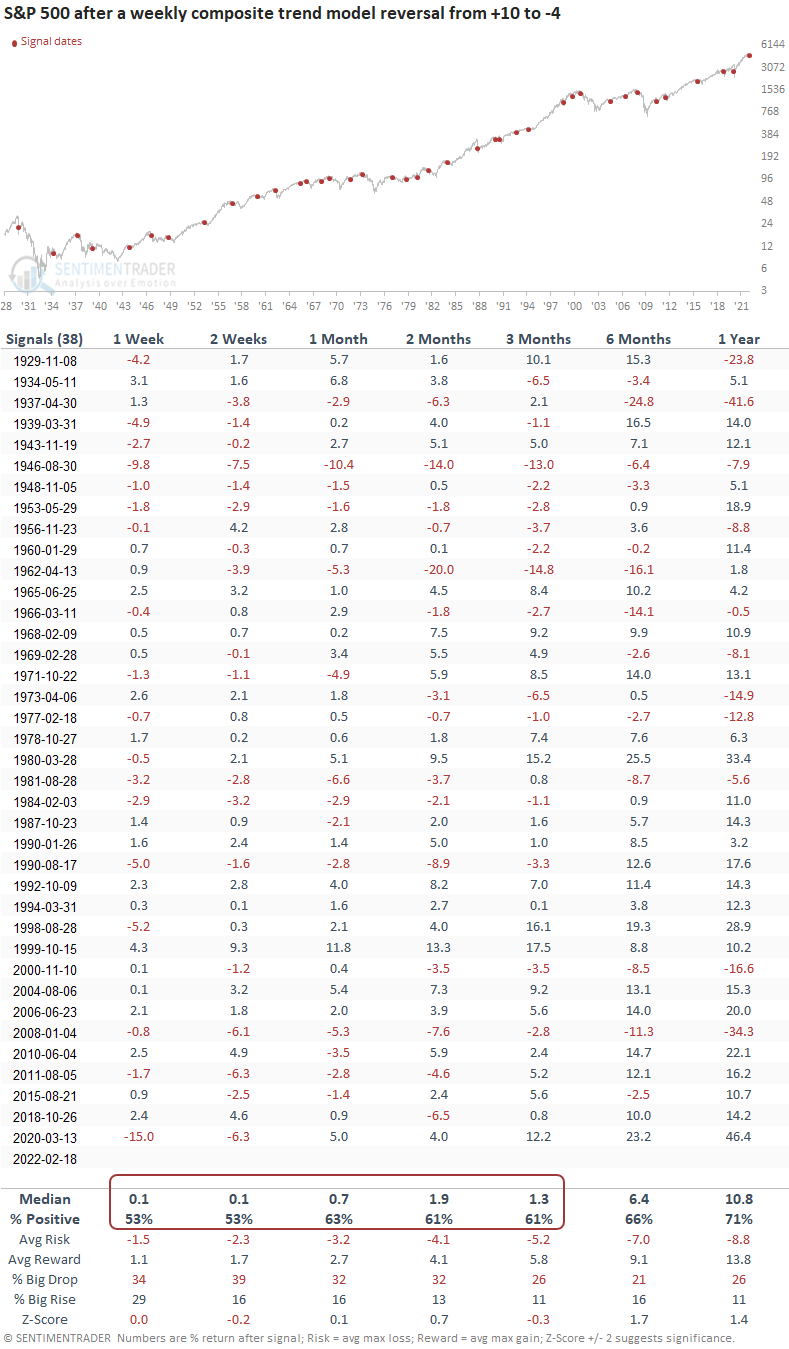
This signal triggered 38 other times over the past 93 years. After the others, S&P 500 future returns were modest, and win rates were in line to slightly worse than historical averages across short to medium time frames. The 6- and 12-month windows show better returns with win rates around historical averages.
The outlook for the next few days suggests caution
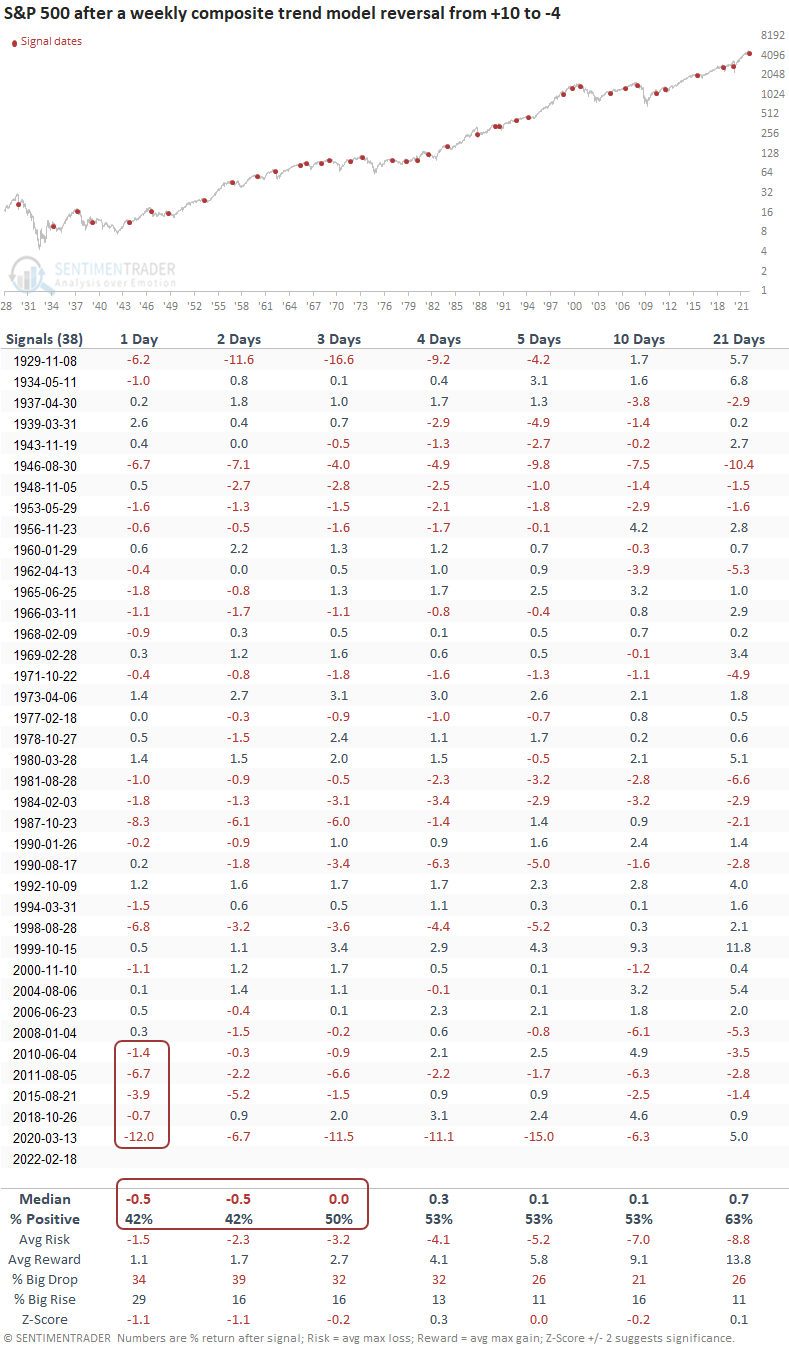
If I apply the signals to an ultra-short-term outlook table, the next few days suggest caution. The previous 5 instances were negative 1-day later, with some eye-opening results.
What the research tells us...
The reversal in a composite trend model for the S&P 500 suggests modest returns for stocks across short to medium-term time frames. When I apply the signals to an ultra-short-term outlook table, one shouldn't be surprised by some downside follow-through in the next few days. The long-term returns look better than average. Given that one will only know in hindsight whether the current correction develops into something more significant, an improvement in the composite trend model provides a better risk/reward scenario. I've found a trend score reversal from -4 or worse to +8 works well.