
Notable sentiment extremes in real estate and natural gas

Key points
- Trader sentiment regarding a prominent real estate ETF recently reached a notable extreme that higher prices have historically followed
- Meanwhile, a bullish Optix extreme for a heavily traded natural gas ETF is suggesting lower natural gas prices
- While our Optix indicator highlights opportunities, traders and investors must still make decisions regarding what position to take - if any - and exactly when to do so
VNQ Optix reaches an extreme
The real estate sector has been - and continues to be - one of the weakest sectors since topping out in December 2021. The Vanguard Real Estate Index Fund ETF (ticker VNQ) is designed to track the MSCI US Investable Market Real Estate 25/50 Index. Trader sentiment for the sector is presently plumbing the depths of historical extremes. Historically, this action has proven favorable for the sector in the future.
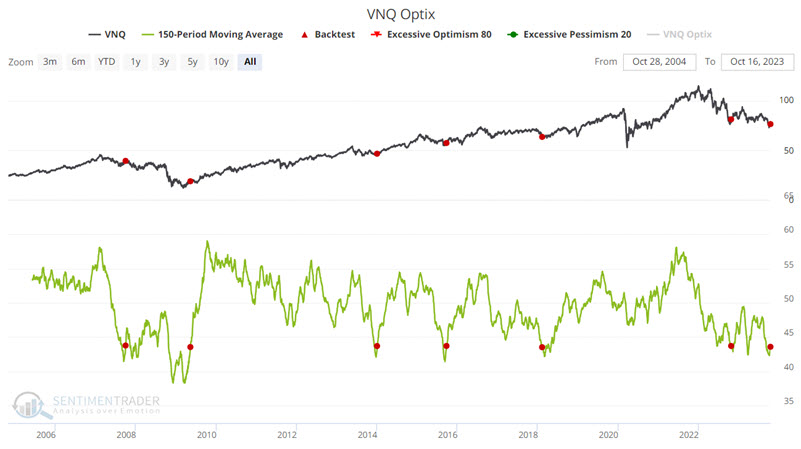
The chart below highlights those dates when the 150-day moving average of our VNQ Optix indicator crossed above 43.5 for the first time in 12 months.
The table below summarizes subsequent VNQ performance.
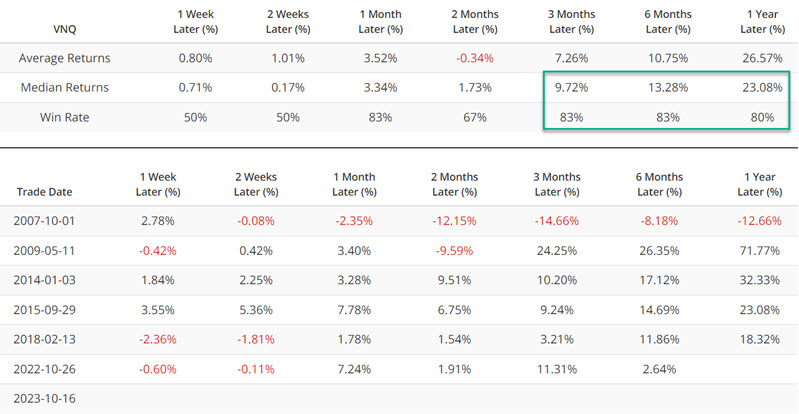
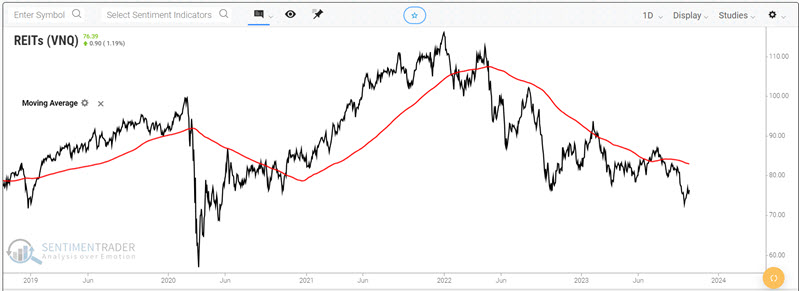
Win Rates of 80% or higher suggest good odds but do not guarantee future results. A little patience may still be in order for investors looking at the real estate sector. The chart below shows ticker VNQ is still clearly ensconced in a downtrend.
The chart below displays the annual seasonal trend for ticker VNQ. The historical tendency is for weakness into the middle of November.
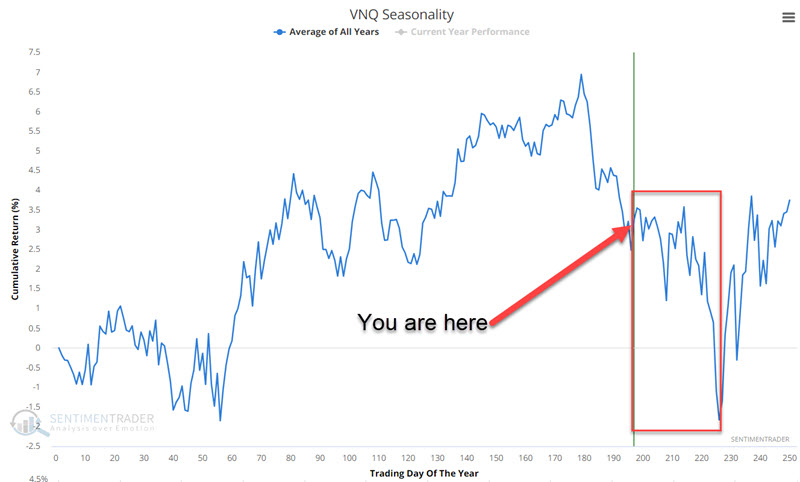
Sentiment suggests that investors start looking for an opportunity in the real estate sector. However, price action and seasonality suggest that investors be patient and wait for signs of a reversal before climbing aboard.
UNG Optix flashes a bearish signal
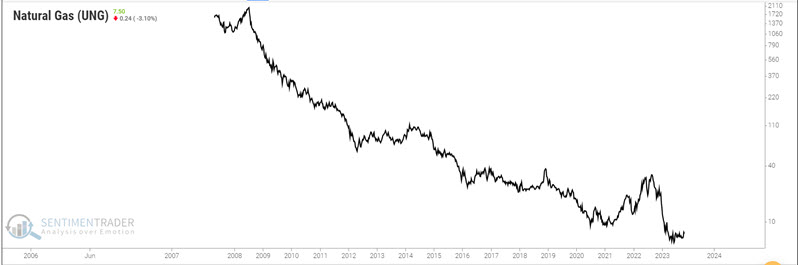
The US Natural Gas fund ETF (ticker UNG) is designed to track the trend in natural gas futures. Due to a near-perpetual state of "backwardation" (When the spot price is higher than the upcoming futures prices, creating a downward sloping curve of the commodity futures price over time. Suggestion: Google "backwardation" if you want to know more) in the natural gas futures market, this ETF has a long-term downward bias, which can be observed in the chart below.
The chart below highlights those dates when the 5-day average for UNG Optix is above 80 while the price for UNG shares is above its 150-day average. 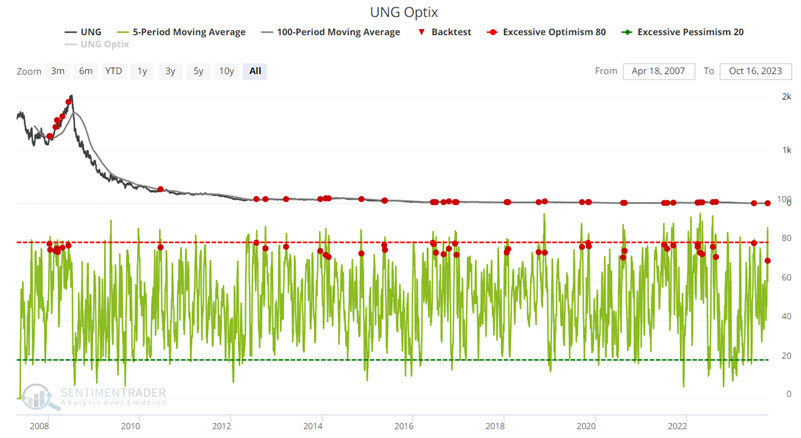
The chart below runs the same test but zooms in on the most recent three years.
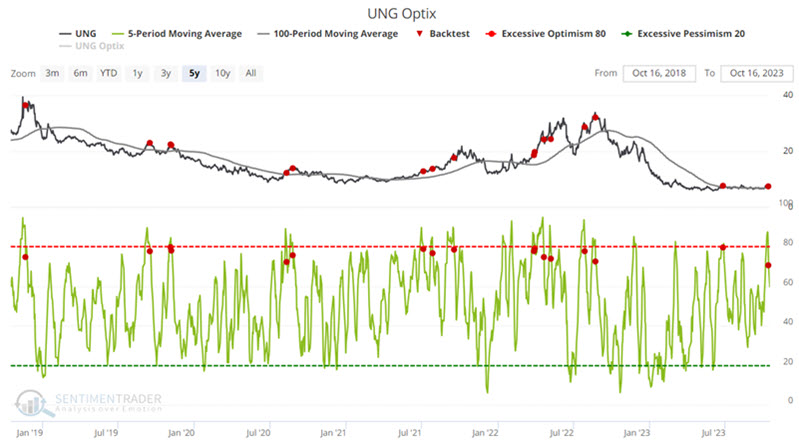
The table summarizes subsequent UNG performance.

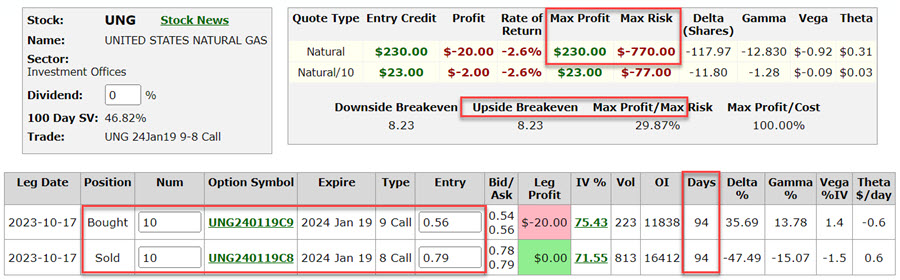
One way to take advantage of this situation is via an option strategy known as a "bear call spread." This involves selling an out-of-the-money call option and simultaneously buying another call option with a higher strike price. An example of this type of trade might be:
- Selling 10 UNG Jan19 2024 8 calls @ $0.79
- Buying 10 UNG Jan18 2024 9 calls @ $0.56
This strategy makes money if the underlying security does not rise too far before option expiration.
The screenshots below (courtesy of Optionsanalysis.com) display the particulars of the trade and the risk curves (i.e., the expected P/L based on a given price for UNG shares as of four different dates leading up to options expiration).
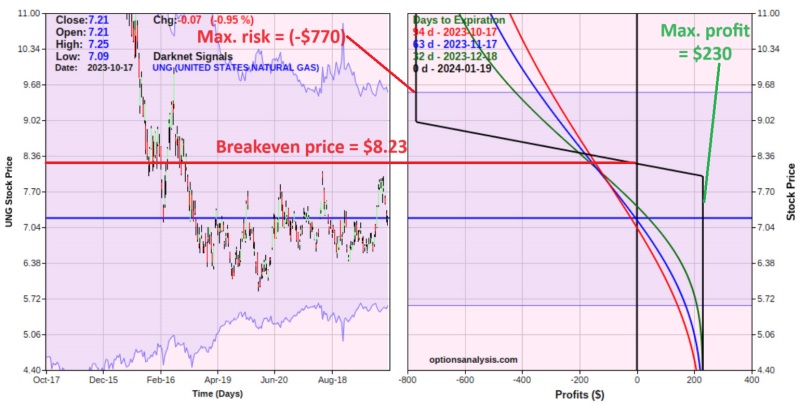
Key things to note:
- The cost of entry - and the maximum risk - on the trade is $770
- This level of loss would only be realized if we hold the trade until expiration and UNG is above $9 a share at that time
- With UNG at $7.21 a share, the breakeven price is $8.23.
- The maximum profit potential is $230 (or 29.87% of capital at risk) and would be realized if UNG is at $8 a share or below at expiration
The hope for a bear call spread is that the underlying security price will remain below the strike price long enough for time decay to eat away at the premium received when the position was entered, eventually allowing the trader to close the spread at a lower net premium.
The real question for a trader entering this position is, "What action will you take to minimize risk if UNG rises to or above the breakeven price before expiration?"
Choices include:
- Exit the trade entirely and cut your loss
- Adjust the existing position
- "Roll up," i.e., buy back the existing position and enter a new bear call spread at higher strike prices
What the research tells us…
Extremes in sentiment highlight potential opportunities. The signals highlighted above suggest the potential for a reversal of fortune in the real estate sector and the natural gas market. They do not, however, offer any guarantees. Also, no matter how consistent a given signal has been, it does not relieve traders and investors of the responsibility to choose the appropriate trading vehicle (stocks, ETFs, options) and strategy and to manage risk.