
Nasdaq's recovery attempt

Key points
- After officially entering correction territory, the Nasdaq 100 has staged a rapid recovery, with short-term market breadth surging from extremely washed-out levels.
- Historically, when the percentage of QQQ components trading above their 10-day moving average rockets from under 10% to over 70% in just five days, the index boasts an 80% win rate over a one-year timeframe.
Nasdaq's recovery attempt
Recent market action has been heavily dominated by geopolitics, leaving investors on edge as they parse daily headlines to determine whether we will see a pause in war or further escalation.
The SentimenTrader team emphasizes two indispensable market analysis concepts in our research reports, among many others: the strategic use of composite models and the identification of reversal signals.
The significance of a composite indicator lies in its ability to minimize the risk of failure, a common drawback when relying on a single metric. Furthermore, the application of reversal signals enhances the risk-reward ratio of trading setups, helping traders avoid the peril of trying to "catch a falling knife."
A previous report noted that the Nasdaq 100 had officially fallen into correction territory, and that initial 10% drawdowns from multi-year highs typically present highly attractive entry points for medium-to-long-term investors. In the subsequent week, price action rebounded, and its short-term breadth gauge-the QQQ Breadth (% > 10 Day Avg)-broke back above the 70 level.
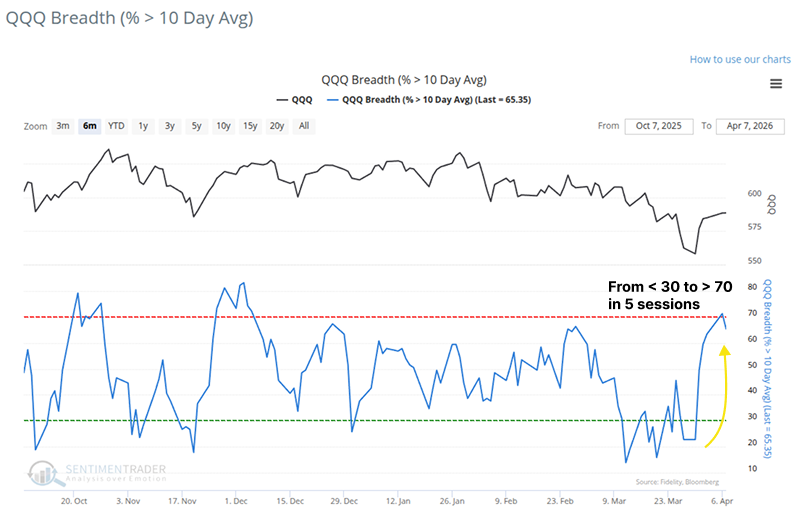
Sharp and sudden shifts provide actionable intel
As equities caught a bid, the QQQ Breadth (% > 10 Day Avg) expanded significantly over the past few sessions. Let's look at how the QQQ performs when this indicator stages a massive thrust, recovering from below 30 to above 70 within a five-session window.
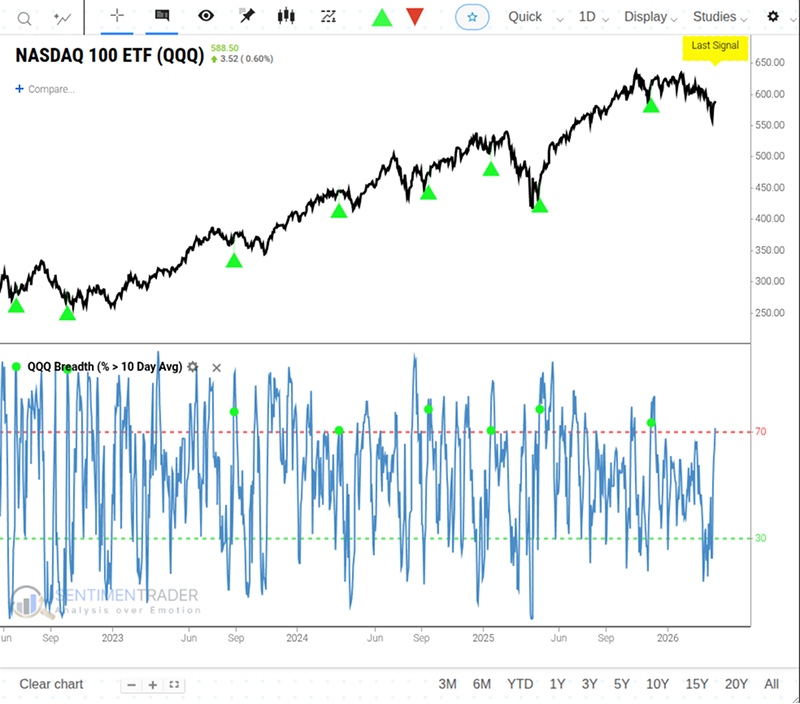
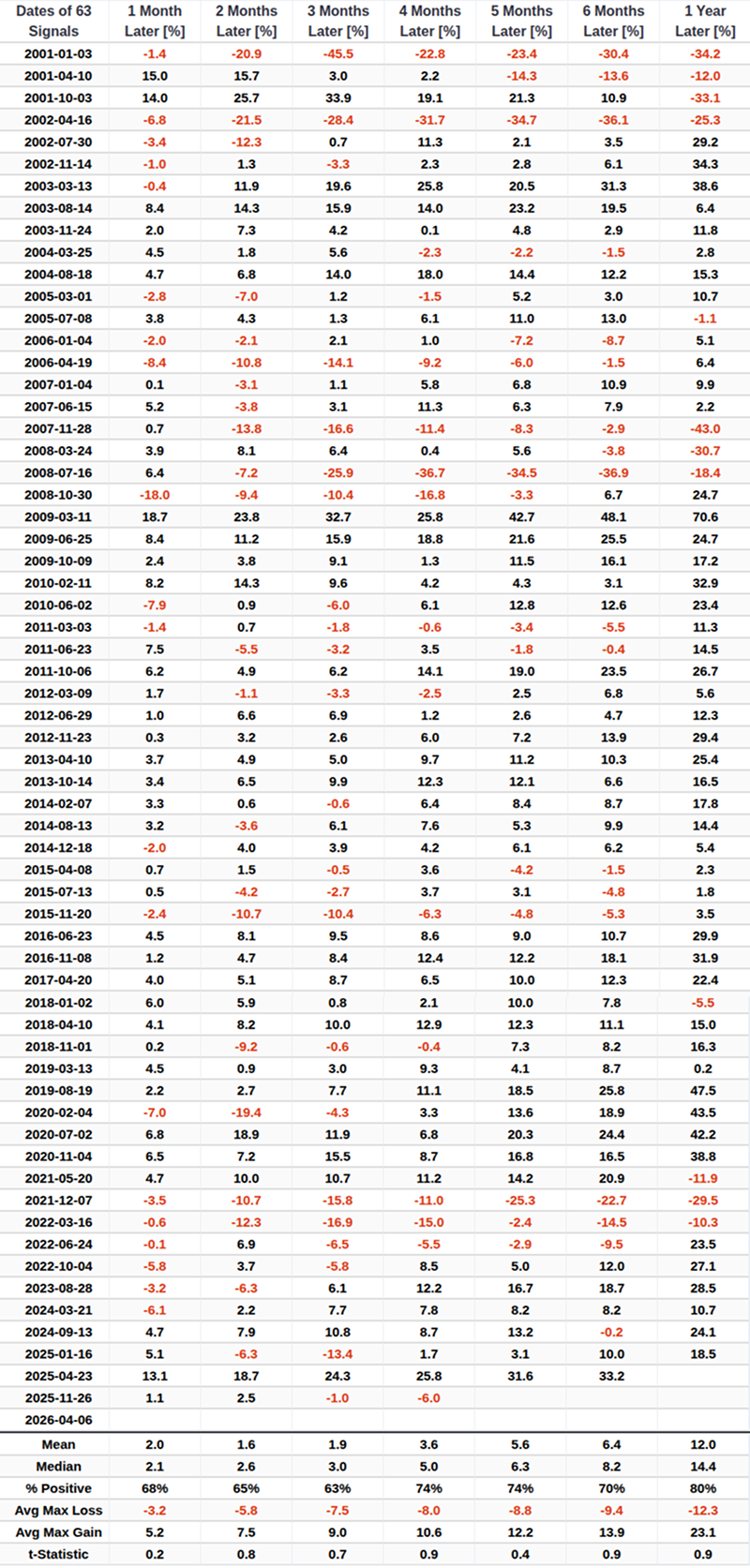
Such rapid momentum reversals historically yield highly positive forward returns for the QQQ. Whenever the percentage of QQQ components trading above their 10-day moving average violently spikes from under 30 to over 70 in five days, the QQQ boasts an 80% win rate over a one-year timeframe.
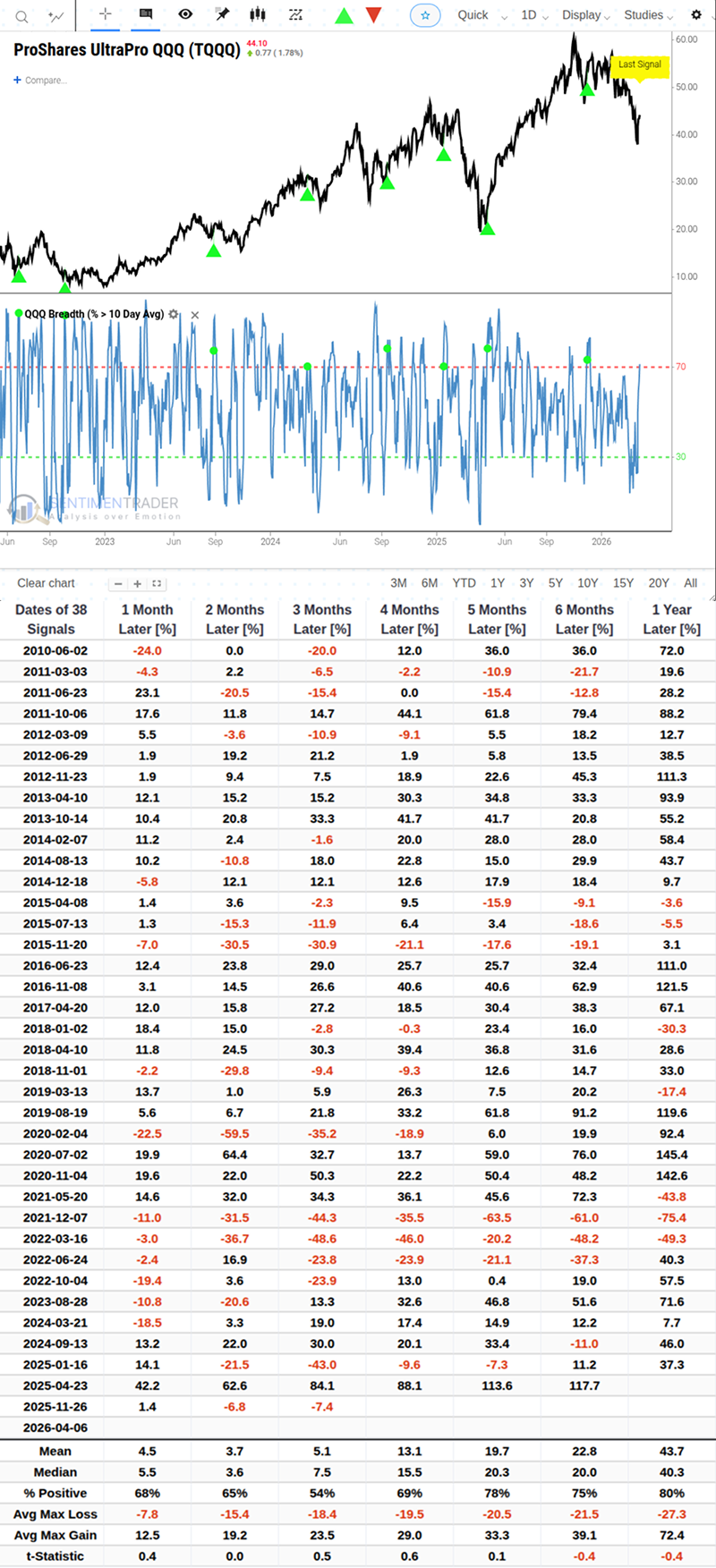
Aggressive traders seeking higher beta might consider the ProShares UltraPro QQQ. The index is designed to track the performance of the 100 largest non-financial companies listed on the Nasdaq and invests with leverage.
A broader market recovery
Beyond the Nasdaq, short-term breadth indicators for the Dow Jones Industrial and the S&P 500 have also staged varying degrees of recovery. We maintain 70 as the threshold for a constructive, pro-risk environment. For related backtest, click here.
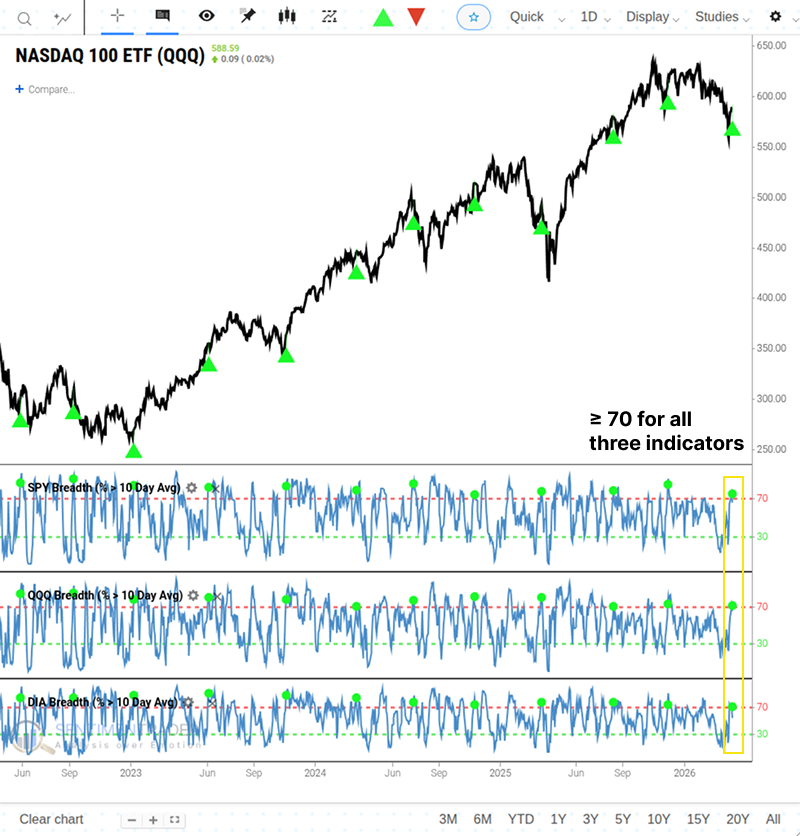
When the percentage of components trading above their 10-day moving average sits at or above the 70 threshold across all three major indexes concurrently, the QQQ tends to sustain its upward momentum and develop constructively.
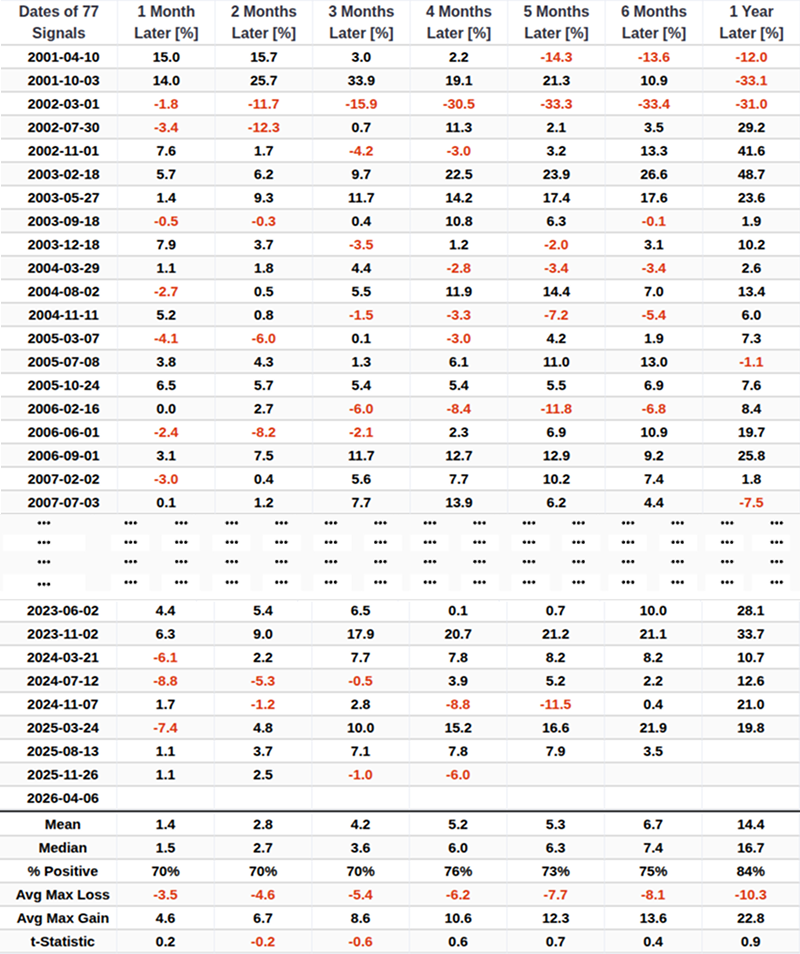
The latest print for the QQQ Breadth (% > 10 Day Avg) on April 7 was 65.35. Although it slipped slightly below the 70 threshold, the combination of easing geopolitical tensions and a mean-reversion bounce from deeply oversold technicals should continue to propel the three major indexes higher in the near term.
What the research tells us...
The structural setup for the Nasdaq 100 has improved materially following its recent dip into correction territory. The short-term breadth surged from extreme washout levels to extreme strength in just five sessions. While short-term metrics naturally ebb and flow (as seen by the slight dip to 65.35 on April 7), the confirmation of breadth expansion across the broader market (S&P 500 and Dow) significantly increases the probability of a sustained rally. Traders should view this situation positively and look for potential trading opportunities.