
Monthly thrust may provide an edge

Key points
- The S&P 500 showed a gain of more than 5% for the month of May
- The stock market has tended to perform better than average following 5+% months
- Performance is even more noteworthy if a 5+% month is preceded by a period of weakness
Strength tends to beget strength in the stock market
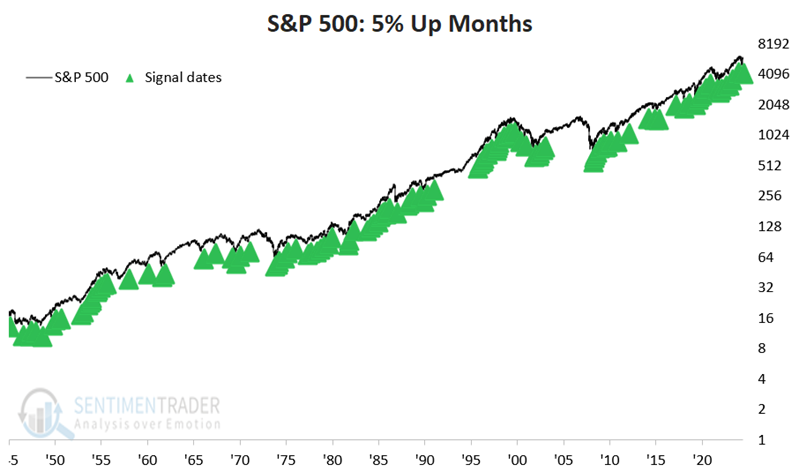
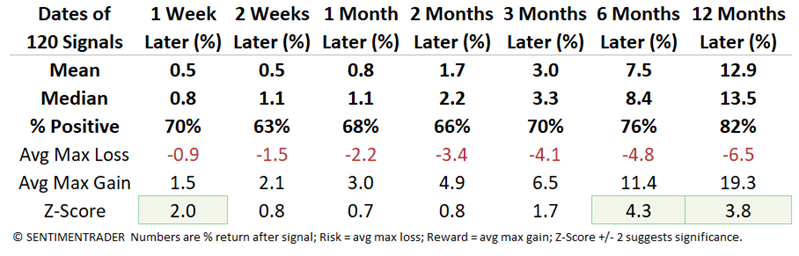
May 2025 showed the S&P 500 registering a monthly gain of +6.2%. This is not an uncommon occurrence. Post World War II, there have been 120 months that have registered a gain of 5% or more.
The table below summarizes S&P 500 performance following all 5% or more up months since 1945.
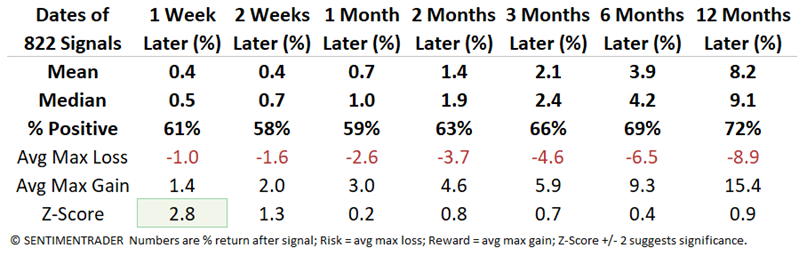
To put these values into perspective, the table below summarizes S&P 500 performance following all months since 1945 that did NOT show a gain of 5% or more. Note that all Mean, Median, and % Positive values are higher in the "+5% or more months" table above than in the "All other months" table below.
Strength following weakness tends to beget even more strength
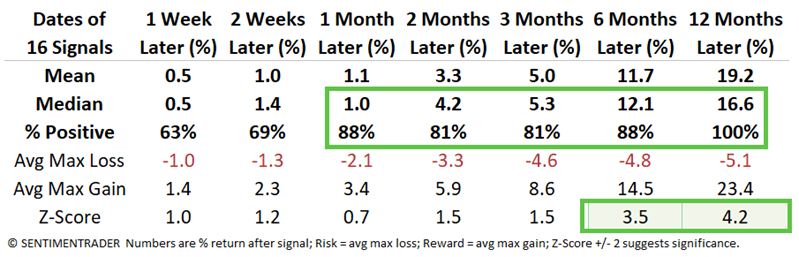
The values above consider all months that show an S&P 500 gain of 5% or more. For our next test, we will highlight only those occasions when the S&P 500 rose 5% or more during a calendar month after at least three consecutive declining months.
The table below summarizes S&P 500 performance.
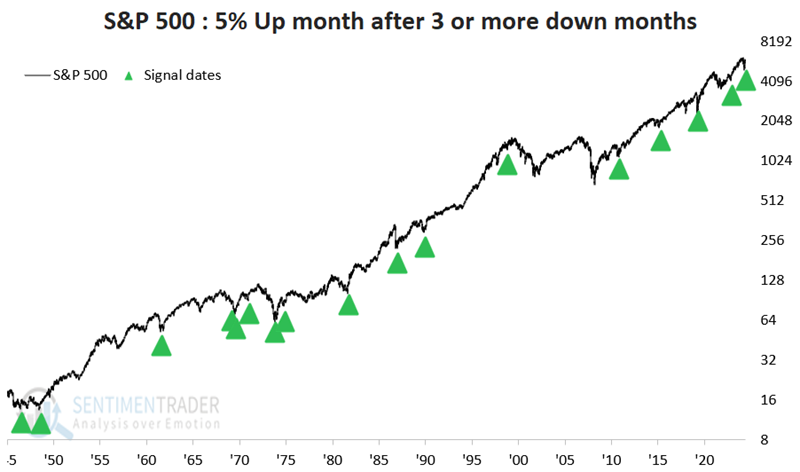
The chart below displays all unique signals (including overlaps, i.e., those that occur within 12 months of a previous signal) versus the S&P 500.
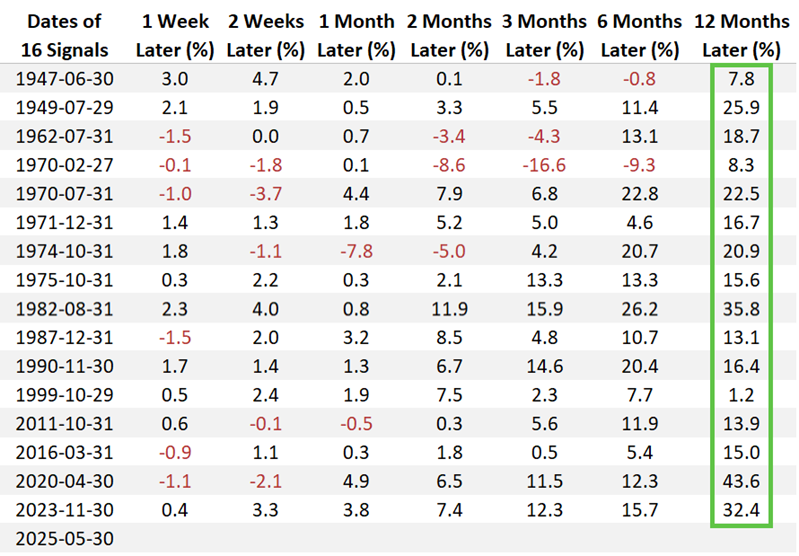
The table below displays S&P 500 performance following each unique signal (including overlapping signals).
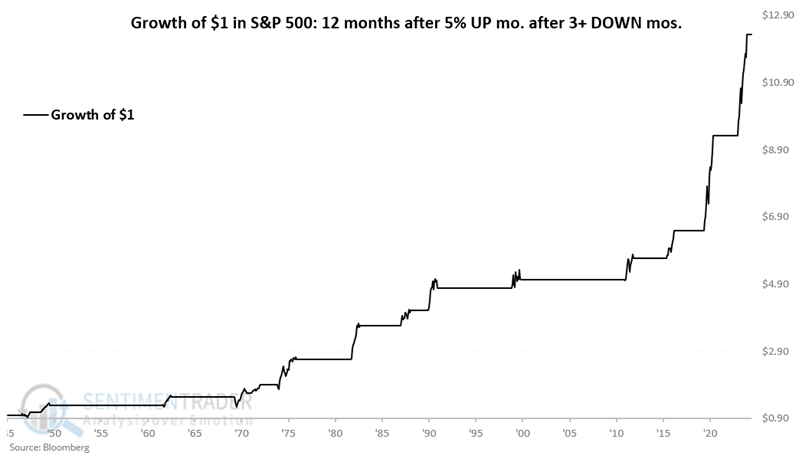
The chart below displays the hypothetical growth of $1 invested only during the 12 months after each date listed above (if a new signal occurs within 12 months of the previous signal, the holding period is extended for another 12 months).
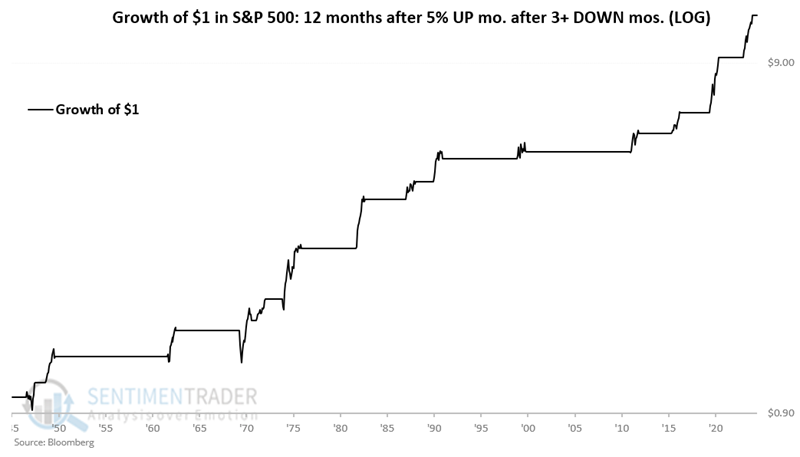
The chart below displays the same results on a logarithmic scale.
Zeroing in on sectors
The table below displays S&P 500 sector and factor performance during the twelve months following each unique signal (including overlapping signals).
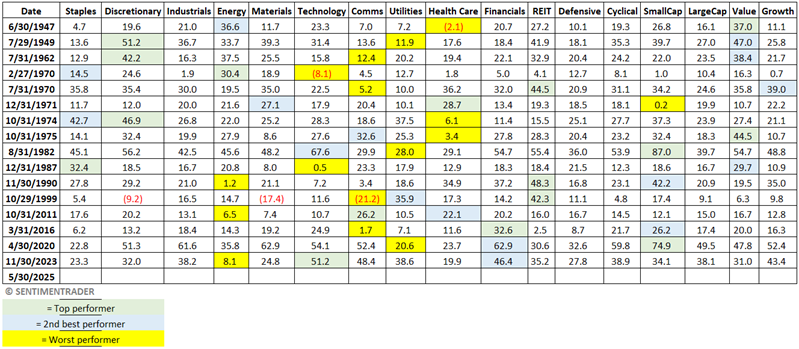
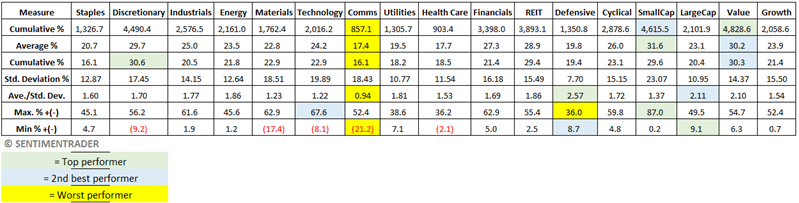
The table below summarizes the results from each unique signal in the table above. However, note that "Cumulative %" results are arrived at as follows:
- A new signal sets the month counter to 12 (i.e., we hold for 12 months after a new signal)
- If another new signal occurs before the counter gets down to zero, we reset the counter to 12 and extend the holding period another 12 months
What the research tells us…
Does the 5+% gain for the S&P 500 after three straight down months guarantee higher stock prices over the year ahead? Not at all. Nevertheless, given the history detailed above, investors may do well to give the favorable case the benefit of the doubt until proven otherwise.