
Large-cap stocks are recovering their long-term uptrends

Key points:
- The percentage of S&P 500 stocks above their 200-day average cycled from < 12% to > 50%
- After similar reversals, large-cap stocks rallied over the long term, with a few notable exceptions
- Value-based sectors are driving the recovery, which is rare and somewhat concerning
A majority of large-cap stocks are now in long-term uptrends
Thanks to a better-than-expected CPI report on Thursday, investors wasted no time discounting an inflation peak. The panic buying sent several indexes up more than 5%, which led to an impressive recovery in breadth-based indicators.
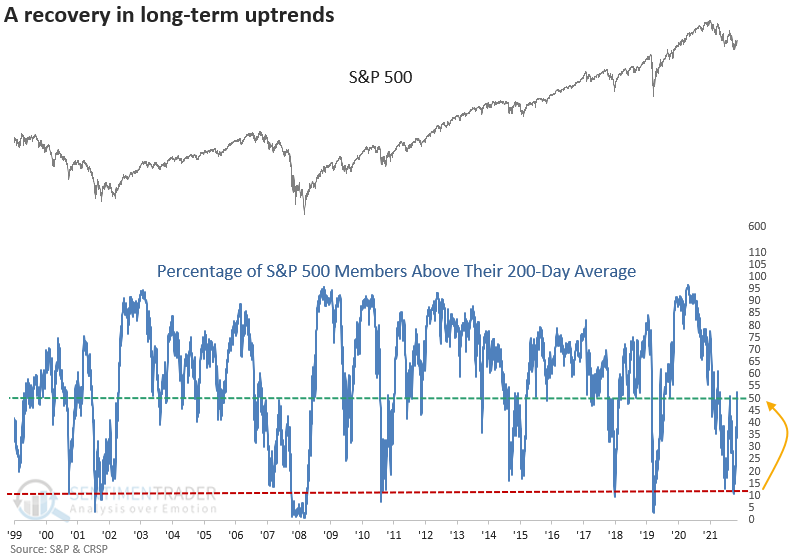
One such indicator, the percentage of S&P 500 members above their 200-day average, increased above 50%. The recovery in long-term uptrends occurred after fewer than 12% of members traded above their average as recently as late September.
The recovery in uptrends exceeded the peak level achieved after the June to August bear market rally, which is worth noting, given that the S&P 500 is significantly lower. The internal condition of the market is improving, and that's normally a welcome development.
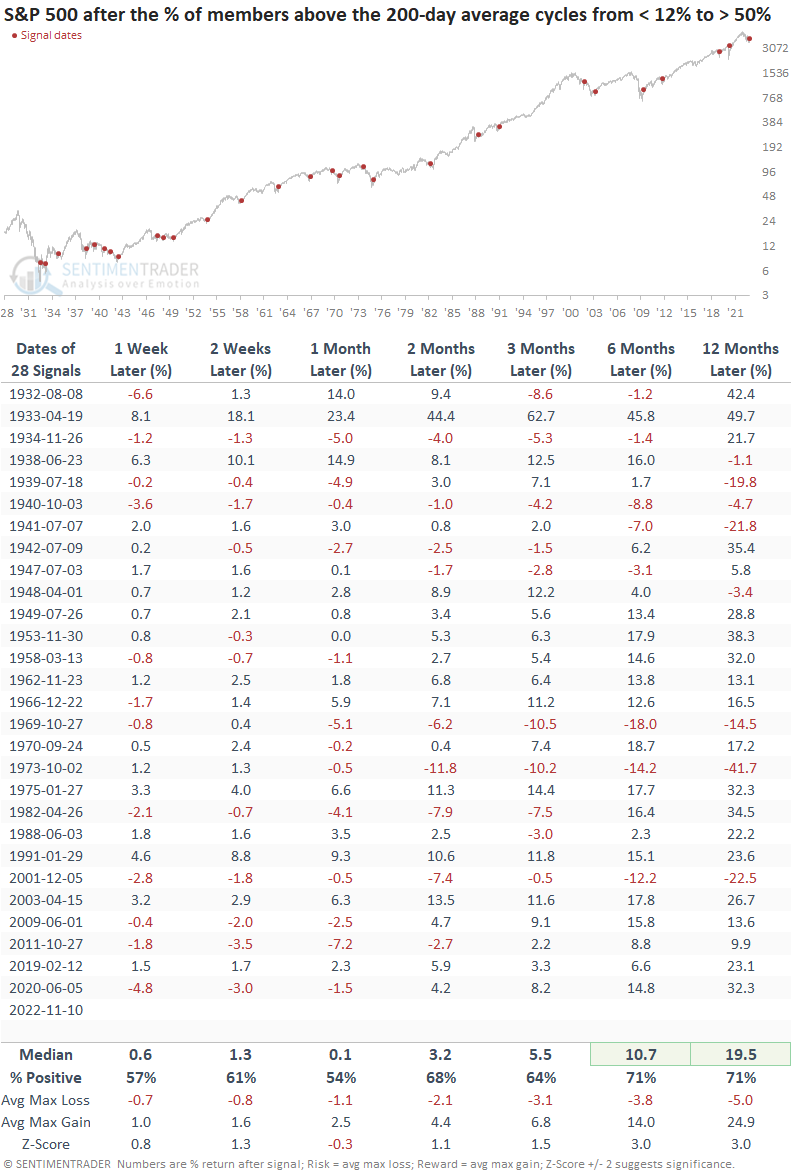
Similar reversals preceded positive long-term returns
When the percentage of S&P 500 members above their 200-day average cycles from < 12% to > 50%, large-cap stocks show solid results on a long-term basis. However, we need to be mindful of a handful of notable failures post the 1929-42 period, like 1969, 1973, 1982, and 2001. The signals occurred in bear markets that were accompanied by a recession.
A rare and somewhat worrisome long-term trend backdrop
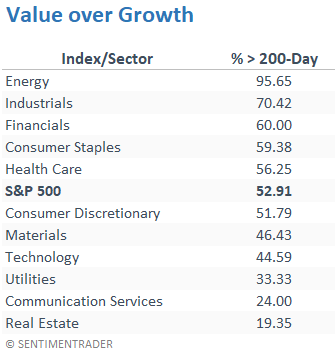
Value-based sectors are leading the recovery in long-term uptrends, which is rare.
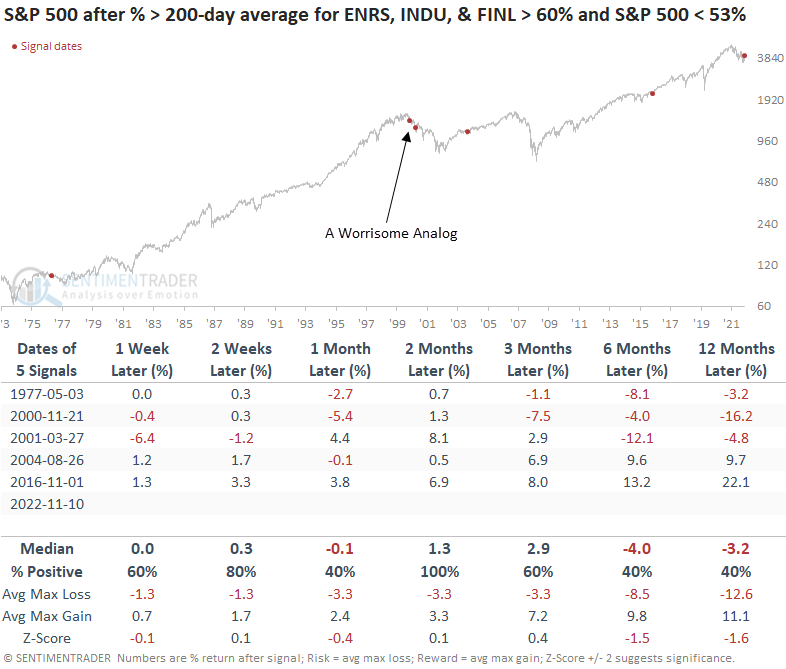
Suppose I conduct a study to identify other periods when Energy, Industrials, and Financials had more than 60% of their respective members above the 200-day average with fewer than 53% for the S&P 500. In that case, I found only five other instances since 1952.
The analog that worries me most is the 2000-02 Dotcom bust. I continue to see that period pop up in breadth-based studies. Remember, Technology stocks weighed on the cap-weighted S&P 500, while other sectors performed much better for most of the first half of the bear market. Once the recession hit, everything crashed in the later stages of the drawdown.
What the research tells us...
Most stocks have recovered their long-term uptrends, which is good for investors if one has a long enough time horizon. One concern with the recovery is that value-based sectors are leading. Historically, early cycle sectors like Consumer Discretionary and Technology lead the market out of significant drawdown periods, especially after an economic contraction. So, the risk for investors is a head-fake similar to what happened in the 2000-02 Dotcom bust when value held up until the recession hit.