
It's time to take a different look at technology

Key points:
- The technology sector appears to be on the precipice of a further decline
- However, it is also entering the most favorable seasonal period of the year
- Likewise, several other typically reliable indicators suggest a possible bullish surprise
The current price trend is bearish
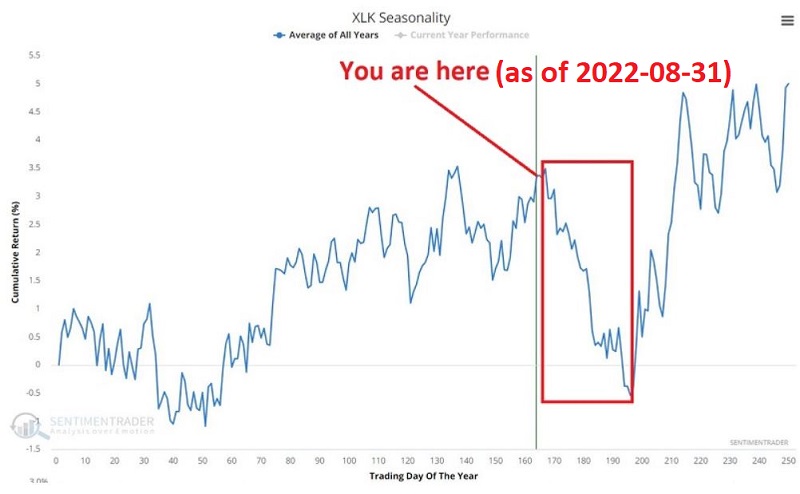
There can be little argument that the current price trend for technology is unfavorable. This does not come as a surprise, as discussed in this piece on 2022-08-31. The chart below is from that article and highlights a seasonally weak period from 2022-08-31 through 2022-10-12.
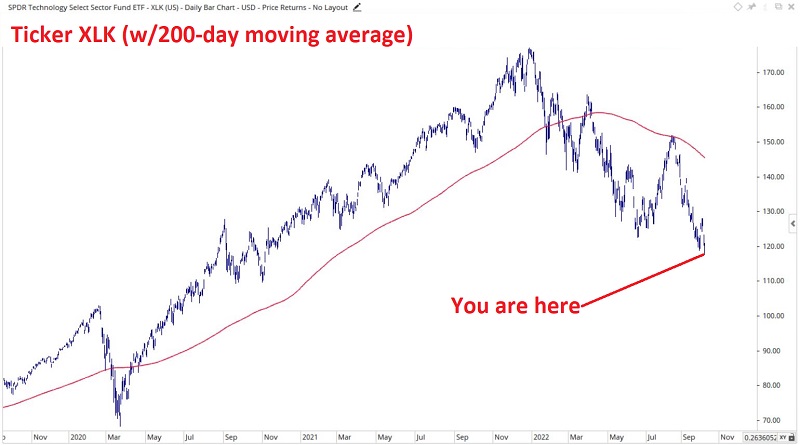
This one played out according to the script, as seen in the chart below.
But unfavorable seasonal periods do not last forever.
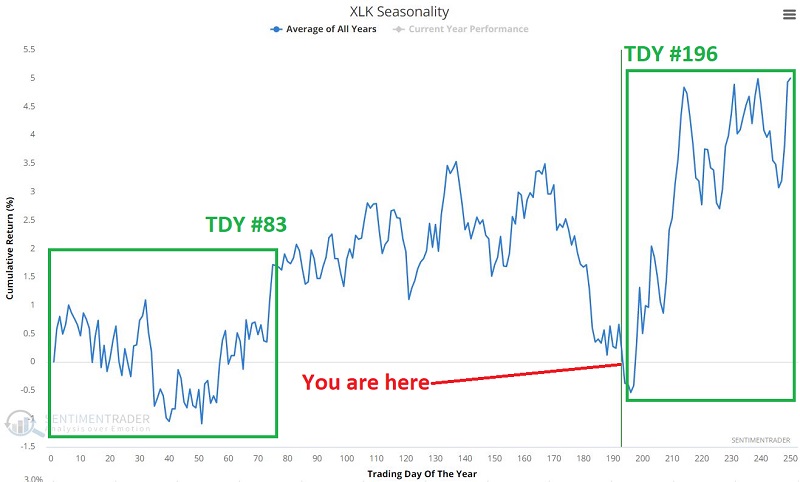
The chart below displays the annual seasonal trend for XLK and highlights a favorable period that extends from Trading Day of Year (TDY) #196 through TDY #83 the following year.
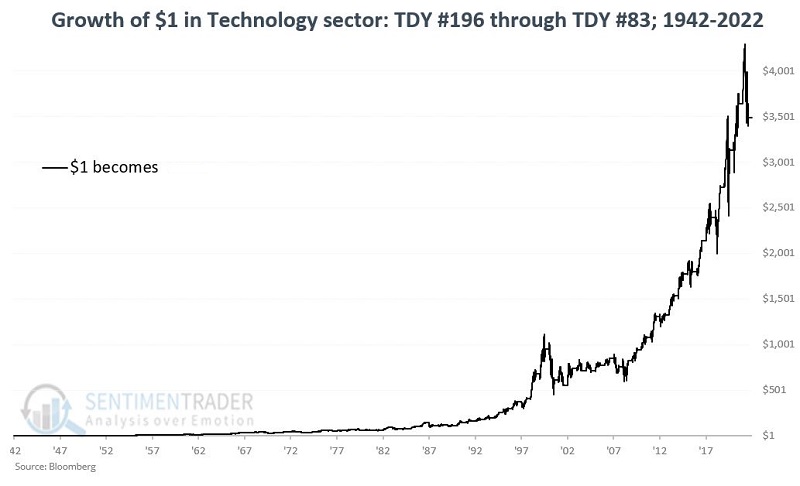
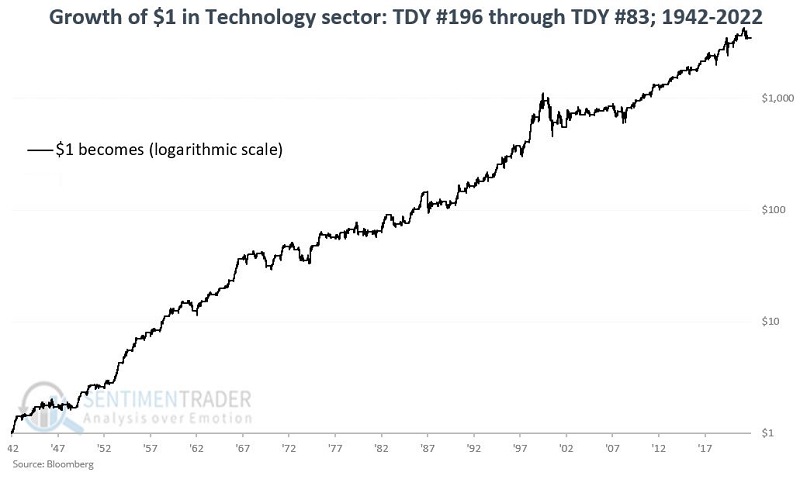
The chart below displays the cumulative growth of $1 invested in the technology sector only from TDY #196 through TDY #83 every year since 1942. Note: The dataset uses the Fama French indexes from 1942 into 1991 and the S&P 500 Technology Sector Index from there.
The chart below displays the same data as the chart above but on a logarithmic scale.
The table below summarizes the results for this period.
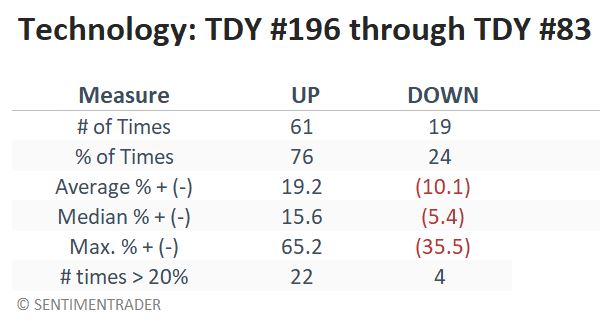
This seasonal period offers no guarantees on a year-by-year basis, but the long-term bias is favorable. Let's consider some other key indicators giving recent signals to bolster the favorable seasonal outlook.
Component correlation is extremely high
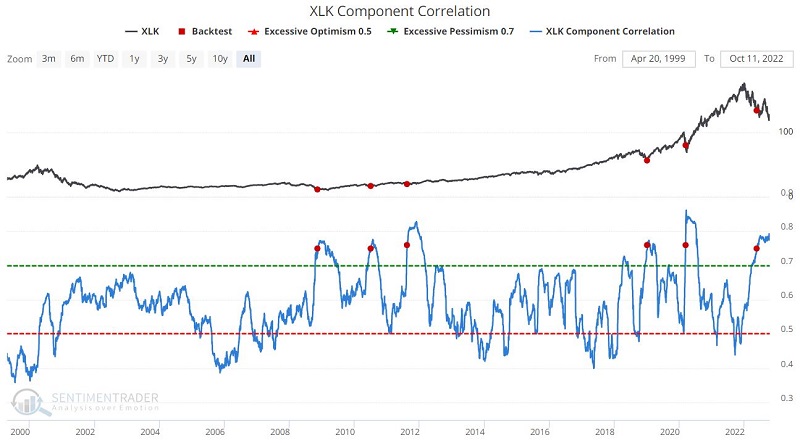
The component correlation measures the degree to which the stocks in a given sector or index trend together. High correlation tends to occur near bottoms, as investors indiscriminately dump stocks in that sector.
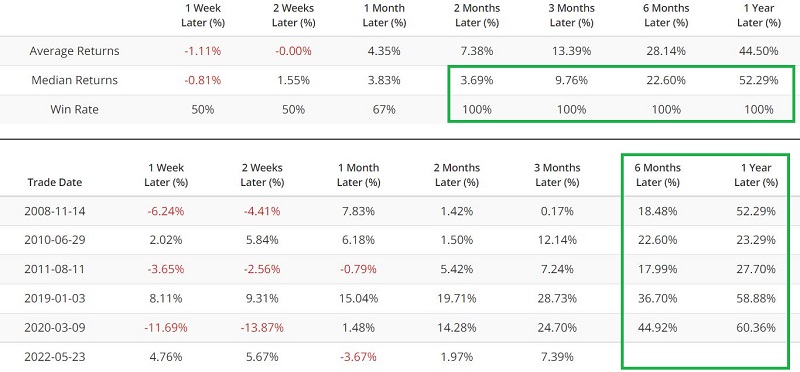
The chart below displays those times when the XLK Component Correlation crossed above 0.75 for the first time in six months, and the table summarizes XLK results following previous signals. The most recent signal occurred on 2022-05-23.
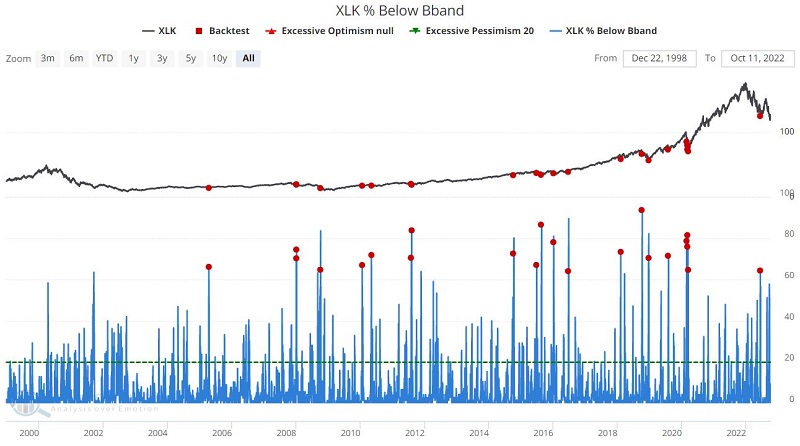
The majority of XLK stocks dropped below their Bollinger Bands
The chart and table below display those times when the percentage of XLK constituent stocks below their lower Bollinger Band crossed above 64 and a summary of the results. This reading indicates a high degree of selling pressure in the sector and is typically bullish on a contrarian basis. The most recent signal occurred on 2022-06-13.

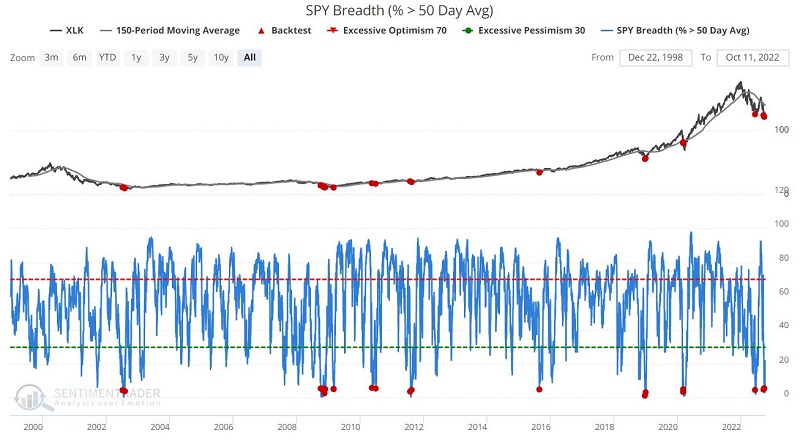
Tech rallies tend to follow SPX breadth washouts
The chart below displays those days when the % of SPX 500 constituent stocks above their 50-day moving average was below 6% while the S&P 500 Index was below its 150-day moving average. The table displays a summary of the results. The most recent signal occurred on 2022-09-29.

What the research tells us…
On a trend-following basis, it makes sense to be patient and wait for the tech sector to show signs of life before taking the plunge into this often lucrative but always volatile sector. Nevertheless, we appear to be reaching a point where investors are beginning to give up on the technology sector. This action, combined with the beginning of a reliably bullish seasonal period, offers the potential to leave investors quite surprised in the months ahead.