
It's time to keep an eye on soybeans - again

Key points
- Soybeans entered a seasonally favorable period on February 1st; so far, there has been only a sharp decline, followed by an equally strong rally
- While some may conclude that things are just not working out this time around, starting now is often when the spring planting cycle-induced rally begins in earnest
- ETF ticker SOYB offers an alternative to trading riskier soybeans futures
Soybeans are highly cyclical
In this article, dated 2023-01-30, I noted the historical tendency for soybean prices to rise between Trading Day of the #21 and TDY #90. That period started at the close on 2023-02-01. So far, beans have gone exactly nowhere. Well, not exactly. As you can see in the annual seasonal trend chart below, after TDY #21, beans rallied slightly,fell hard, and then rallied back to almost exactly where they started.
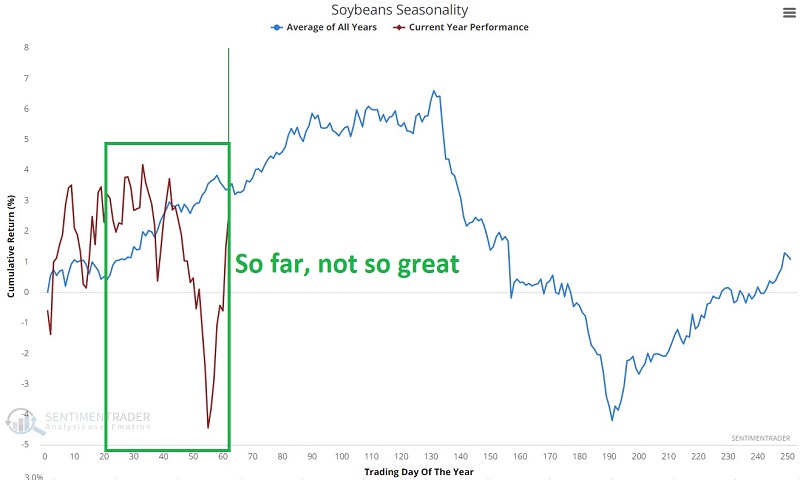
This type of volatility, whipsawing action can be enough to drive off even the most ardent bull. But another opportunity may be at hand. Note the area in the green box below. It highlights the period from TDY #64 through TDY #90.
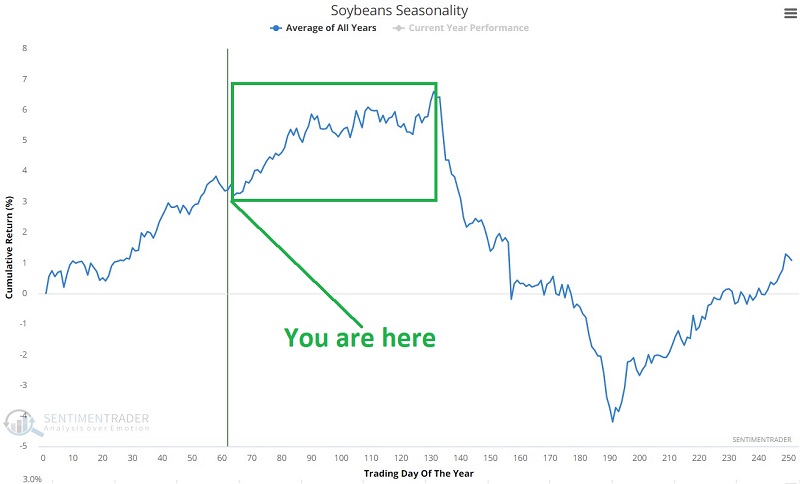
Let's take a closer look at this period.
Each full-point movement in the price of soybeans represents a $50 change in the value of a soybean futures contract. The chart below displays the hypothetical $ gain from holding long one soybean futures contract only from the close on TDY #64 through TDY #90 each year starting in 1937.
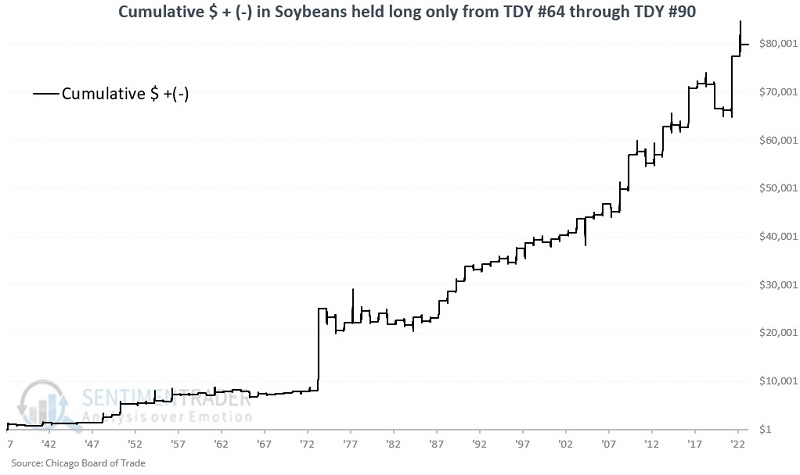
The table below summarizes performance results.
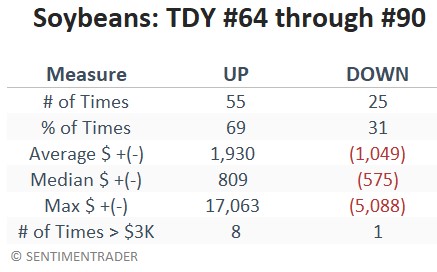
Note that traders who eschew futures contracts can play the long side of the soybean market via the Teucrium Soybean ETF (ticker SOYB), which is intended to track soybean futures, but which trades like shares of stock.
What the research tells us…
Soybeans are a highly cyclical market. Likewise, due to the planting schedule in the U.S., the spring period often sees bean prices rally as concerns about the upcoming harvest for the current year is in doubt. Soybean prices appeared to be breaking down in early March, raising fears that this might just be an off-year (and that remains a possibility). However, the recent rebound rally - combined with still favorable seasonality - raises the potential that beans will fulfill their common spring performance schedule and rally at least into early May.