
It's time to keep an eye on copper

Key points
- Copper tends to be a highly cyclical market and is considered to be highly correlated to the overall economy
- This market is entering a typically favorable seasonal period
- ETF ticker CPER offers an alternative to trading riskier copper futures
Copper is entering a seasonally favorable period
The chart below displays the annual seasonal trend for copper futures.
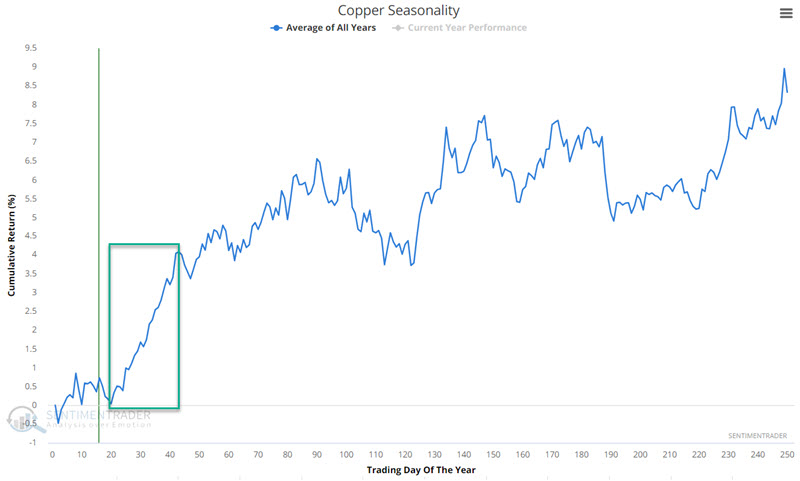
Note that copper is soon entering a typically favorable seasonal period. That seasonally favorable period extends from the close of TDY #20 through the close of TDY #43. Note that the contract we follow from Bloomberg tracks spot copper futures and includes all dates when electronic trading takes place (which typically means most weekdays, including most holidays).
For 2024, this period extends from the close on 2024-01-29 through 2023-02-29.
The chart below displays the cumulative hypothetical gain from holding long one copper futures contract only during TDY #20 through TDY #43 every year since 1959.
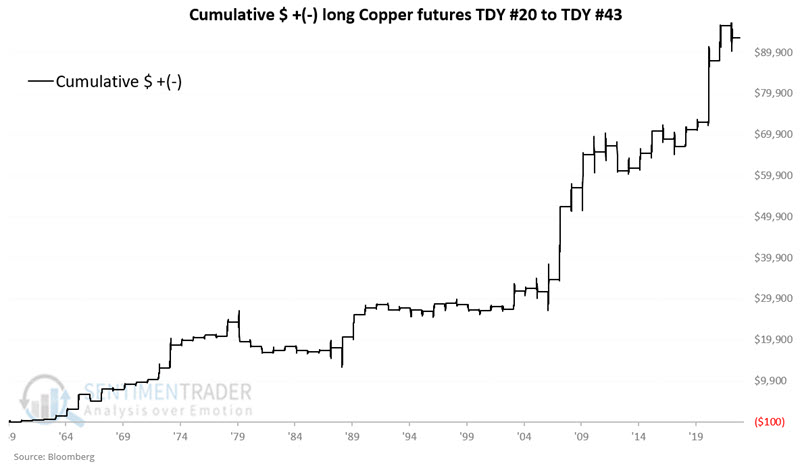
The table below summarizes performance results during this favorable seasonal period.
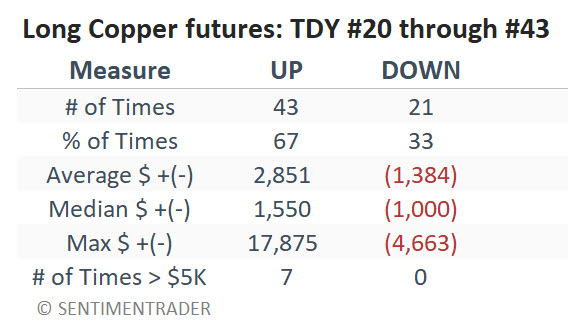
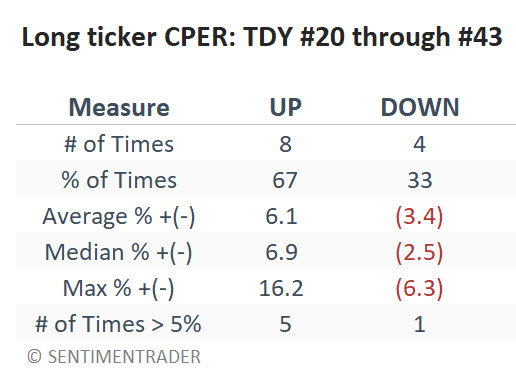
The good news is that historical results have skewed favorably. The bad news is that there is no guarantee that future results will be similar. Even if they are, a 67% Win Rate implies that copper will lose ground during this period in one out of every three years. So this is a "tendency" and not a "sure thing." Likewise, the fact remains that copper futures are inherently quite volatile and require deep pockets (and a solid understanding of the unlimited risk inherent in futures trading) to trade.
Using an ETF as an alternative
The United States Copper Index Fund (CPER) is an exchange-traded security designed to track copper futures price movements in percentage terms. CPER issues shares that may be bought and sold like shares of stock. Volume can be relatively thin at times, although it also tends to pick up smartly when copper actually gets moving.
The futures contracts held by ticker CPER are based on their own proscribed roll schedule. This means that the daily percentage fluctuation in CPER may differ from those of the spot contract we used above to track copper futures directly.
NOTE: We use the same buy and sell dates for CPER that we did for copper futures above to compare apples to apples.
The chart below displays the growth of $1 invested in CPER only during TDY #20 through TDY #43 for copper futures since CPER started trading in 2011.
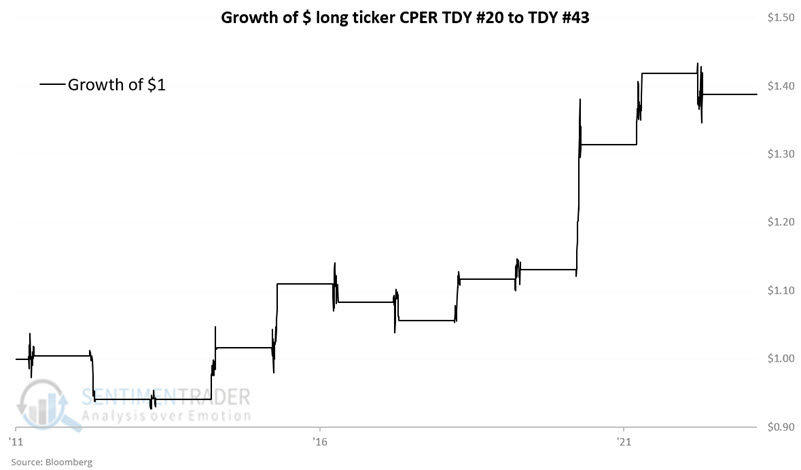
The table below summarizes performance results during this favorable seasonal period.
What the research tells us…
Copper is a highly cyclical market. It tends to show strength in the first half of the year and weakness during the second half. This market is now entering a period that has seen copper futures offer some exceptional strength. That said, traders must recognize the exceptionally volatile nature of copper futures. Non-futures traders who wish to play the long side of copper can consider ticker CPER.