
it's time to keep a close eye on soybeans

Key points
- Due to the nature of the planting cycle, soybeans are a highly cyclical market
- Beans are entering their weakest seasonal period of the year
- Results can vary widely year-to-year, but seasonal weakness in beans is one of the more reliable seasonal commodity trends
First, an update on corn
In this article dated 2023-05-31, I pointed out that corn tends to show weakness in June. June 2023 perfectly illustrated the potential benefits and limitations of seasonal trends. The chart below shows price action for Corn futures in recent months.
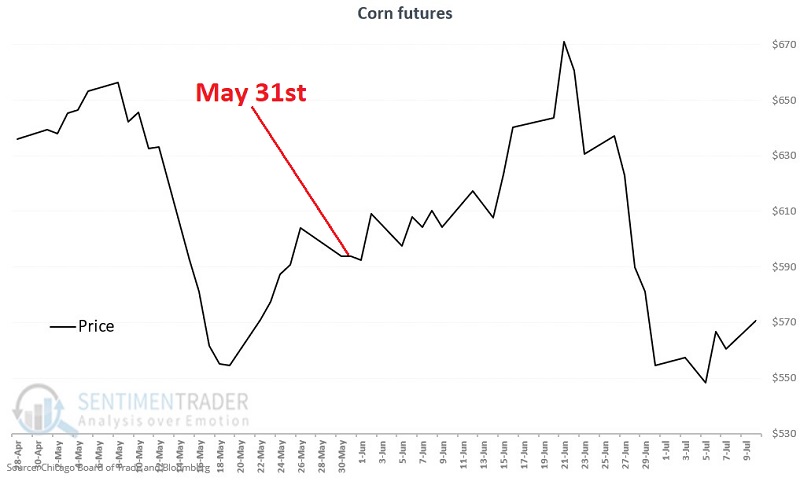
The good news is that corn futures did lose ground during June, as expected. The value of a corn futures contract is roughly $1,200 lower than it was on 2023-05-31. The bad news is that the value of a corn futures contract first rallied over $5,300 in value before plunging.
A trader who relied solely on a bearish seasonal tendency and sold short on May 31st would have had to sit through an open loss of over -$5,300 to garner the current open profit. This type of blind allegiance to any given seasonal trend is not recommended. No matter how historically reliable any trend or indicator has proven to be, the individual trader is never relieved of their duty to thoughtfully allocate capital and ruthlessly manage risk.
Soybeans are now entering a significant period of seasonal weakness
The chart below displays the annual seasonal trend for soybean futures.
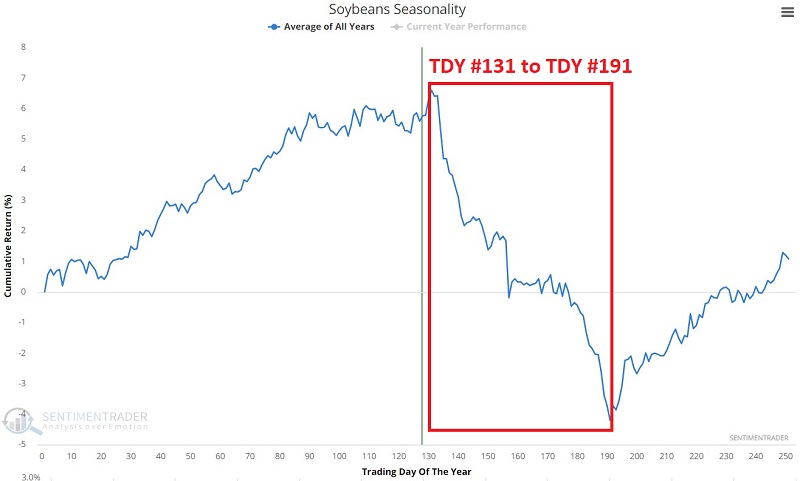
Identifying the weakest time of year is not difficult. The red box highlights the period that extends from the close on Trading Day of Year #131 through TDY #191. For 2023 this period extends from the close on 2023-07-12 through the close on 2023-10-09.
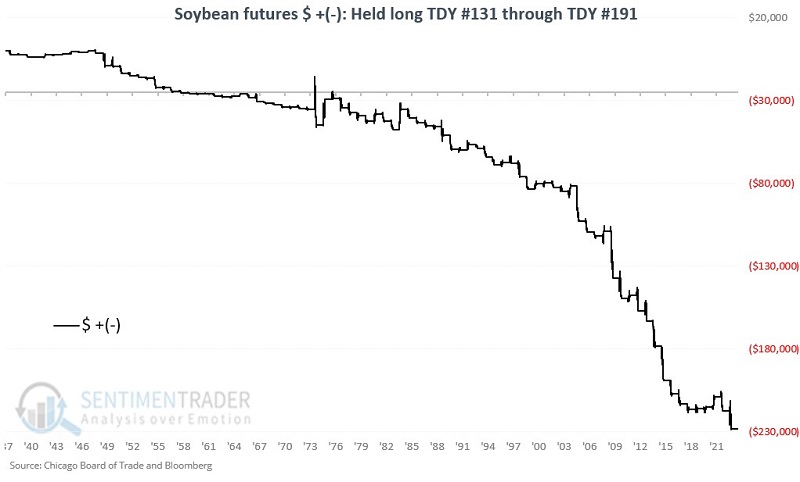
The chart below displays the hypothetical cumulative $ +(-) from holding a long position in soybean futures only during this unfavorable period every year since 1937.
The table below summarizes soybean futures performance during this unfavorable period.
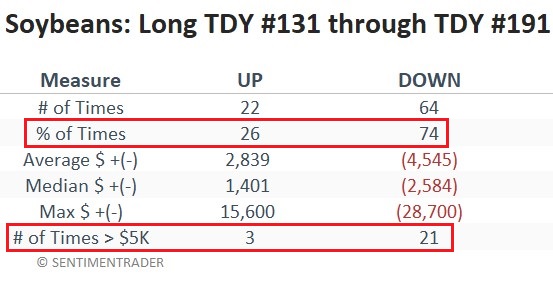
Clearly, the probabilities favor the downside during this period. 74% of the past 86 years have witnessed lower soybean prices during this period. Also note that there have been 21 years that saw soybean futures decline -$5,000 or more, but only three years showed a gain of $5K or more.
The trading reality, however, is that in any given year, anything can happen. In 1974 soybean futures rallied over $15,600, and in 1983 the gain was almost $12,000.
What the research tells us…
Seasonality tells a trader "where to look" for trading opportunities and "in which direction to lean." Beyond that, there are no guarantees. With that caveat in mind, it seems logical that traders should look for opportunities to play the short side of soybeans between now and early October.