
It's time to keep a close eye on small-caps

Key points:
- Small-caps have entered their most favorable seasonal period of the year
- They do so accompanied by improving relative strength versus large-caps
- A potential tailwind from a variety of oversold breadth indicators also exists
The best time of year for small-caps has begun
Small-cap stocks are entering their best time of the year, and a bevy of breadth indicators should give them even more support.
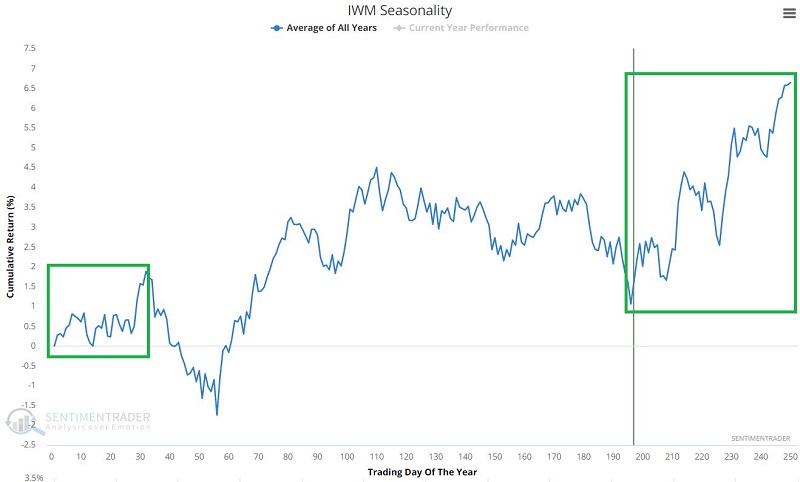
The chart below displays the annual seasonal trend for the iShares Russell 2000 ETF (IWM), which tracks the Russell 2000 small-cap index. Note that the index has just entered a seasonally favorable period that extends from the close on Trading Day of Year (TDY) # 196 through TDY #32 of the following year. This period began on the close of October 12 and will run into early February 2023.
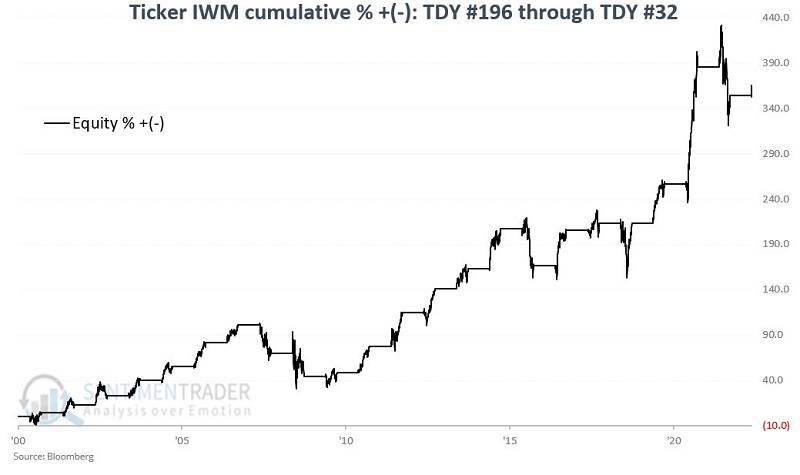
The chart below shows the cumulative percentage return for IWM if held only during these seasonal stretches.
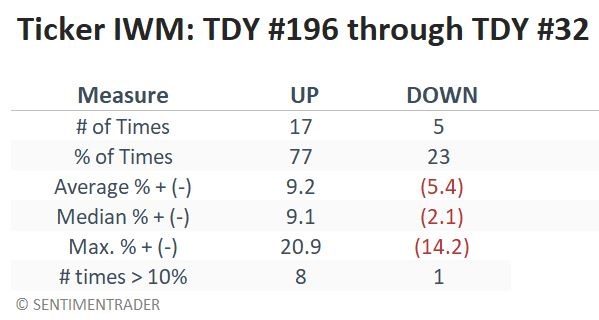
The table below shows that IWM rose 17 out of 22 times, with a much higher probability for large gains than large losses.
Small-cap relative performance is creeping higher
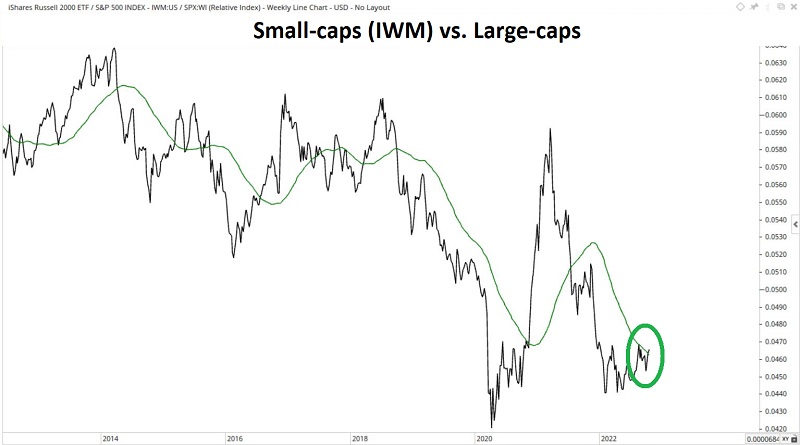
Small caps significantly underperformed large caps for much of the past decade. As a result, recency bias likely causes many investors to shy away from small-caps.
The reality is that neither large-cap nor small-cap enjoys a permanent advantage, and the pendulum typically swings back and forth over many years. The chart below displays the performance of IWM relative to SPDR S&P 500 ETF (SPY). Small-caps are presently trying to establish an uptrend versus large-caps.
Oversold breadth indicators align on the bullish side
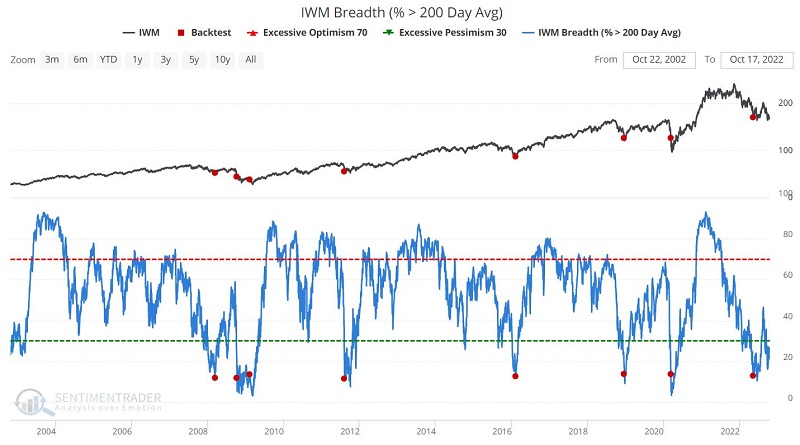
The chart below displays those times when the percentage of IWM constituent stocks above their 200-day moving average dropped below 14% for the first time in four months. The table summarizes subsequent IWM performance. Signals tend to be early, but three, six and twelve-month results are compelling. It triggered earlier this summer, so we're in the favorable part of its historical tendency.
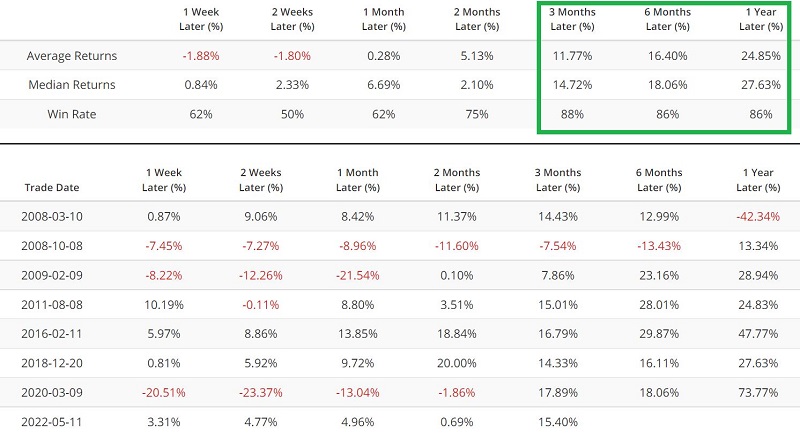
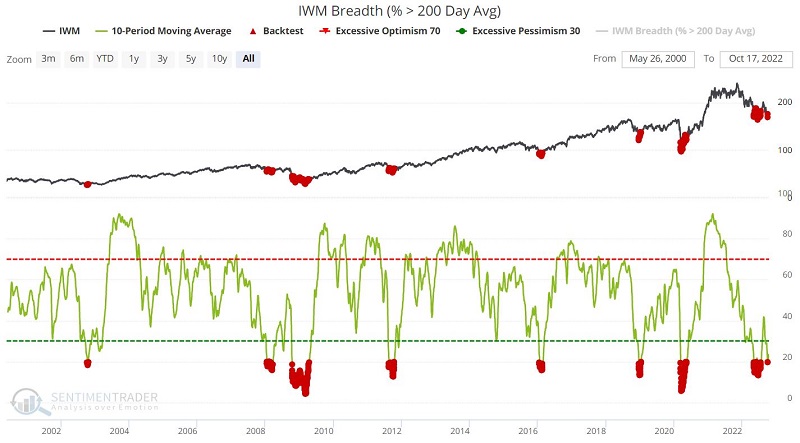
The chart and table below track a slight variation of the indicator above. This version identifies all days when the 10-day average of the above indicator is below 20%.

The final indicator identifies those days when the 20-day average of the IWM McClellan Summation Index crossed below -1000 for the first time in six months. Again, this triggered during the May selloff and while it has come back down again, isn't quite at the same extreme.
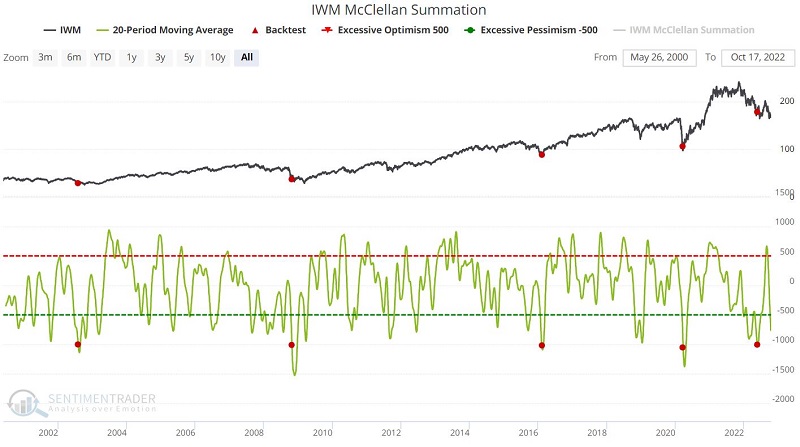
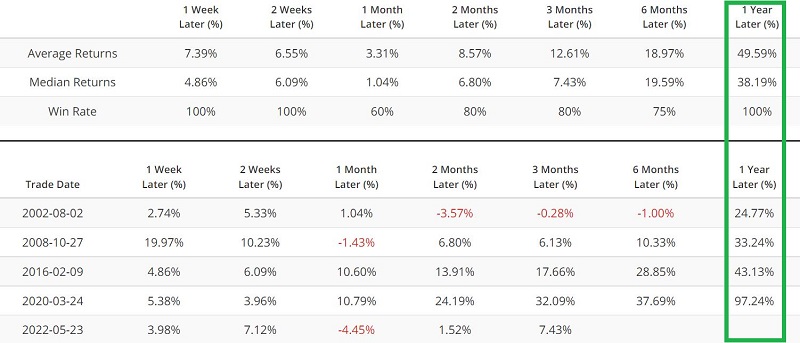
The signals from all three indicators have typically been followed by favorable price action over the next twelve months. As always, past performance does not guarantee positive results this time around. But they do offer some solid confirmation.
What the research tells us…
After a decade of underperformance, small-cap stocks may be poised to return to the forefront. At the moment, a confluence of potentially favorable indications may be forming. The combination of favorable seasonality, improving relative strength (compared to large-caps), and oversold breadth indicators hopefully point to an opportunity in the small-cap sector.