
Investment-grade bonds triggered a breadth thrust

Key points:
- Investment-grade bonds triggered a new breadth thrust signal, indicating broad participation
- After similar bursts in participation, investment-grade bonds, and stocks rallied
- Several investment-grade bond models continue to maintain a favorable status
A breadth thrust buy signal for investment-grade bonds
Although I don't actively invest in investment-grade bonds, I closely monitor them along with high-yield bonds. Analyzing both types of corporate bonds helps me gauge the overall macro backdrop for risk assets. When bonds spanning a broad range of credit ratings convey a positive message, it usually portends bullish outcomes for both bonds and stocks.
On Monday, a model that measures breadth thrust signals for investment-grade bonds triggered an alert, providing bond and equity investors with a favorable market message.
The breadth thrust model triggers when the 10-day sum of investment-grade advancing issues exceeds the 10-day sum of declining issues by a ratio of 1.41. I use a reset condition to screen out repeats by requiring the ratio to fall below 0.81 before a new signal can trigger again.
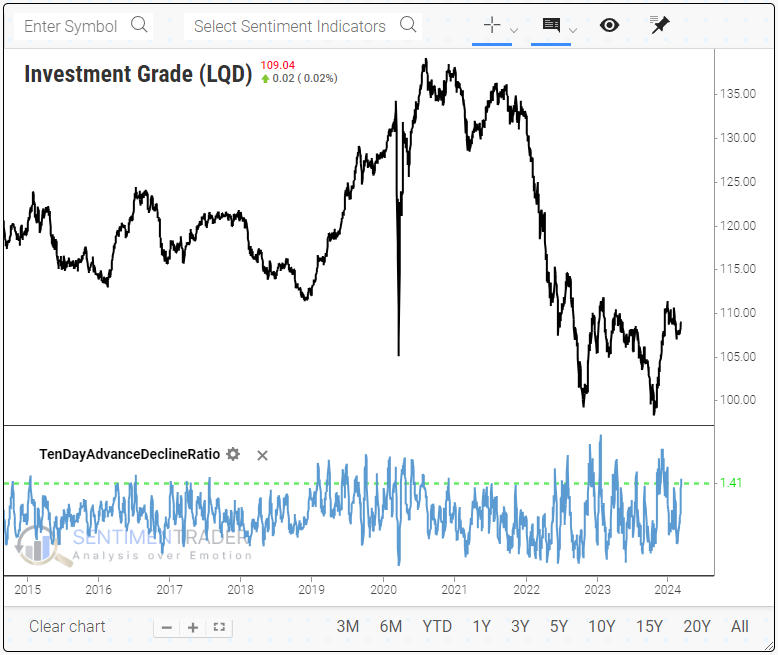
Similar surges in participation preceded positive returns
The investment-grade breadth thrust signal struggled as inflation reared its ugly head in 2021, forcing the Fed to hike interest rates aggressively. However, with inflation significantly lower and the Fed on hold, the precedent set in November 2023 suggests a potential shift in the backdrop toward a more favorable environment, echoing the signals observed before 2021.
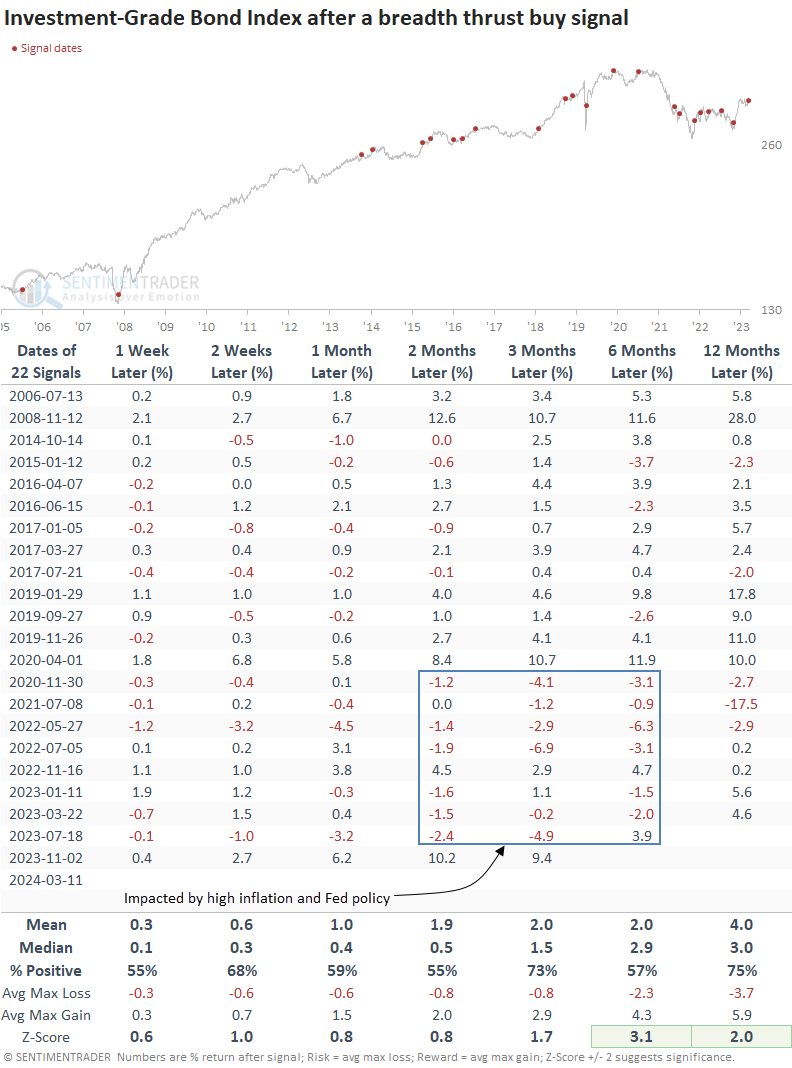
The market message from investment-grade bonds is bullish for stocks
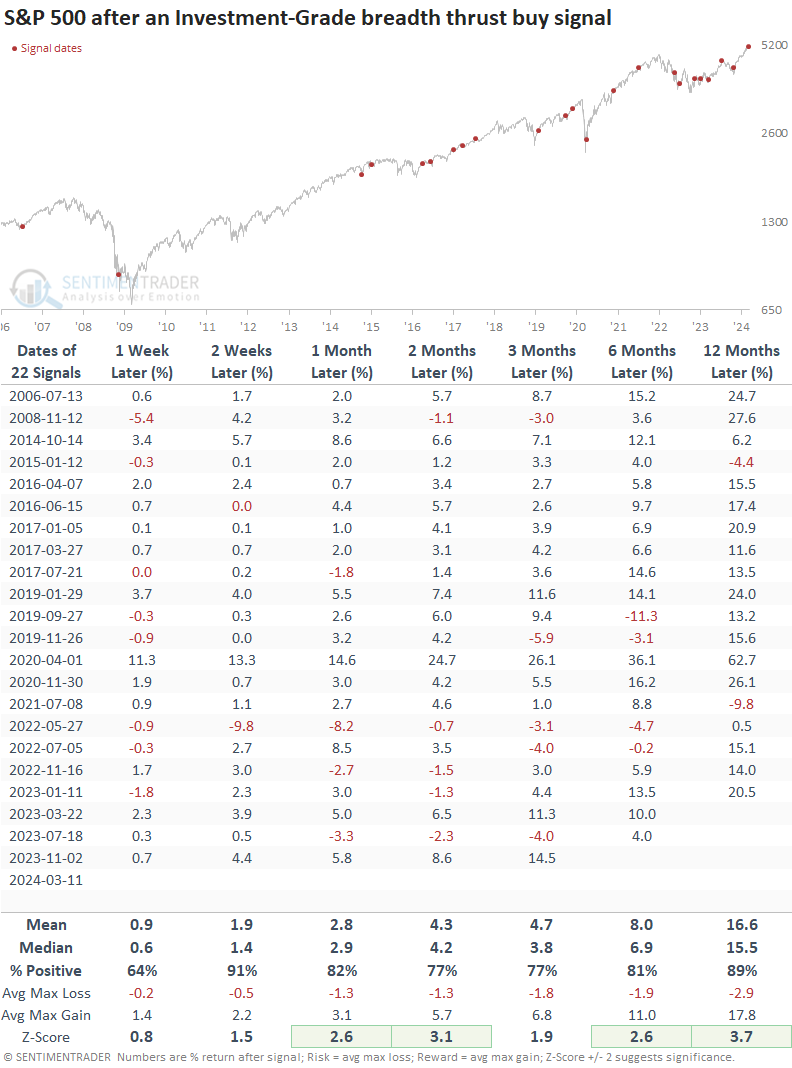
When investment-grade bonds trigger a breadth thrust, the S&P 500 displays excellent returns and win rates, with z-scores suggesting above-random returns. That was especially the case over the following two weeks, a period with only one loss.
While higher-quality corporate bonds struggled in the 2021-22 period, the S&P 500 fared much better, with 7 out of 8 signals showing a profit at some point over the subsequent three months.
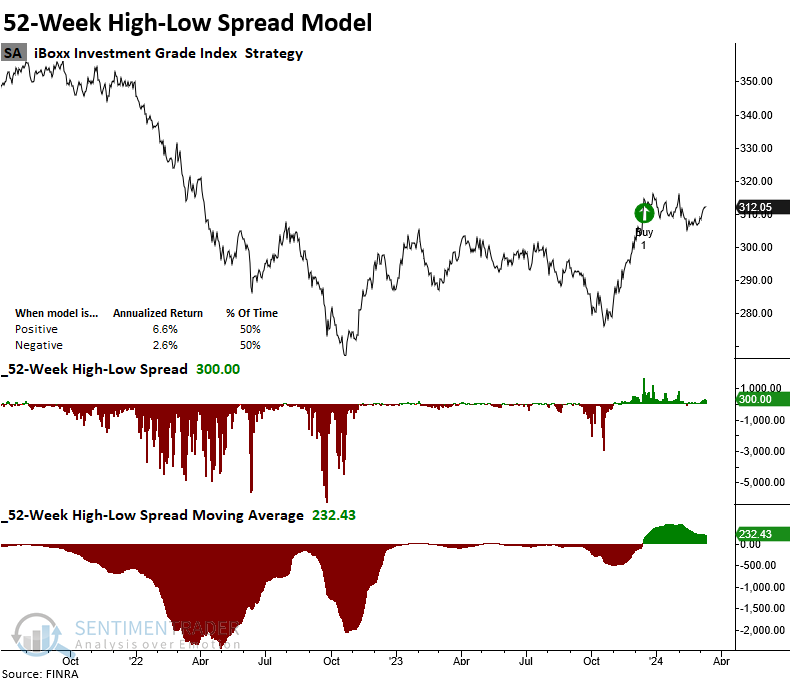
A long-term breadth measure for investment-grade bonds is favorable
After maintaining a sell signal since 2021, this 52-week high-low spread model triggered a buy signal in late 2023, indicating a more favorable backdrop for investment-grade bonds.
A positive model outlook corresponds to an annualized return of 6.6% for the iBOXX Investment-Grade Bond Index, whereas a negative stance results in a meager return of 2.6%.
Relative strength for investment-grade bonds is favorable
This relative strength model, which compares the investment-grade ETF (LQD) to the T-Bill ETF (BIL), a cash proxy, continues to maintain a bullish status, favoring corporate bonds over cash.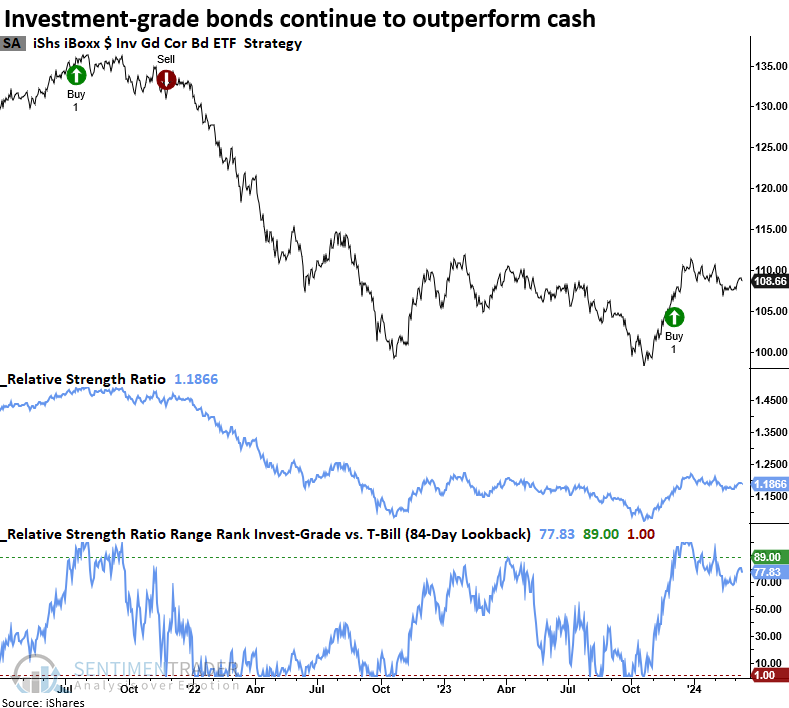
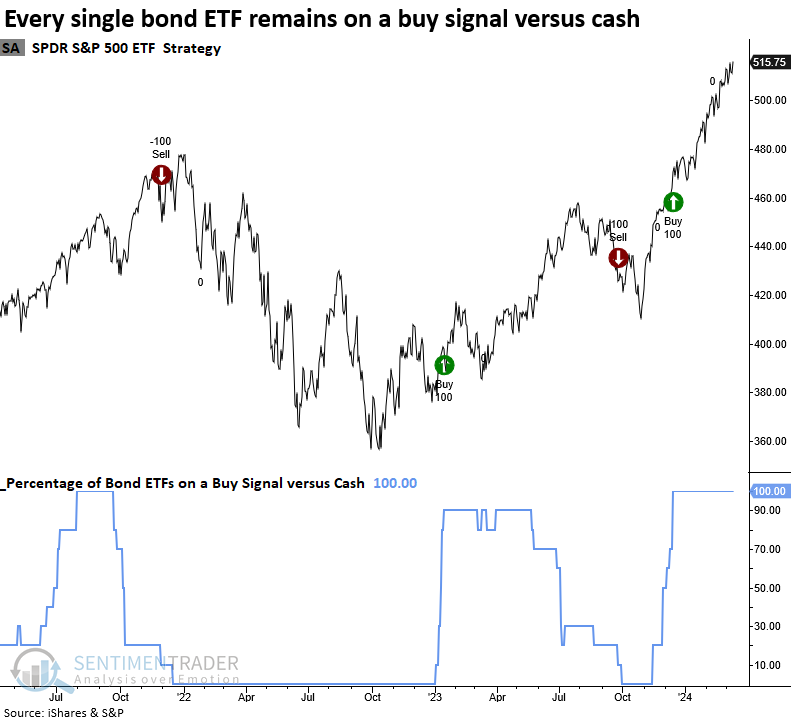
A broad composite, which measures whether ten bond ETFs are on a relative strength buy signal versus cash, shows 100% of the components in a favorable position, indicating a bullish backdrop for risk assets.
What the research tells us...
An Investment-grade bond model triggered a new breadth thrust buy signal, providing additional evidence that the overall macro backdrop remains constructive. After similar signals, higher-quality corporate bonds and stocks rallied, with the S&P 500 displaying excellent results across all time horizons. Additionally, several other models for investment-grade bonds and a broad bond composite remain in a bullish status.