
Industry and hedging action lend favorable weight to the bullish case

Key points
- Favorable indicator signals should be thought of as "weight of the evidence" and not as automatic "buy signals"
- Still, when a variety of typically reliable indicators generate favorable signals within a short time, it often signifies a buying opportunity for stocks
- Our Industry % Indexes in Bear Market and Major Index Combo hedging indicators recently flashed favorable signals
A favorable confirmation from Industry Indexes
Our Industry % Indexes in Bear Market indicator shows the percentage of 23 industries that are trading more than 20% below their 52-week highs. Typically, a rise above 10% indicates a buyable pullback in an ongoing bull market or the onset of an actual bear market. When this indicator rises above 10%, one can only speculate which of these two possibilities will ultimately play out. So, one approach is to wait for this value to drop back below 10% to suggest that the worst may be over. In reality (and as we will see in the chart below), this index can flit above and below 10% several times before ultimately heading lower.
The chart below highlights all dates when the indicator value crossed below 10%.
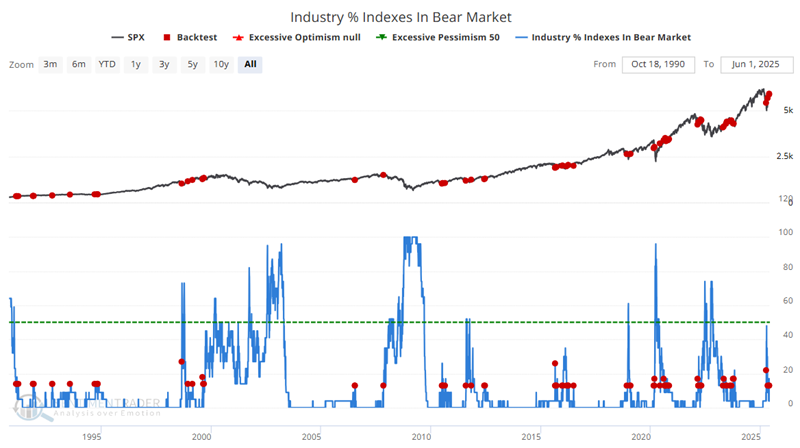
The most recent signals occurred on 2025-04-24, 2025-05-12, 2025-05-27, and 2025-05-29. The table below summarizes S&P 500 performance following the signals highlighted above.

There is no way to know if this index will again jump back above 10% in the near term. Nevertheless, the implication of recent signals is favorable for stocks over the next three to twelve months.
A favorable confirmation from our Major Index Combo
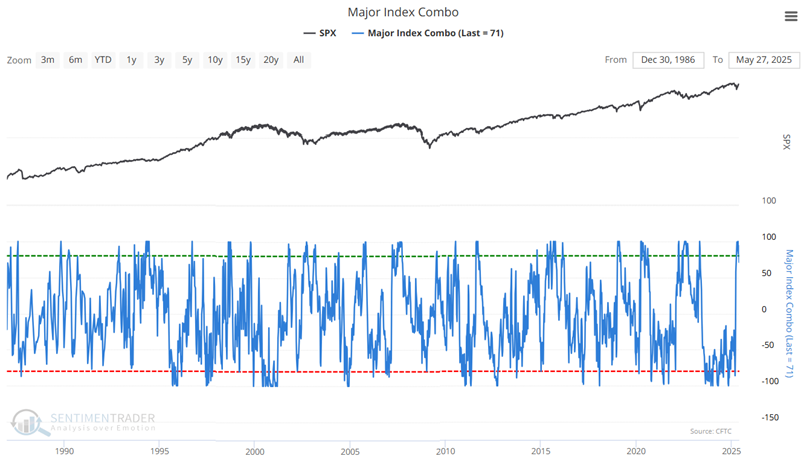
Our Major Index Combo indicator is based on weekly data and reflects hedgers' and small speculators' positions in the S&P 500, Nasdaq 100, and DJIA futures. It combines the full contract and e-mini, adjusting for contract size, and calculates the dollar value. The chart is a one-year stochastic of hedger positions minus speculator positions, so if it reads 100, then hedgers are the most exposed to stocks in at least a year, and speculators are the least exposed.
This is computed as a non-contrary indicator, so it can be a good sign for stocks when the Combo is exceptionally high (an indicator reading above 80). Conversely, readings below 20 are usually a negative sign for stocks.
The chart below highlights all dates when the 10-week average for the Major Index Combo crossed above 66. The most recent signal occurred on 2025-05-20.
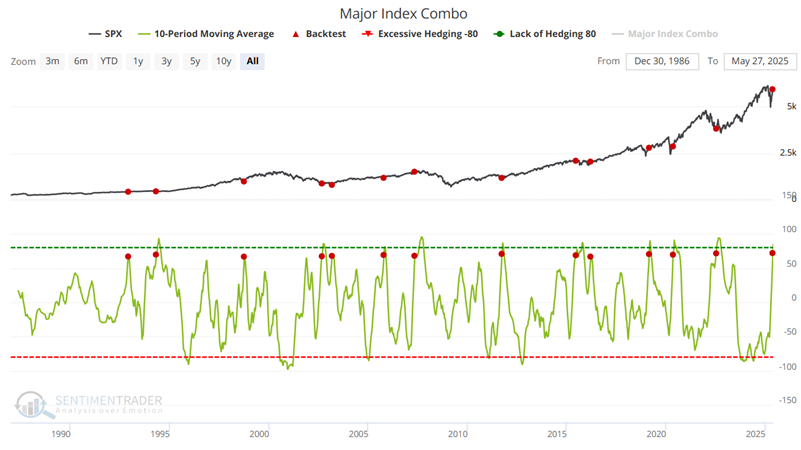
The table below summarizes S&P 500 performance following the signals highlighted above.

The table below displays S&P 500 performance signal-by-signal.
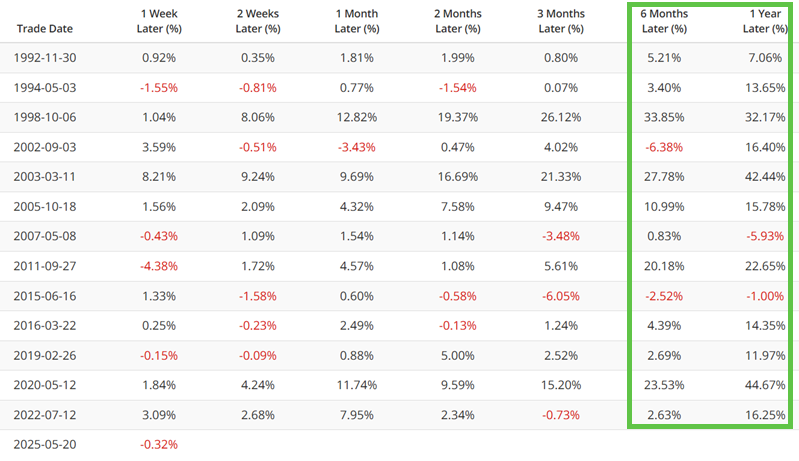
The recent spike in this indicator is a favorable factor for stocks in the year ahead.
What the research tells us…
Each indicator signal highlighted above has a solid long-term track record on a standalone basis. Combined, they offer a powerful argument that the outlook is favorable for stocks. That said, it is always important to remember that no favorable indicator - or combination of indicators -guarantees higher stock prices. Nevertheless, from a "weight of the evidence" perspective, the information above suggests giving the bullish case the benefit of the doubt unless and until price action provides us with a reason not to.