
If this is a bear market...

Key points:
- Bear markets since 1950 have typically troughed right about now, but there was wide variability
- The highest-correlated bear markets to 2022 have seen a bit more weakness, but then multi-month rallies
- Since 1980, these bear markets have all seen multi-week to multi-month rebounds
If we're really in a bear market...
Last week, we looked at the years with the highest correlated 100-day starts to a year. Right about now, most of these bad starts witnessed a multi-month reprieve, despite the oft-cited "sell in May" seasonal phenomenon.
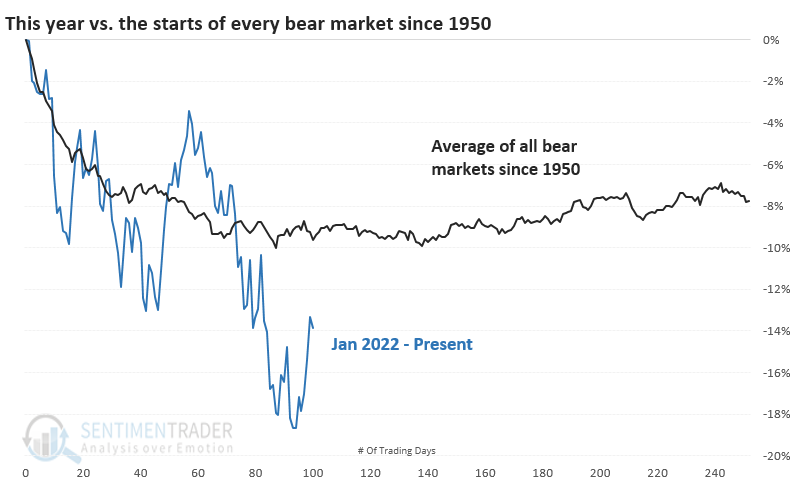
But let's assume the worst. Let's assume that we're mired in a bear market, whether it ends up being declared or not. Since 1950, there have been 21 bear markets, using the definition by Ned Davis Research. Using published media reports, a Bear Market requires a 30% drop in the Dow Jones Industrial Average after 50 calendar days or a 13% decline after 145 calendar days.
Based on those definitions, the current drawdown is significantly worse than average. The "average" line doesn't show a severe drop simply because bear markets have unfolded at different speeds. Some dropped 30% in weeks; others took months or years to get there. But on average, bear markets formed an interim bottom about where we did this year.
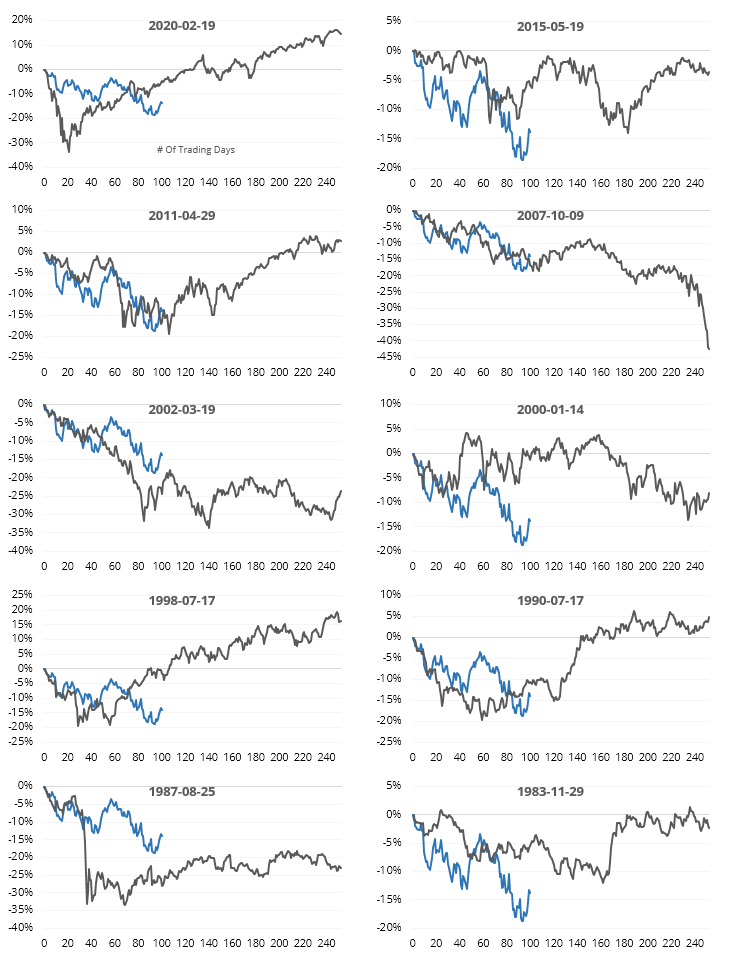
The ten most recent bears show wildly different patterns, which is why the average line above looks so mild.
The bear markets most like ours
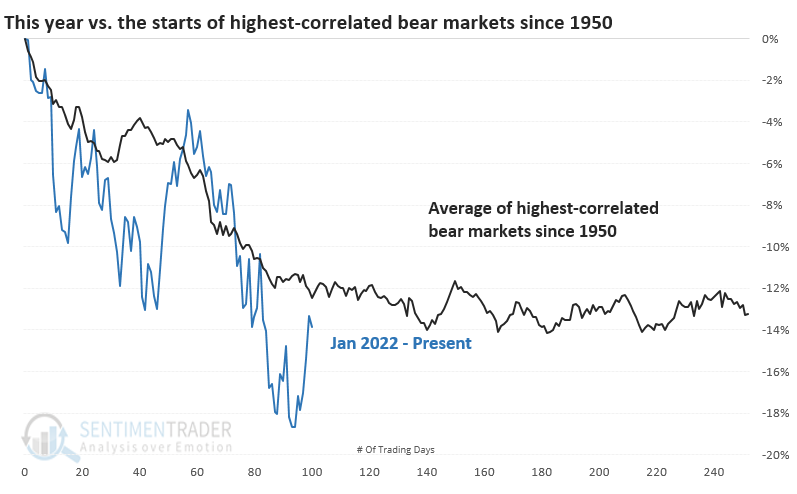
Many of the bear markets don't look anything like the current (potential) one. So, let's focus solely on those with a correlation of at least +0.50 (on a scale of -1.0 to +1.0) to the current (potential) one.
Here, the average line tracks closer to what investors have suffered in 2022, though once again, this year has been worse than most. It's less encouraging for bulls, as the average line continued to drag lower for another month or two before troughing.
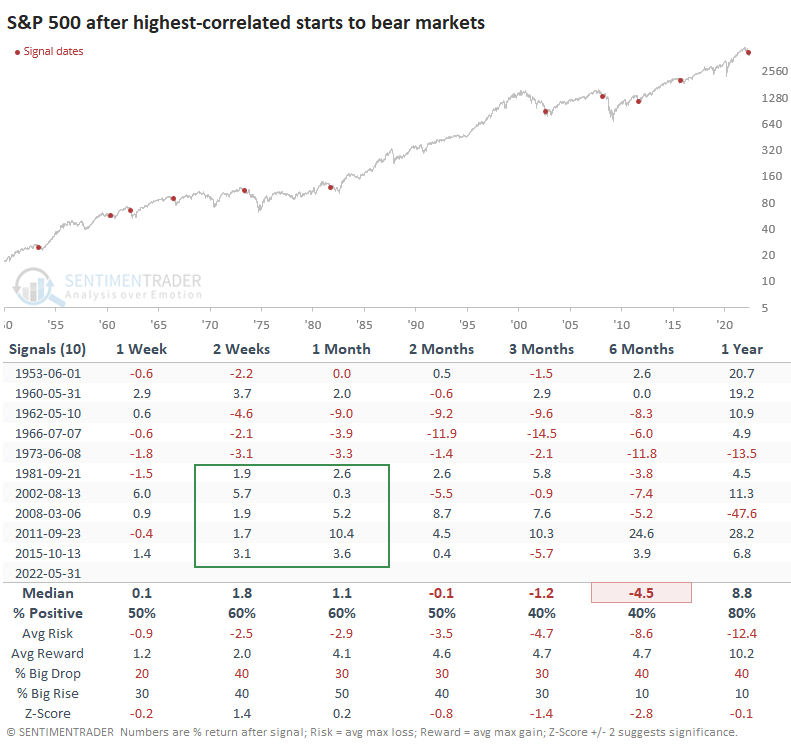
The ten most recent highly-correlated bear markets are below. The green boxes show that most of these did enjoy a multi-month rebound right about now.
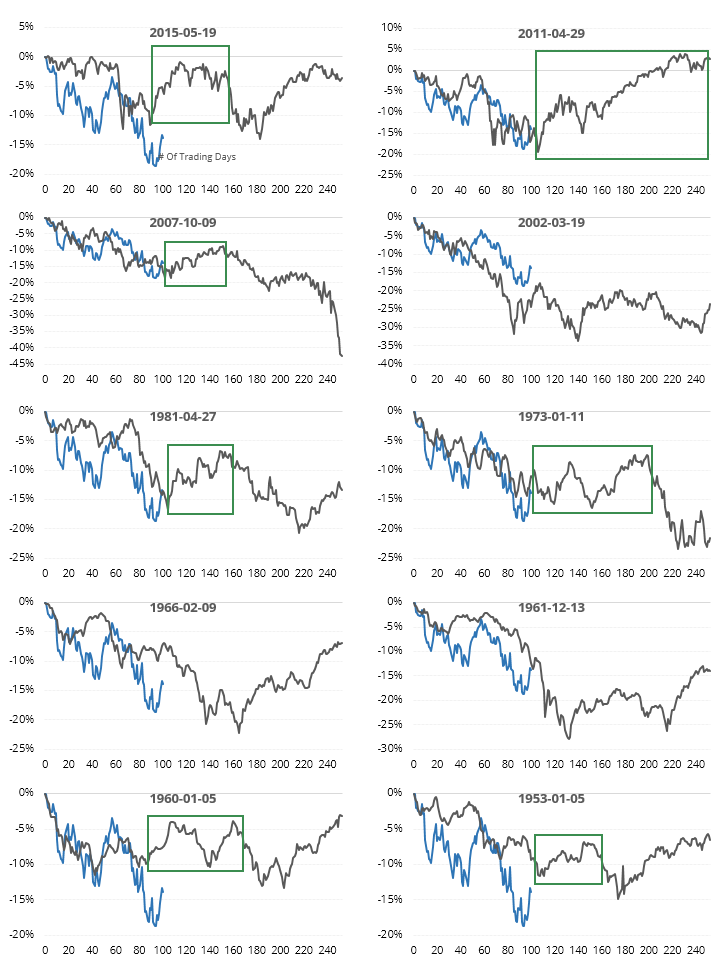
Over the past 40 years, once the bear markets progressed this far - a little over 100 days - they all managed multi-week to multi-month relief rallies. Before 1980, that wasn't the case - pretty much exactly the opposite.
What the research tells us...
For weeks, we've been showing that sentiment is about as washed out as it gets, even during bear markets. And even during bear markets, this kind of investor behavior has consistently preceded multi-week to multi-month relief rallies. We can see above that other bear markets tended to see troughing behavior about this far into a decline, further aiding the idea that buyers may finally gain the upper hand for a while.