
Healthcare stocks attempt a reversal as insiders buy

Key points:
- The healthcare sector has approached a 100-year extreme drawdown relative to the broader market
- Trends in the sector are so bad that they indicate washout conditions, and investors seem to sense snapback potential
- Corporate insiders among healthcare stocks have been buying with increasing intensity, also sensing an opportunity
Healthcare is reversing from a historic drawdown
The rally in stocks off the April low has been described as "torrid," "relentless," and "broad-based." All true.
But that doesn't mean everything has rallied, as investors in the healthcare sector have come to know all too well. Relative to the S&P 500, the total return on those stocks just hit a -35% drawdown for one of the few times in 100 years.
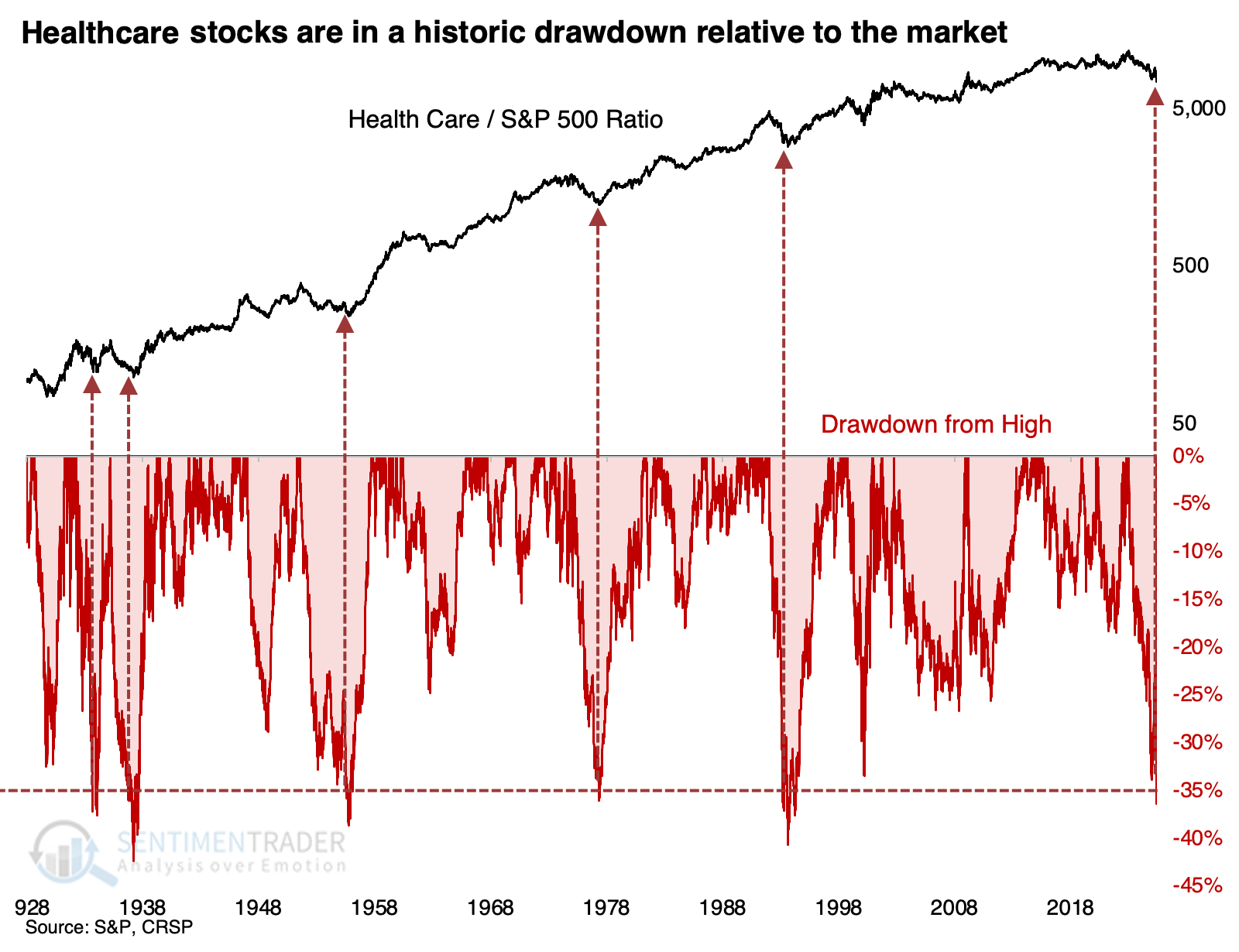
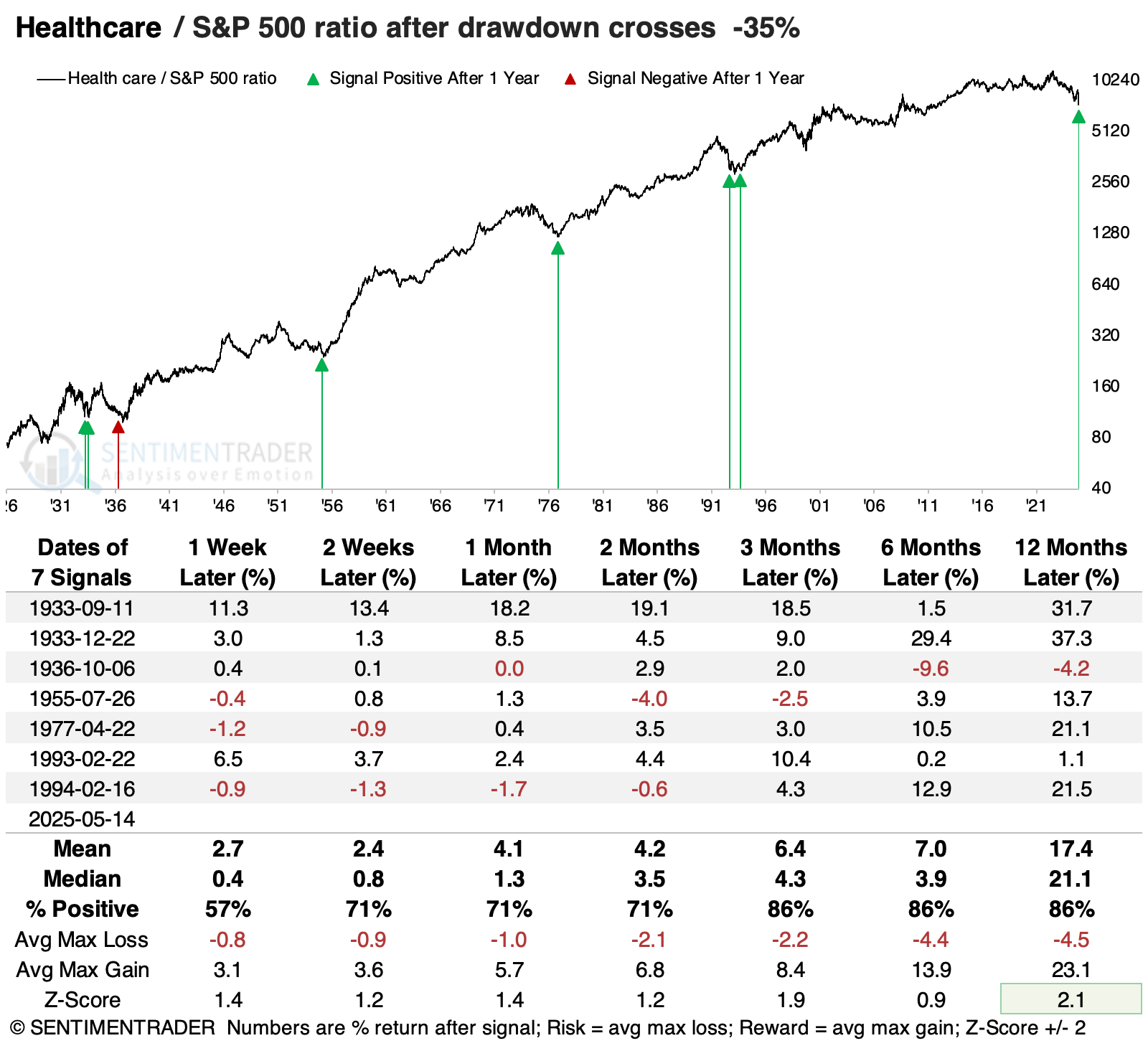
The table below shows how they performed relative to the market in the months after those severe drawdowns. It includes any date when the drawdown reached -35% for the first time in at least three months. They were all triggered by medium- to long-term lows in the ratio, with the only relative loss over the following year, in 1936, soon transitioning to a generational low.
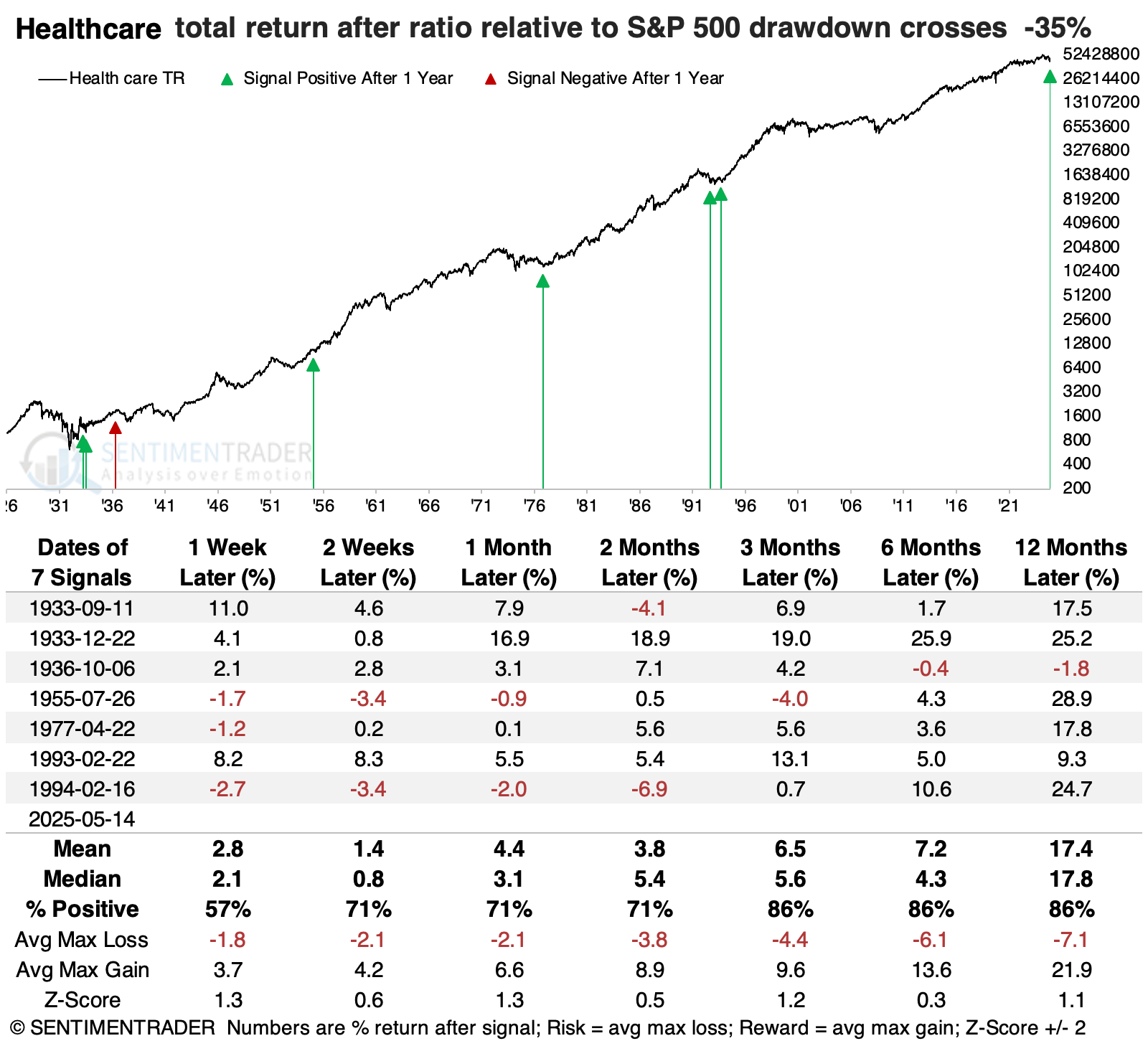
The table below shows the absolute total return for the sector (not relative to the S&P 500). Losses were rare and minimal. Over the following year, only the 1933 signals witnessed a further drawdown larger than -9%, while the average drawup (maximum gain) neared +22%.
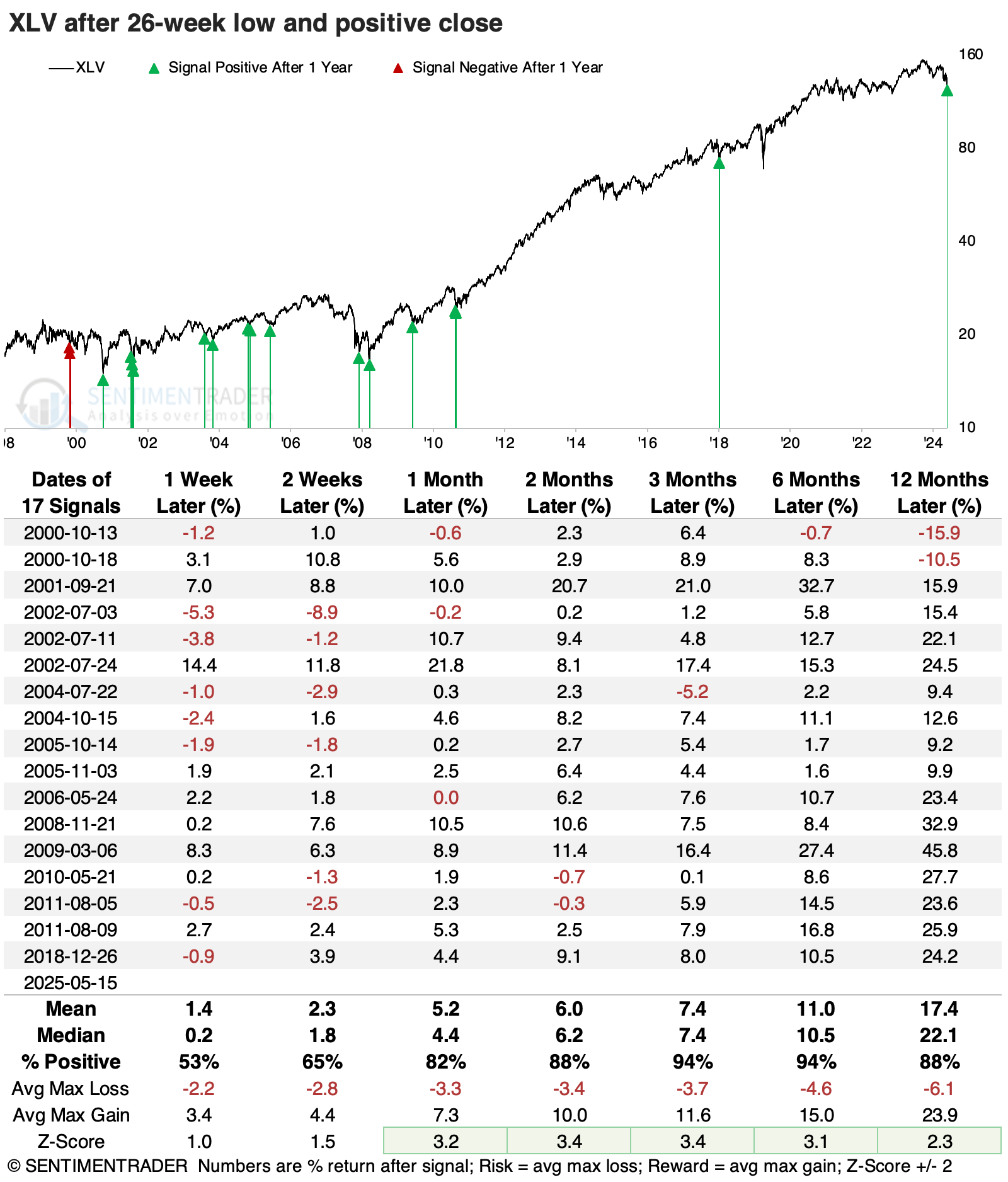
Investors seemed to notice the potential for a snapback last week, as the sector fund XLV dove to a new low on Thursday but then reversed intraday to close in positive territory. In the fund's history, similar reversals occurred only a handful of times, all preceding sustained rallies.
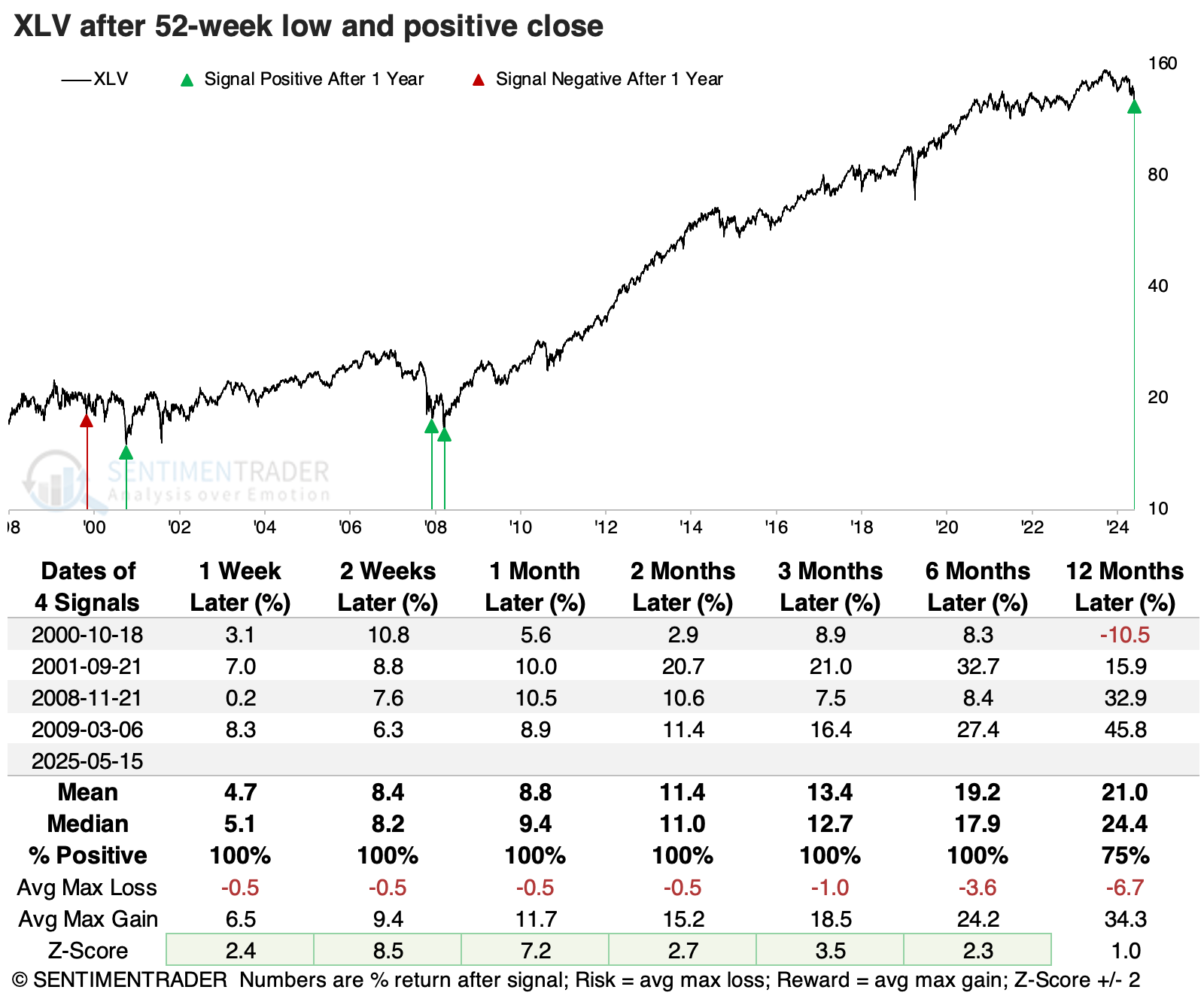
Because of the tiny sample size, the table below relaxes the parameters to include six-month lows; it shows forward returns when XLV hit a six-month low and then reversed intraday to close higher than the prior day's close. There were many more instances (though only one in the past decade), and every one showed a gain either three or six months later.
A trend so bad it may be good
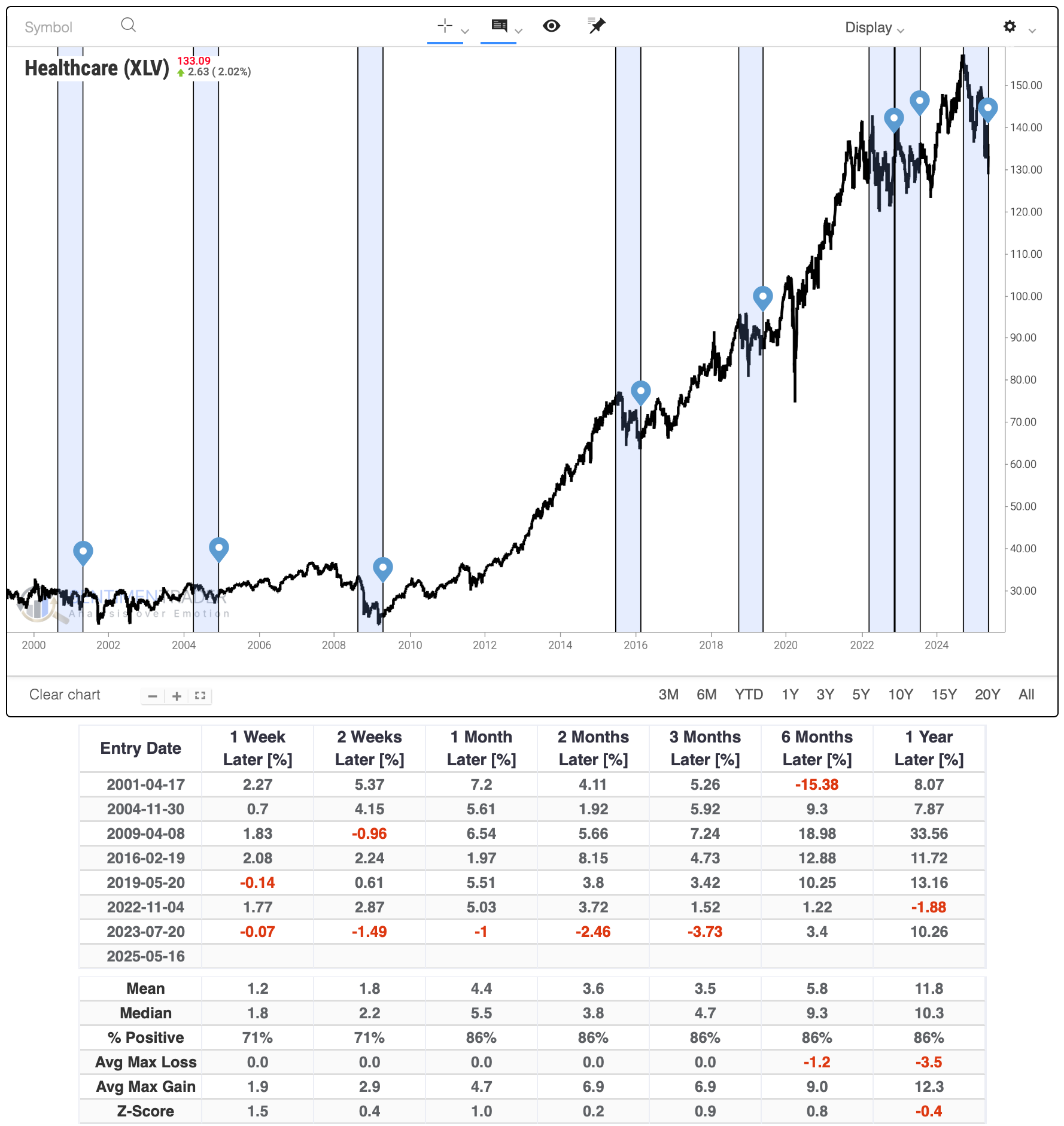
The decline in XLV since its September peak has been fairly harsh, with a major failed rally attempt. The Correlation Pattern Match tool shows similar price patterns, highlighting any similarly-paced period with a correlation higher than +0.80 on a scale of -1.0 to +1.0. The table below the chart indicates that XLV had a strong tendency to rally in the months following similar price action.
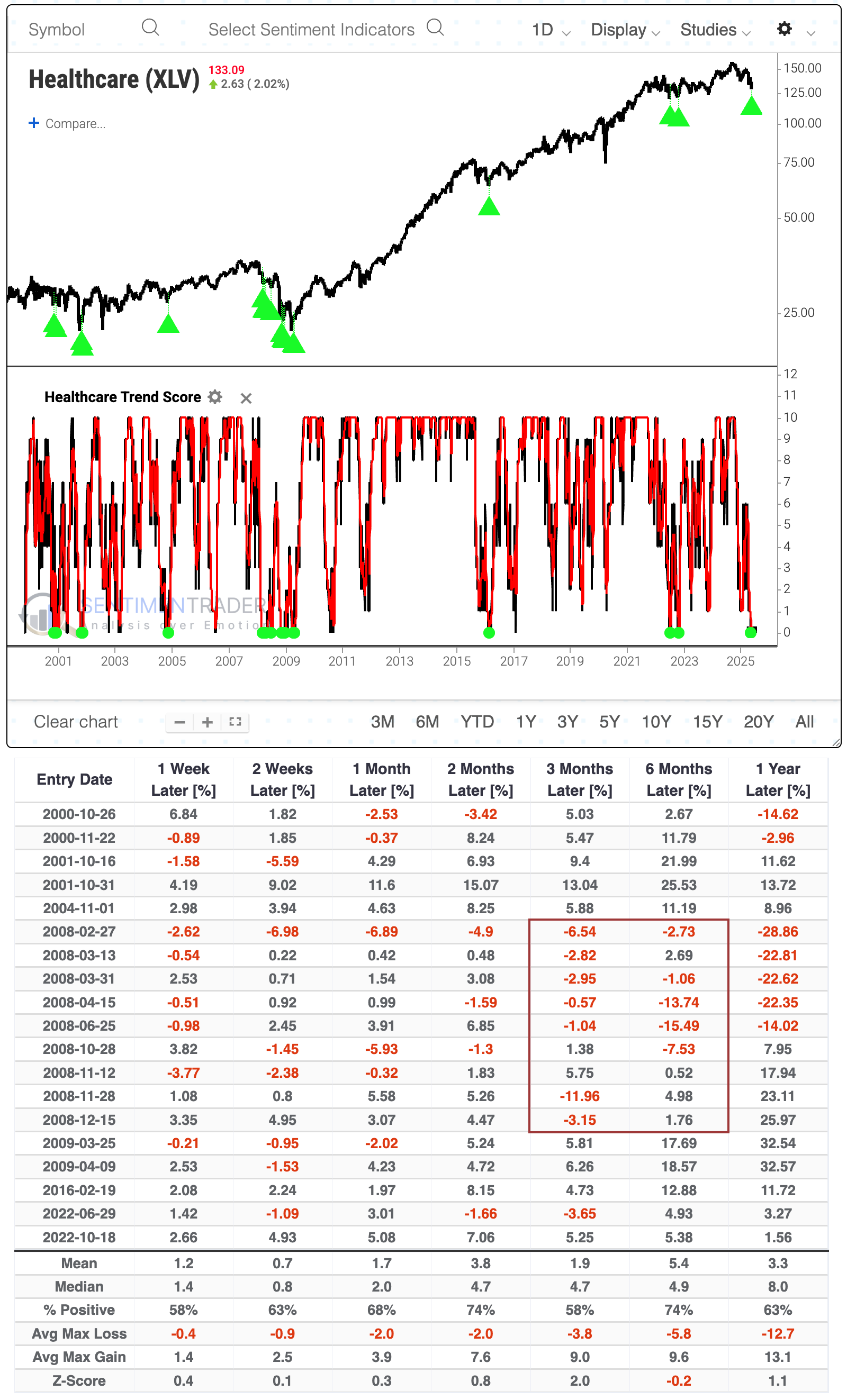
The Trend Score on XLV is understandably poor. In fact, it really couldn't get any worse. The Trend Score aggregates ten measures of trend based on XLV's momentum and position relative to various moving averages. The Score has been mired at 0 for two straight weeks.
Over the life of the fund, further downside has been limited when its trend was so exhaustively negative for two weeks EXCEPT for during the 2008 global financial crisis. Those were terrible signals for a contrarian, as the fund continued on to double-digit losses. So, one would have to believe that a multi-generational crisis was on hand to give that period more weight than the other signals.
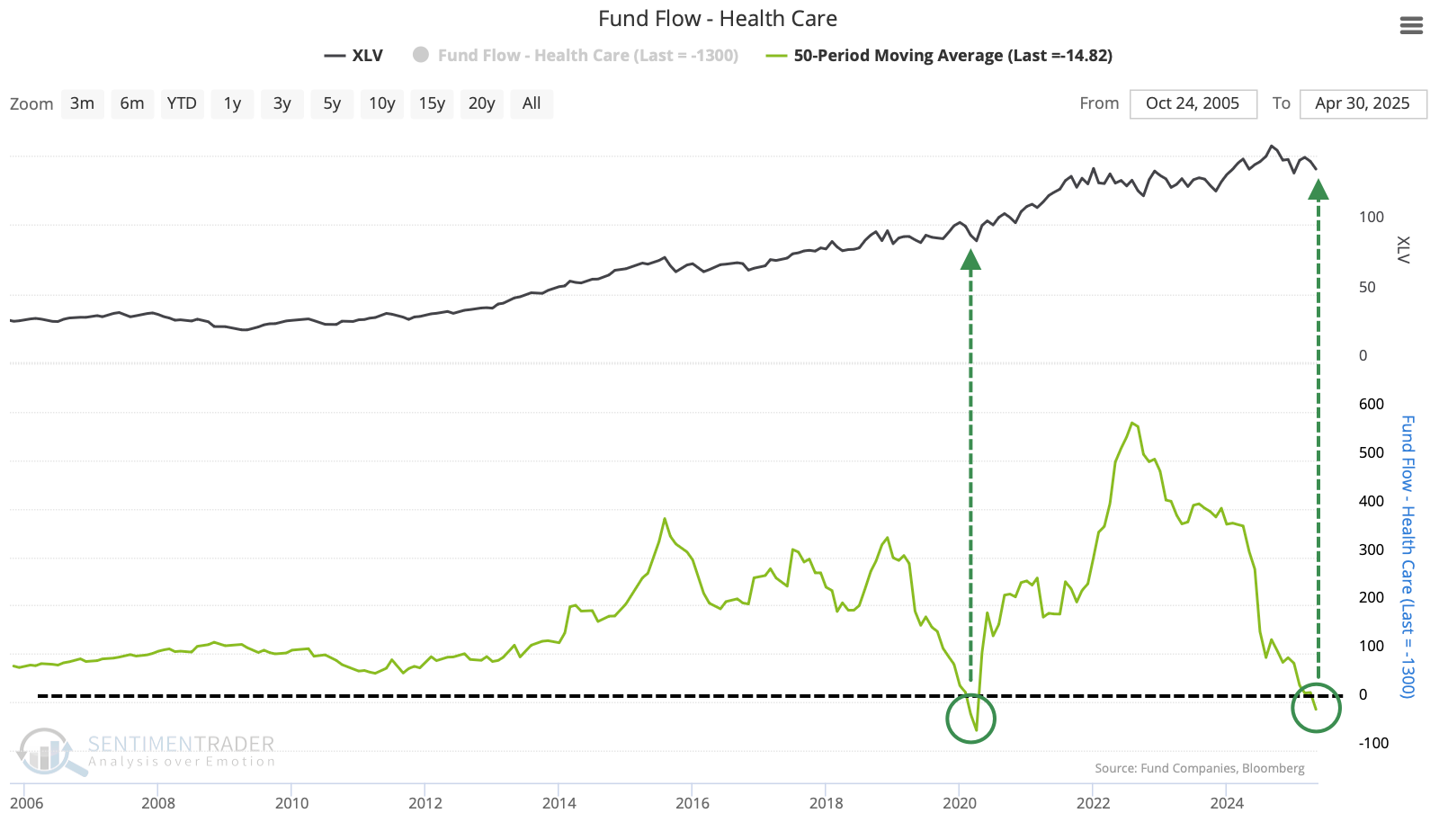
From a very long-term perspective, it's remarkable that a 50-month moving average of fund flows in all healthcare sector ETFs has turned negative for only the 2nd time in two decades.
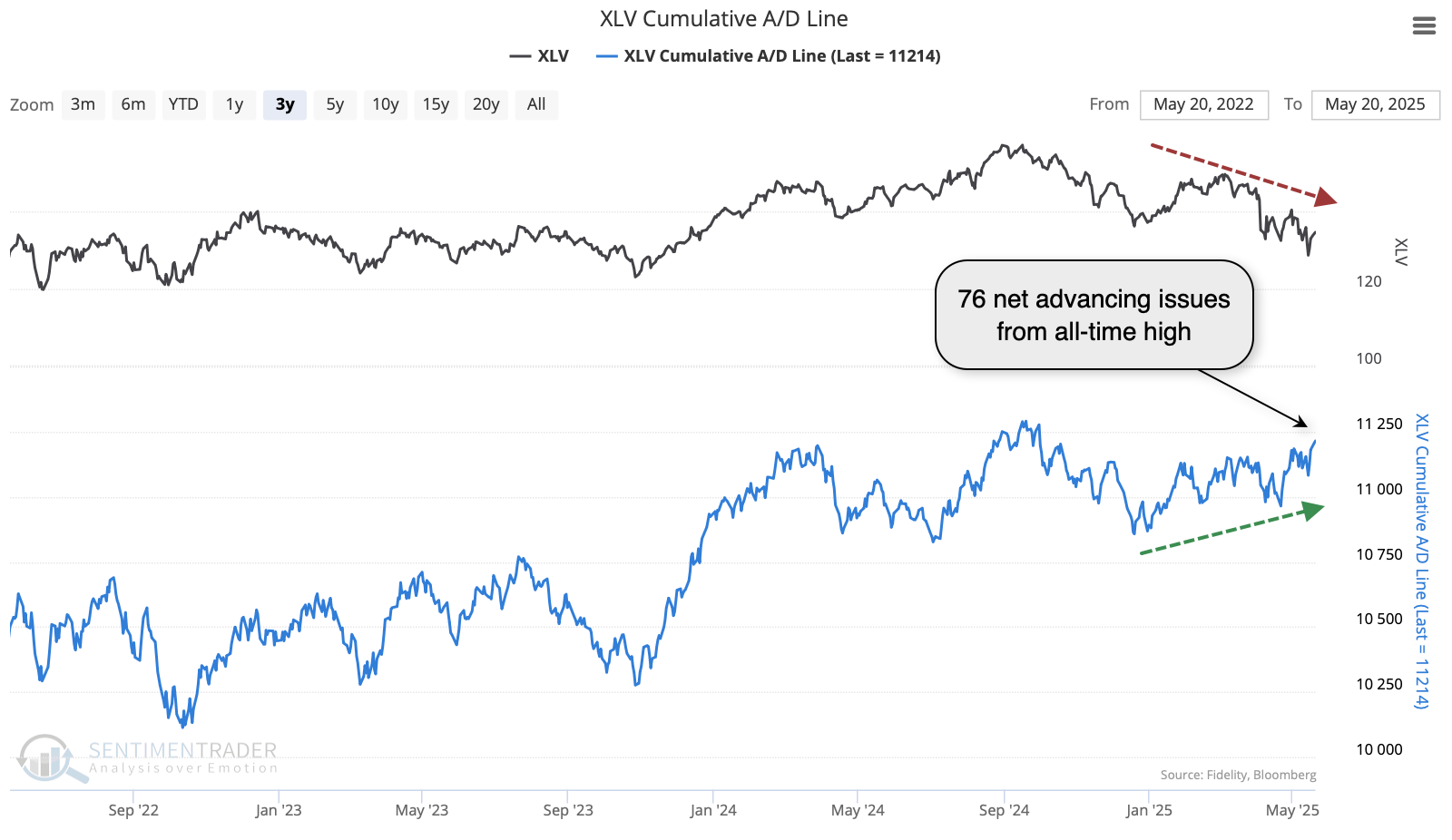
The decline in funds like XLV are due in part to trouble in some large-cap stocks like UnitedHealth. The Cumulative Advance/Decline Line for XLV is quite healthy, only a net 76 advancing issues away from an all-time high. It has been steadily rising while XLV has declined in recent months.
As others sell, insiders step up
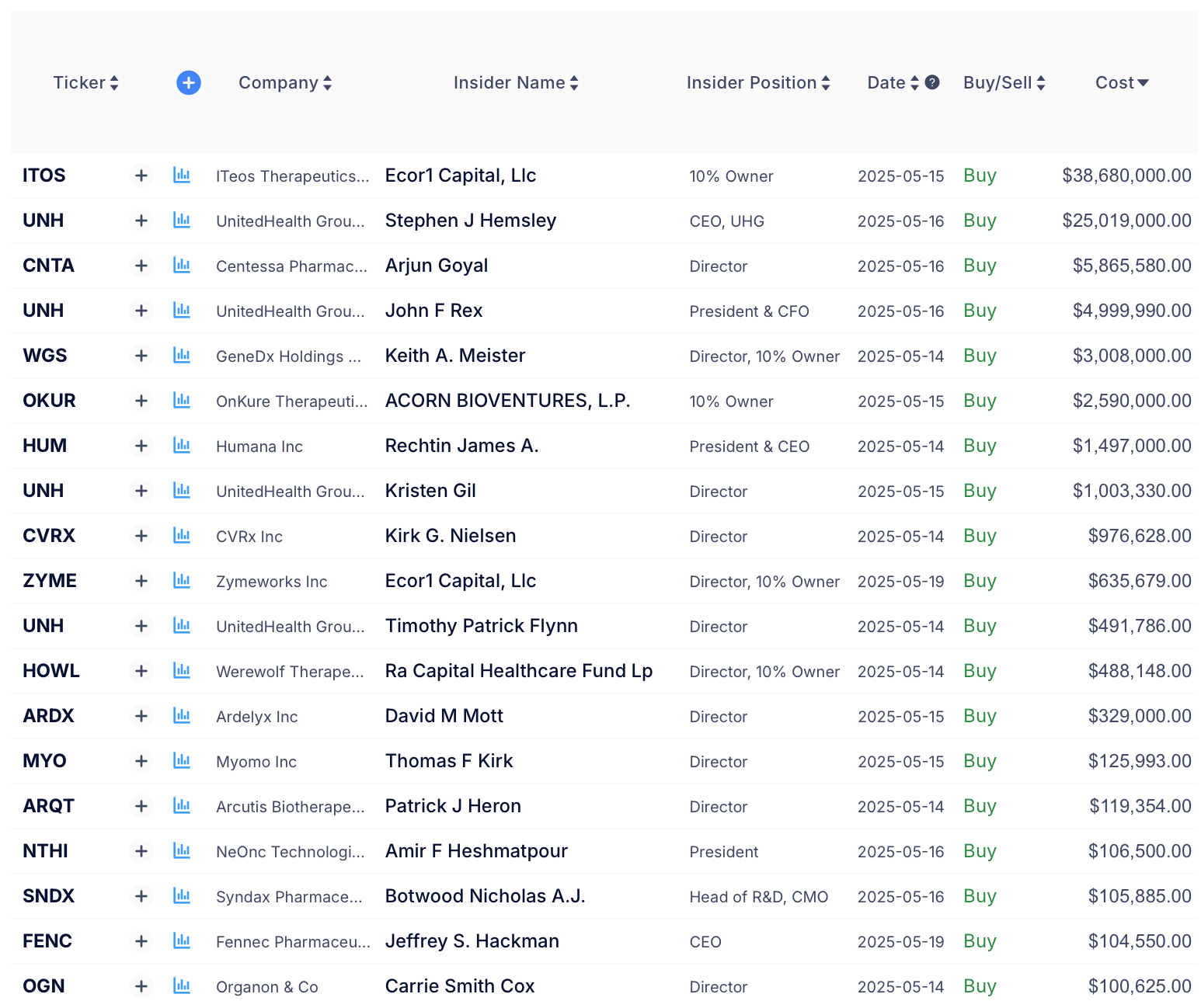
The GuruFocus service shows many substantial insider buys in the healthcare industry last week.
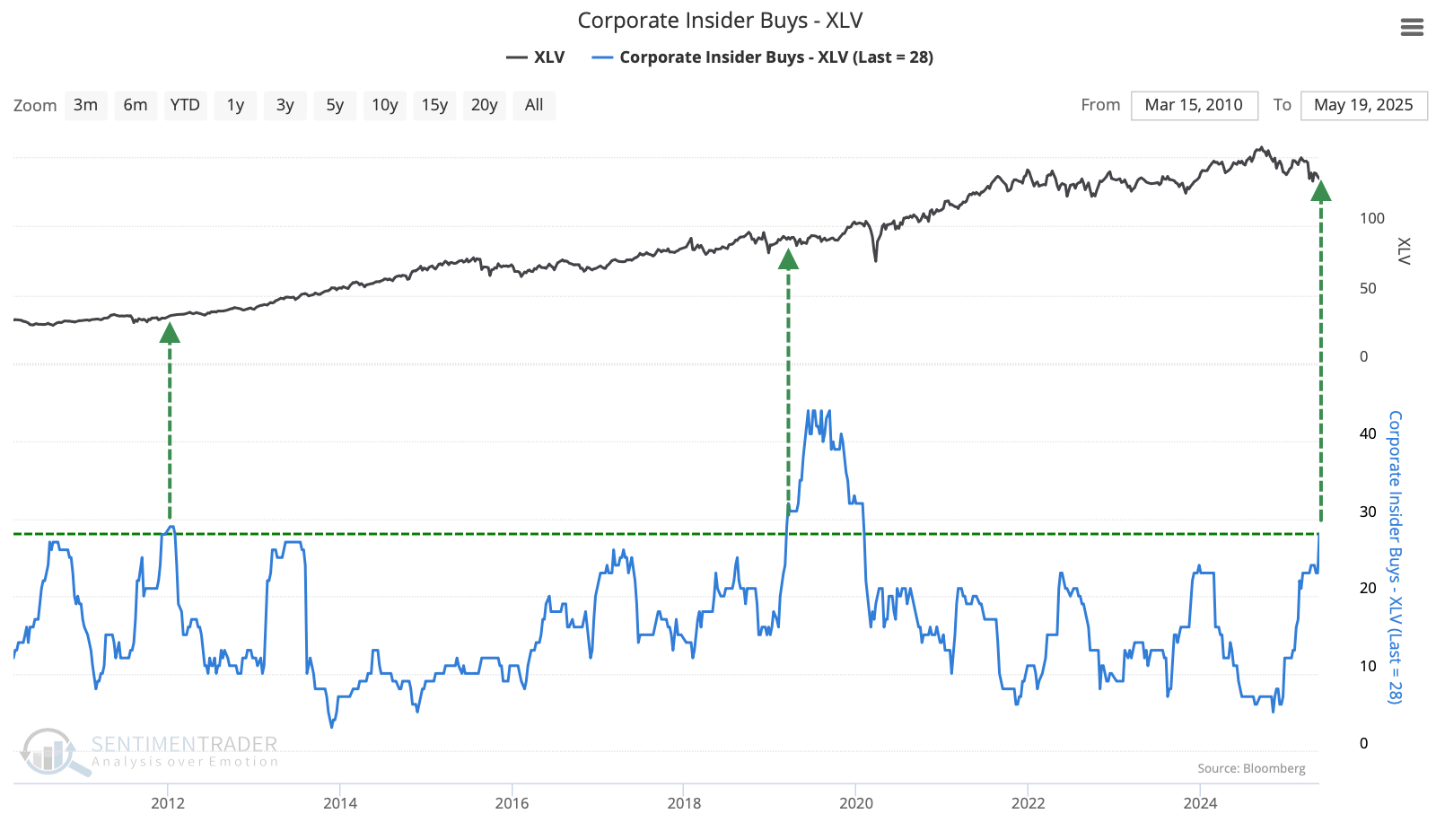
The spike in buying transactions over the past week continues the trend of rising purchase interest among insiders since the sector peaked.
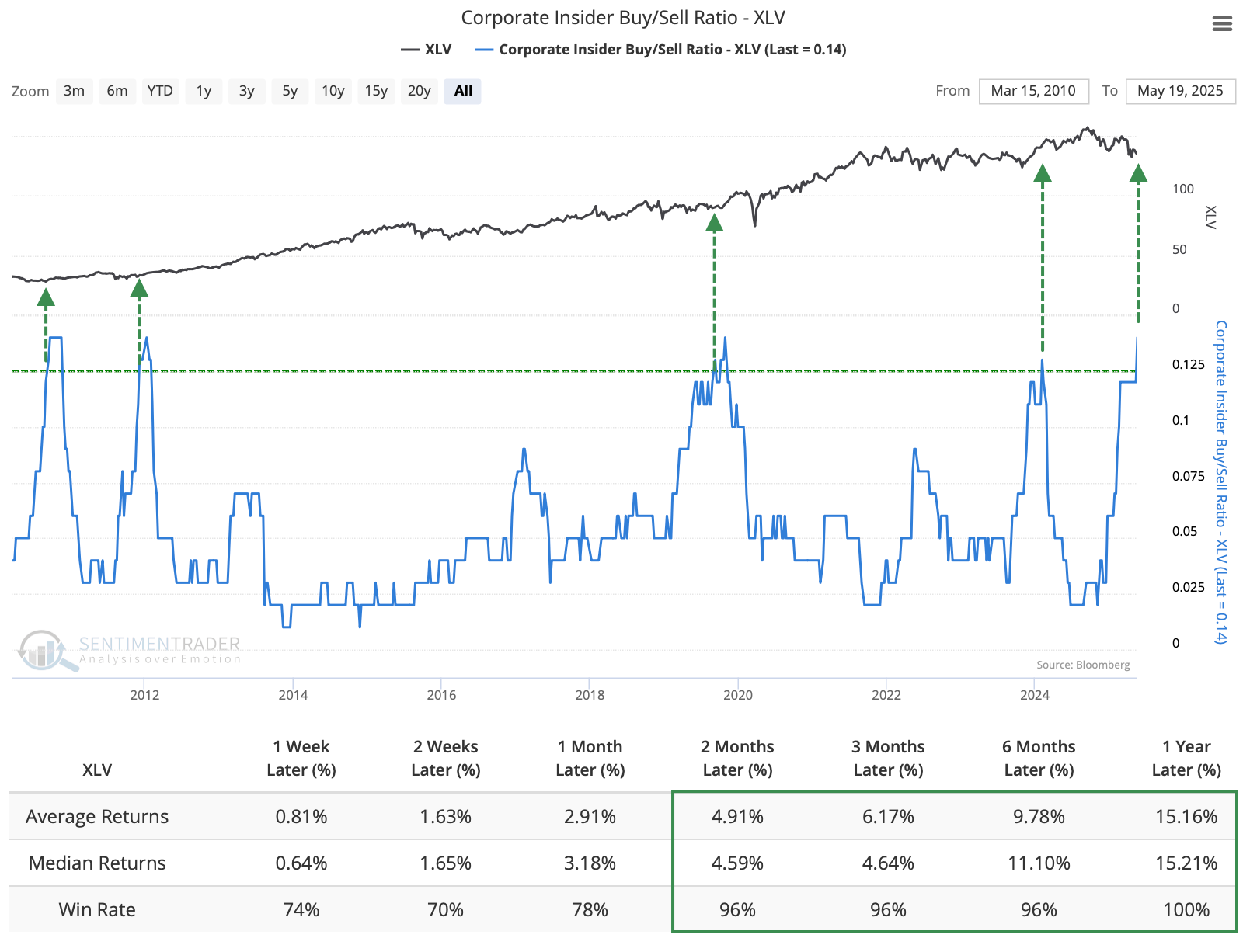
When we combine the rise in buying interest with a historically low number of sellers, the Buy/Sell Ratio also spiked to a level that ties its record going back over a decade. Other times the ratio approached this extreme, XLV did extremely well from two months and beyond (granted, much of the study period was dominated by bull markets).
What the research tells us...
Healthcare stocks have bounced back since sinking to a low and then reversing late last week. But the magnitude of their decline, both absolute and relative, suggests that more gains could (and should) be in the offing. The sector's trend has been so bad that it's potentially good for a contrary reaction, especially in relation to the broader market. The increasing pace of buying among insiders in the sector further confirms that those who should know best have confidence in a potential recovery.