
Healthcare insiders are bullish (and why you should wait to follow their lead)

Key Points
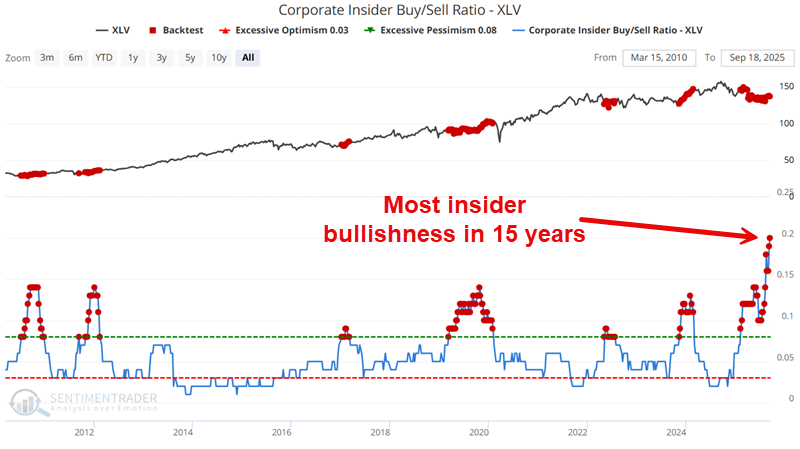
- Healthcare sector corporate insiders are arguably more bullish now than at any time in the last fifteen years
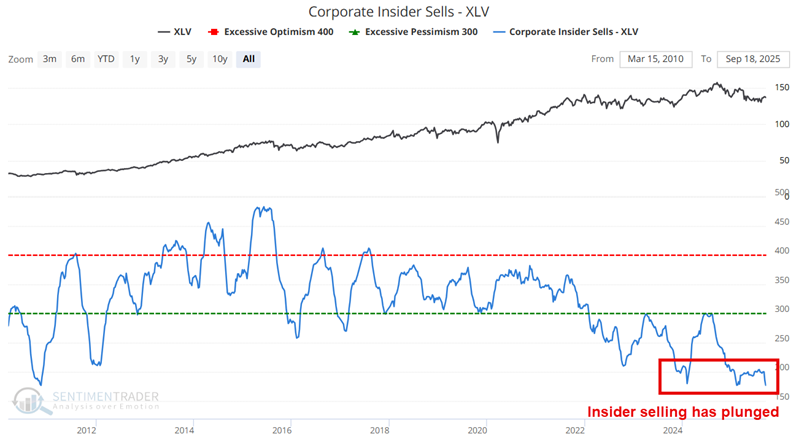
- Insider buying has spiked, and insider selling has plunged
- However, investors may be wise to wait a while longer before joining in, as healthcare enters a particularly unfavorable seasonal period
Healthcare has been a laggard, but insiders expect the tide to turn
The healthcare sector has been a conspicuous laggard in recent years. While the S&P 500 and most other sectors have advanced, healthcare has remained mired in a long, drawn-out trading range.
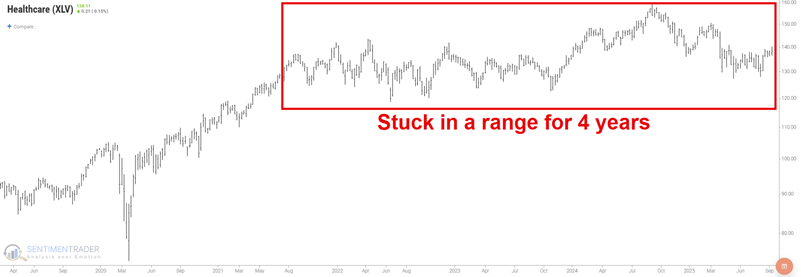
However, healthcare sector corporate insiders have recently significantly increased their open market buying, and insider selling has plummeted to a 15-year low. While corporate insiders are not known for "precision market timing," their recent activity bodes well for the potential for above-average performance for this sector in the next one to three years.
That said, in the very short term, investors should be patient and wait a bit longer before following the lead of insiders as this sector enters what has historically been a particularly challenging period.
Insider buying is up, insider selling is down
An increase in insider buying is considered the best sign from insiders, as it indicates that corporate executives are putting their own cash to work by buying shares of their own company in the open market. A decline in insider selling can also be a favorable sign. When both things occur simultaneously, it is a clear sign that insiders see better days ahead for their companies' stock.
The chart below highlights all weeks when our Corporate Insider Buys - XLV indicator was above 25.
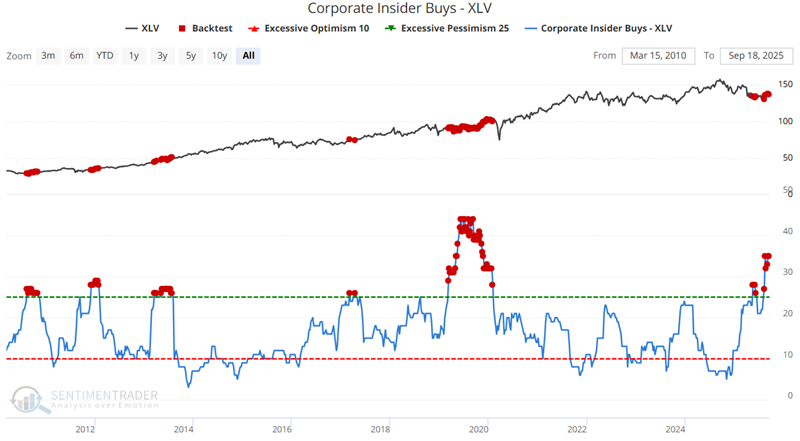

Below, we see that insider selling has plummeted to its lowest level in fifteen years while buying has picked up.
Combining these two factors generates our Corporate Insider Buy/Sell Ratio-XLV indicator. As you can see below, the current confluence of increased buying and dissipation of selling indicates that healthcare insiders are presently more bullish than at any time in the past fifteen years.

So, should investors follow their lead and jump into this lagging sector? Perhaps, but maybe not right away.
Seasonality is a concern that strongly suggests patience
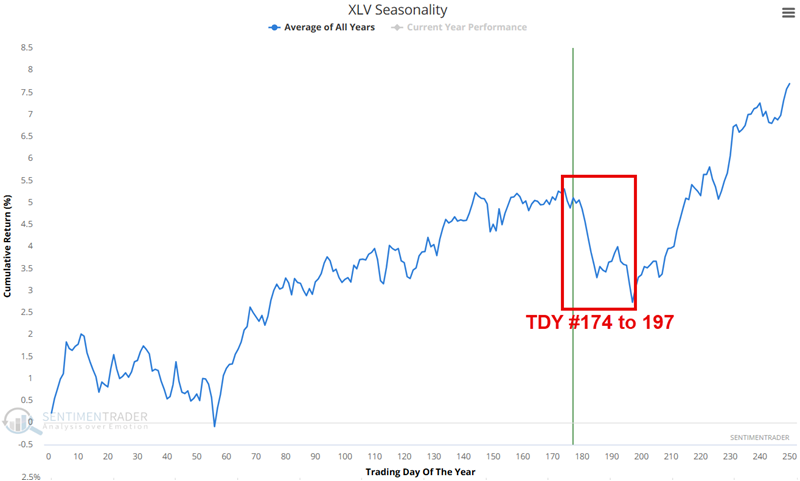
The chart below displays the Annual Seasonal Trend for the Health Care Select Sector SPDR Fund (XLV) and highlights the period that extends from Trading Day of Year (TDY) #174 through TDY #197. For 2025, this period extends from the close on September 12th through the close on October 15th.
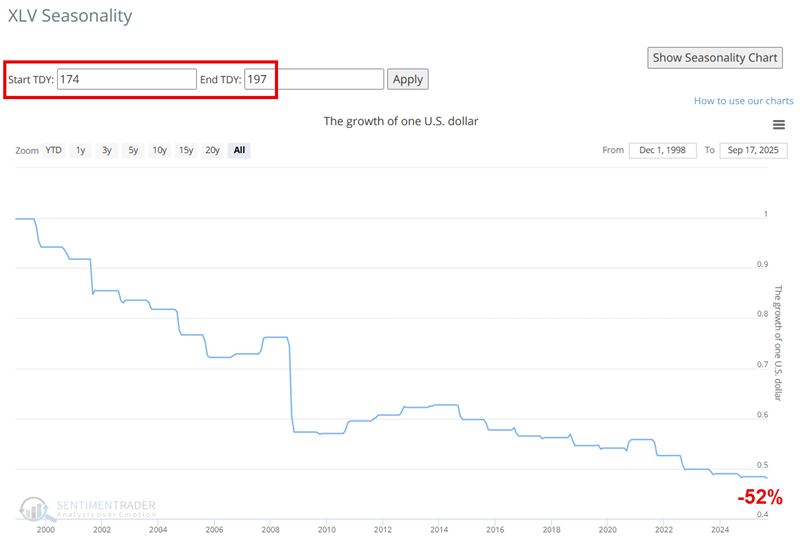
The chart below displays the hypothetical growth of $1 invested in XLV only during this particular period every year since 1999. XLV has declined 19 times and advanced only 7 times during this period. This persistent weakness has resulted in a cumulative loss of 52%.
What the research tells us…
For longer-term investors, corporate insider buying is one of my favorite indicators. A sizable pickup in insider bullishness is almost always rewarded over the next one to three years. The healthcare corporate insider activity highlighted above strongly suggests a favorable outlook for this long-lagging sector. Nevertheless, the persistent nature of seasonal weakness in healthcare from late September into mid-October suggests that investors should check back in mid-October rather than take the plunge now.