
Financials are broadening but leadership is not fully confirmed

Key points:
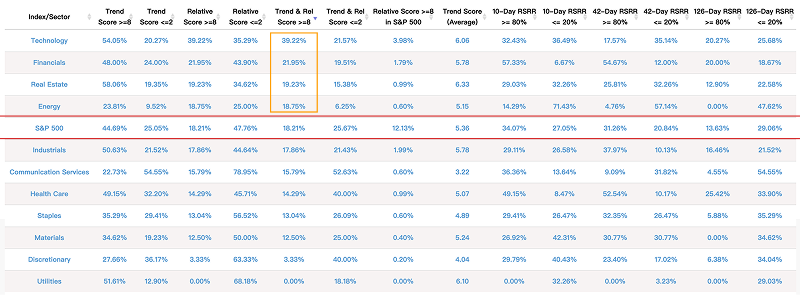
- Financials led all sectors in the percentage of S&P 500 stocks with a 10-day relative strength range rank above 80%.
- The sector ranked just behind Technology in the share of stocks with both absolute and relative trend scores above 8.
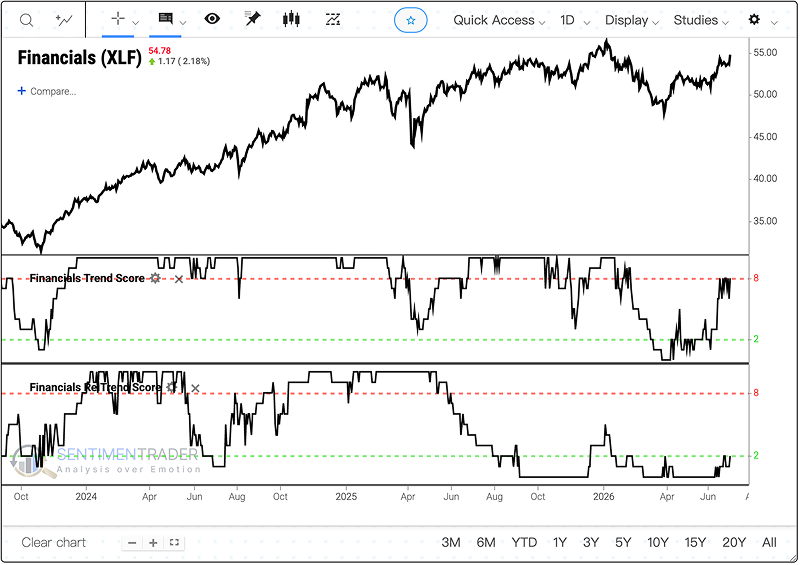
- XLF's own TrendScore improved to 8, but its relative TrendScore versus the S&P 500 remains only 2.
- The percentage of XLF components with a 14-day RSI above 70 reached a five-month high.
- July has historically been one of the stronger seasonal windows for XLF.
The AI ecosystem is still doing the heavy lifting, but financials are starting to broaden
The AI complex is still the market's most visible leadership group, and I've spent most of this year focused there. Still, prudent portfolio management means keeping an eye on where the rally might spread next. Lately financials have earned that attention. A record first half for global M&A and clearer capital-return visibility after the large banks passed the Fed's stress tests have given the group a friendlier backdrop. The story makes sense. The question is whether the internals agree.

They do, to a point. On a 10-day basis, financials are leading every sector in relative strength, with more than 57% of the group's stocks carrying a relative strength range rank above 80%, against 34% for the S&P 500. And it isn't a one-day flicker. The longer-window reading is elevated too, which tells me the bid is broader than a couple of sessions.
The trend-score work backs it up
Short-term relative strength can be noisy, so the more useful check is the trend data. There, financials rank just behind technology in the share of stocks scoring eight or above on both the absolute and the relative trend. That matters, because it moves the signal from "a sharp few days" toward "a group where a real portion of names are in a genuine uptrend."
Here's the catch
This is where the picture gets less clean. XLF's own trend score has recovered to 8, which is consistent with a constructive price trend. But its relative trend score versus the S&P 500 is still just 2. The absolute trend has improved a lot more than the relative one. In plain terms, financials are participating in the rally. They aren't yet leading it.
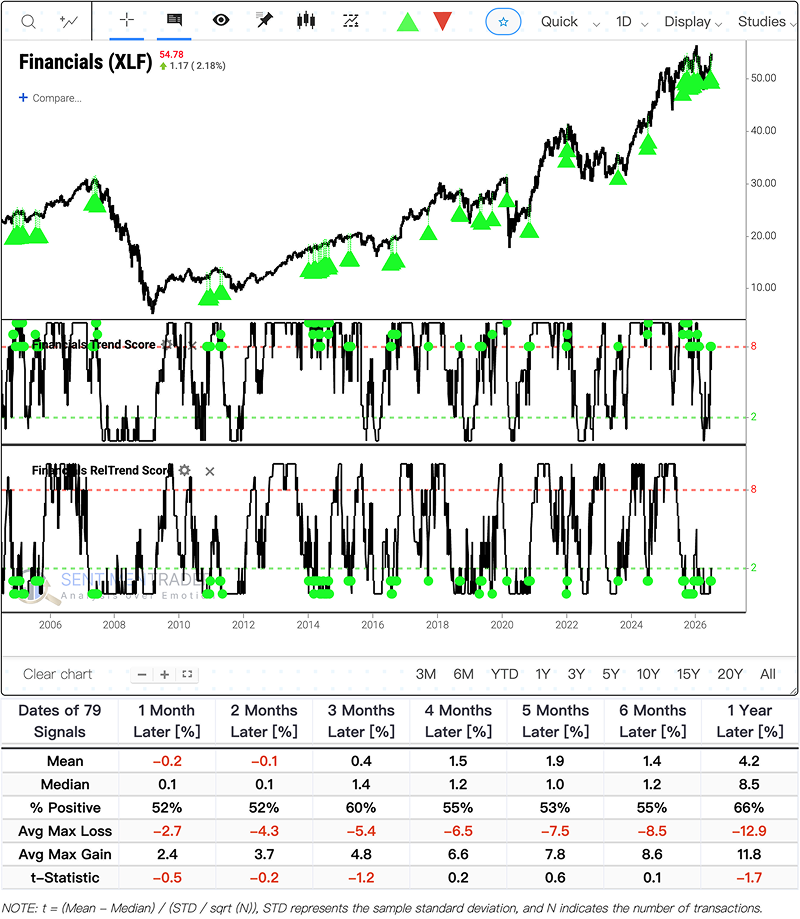
History suggests the setup can pay off, just not smoothly. Across 79 similar setups, returns were flat for the first two months, turned positive by the third, and improved over the longer horizon. The average maximum drawdown along the way was near 13%. Click here to see the backtest.
Momentum is spreading, not overheating
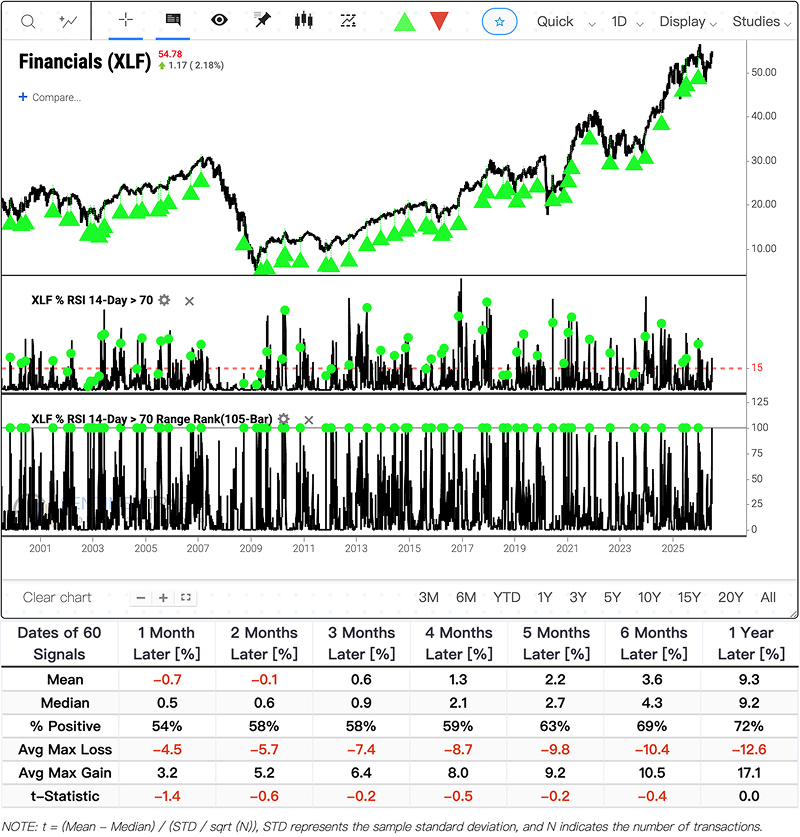
The one place that relative weakness hasn't shown up yet is momentum. More than 22% of XLF components now sit in overbought territory, the highest share in 5 months.
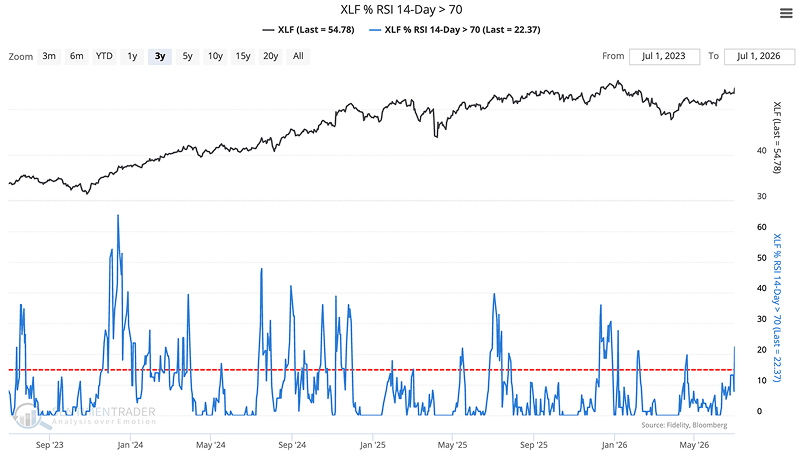
Broad overbought readings are usually more about momentum expansion than a sell signal, especially after a period of underperformance. That said, history cautions against treating this as a short-term chase. Across 60 similar bursts, returns were negative for the first two months, turned positive by the third, and improved steadily thereafter, with a one-year win rate above 70%. Click here to see the backtest.
Strength beneath the surface is unusually broad
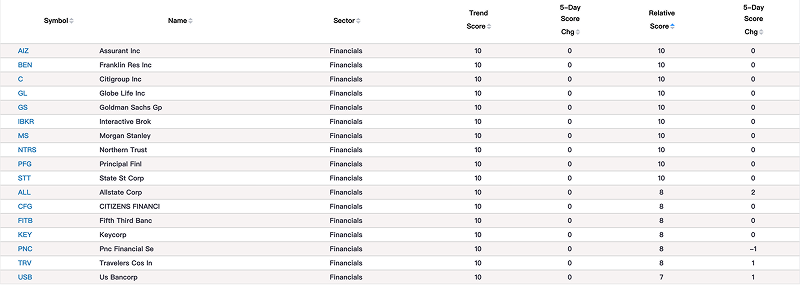
Peek under the hood and the leadership isn't confined to one corner of the sector. Capital markets names like Goldman Sachs, Morgan Stanley, and Interactive Brokers show up, but so do the big and regional banks, with Citigroup, PNC, and U.S. Bancorp carrying strong scores, and insurers like Allstate and Travelers joining them. That breadth is what makes this more durable than a rally carried by a couple of mega-banks.
July adds a modest tailwind
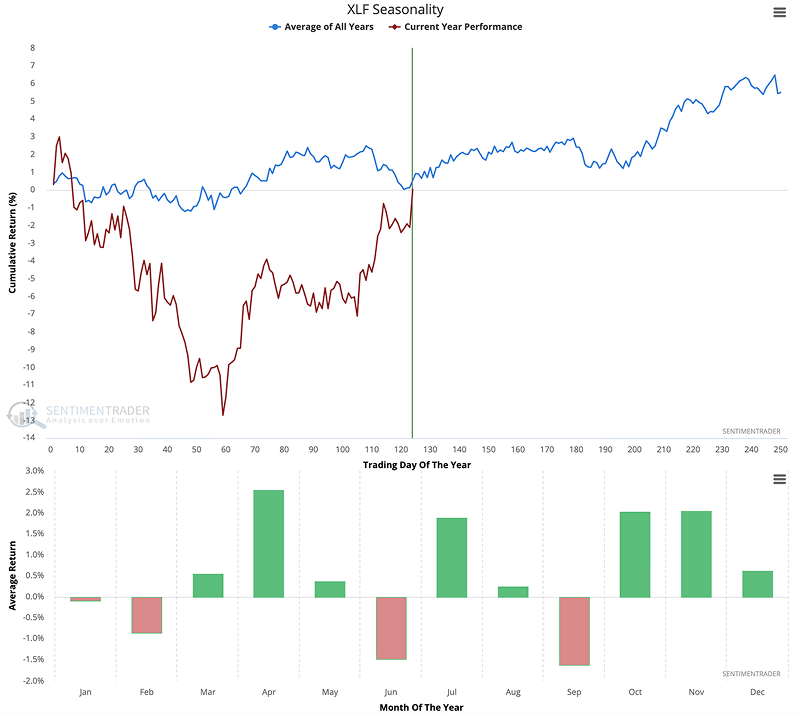
Seasonality isn't a reason to own a sector. It matters when it lines up with improving breadth and momentum, which is the situation here. July has historically been one of XLF's stronger months, and the current year's path has already started to repair after a rough first half.
What the research tells us...
Financials look like the most interesting non-technology group to watch right now. Short-term relative strength leads the market, trend-score breadth ranks just behind technology, momentum is spreading, and the strength beneath the surface spans capital markets firms, banks, asset managers, and insurers. The caveat is that XLF has not confirmed relative leadership. An absolute trend score of 8 next to a relative score of 2 is a divergence, not a green light. They've earned attention, not yet conviction. If the relative trend starts catching up to the absolute one, this group earns a bigger seat at the table. Stay tuned.