
Economic surprises turn positive for the first time in over five months

Key points:
- The Citi Economic Surprise Index turned positive, following an extended period in negative territory
- Similar trends in economic reports surpassing expectations fueled a bullish bias in the S&P 500
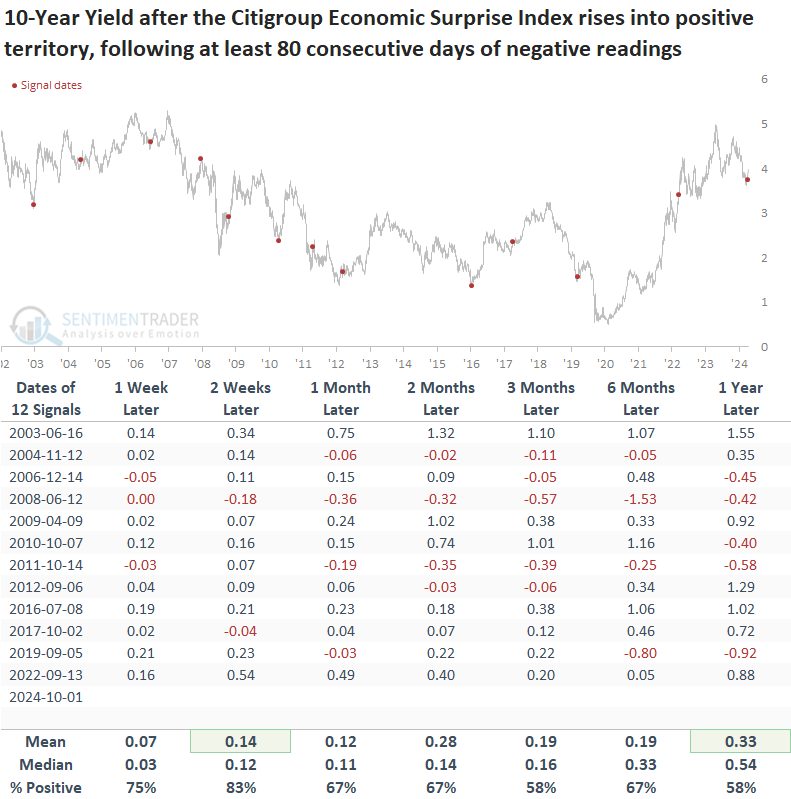
- Cyclical stocks outperformed defensive ones as the 10-year Treasury yield tended to increase
Economic releases are beating expectations
When the Citi Economic Surprise Index rises above zero, it reflects that economic reports have exceeded analysts' projections over a rolling three-month period. In contrast, a reading below zero means releases have been weaker than anticipated.
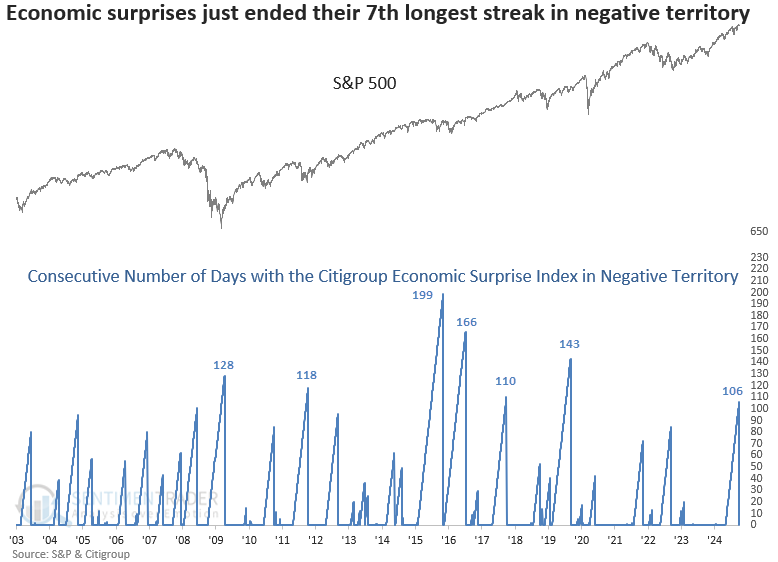
Following the 7th longest streak in history in negative territory, the Citigroup Economic Surprise Index turned positive.
The previous streak of at least 100 consecutive days in negative territory occurred in 2019, when the Federal Reserve last shifted from a tightening to an easing policy stance, offering an interesting comparison. That signal produced a maximum gain of 13% in the S&P 500 over six months, just before the onset of Covid.
Similar reversals in economic surprises produced positive stock returns
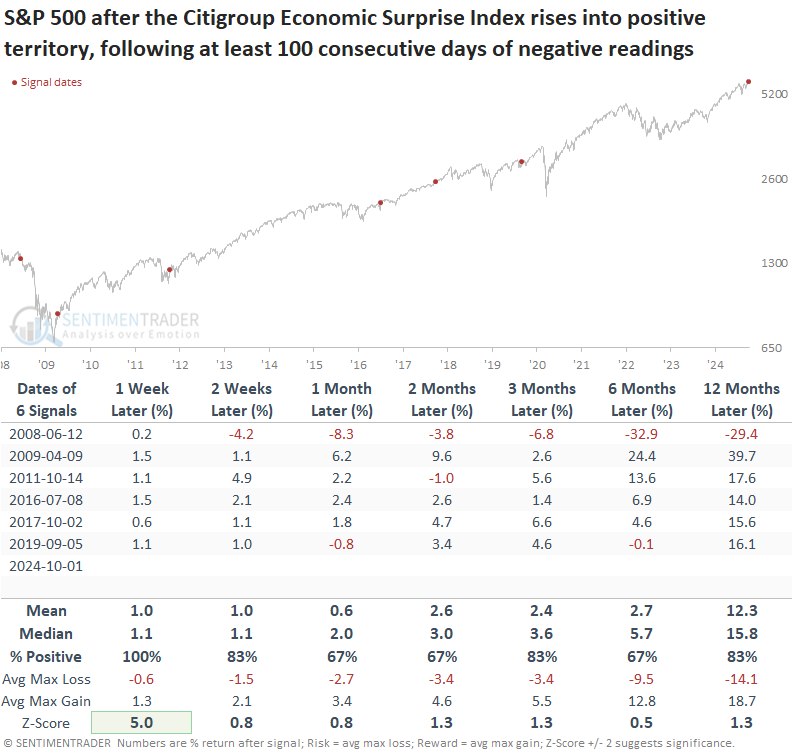
While the sample size is small, whenever the Citigroup Economic Surprise Index increased above zero following at least 100 consecutive days in negative territory, the S&P 500 rose in all but one case over the following year. That instance occurred in 2008, during a downtrend in the S&P 500, a scenario vastly different from today's market environment.
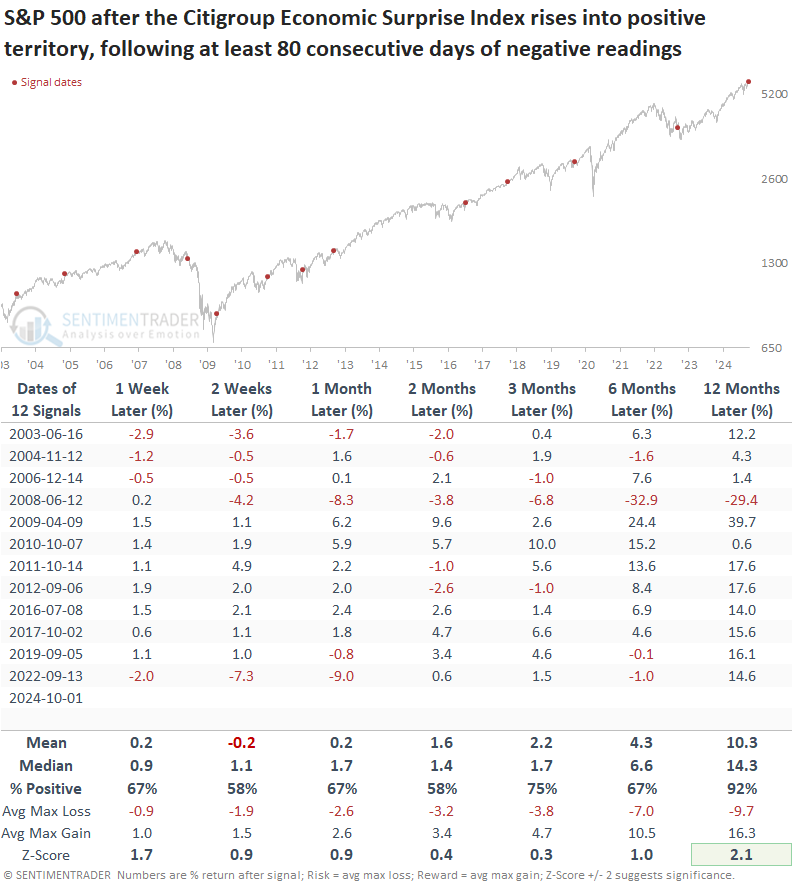
If the threshold is reduced from 100 consecutive days to 80, the sample size grows, with precedents jumping from 6 to 12. Under these conditions, the S&P 500 continued its upward trajectory, rising 92% of the time over the subsequent year.
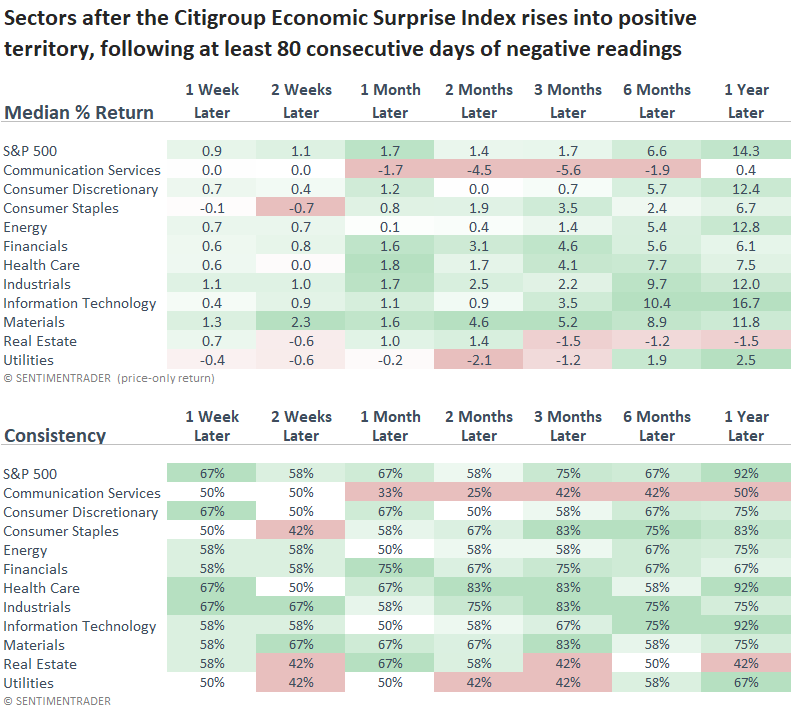
Given the stronger-than-expected economic reports, it's no surprise that cyclical sectors outperform while defensive ones lag.
Although one day doesn't define a trend, after last Friday's stronger-than-expected NFP report, Real Estate and Utilities declined as the S&P 500 and cyclical sectors rallied sharply.
The recent rally in the 10-year yield could persist for a while longer
Fueled by better-than-expected economic data, the 10-year yield typically rises over short-and medium-term periods. With defensive sectors like utilities having been relative winners and exhibiting an overbought condition, a further increase in the 10-year yield could put pressure on these groups.
What the research tells us...
Economic reports have surpassed expectations over the past three months, driving an index that tracks the data series into positive territory. Historically, similar patterns have provided a tailwind to equities, particularly benefiting cyclical sectors. The 10-year Treasury yield typically climbs as stronger-than-expected data indicates a more robust economy than economists had forecast, placing pressure on higher-yielding defensive sectors as rising bond yields offer an attractive alternative.