
Economic sentiment triggers a recession sell signal

Key points:
- A composite that measures economic sentiment has reversed from an optimistic level
- The contraction triggered a new composite recession model sell signal
- After similar signals, the S&P 500 shows negative returns across most time frames
- History suggests a potential recession looks more likely
Economic sentiment as a stock market and recession signal
A new signal from a voting member in the TCTM Recession Composite Model registered an alert with the June update. The model uses various economic sentiment survey measures to identify a reversal from an optimistic outlook on the economy to a pessimistic one.
Model Components:
- NFIB Small Business Optimism
- NFIB Small Business Economy to Improve
- University of Michigan Consumer Sentiment
- Conference Board Consumer Confidence
- ISM Manufacturing
- NAHB Market Index
- Philadelphia Fed Business Outlook Survey
- ISM Non-Manufacturing
Sentiment signals work best when they reverse from an extreme
The model ranks each time series relative to all other values in history and then calculates the average of all components. 100 is the highest, and 0 is the lowest. An optimistic economic reset occurs when the average rank exceeds the 73rd percentile. A new sell signal triggers when the average level falls below the 37th percentile.
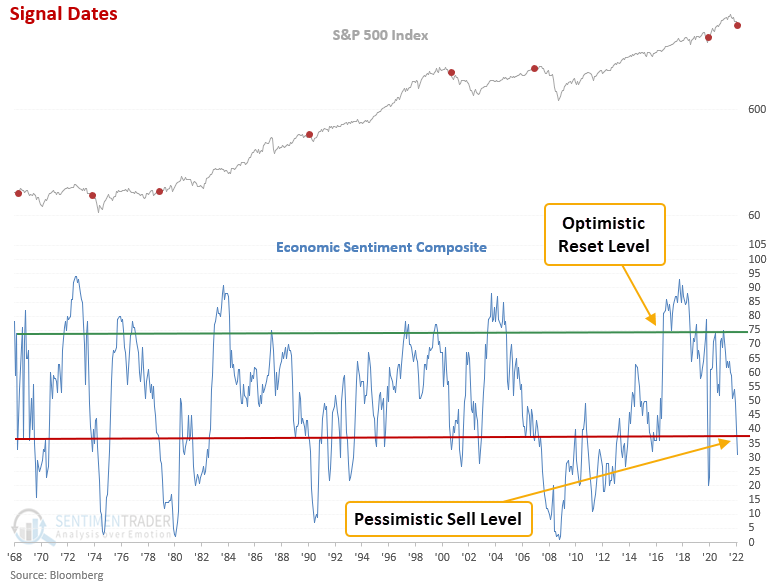
Similar contractions in economic sentiment preceded negative returns for stocks
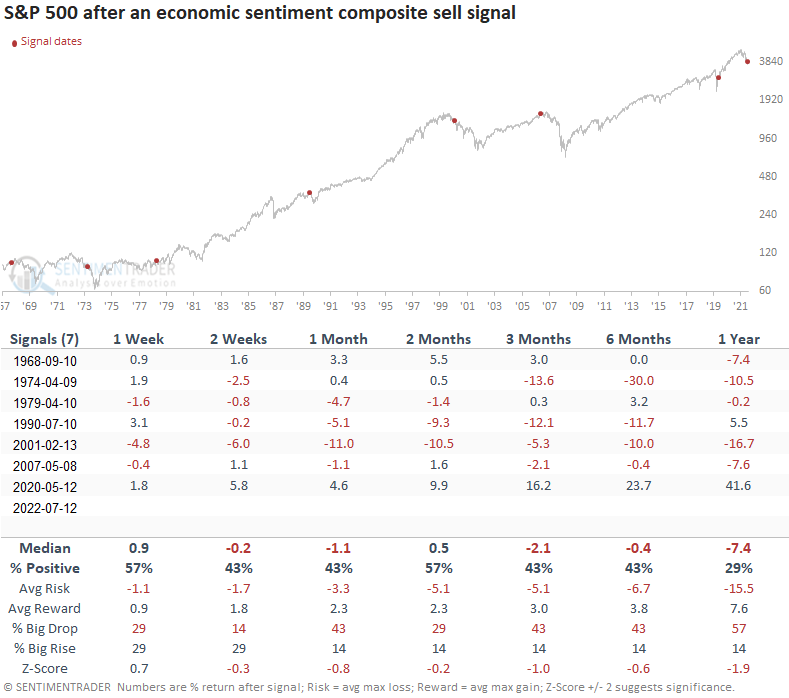
This model generated a signal 7 other times over the past 54 years. After the others, S&P 500 future returns, win rates, and risk/reward profiles were unfavorable across almost all time frames. Returns were negative at some point in the first year in 6 out of 7 instances. The one positive instance occurred after the manufactured government shutdown related to Covid.
The NFIB data is the last series to be updated each month. The release day is the second Tuesday of each month. So, I adjusted the signal dates to reflect that day.
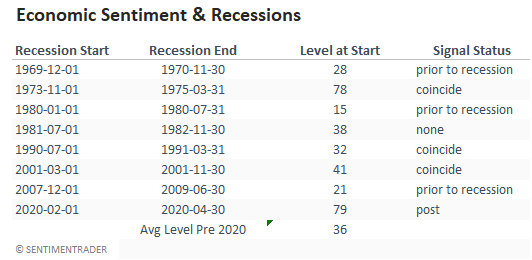
Recessions around an economic sentiment signal
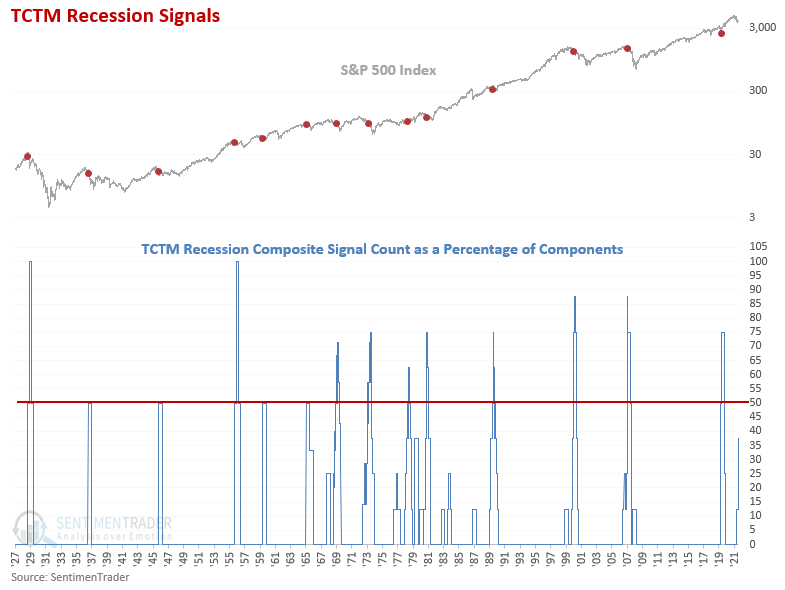
The economic sentiment signal has triggered before or during a recession in 6 out of 8 instances since 1969. With a current reading of 31%, which is below the average level at the start of a recession, the odds are tilting more toward an economic contraction.
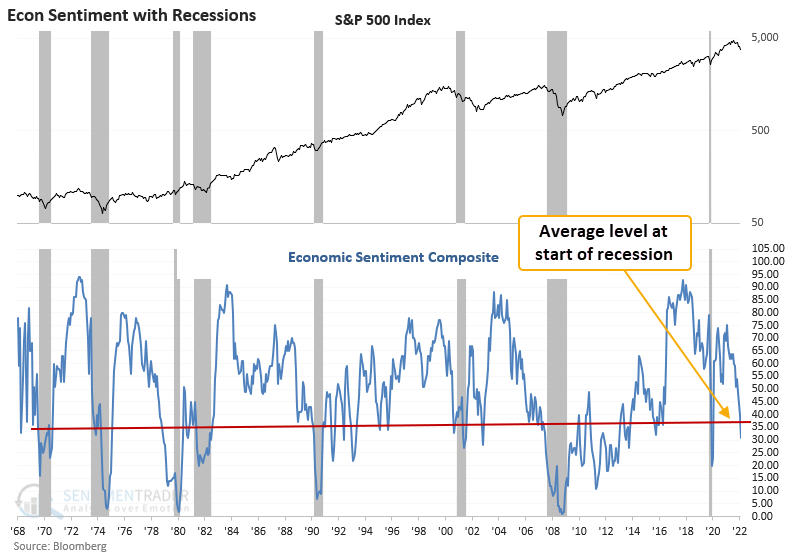
With the S&P 500 and other indexes in a bear market, monitoring the economy for signs of a recession is imperative. Bear markets accompanied by a recession typically experience more significant drawdowns.
The TCTM recession composite increased to 37.5% with the economic sentiment signal. The threshold level for an alert is 50%.
What the research tells us...
When the economic sentiment composite reverses from a period of optimism to pessimism, a diverse group of consumer and business surveys has become more pessimistic about the economy's future direction. Using the economic composite to measure that change in sentiment, similar setups to what we're seeing now have preceded falling prices for stocks and an increased likelihood of an economic contraction.