
Did this price pattern mark a top for equities?

Key points:
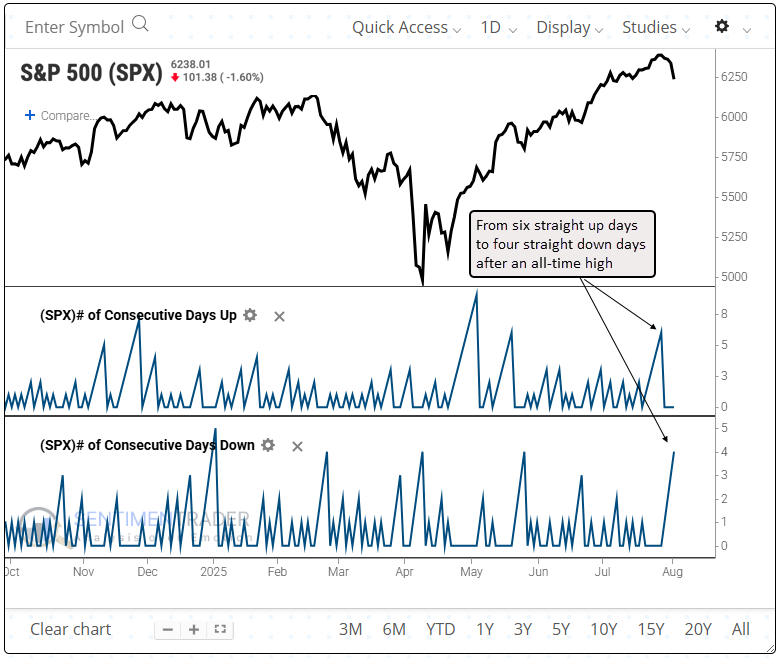
- The S&P 500 recorded six up days, then four down, off an all-time high
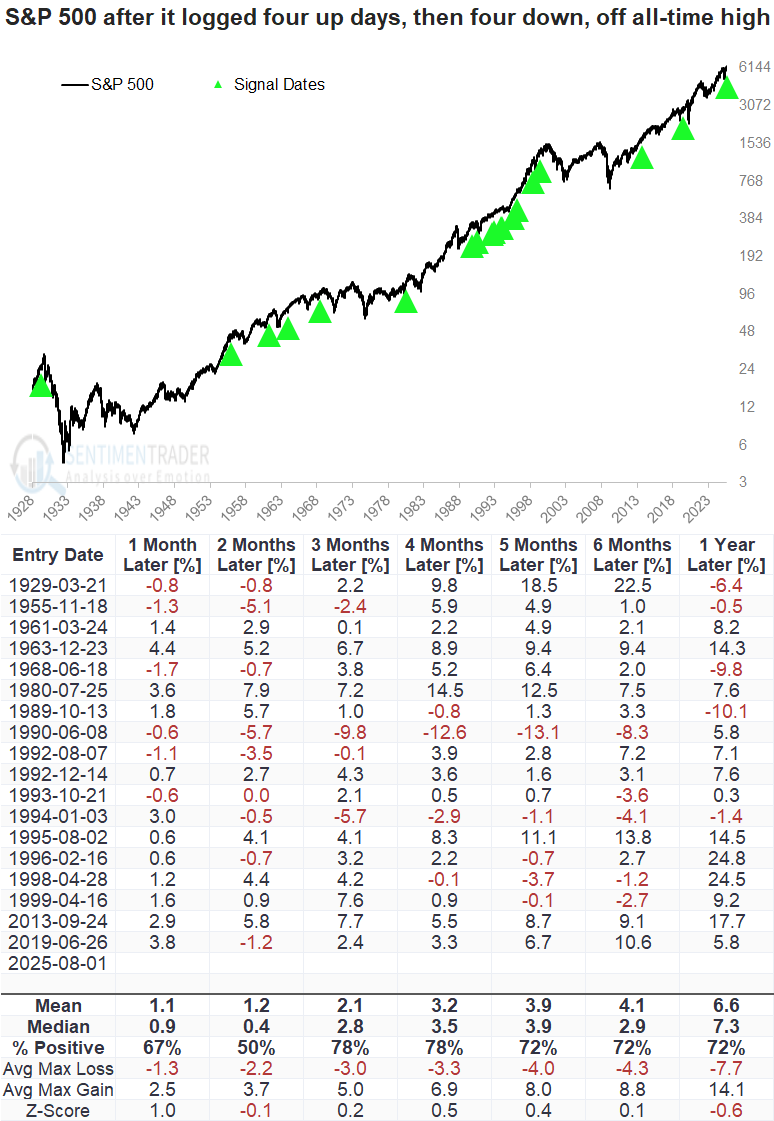
- Similar patterns saw the index bounce back, rallying 78% of the time over the next three months
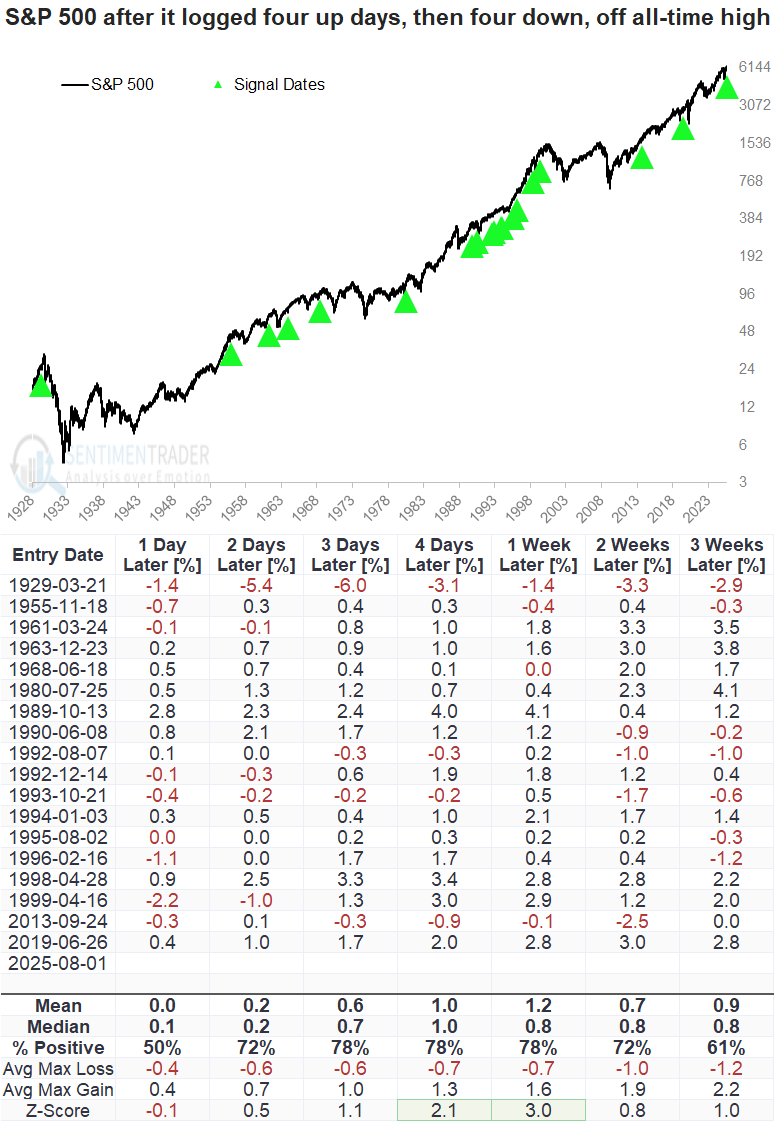
- Even shorter time frames favored a snap-back rally, with a caveat
An ominous price pattern or just noise?
Stocks' most recent breakout was met with persistent selling pressure. Textbooks tell us that's a sign of rejection, and a bad sign going forward.
On Friday, the world's most benchmarked index logged its fourth straight daily decline from an all-time high. The pullback follows six consecutive record closes, prompting debate over whether this marks a meaningful shift or is simply noise within an ongoing uptrend.
Price patterns like this tend to be observations rather than actionable trading signals, which is why we don't incorporate them into our weight-of-the-evidence framework. Nonetheless, they are intriguing to assess, particularly as a way to challenge and debunk the narratives that often accompany them.
A bounce-back looks likely
Whenever the S&P 500 saw four up days in a row followed by four down days after hitting a record high, it typically bounced back, rallying 78% of the time over the following three and four months. Moreover, the 1990 precedent was the only case aligned with a significant market top.
While it's unlikely this pattern represents the start of a correction, given the coin flip win rate at the two-month mark and unfavorable seasonality, one cannot rule out some choppy price action in the next few months. Some signals differ slightly, but you can load and run this test yourself with the Backtest Engine by clicking here.
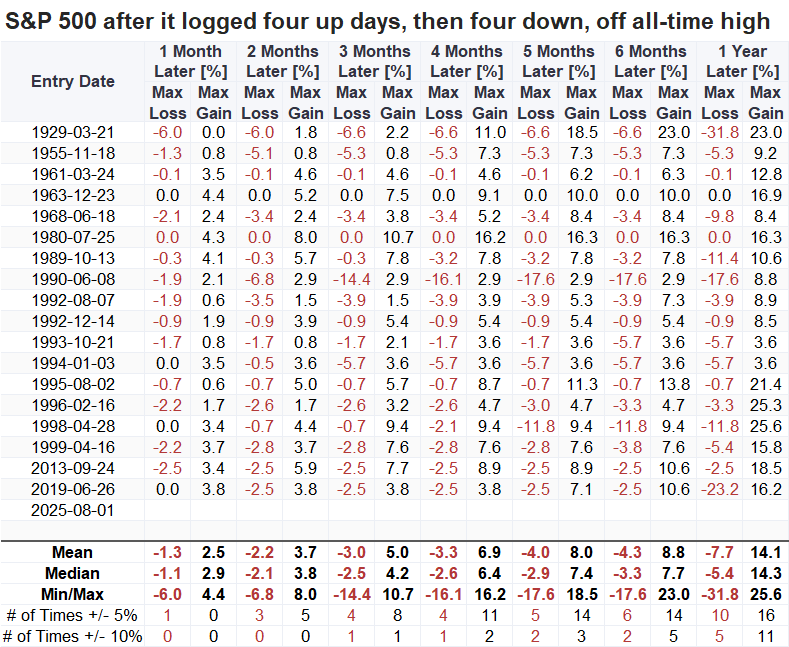
Within the following four months, the S&P 500 experienced just four maximum losses exceeding 5%, and only one surpassed a 10% drop.
After these price patterns, the next day was a coin flip. However, win rates and returns showed notable improvement in the three to five-day horizons, suggesting a snapback rally.
What if the next day is up or down?
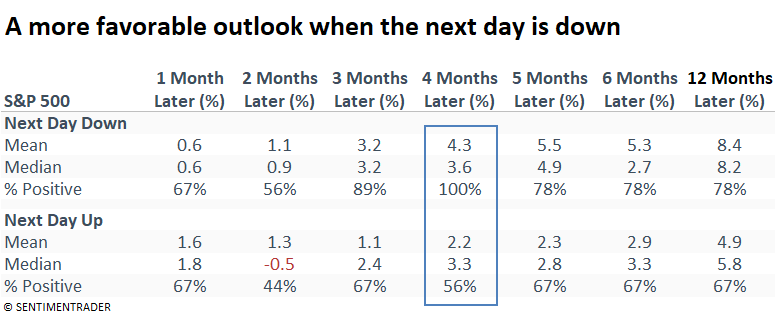
With stocks rebounding today, it's worth examining how the S&P 500 performed depending on whether the day after one of these signals was positive or negative. Interestingly, when the next day is down, the world's most benchmarked index has tended to perform better, rallying 100% of the time over the following four months.
What the research tells us...
The S&P 500 just exhibited a rare pattern by rising for at least four consecutive days to a record high, only to follow that with four straight days of losses. While this back-to-back shift in momentum may appear ominous on the surface, especially after reaching all-time highs, history suggests it's more reflective of the natural ebb and flow within an uptrend.
In fact, following similar occurrences, the index has rallied over the next three months in 78% of instances, with only one case experiencing a decline of more than 10%. Rather than signaling imminent danger, this pattern often marks a brief consolidation within a broader bullish trend.