
Crude oil swoons to a new 1-year low

Key points:
- Crude oil closed at a 1-year low for the first time in over a year
- Similar price patterns suggest the commodity could stagnate over the subsequent six months
- Energy stocks underperformed the S&P 500 over the subsequent year, while Discretionary outperformed
A prominent global barometer fell to its lowest level in a year
Over the last few months, I've highlighted the softening in interest rates and the dollar. While it's essential to recognize that this could suggest underlying growth concerns, lower rates and a weaker dollar tend to stimulate the economy. Commodities, too, should provide a tailwind, with one crucial one likely to offer meaningful support.
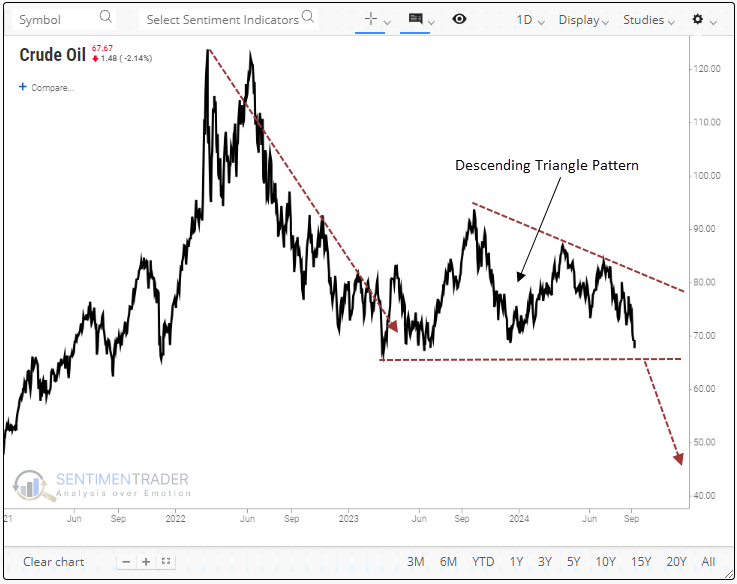
Crude oil, a critical global commodity known for its influence on economic trends, hit a 1-year low last week for the first time in more than a year. The previous instance led to a rebound. However, the rally was capped, and oil has been consolidating in an extensive range, with the commodity now pressing near the lower boundary.
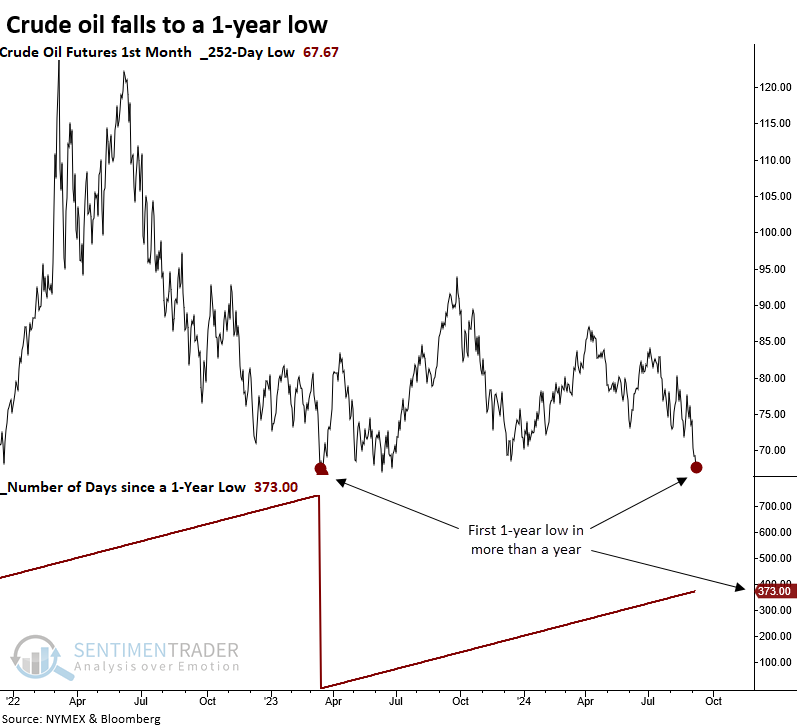
A 1-year low preceded a stagnant environment over a medium-term horizon
When crude oil reaches a 1-year low for the first time in a year, it often shows a mild tendency to rebound over the subsequent weeks, rising in 12 out of 17 cases. However, oil's performance over the next six months, while slightly better than a coin toss, was not without risk. At some point during this time frame, the commodity displayed a loss in 13 out of 17 instances.
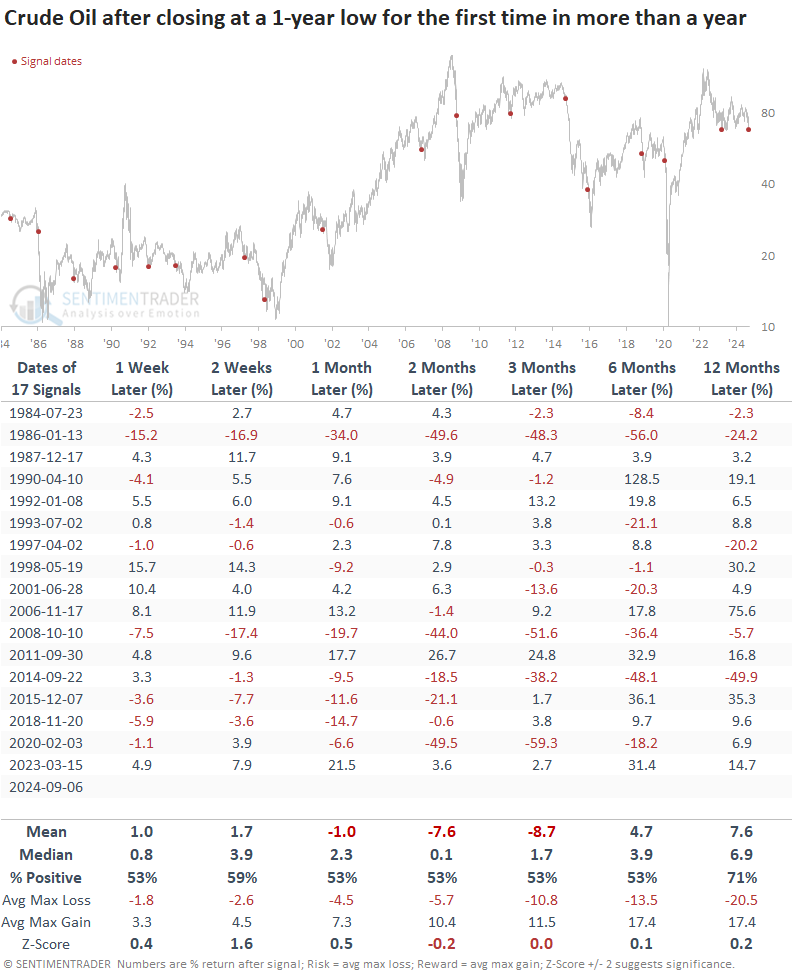
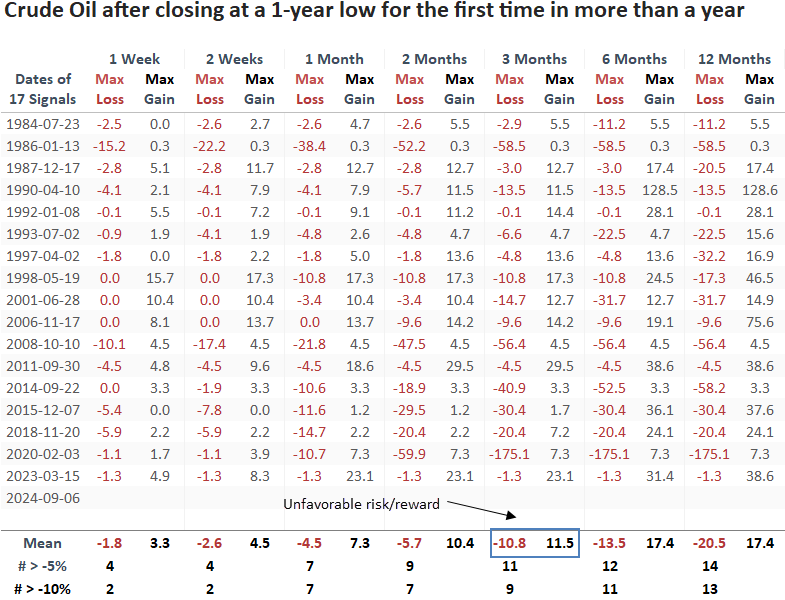
Over the next six months, the signal encountered a maximum loss exceeding -5% in 12 out of 17 cases and -10% in 11 out of 17 occurrences. Furthermore, the average maximum loss almost equaled the maximum gain at the three-month interval.
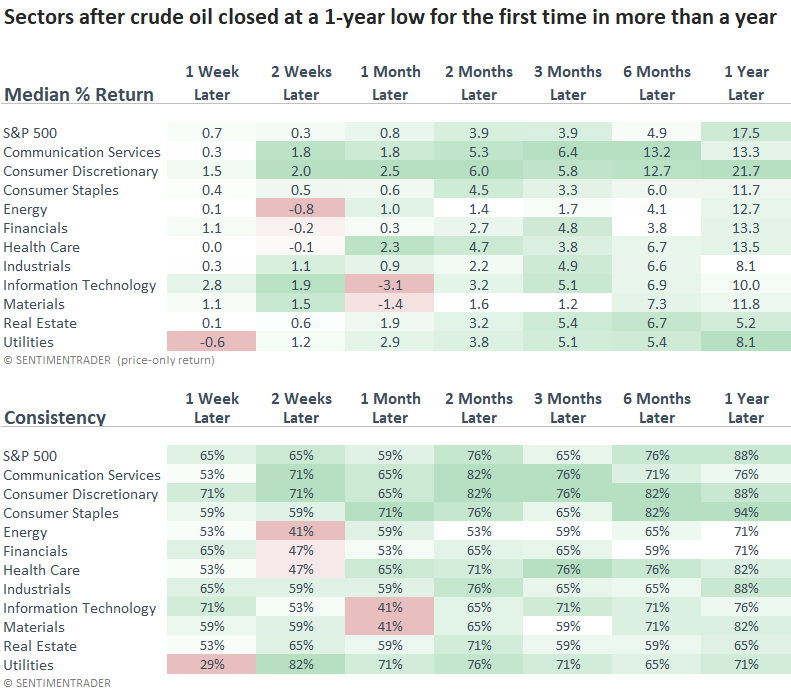
The S&P 500 Energy sector underperformed the S&P 500 in six out of seven intervals. As one might expect, Consumer Discretionary stocks benefitted the most from the one-year low in crude oil, outperforming the broad market across all time horizons. Moreover, a year later, it was the best-performing group.
Crude oil trends are guiding the energy sector's direction
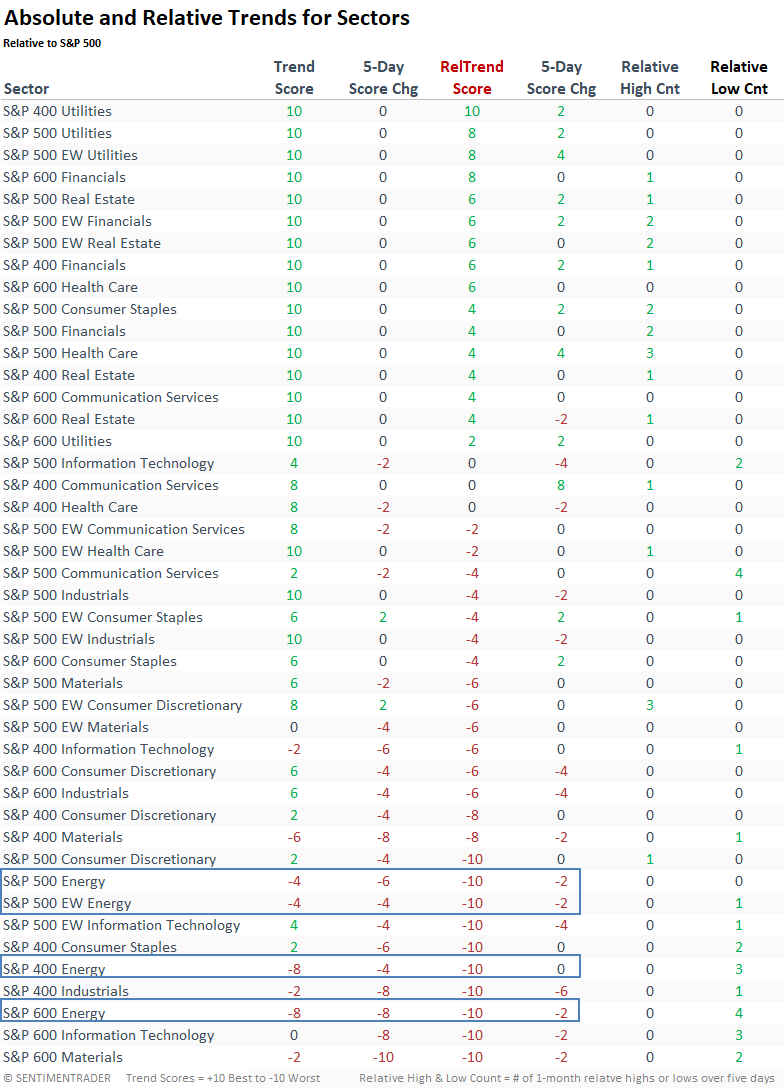
Energy indexes across all market capitalizations and index weighting methodologies currently show a relative trend score of -10 compared to the S&P 500, distinguishing it as the only sector with all ten relative trend-following indicators in a negative position. Additionally, none hold a positive absolute trend score. From a top-down view, energy should be avoided.
A glimmer of light in large-cap energy
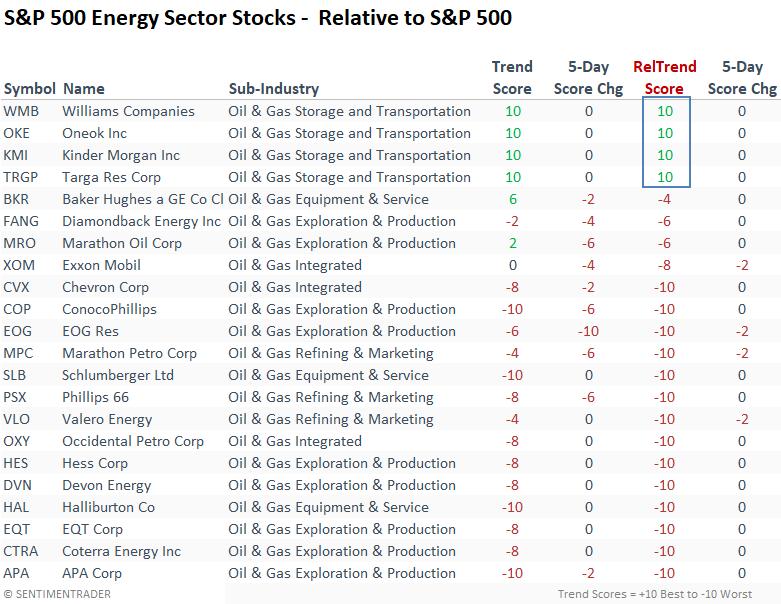
Even though the energy sector appears bleak at the sector level, oil and gas storage & transportation stocks exhibit perfect absolute and relative trend scores, offering select bottom-up opportunities.
Storage and transportation companies are less exposed to oil price fluctuations, as their revenues are primarily secured through long-term fee-based contracts. Moreover, they often offer higher dividend yields, appealing to income-focused investors. So, it's unsurprising to see these stocks display bullish trend scores, similar to defensive sectors, which I highlighted last week. As interest rates fall, dividend yields for these groups become more attractive.
An ominous price pattern
From a technical analysis perspective, the price pattern in crude oil resembles a descending triangle, a continuation formation that often resolves in the direction of the previous trend-which has been downward since oil's peak in 2022.
While crude oil's big picture looks ominous, I wouldn't be surprised if it bounced one more time before heading lower.
What the research tells us...
Crude oil, often seen as a global economic gauge, hit its lowest closing level in over a year. While a short-term rebound is possible, a more cautious medium-term outlook is warranted. The commodity has formed a descending triangle pattern, which traditionally signals further downside. Historically, energy stocks have seen favorable returns after similar 1-year low scenarios in oil, but the sector has often underperformed the S&P 500, which aligns with current relative trends. However, all is not lost, as lower crude oil prices provide a bullish backdrop for other groups, especially the Consumer Discretionary sector.
With interest rates, the dollar, and now crude oil falling, several factors are aligning that should provide a bullish tailwind for equities as long as employment does not significantly weaken. That said, indexes are most likely in a holding pattern until after the election.